A company that doesn't build AI is earning $100 million a year!
The creator of this business miracle is 'Arena', the 'large model battleground' that major Silicon Valley AI giants are vying for.
Its predecessor was called Chatbot Arena, initially just an open-source research project launched by a UC Berkeley team in 2023.
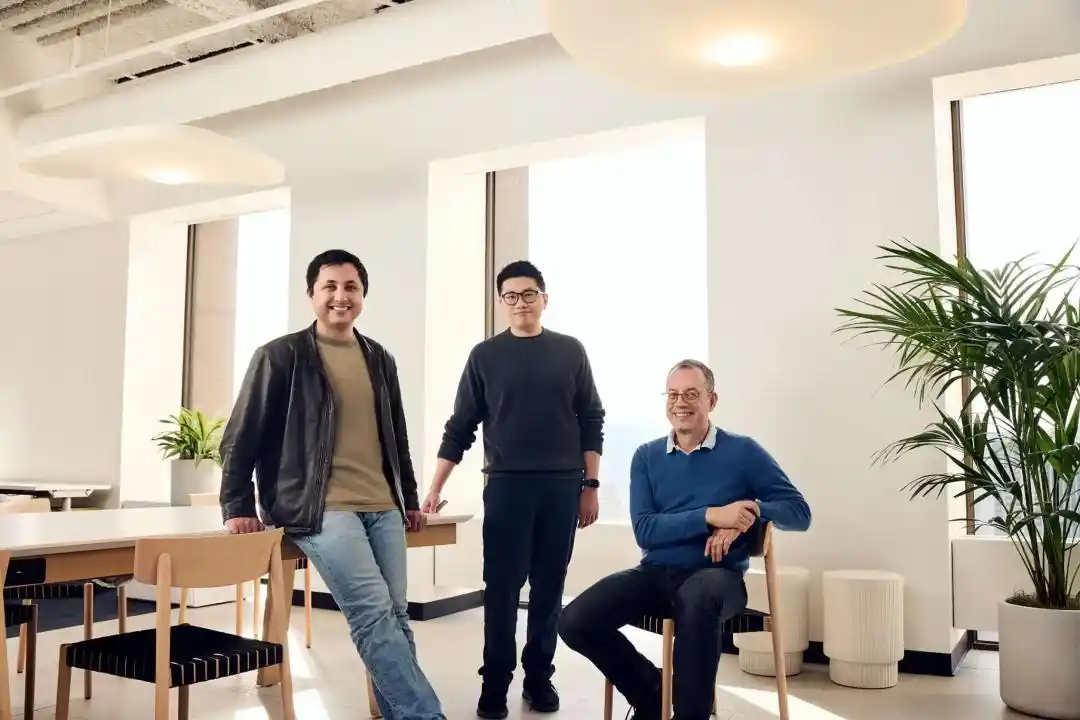
Who would have thought that in such a short time, it would become the core arena holding the fate of large models.
Just today, a mere 8 months after Arena's commercial service launched, its annualized revenue reached $100 million, hitting a new milestone.
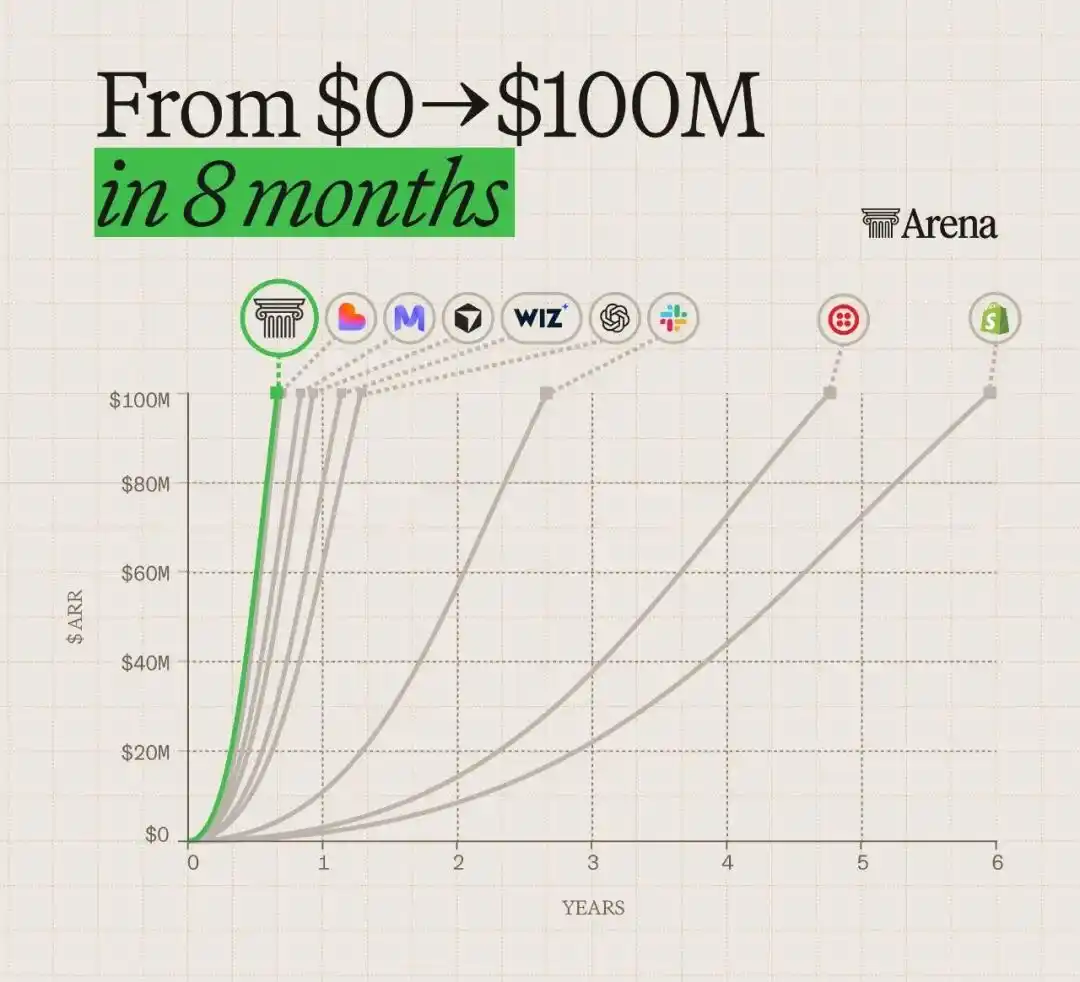
ChatGPT, Claude Battle for the Top, The Large Model Arena
For many, Arena is no stranger.
What it's most famous for is that large model leaderboard entirely built on real user blind testing.
The gameplay is extremely simple, yet full of competitive spirit—
Enter a prompt, the system blindly dispatches two anonymous models to answer simultaneously; then choose which one is better.
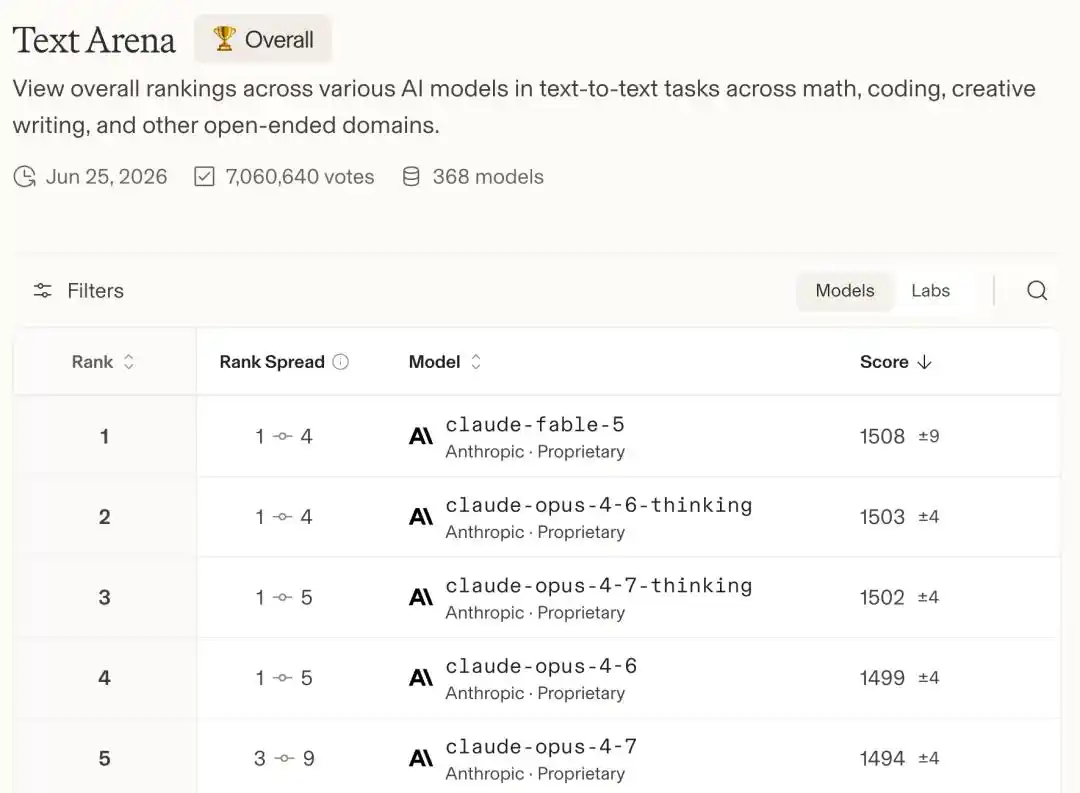
The system aggregates tens of millions of such votes into an Elo-style leaderboard.
This 'battle arena' mechanism has made it a holy land for global AI enthusiasts and developers.
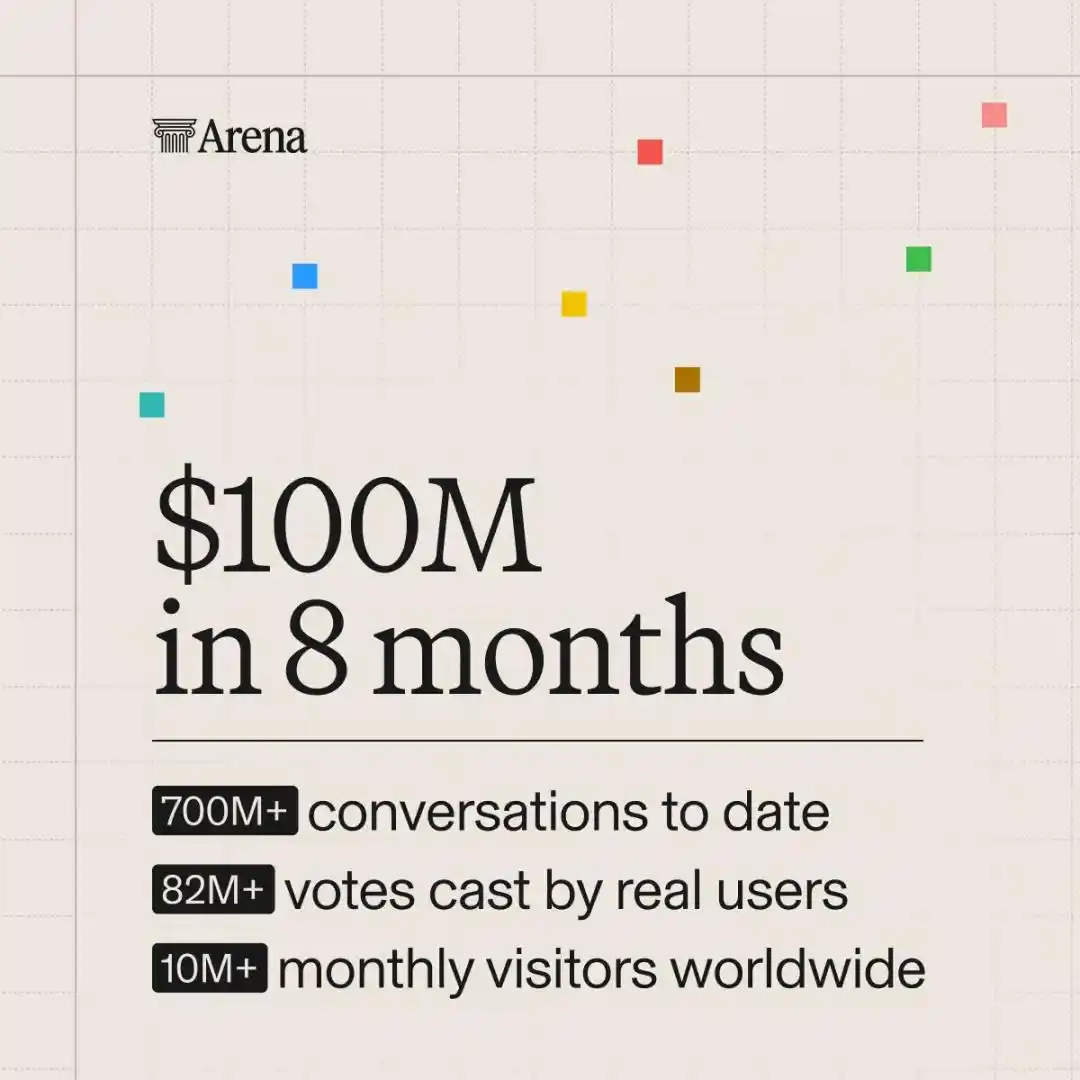
To date, the platform has accumulated over 10 million user evaluations, 700 million conversations, 82 million votes, more than 10 million monthly visitors from over 150 countries worldwide.
More crucially, about 80% of daily user prompts are completely new, no model can 'memorize' them in advance.
How valuable is this?
OpenAI, Google, Anthropic, Meta—these top-tier giants usually at each other's throats—all submit their flagship models to Arena to be grilled by the community.
OpenAI even secretly tested on the board under the codename 'summit' before GPT-5's official release.

In other words, the strongest batch of models in all of Silicon Valley are waiting for a Berkeley student project to give them its stamp of approval.
How Did $100 Million in Revenue Materialize?
So the question arises—how did a free leaderboard become a $100 million cash cow?
Last September, Arena launched a commercial service called AI Evaluations:
Model vendors and large enterprises can pay to have Arena mobilize its community of tens of millions to conduct in-depth evaluations of their own models, obtaining 'real-world' performance analyses that mere benchmarking simply can't provide.
This is a set of 'CI/CD system for the real world'.
Once a model is ready for public release, Arena will evaluate it for the community for free;
But if a company wants to know where their model truly excels, where it's weak, and where it's hallucinating in the hands of real users, they have to pay.
This is a classic 'pickaxe seller' business—during a gold rush, those digging for gold might not make money, but those selling water and shovels profit steadily.
The more frantically large model vendors compete, the more desperately they try to squeeze out the last bit of performance, the bigger their appetite becomes for this kind of 'post-launch optimization' service.
And Arena happens to be positioned exactly where everyone must pass through.
Three Berkeley Grads
Building the Most Profitable Business
Arena's predecessor was called Chatbot Arena.
Before that, it belonged to the renowned LMSYS research group at Berkeley.
Two Berkeley roommates simply wanted to do something straightforward—build a neutral arena for large language models, letting everyone compete fairly.
No one expected this student project would sprint its way to becoming a unicorn.
The timeline is breathtakingly fast: In the spring of 2025, the project spun off from the university, formally incorporated, and within weeks secured a $100 million seed round at a $600 million valuation;
A few months after the commercial product launched, within just four months, annualized revenue surged to $30 million.
Immediately following, this January, a $150 million Series A round led by Felicis and UC Investments landed, with a post-money valuation fixed at $1.7 billion.

The three at the helm are no ordinary figures either.
CEO Anastasios Angelopoulos is a mathematician at heart.
While studying electrical engineering as an undergraduate at Stanford, he studied under the legendary figure in convex optimization, Stephen Boyd.
For his Ph.D. at Berkeley, his advisors were directly two godfather-level giants—machine learning master Michael I. Jordan and computer vision master Jitendra Malik.
His research focus in recent years has mainly been on how to make mathematically rigorous judgments about a black-box model.
CTO Wei-Lin Chiang is a familiar face in the open-source community—the wildly popular open-source chatbot Vicuna was his creation.
He pursued his Ph.D. at Berkeley under Ion Stoica, specializing in distributed systems, and previously worked at Google, Amazon, and Microsoft.
The moment ChatGPT entered public beta in late 2022, he dropped all his previous research and plunged headfirst into Arena.

His obsession with this project was described by his partner Angelopoulos as 'a labor of love'.
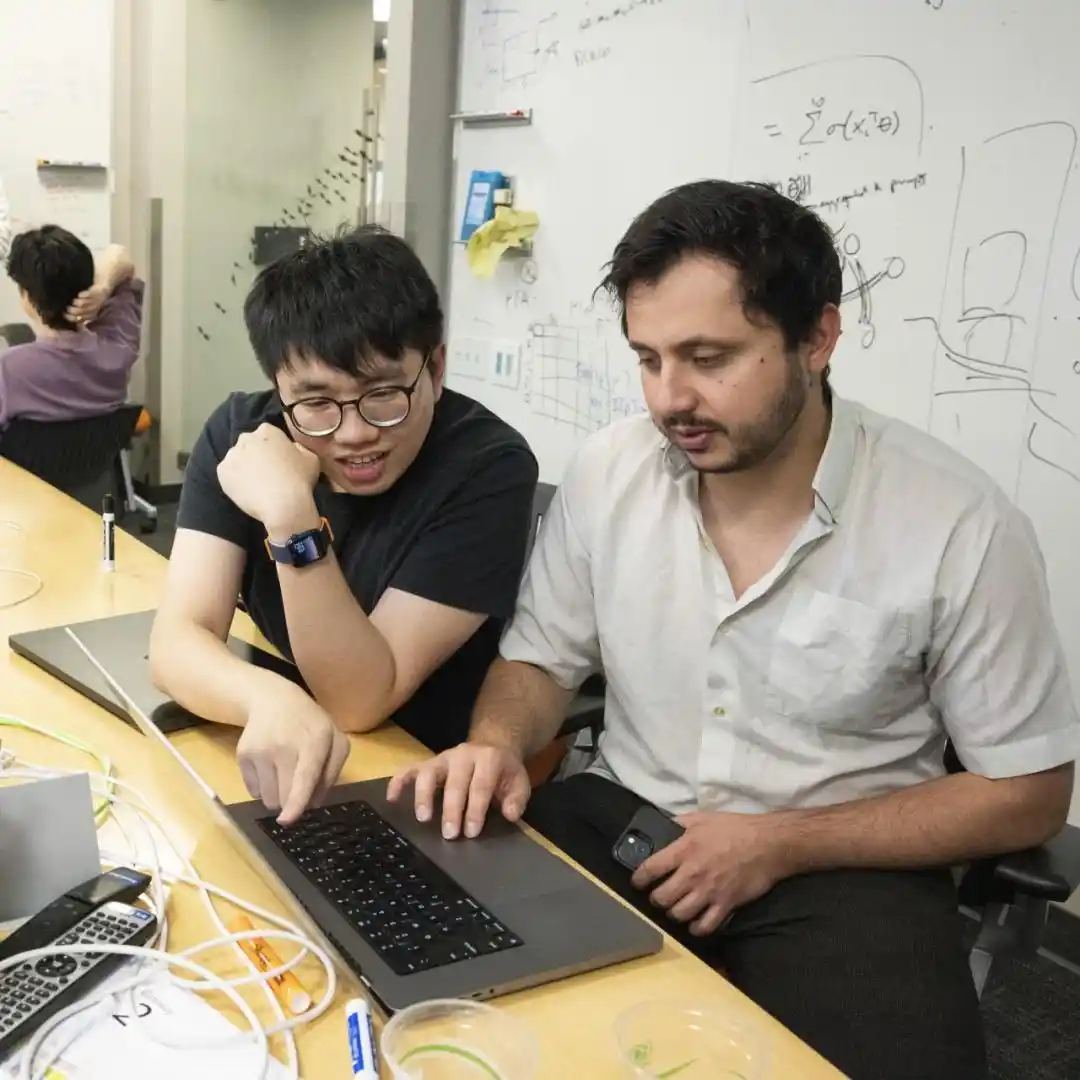
For this project, their work hours were so long they simply moved in together. Two roommates built a $1.7 billion company.
The third co-founder is the famous Berkeley professor and Databricks co-founder Ion Stoica. He served as an advisor until the project incorporated in April 2025.
Being the Referee is More Important Than Being the Player
Arena's latest move is launching Agent Mode.
What it evaluates is no longer just 'who chats better', but the real work millions of users are doing with agents: writing code, debugging, conducting research, analyzing documents—those long tasks involving hundreds of tool calls and multi-turn interactions.
It has begun scoring with objective metrics like task completion rate and hallucination rate, far exceeding the initial scope of 'human preference voting'.

AI is evolving from 'chatbots' to 'agents' capable of independently handling work, with tasks growing longer and stakes higher.
Evaluation is the last probe humans have into the inner workings of AI.
The reason Arena's business can be worth $100 million, worth $1.7 billion, essentially bets on this fact becoming increasingly important and increasingly expensive.
But everyone ultimately has to answer the same question—when machines start setting their own exams, who remains qualified to grade them?
References:
https://techcrunch.com/2026/06/29/arena-the-ai-leaderboard-everyone-uses-is-now-a-100m-business/
https://x.com/ml_angelopoulos/status/2071629882057228680?s=20
This article is from the WeChat public account "新智元", author: ASI启示录, editor: 桃子