Investing $5 Billion: Cerebras Uses a 'Redemption Bond' to Enter Sam Altman's Hall of Gods

marsbitОпубликовано 2026-05-14Обновлено 2026-05-14

Введение

Cerebras Systems, the chipmaker known for its massive wafer-scale WSE-3 processor, is making a dramatic IPO push with a $48 billion valuation. This move follows a crucial deal with OpenAI, where Cerebras will provide 750 megawatts of computing power over three years. In exchange, OpenAI receives warrants for a 10% stake in Cerebras, valued at around $5 billion. This agreement, termed a "computing ransom note," secures Cerebras a place within Sam Altman's influential network while sacrificing a significant portion of its potential profits from the deal. The partnership has supercharged Cerebras's market prospects, granting it a premium valuation and positioning it as a core OpenAI partner. The article frames this as part of "Altman Economics," where OpenAI leverages its model sovereignty to extract concessions from hardware suppliers, reshaping the AI hardware landscape into a hierarchy of sovereigns and vassals.

On Wall Street's monitors, the flames of the digital oracle burn ever brighter.

This week, the chip industry's 'maverick', Cerebras Systems, charged towards an IPO with a valuation of $48 billion

This is the largest listing of 2026, a commercial ritual imbued with both sanctity and brutality.
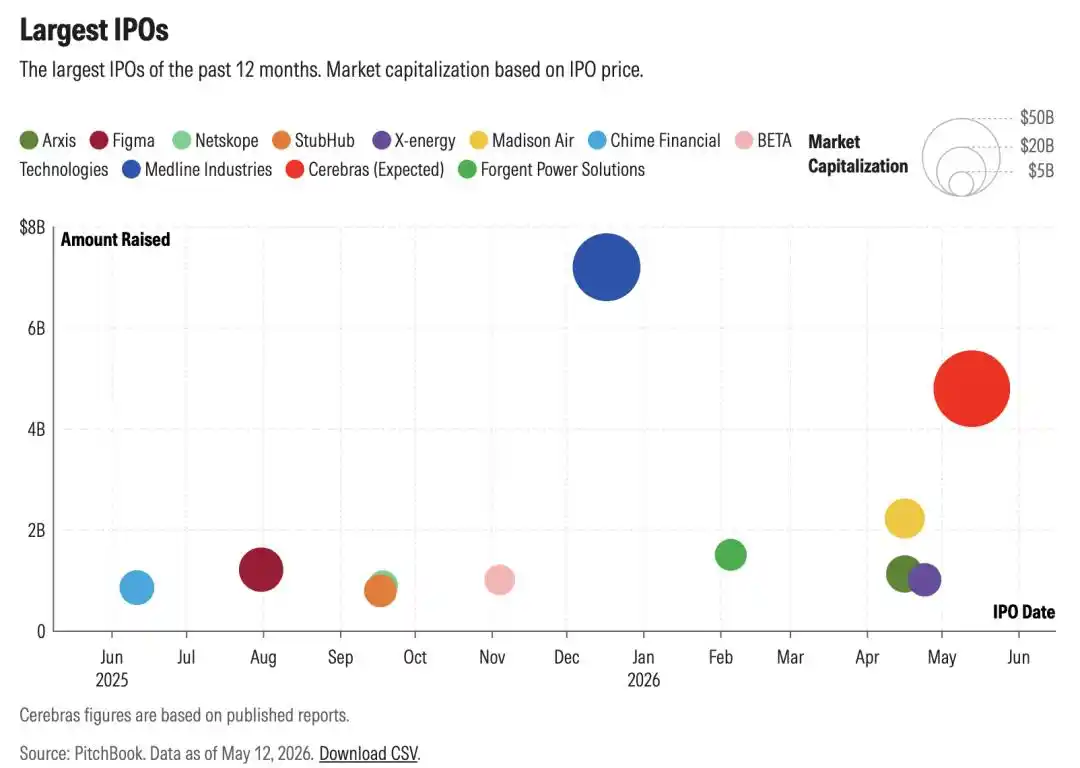
To squeeze into Sam Altman's 'Hall of Gods', Cerebras personally cut away 10% of its own 'flesh and blood'—stock warrants worth approximately $5 billion.

This is no longer a simple IPO. It is a tribute from underlying hardware to model sovereignty, paid in the twilight of an era.

And standing behind all this prosperity is the man known as the 'new lord of Silicon Valley'.

The Return of Brutalist Aesthetics

It Forged a 'Silicon-based Leviathan'

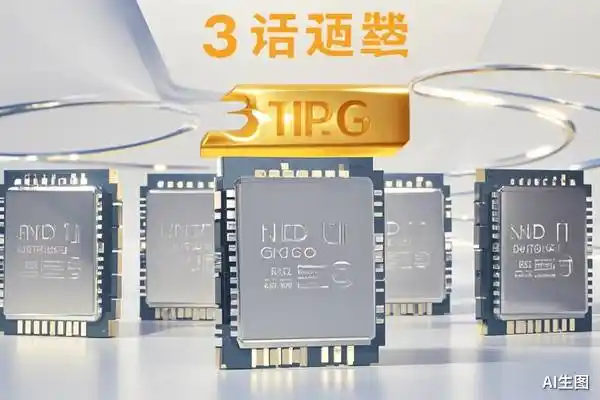
If Nvidia proudly calls its B200 chip an exquisite postage stamp, then Cerebras's flagship product, WSE-3, is a massive dinner plate.
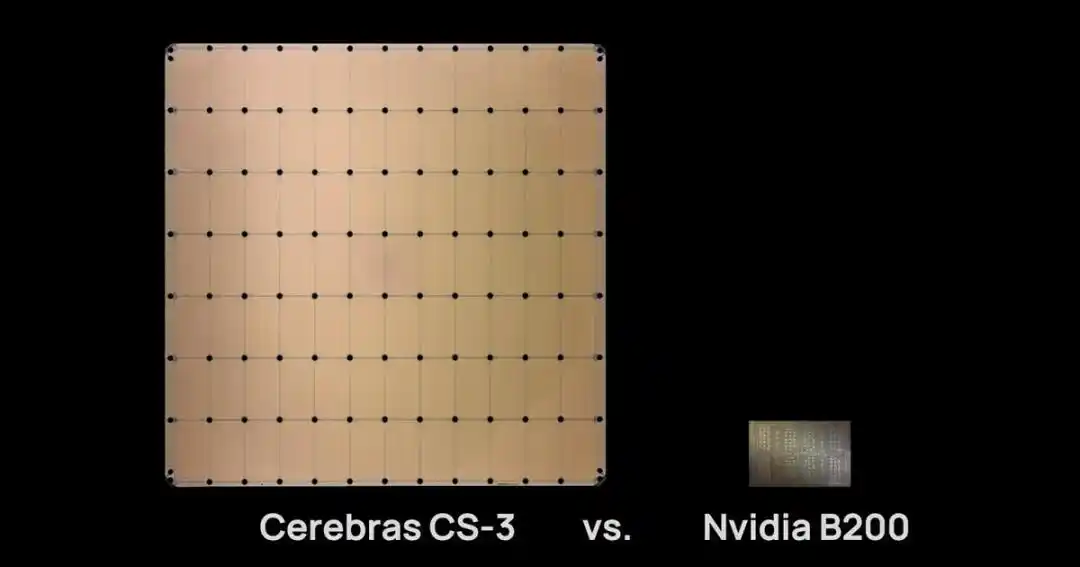
For the past three decades, the semiconductor industry's creed has been 'miniaturization'—dancing on a pinhead, stacking transistors at the nanoscale.

But Cerebras took a counterintuitive path: Since memory bandwidth is the Achilles' heel of AI inference, why not just make the entire wafer into a single chip.

This 'silicon-based leviathan' is nearly half a square foot in size, featuring over 4 trillion transistors (19 times that of Nvidia's B200), 900,000 AI-optimized cores, and 125 petaflops of AI compute—making its total computing power 28 times that of the B200.

Its design is fundamentally about 'trading space for time': etching cores directly onto a single 12-inch wafer, flattening the 'memory wall' where data shuttles between the chip and external storage.

This brutalist aesthetic shows terrifying dominance in the 'Age of Inference':

When running top-tier models from OpenAI, Cognition, Meta, etc., it can achieve a throughput speed of up to 3000 tokens per second, outpacing traditional GPUs by 70 times.
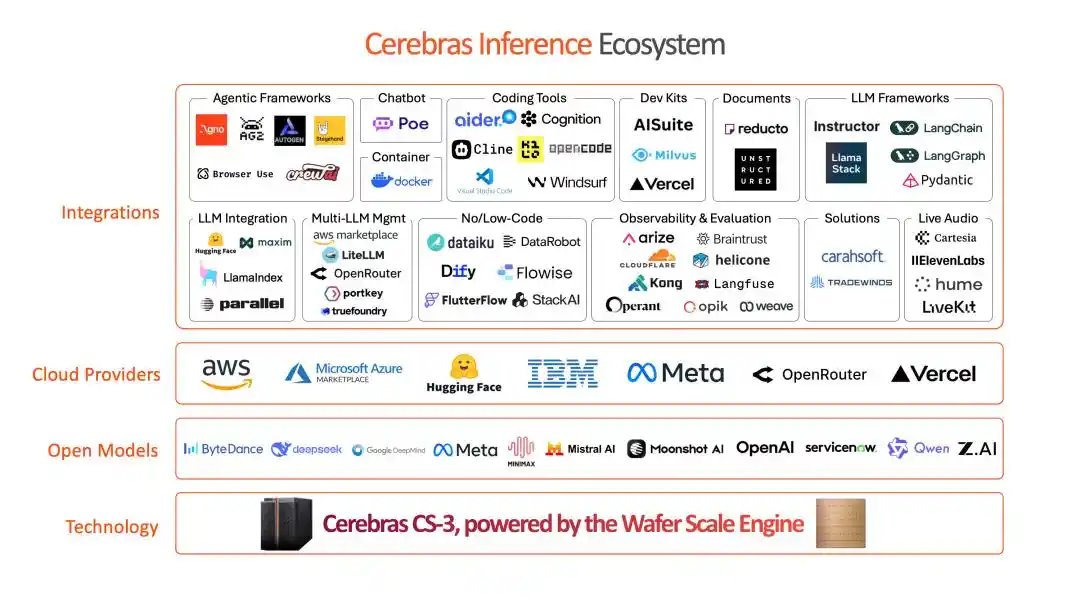
However, in 2026, the hardest technology, if it can't be converted into the fastest Tokens, is just expensive sand.

Eighteen months ago, Cerebras was a forlorn geek.

In 2025, its revenue was only $510 million, almost entirely from a single customer, the UAE's G42. It operated at a loss of $145.9 million, forcing the postponement of its IPO plans.
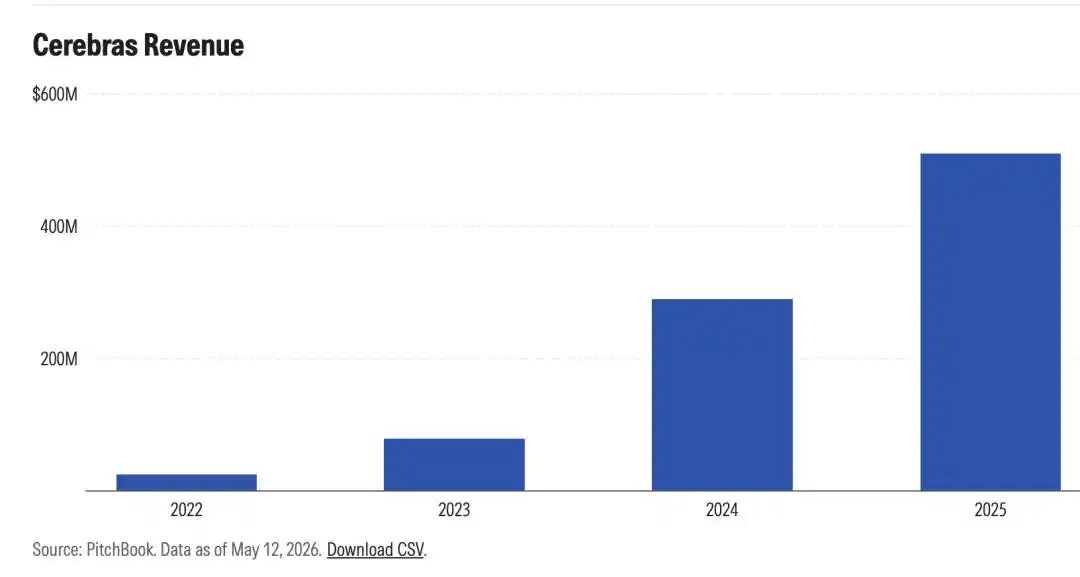
Despite possessing performance surpassing Nvidia's, its fate hung on the checkbook of a single client, like an orphan at constant risk of drowning.

Until it knocked on the door leading to Sam Altman's inner circle.

The $5 Billion 'Redemption Bond'

The Golden Ticket to the Future

In the world of AI, Moore's Law is giving way to the 'Law of the Circle'.

In exchange for survival and explosive growth, Cerebras signed an agreement that left outsiders dumbfounded: providing OpenAI with 750 megawatts of computing capacity over the next three years.

Calculated at current market prices (750 MW is roughly worth $9 billion annually), this deal could bring about $27 billion in revenue and $10 billion in gross profit.

For a company still in the red last year, this was a lifeline.

More tellingly, these 750 megawatts constitute just one-fortieth of the total computing power OpenAI believes it will need by 2030. This leftover order is enough to catapult Cerebras from a 'marginal player' to a market focal point.

But there is no free lunch, only expensive endorsements.

In exchange, Cerebras must gradually grant stock warrants to OpenAI. Upon exercise, OpenAI would hold 10% of Cerebras's shares—worth about $5 billion at the offering price midpoint of $155.

This means Cerebras generously offered up half the potential future profits from this mega-deal as a 'tribute' directly to OpenAI.

This is not an equal exchange. This is the AI era's 'computing power redemption bond'.

OpenAI is the 'lord' holding the power to allocate traffic and demand, while Cerebras is a heavily armored knight providing advanced tools of production—to enter the lord's domain, the knight must pay homage and share half his spoils.
Once branded as OpenAI's core blood ally, Cerebras's price-to-sales (P/S) ratio instantly skyrocketed to 15 times, a level even Nvidia must respectfully acknowledge.

'Altmanomics'

He Is Cashing Out the Hardware Giants

Cerebras is not the only computing power enterprise bowing to Sam Altman.

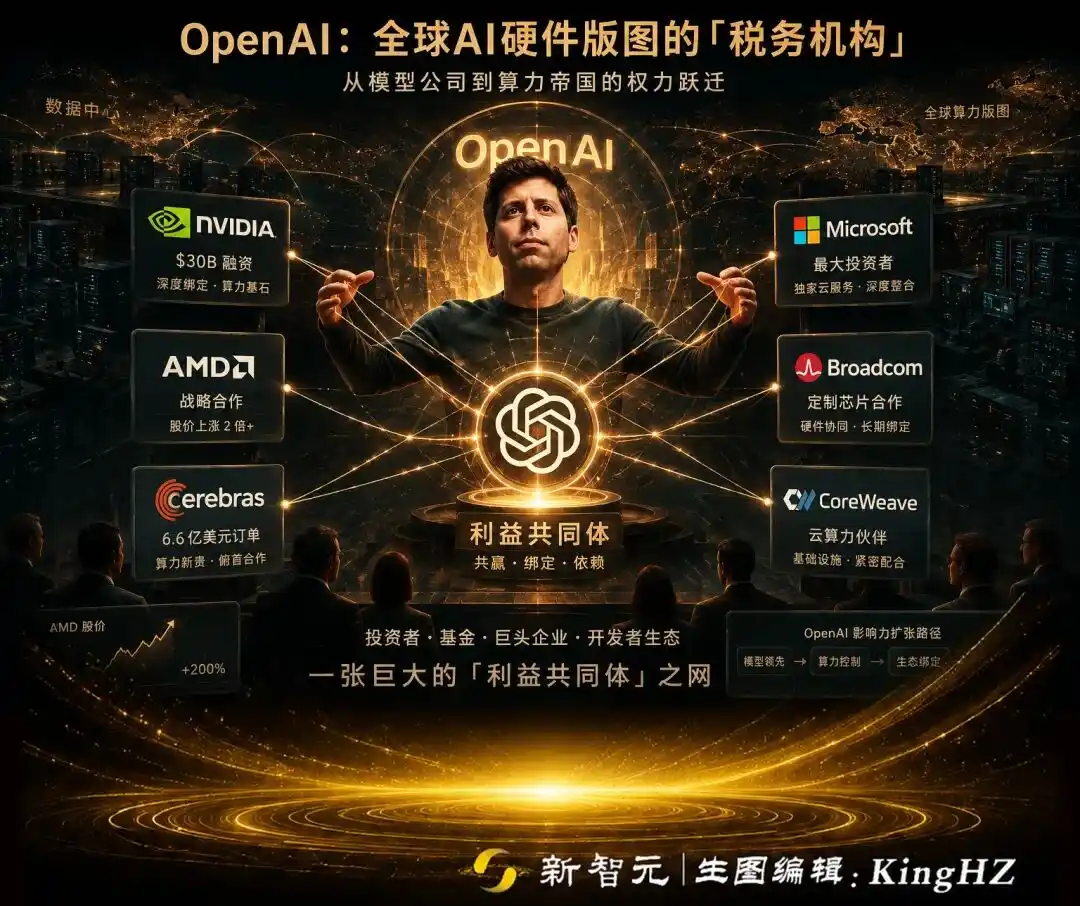
Last October, AMD's stock doubled after reaching a similar agreement with OpenAI; earlier, Nvidia was rumored to have deepened its ties with OpenAI through a $30 billion financing round.

A clear map of power is emerging: OpenAI is evolving from a software company into a global 'tax authority' over the AI hardware landscape.

Sam Altman's true ambition is not merely to acquire data centers for training and running its models, but to quietly expand the group of companies and investors who have a 'vested interest in OpenAI's success.'

He is weaving a vast web of an 'interest community'.
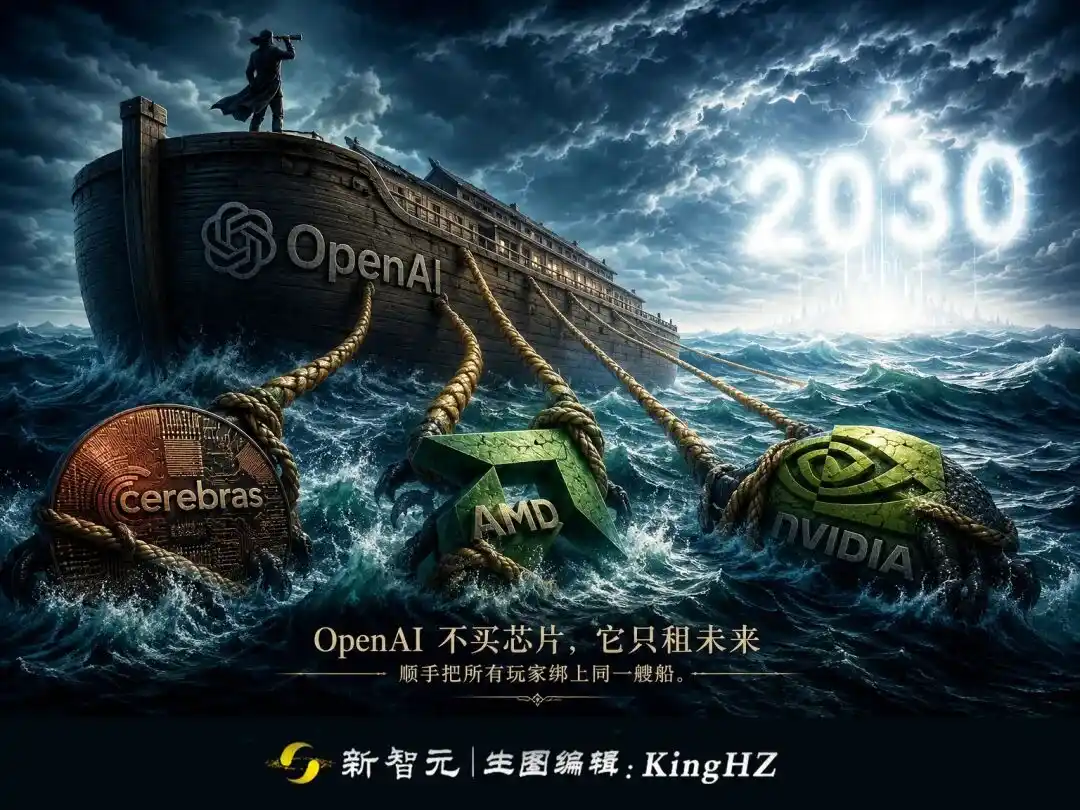
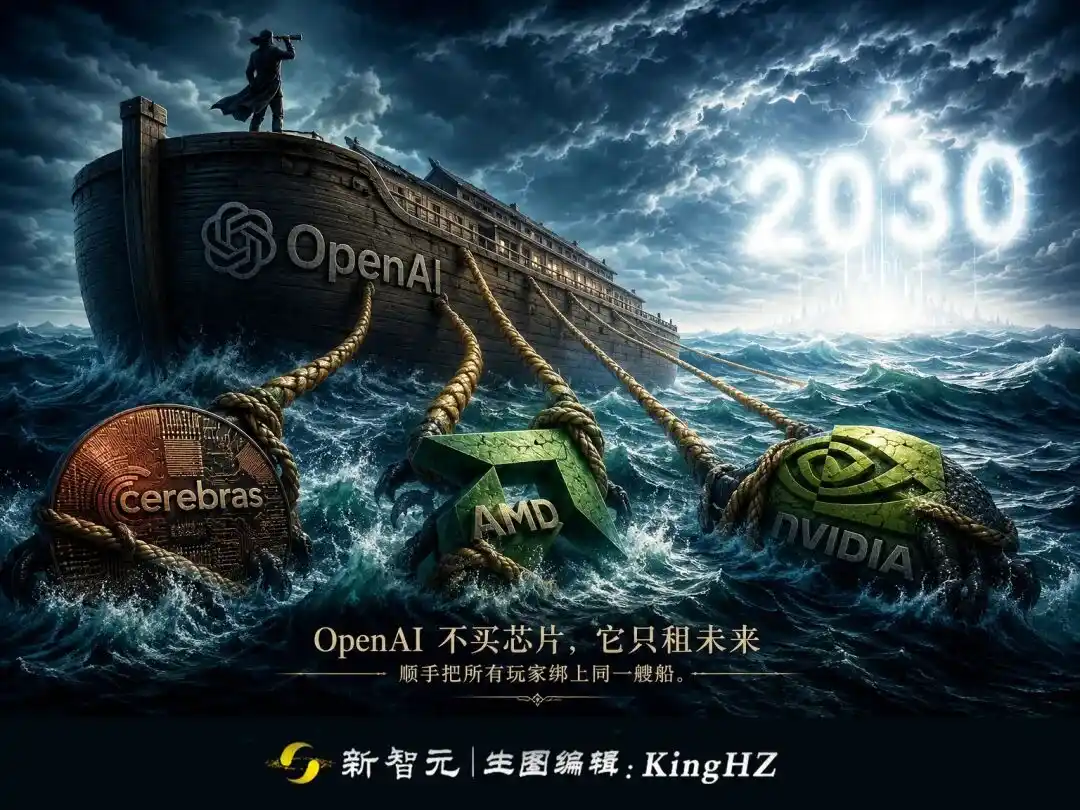
OpenAI doesn't buy chips; it only rents the future—and in the process, binds all players to the same ship.

For hardware vendors: Even with profits halved, obtaining the 'OpenAI certification' and a 15x P/S valuation is a worthwhile deal.

For Sam Altman: He not only secures the computational foundation for the next decade but also becomes a shareholder in all potential competitors.
This is the essence of 'Altmanomics': In the second half of the AI race, whoever defines the demand for models holds the 'power to tax' the underlying supply chain.

Can $48 Billion Buy a Seat at the Power Table?

This Thursday, Cerebras's IPO received 20 times oversubscription. The pricing range was raised to $150-$160 per share, implying a valuation of $48 billion, coinciding with semiconductor stocks rising 53% cumulatively from their March lows.
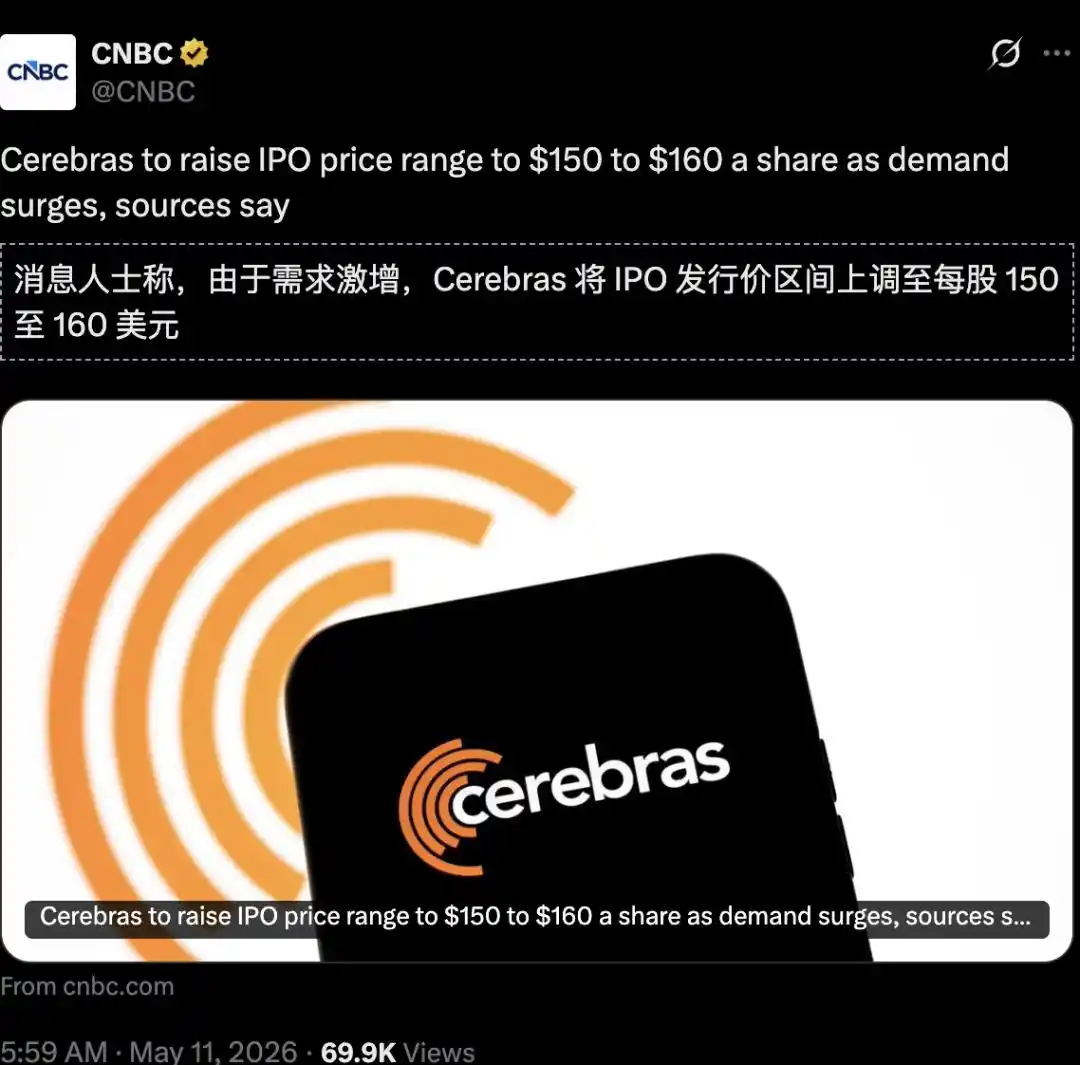
The capital market's frenzy is almost blind. They no longer care whether Cerebras lost $140 million last year or if its P/S ratio has already surpassed Nvidia's.

They are buying a kind of 'certainty'.

In the uncertain landscape of 2026, what identity tag is more certain than being a 'Core Partner of OpenAI'?

This is precisely the most intriguing aspect of this IPO. Cerebras's high valuation is essentially a market premium for the 'Altman endorsement'.

Conclusion: Sovereignty or Vassalage?

This 2026 listing marks the semiconductor industry's entry into a brutal era of stratification.

Future chip companies have only two paths:

Either, like Nvidia, rely on first-mover advantage to build their own ecological empire and become the rule-maker; or, like Cerebras, offer up half their soul in a high-stakes gamble for a ticket into the core circle.

If you cannot become a god, then become the most expensive offering.

This is not just a technological battle; it's a battle for sovereignty.

In every megawatt of electricity flows the 'tribute' from chipmakers to Silicon Valley's new overlord.

References:

https://x.com/FT/status/2054141078710768006

https://www.ft.com/content/3f77f8ad-16b8-4f97-ae55-0bd2e31122fa?syn-25a6b1a6=1

https://www.theinformation.com/newsletters/ai-agenda/startup-helping-openai-optimize-ai-cerebras-chips

https://www.morningstar.com/stocks/why-ai-chip-designer-cerebras-is-2026s-hottest-ipo-yet

This article is from the WeChat public account "Xin Zhi Yuan," author: Xin Zhi Yuan, editor: KingHZ


Трендовые криптовалюты

Связанные с этим вопросы

QWhat is the core technology and design philosophy behind Cerebras Systems' WSE-3 chip, and how does it differ from traditional chip designs?

ACerebras Systems' WSE-3 chip employs a radical design philosophy that contrasts with the traditional industry focus on miniaturization. Instead of shrinking components, it uses an entire 12-inch silicon wafer to create a single, massive chip. This 'brute-force' approach, described as 'trading space for time,' is aimed at eliminating the 'memory wall' bottleneck by providing immense on-chip memory bandwidth. It contains over 4 trillion transistors (19x more than NVIDIA's B200), 900,000 AI-optimized cores, and delivers 125 petaflops of AI computing power. Its key difference is its monolithic wafer-scale design versus the traditional multi-chiplet or discrete GPU designs, prioritizing high-speed data access for AI inference.

QWhat was the crucial strategic deal Cerebras made with OpenAI to enable its 2026 IPO, and what were the key terms?

AThe crucial deal was a multi-year agreement where Cerebras committed to supply 750 megawatts of computing capacity to OpenAI. In exchange for this massive, revenue-guaranteeing contract—valued at approximately $27 billion in revenue and $10 billion in gross profit over three years—Cerebras granted OpenAI warrants. Upon exercise, these warrants would give OpenAI a 10% equity stake in Cerebras, valued at around $5 billion based on the IPO's mid-range share price. This deal, framed as a 'ransom note' or 'tribute,' provided Cerebras with the financial credibility and market validation needed for a successful high-valuation IPO.

QHow does the article characterize the evolving power dynamic in the AI industry, particularly regarding OpenAI's role?

AThe article characterizes the power dynamic as a shift where OpenAI is evolving from a software company into a dominant 'tax authority' or 'feudal lord' over the global AI hardware landscape. By securing large, long-term compute capacity deals from hardware makers like Cerebras, AMD, and NVIDIA—often in exchange for equity or favorable terms—OpenAI is locking in its future compute foundation. More importantly, it is weaving a vast 'community of interest,' binding these suppliers to its success. This grants OpenAI 'taxation rights' over the hardware supply chain, as it defines model demand and controls access to the most lucrative market segments.

QWhat does the term 'Altmanomics' (Altman Economics) refer to in the context of this article?

AIn this article, 'Altmanomics' refers to the strategic and economic model pioneered by OpenAI's Sam Altman. Its essence is that in the later stages of the AI race, the entity that defines the demand for AI models gains the power to 'tax' the underlying hardware supply chain. Instead of merely purchasing chips, OpenAI 'rents the future' by making long-term capacity deals that often include equity stakes. This strategy allows OpenAI to secure its computational base at favorable rates while simultaneously making shareholders and partners out of potential hardware competitors, thereby consolidating its ecosystem power and ensuring alignment of interests.

QAccording to the article's conclusion, what two paths are available for semiconductor companies in the new AI era, as exemplified by NVIDIA and Cerebras?

AThe article concludes that semiconductor companies now face two distinct paths: 1) Become a rule-maker like NVIDIA, which uses first-mover advantage and ecosystem strength to establish its own empire and dictate distribution rules. 2) Become a vassal or 'high-value offering' like Cerebras, which trades a significant portion of its potential sovereignty and profits (through equity and deals) to a dominant AI platform (OpenAI) in exchange for a guaranteed, high-value ticket into the core industry circle. The choice is between maintaining sovereign control or becoming a strategically important, yet subordinate, partner to the new 'lords' of silicon.

Похожее

SpaceX, ИИ и XRP: Почему следующий перенос богатства может быть другим?

Финансовый мир вступает в фазу, ориентированную не на спекулятивные циклы, а на строительство новой экономической инфраструктуры. Ожидания публичного размещения акций SpaceX отражают поиск капиталом новых рубежей, таких как космическая инфраструктура, спутниковые сети и центры обработки данных. Это, наряду с развитием искусственного интеллекта (ИИ), формирует повышенный структурный спрос на промышленные товары. Блокчейн-технологии могут занять ключевую роль в этой новой системе не как спекулятивные активы, а как слой для расчетов в реальном времени. Активы, ориентированные на платежи и межсетевое взаимодействие, такие как XRP и XLM, могут стать важными для трансграничных расчетов и машинных платежей, что подчеркивается связями между их создателями и космической отраслью (например, Vast и SpaceX). Ключевой становится конвергенция ИИ и блокчейна. По мере того как автономные ИИ-агенты начинают совершать транзакции, растет потребность в инфраструктуре для мгновенных расчетов и управления идентификацией, которую могут обеспечить распределенные реестры. Четкое регулирование цифровых активов ускоряет институциональное внедрение. Таким образом, формируется картина структурного перехода: капитал направляется в космическую и ИИ-инфраструктуру, что стимулирует спрос на товары, а блокчейн-сети позиционируются как финансовый слой для расчетов между этими новыми системами.

marsbit34 мин. назад

SpaceX, ИИ и XRP: Почему следующий перенос богатства может быть другим?

marsbit34 мин. назад

Обратный отсчет до GPT-5.6: Прощай с иллюзией единого API, итерации вычислительной мощности не сравнятся с одним согласованием

В середине июня 2026 года ряд событий, включая ограничения для модели Fable 5, открытый исходный код GLM-5.2 и утечку информации о GPT-5.6, указывают на переломный момент в индустрии ИИ. Логика развития отрасли претерпевает существенные изменения: во-первых, «пригодность к использованию» становится важнее «передовых технологий», формируется «двухколейная» система сосуществования контролируемых закрытых и локальных открытых моделей; во-вторых, конкуренция смещается от «языкового интеллекта» к «пространственному интеллекту (моделям мира)», требующему огромных вычислительных мощностей; в-третьих, «независимость от модели» становится критически важной для разработчиков приложений для обеспечения непрерывности бизнеса в условиях транснациональных регуляторных рисков. Инцидент с Fable 5 (Anthropic), доступ к которой для неамериканских пользователей был ограничен через 72 часа после запуска, демонстрирует, что технологическое лидерство может быть ограничено нормативными требованиями. В ответ открытое сообщество, как показывает выпуск GLM-5.2 с лицензией MIT, предлагает стабильные, экономичные и локально развертываемые альтернативы, сокращающие затраты и снижающие зависимость. В свою очередь, OpenAI, судя по утечкам, фокусирует GPT-5.6 на развитии «пространственного интеллекта» и «моделей мира», пытаясь создать новое технологическое преимущество в областях, требующих высокой вычислительной мощности, таких как 3D-моделирование и робототехника. Ключевой вывод: в новой эре оценивать инфраструктуру ИИ необходимо не только по техническим показателям, но и по устойчивости к нормативным требованиям. Для разработчиков жизненно важно создавать архитектуры, не зависящие от конкретной модели, чтобы обеспечить быстрый переход между поставщиками и поддержание непрерывности бизнеса.

marsbit2 ч. назад

Обратный отсчет до GPT-5.6: Прощай с иллюзией единого API, итерации вычислительной мощности не сравнятся с одним согласованием

marsbit2 ч. назад

Закончится ли скоро «битва субсидий на токены» между ИИ-гигантами?

Токены ИИ, используемые в подписках, на самом деле сильно субсидируются: в дорогих тарифах стоимость потреблённых токенов может в 70 раз превышать абонентскую плату. Основные игроки, такие как OpenAI и Anthropic, активно привлекают инвестиции и готовятся к IPO, но их бизнес-модель сталкивается с фундаментальной проблемой — отсутствием «эффекта привязки» (lock-in) пользователей. В отличие от интернет-сервисов, таких как такси или доставка еды, токены легко заменяемы, и пользователи могут быстро переключиться на более дешёвый аналог. Билл Марис, основатель Google Ventures, отмечает, что Google, обладая огромной прибылью от рекламы, может снизить цену токенов на 80%, оказывая давление на конкурентов, которые зависят от внешнего финансирования. Это делает ценовую войну не средством достижения монополии, а скорее бесконечной «игрой на выживание», где цель — остаться за игровым столом. Вероятный сценарий — превращение токенов в стандартизированную инфраструктуру, подобную электричеству или интернет-трафику, где цены стремятся к себестоимости, а прибыль становится минимальной. Это означает, что эпоха крупных субсидий может продлиться, и пользователи продолжат получать мощные ИИ-сервисы по относительно низкой цене, но сами компании-разработчики вряд ли достигнут сверхвысокой прибыльности в долгосрочной перспективе.

marsbit2 ч. назад

Закончится ли скоро «битва субсидий на токены» между ИИ-гигантами?

marsbit2 ч. назад

За пределами поля: Игра на прибыль вокруг чемпионата мира

**За пределами поля: Игры на прибыль вокруг Чемпионата мира по футболу 2026** Чемпионат мира — это не только фестиваль для фанатов, но и глобальное окно для спекуляций. Турнир концентрирует внимание, эмоции и капитал, создавая целую экосистему для азартных игр. Основные сферы: 1. **Прогнозные рынки (Polymarket, Kalshi):** Набирают популярность, опережая традиционные букмекеров. Торговля контрактами на исходы событий привлекла миллиарды долларов, порождая истории о крупных выигрышах и потерях. 2. **Традиционные спортивные ставки:** Остаются основой с ожидаемым оборотом свыше $500 млрд. В США ставки на футбол временно становятся ключевым видом спорта для букмекерских платформ. 3. **Акции ("концептуальные акции"):** Котировки компаний, связанных с потреблением (например, корейские сети фастфуда, японские бренды), резко колеблются в зависимости от успехов национальных сборных, отражая настроения фанатов. 4. **Перепродажа билетов:** Рынок билетов превратился в арену для спекуляций. Цены на вторичном рынке сильно зависят от команд, матчей и локаций. Появились даже схемы продажи "права на покупку" билетов (FIFA RTB) и "короткие" продажи без наличия билета. 5. **Коллекционные предметы и мерч:** Ограниченные серии товаров (например, тематические футболки Нью-Йорка) и классические коллекционные предметы (наклейки Panini) становятся объектами перепродажи с высокой наценкой. Распространена и продажа поддельной атрибутики. 6. **Криптовалюты:** Волна мем-токенов на тему ЧМ на блокчейне Solana привлекла спекулянтов, но большинство проектов не имеют реальной ценности и являются схемами "накачки и сброса", ведущими к большим потерям. 7. **Информационные услуги:** Зарабатывают на потребности в данных для спекуляций. Примеры: сайты для отслеживания динамики цен на билеты (SeatSidekick) и платные Telegram-каналы с прогнозами на ставки. Итог: Пока на поле разыгрываются матчи, за его пределами разворачивается масштабная финансовая игра, где истинными победителями часто становятся не те, кто угадал счет, а те, кто вовремя понял, куда направляются внимание и деньги миллионов.

marsbit3 ч. назад

За пределами поля: Игра на прибыль вокруг чемпионата мира

marsbit3 ч. назад

Заявление о фонде Hyperliquid ETF привлекает внимание, поскольку нарратив HYPE набирает обороты на X

Сводка (на русском): Сообщение в X от AlphaOnChain от 20 июня 2026 года привлекло внимание к теме ETF на Hyperliquid (HYPE). В посте утверждается, что три ETF на HYPE, запущенные в мае 2026 года, уже аккумулировали совместные активы на сумму 158 миллионов долларов США. Согласно данным, крупнейшими продуктами являются ETF Bitwise HYPE (88 млн долларов) и 21Shares HYPE ETF (66 млн долларов). Этот слух подчеркивает растущий интерес рынка к альткойн-нарративу HYPE. Hyperliquid известен своей экосистемой, ориентированной на децентрализованную торговлю perpetual-контрактами и инфраструктуру бирж. Возможный приток средств в ETF-продукты может указывать на то, что институциональный и розничный спрос начинает смещаться за пределы биткойна и Ethereum в сторону более рискованных активов. Ключевая оговорка статьи заключается в необходимости проверки данных. Поскольку информация исходит из социальных сетей, а не из официальных заявлений эмитентов или данных фондов, к цифрам следует относиться с осторожностью. Публикация скорее отражает растущее внимание к нарративу Hyperliquid, а не является подтвержденным фактом. Для трейдеров важно это различие: краткосрочные движения могут быть вызваны ажиотажем в соцсетях, но устойчивый рост, как правило, требует подтвержденного спроса, ликвидности и развития экосистемы.

bitcoinist4 ч. назад

Заявление о фонде Hyperliquid ETF привлекает внимание, поскольку нарратив HYPE набирает обороты на X

bitcoinist4 ч. назад

Торговля

Спот
Фьючерсы

Популярные статьи

Как купить GODS

Добро пожаловать на HTX.com! Мы сделали приобретение Gods Unchained (GODS) простым и удобным. Следуйте нашему пошаговому руководству и отправляйтесь в свое крипто-путешествие.Шаг 1: Создайте аккаунт на HTXИспользуйте свой адрес электронной почты или номер телефона, чтобы зарегистрироваться и бесплатно создать аккаунт на HTX. Пройдите удобную регистрацию и откройте для себя весь функционал.Создать аккаунтШаг 2: Перейдите в Купить криптовалюту и выберите свой способ оплатыКредитная/Дебетовая Карта: Используйте свою карту Visa или Mastercard для мгновенной покупки Gods Unchained (GODS).Баланс: Используйте средства с баланса вашего аккаунта HTX для простой торговли.Третьи Лица: Мы добавили популярные способы оплаты, такие как Google Pay и Apple Pay, для повышения удобства.P2P: Торгуйте напрямую с другими пользователями на HTX.Внебиржевая Торговля (OTC): Мы предлагаем индивидуальные услуги и конкурентоспособные обменные курсы для трейдеров.Шаг 3: Хранение Gods Unchained (GODS)После приобретения вами Gods Unchained (GODS) храните их в своем аккаунте на HTX. В качестве альтернативы вы можете отправить их куда-либо с помощью перевода в блокчейне или использовать для торговли с другими криптовалютами.Шаг 4: Торговля Gods Unchained (GODS)С легкостью торгуйте Gods Unchained (GODS) на спотовом рынке HTX. Просто зайдите в свой аккаунт, выберите торговую пару, совершайте сделки и следите за ними в режиме реального времени. Мы предлагаем удобный интерфейс как для начинающих, так и для опытных трейдеров.

305 просмотров всегоОпубликовано 2024.05.09Обновлено 2026.06.02

Как купить GODS

Обсуждения

Добро пожаловать в Сообщество HTX. Здесь вы сможете быть в курсе последних новостей о развитии платформы и получить доступ к профессиональной аналитической информации о рынке. Мнения пользователей о цене на GODS (GODS) представлены ниже.

活动图片