SEI jumps 10% after zero-fee rollout: But this rise may not last

ambcryptoPublished on 2026-04-02Last updated on 2026-04-02

Abstract

Sei's price surged over 10% in 24 hours following the integration of zero-fee swaps on platforms like MetaMask, Backpack, and YeiFinance, which removed gas costs and improved accessibility. Trading volume increased by 258%, indicating strong organic participation. However, SEI remains within a descending channel, facing resistance near $0.062 and $0.070. While RSI rebounded from oversold conditions, it stayed below the midline, showing limited bullish strength. Additionally, Total Value Locked (TVL) dropped 7.32% to $43.2 million, contrasting with the price increase and raising concerns about the rally's sustainability. The current structure suggests potential downside movement toward $0.048 before any stable upward continuation.

Sei has integrated zero-fee swaps across MetaMask, Backpack, and YeiFinance, removing gas costs and lowering barriers for users. This shift improves accessibility, which was directly reflected in market behavior as SEI gained over 10% in 24 hours.

Trading volume has surged by more than 258%, showing a sharp rise in participation rather than isolated buying. Users can now interact across multiple wallets without friction, showing that transaction activity supported organic demand rather than speculative spikes.

Can SEI break descending pressure?

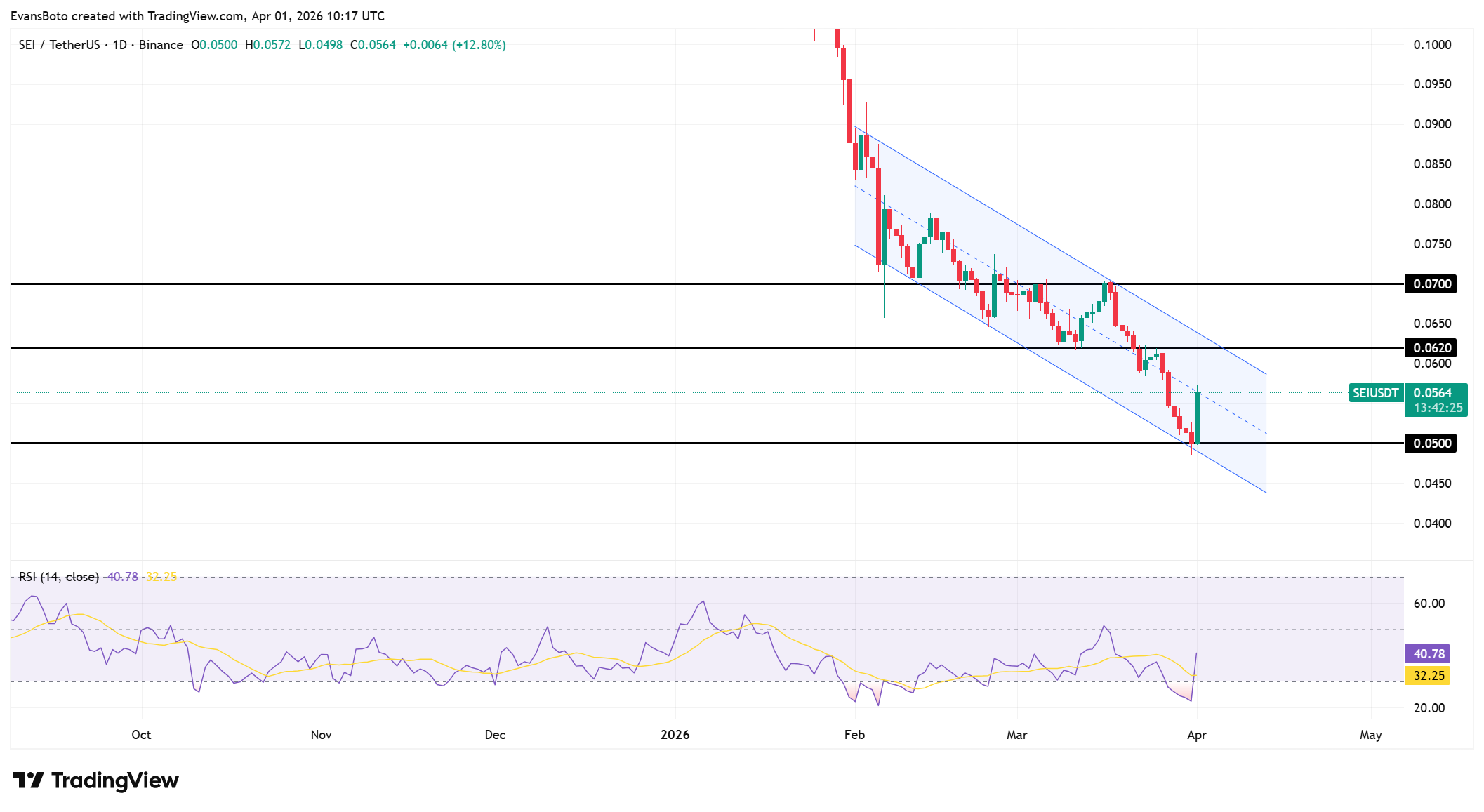
SEI rebounded from the $0.050 support level after an extended decline, showing clear buyer interest at this demand zone.

The token traded within a descending channel at the time of writing, which continued to define the broader structure.

Although the rebound has pushed SEI toward mid-range levels, resistance near $0.062 and $0.070 still capped upside movement. This structure reflected controlled recovery rather than a confirmed reversal.

As price attempted to climb, each rejection within the channel reinforced SEI’s bearish pressure. However, holding above $0.050 will prevent a further breakdown.

A sustained push beyond the channel would be required to shift structure, yet current positioning still reflects compression under resistance.

RSI has rebounded from oversold conditions and sat around 40.78 at the time of writing, reflecting easing sell pressure after the recent drop. However, RSI remained below the midline, which limited confirmation of bullish strength.
Source: TradingView

TVL drop questions rally strength

SEI’s Total Value Locked stood at $43.2 million at press time after declining by 7.32% over the past 24 hours. This drop contrasted sharply with the rising price and increased trading activity.

While price and volume suggested growing interest, declining TVL indicated that capital within the network had reduced. This divergence raised concerns about the sustainability of the current move.

If network value does not expand alongside price, the rally risks relying on short-term participation rather than long-term commitment. However, accessibility improvements from zero-fee swaps could eventually attract new liquidity.

For now, the mismatch between TVL and price reflects an imbalance that weakens the foundation of the ongoing recovery.
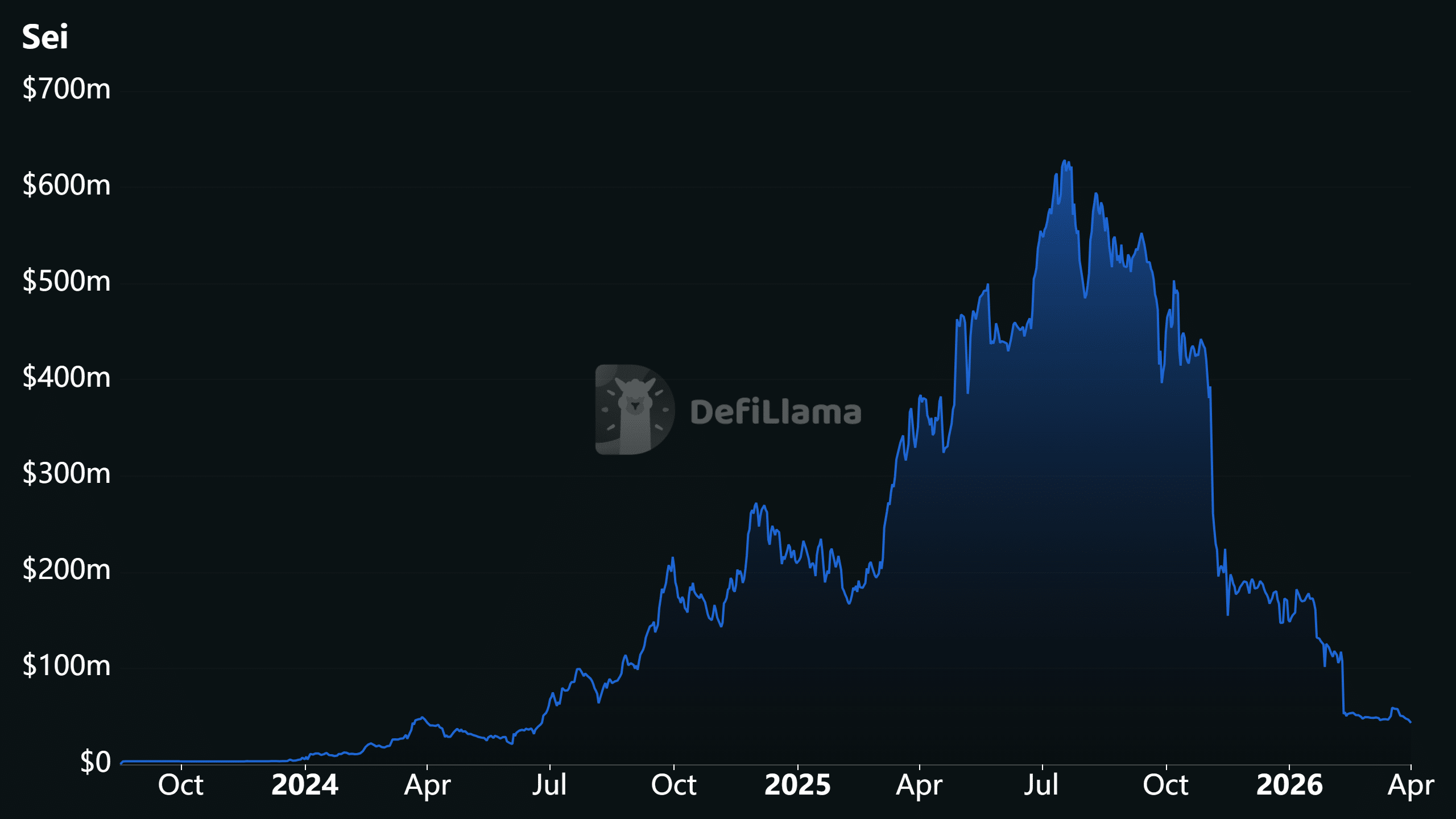
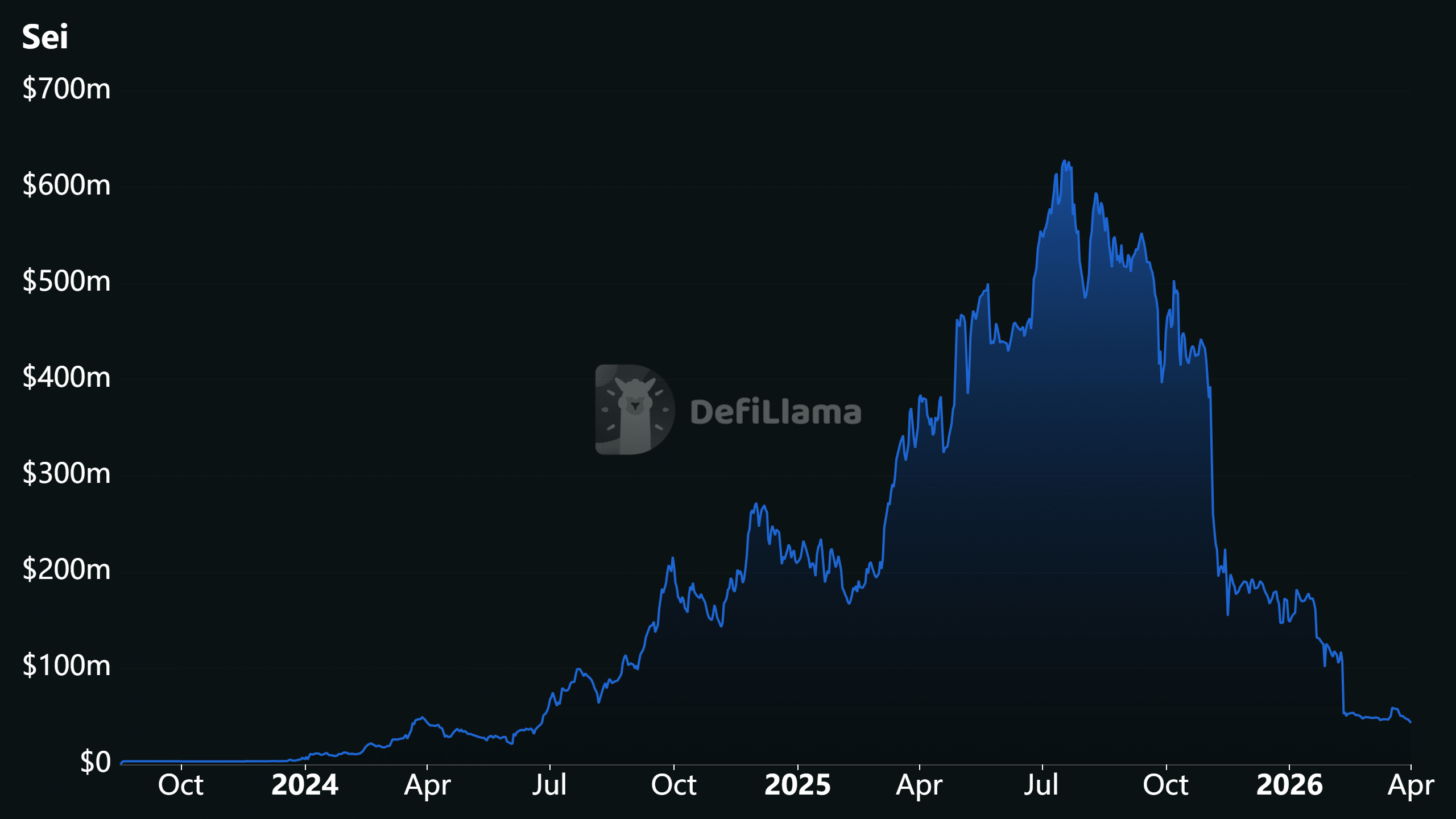
Source: DefiLlama

To sum up, Sei’s utility expansion has improved accessibility and driven strong participation, yet structural pressure remains intact within the descending channel.

The RSI recovery supports a short-term bounce, though it does not confirm dominance. Meanwhile, declining TVL has weakened the rally’s foundation.

As a result, the current setup favors a downside sweep toward $0.048 before any stable upward continuation.


Final Summary

  • Zero-fee utility improves demand structure, yet price still reacts to liquidity imbalances rather than sustained capital inflows.
  • LIT’s recovery remains fragile despite improving short-term participation signals.

Related Questions

QWhat was the immediate market reaction to Sei's rollout of zero-fee swaps on major wallets?

AThe immediate market reaction was positive, with the price of SEI gaining over 10% in 24 hours and trading volume surging by more than 258%.

QAccording to the technical analysis, what key price level must SEI hold above to prevent a further breakdown?

ASEI must hold above the $0.050 support level to prevent a further breakdown.

QWhat concerning on-chain metric diverged from the price increase, raising questions about the rally's strength?

AThe Total Value Locked (TVL) on the network declined by 7.32% to $43.2 million, which contrasted with the rising price and created a divergence that weakened the rally's foundation.

QWhat does the RSI level of 40.78 at the time of writing indicate about the market momentum?

AAn RSI of 40.78 indicates that sell pressure has eased after recent oversold conditions, but it remains below the midline (50), limiting confirmation of strong bullish momentum.

QWhat is the overall conclusion of the article regarding the sustainability of SEI's price rise?

AThe overall conclusion is that the current setup is fragile and favors a downside sweep toward $0.048 before any stable upward continuation can occur, due to structural bearish pressure and a decline in TVL.

Related Reads

OpenAI's Hyperliquid Pre-IPO Pricing Venture: Why Did It Last Only Half a Year?

The article discusses the rise and fall of Pre-IPO pricing markets on the Hyperliquid blockchain. Trade.xyz, an anonymous team, successfully built the largest pre-market for SpaceX (SPCX) by launching a contract with a clear anchor: the eventual Nasdaq listing price. This provided inherent price stability and validation. In contrast, Ventuals, a team backed by Paradigm, failed despite holding exclusive contracts for highly sought-after companies like OpenAI and Anthropic. Its key mistake was its pricing mechanism. For companies with no near-term IPO date, Ventuals' oracle relied partly on opaque private market transactions and, critically, partly on its own contract's moving average price. This created a self-referential feedback loop where prices were artificially propped up and detached from genuine supply and demand, leading to illiquid markets. Ventuals shut down after nine months, settling positions at final prices of $1,341.80 for OpenAI and $1,618.90 for Anthropic. Ironically, some employees and late-stage investors of these very companies reportedly used these flawed Ventuals prices for valuation reference, highlighting the acute demand for any price signal in illiquid private markets. The article concludes that while demand for pre-IPO trading is real and growing, with players like Coinbase now entering the space, the fundamental challenge remains: without a public listing to provide a definitive price anchor, these markets struggle to establish truly accurate and liquid pricing. The need for a transparent, self-correcting market is the critical lesson from Ventuals' failure.

marsbit17m ago

OpenAI's Hyperliquid Pre-IPO Pricing Venture: Why Did It Last Only Half a Year?

marsbit17m ago

With Daily Active Users Reaching 3-4 Times That of the Industry's Second Place, Which Crack in the Office Agent Market Has Tencent's WorkBuddy Torn Open?

Tencent's AI office assistant, WorkBuddy, has achieved daily active users (DAU) 3-4 times that of the industry's second-place product, primarily driven by non-technical users like HR, operations, and administrative staff. Its rapid growth, starting with a public beta in March 2026, highlights a key strategic divergence from competitors like OpenAI's Codex and Anthropic's Claude Code. Unlike those tools, which originated as developer-focused assistants (in command lines or IDEs) and are now expanding towards office scenarios, WorkBuddy was built from the ground up for non-technical office workers. Its development was user-driven, initiated after腾讯云's team observed non-technical employees using their CodeBuddy coding tool for general tasks. WorkBuddy's design is defined by three core decisions aimed at lowering barriers: 1) Using natural language instead of technical concepts, so users describe their goal without needing to understand prompts or agents. 2) Providing pre-packaged "Skill" templates for common office tasks like data processing, content creation, and research. 3) Natively integrating into existing腾讯 ecosystems like腾讯 Docs and WeChat, making the agent a seamless part of the user's workflow rather than a separate tool. This "scenario encapsulation" approach, prioritizing the shortest path for users to get work done, contrasts with the "underlying capability" focus of Codex and Claude, which offer more flexibility but require more technical setup. Analysts confirm WorkBuddy's leading market position in China by mid-2026, with massive user and request growth following its launch. Recognizing the same trend of surging non-technical adoption, OpenAI and Anthropic are now pivoting their products with features like role-based plugins (Codex) and a simplified desktop interface (Claude Cowork). However, adapting tools built for developers requires significant changes to interaction models and integrations. WorkBuddy currently holds an estimated six-month lead in delivering a complete solution for non-technical office users. Its recently launched enterprise version aims to solidify this advantage. The competition underscores two valid paths: embedding agent capabilities directly into familiar work environments versus building powerful, general-purpose agents that users must learn to access. WorkBuddy's early success demonstrates the effectiveness of the former strategy for mainstream office adoption.

marsbit26m ago

With Daily Active Users Reaching 3-4 Times That of the Industry's Second Place, Which Crack in the Office Agent Market Has Tencent's WorkBuddy Torn Open?

marsbit26m ago

Trading

Spot
Futures

Hot Articles

How to Buy SEI

Welcome to HTX.com! We've made purchasing Sei Network (SEI) simple and convenient. Follow our step-by-step guide to embark on your crypto journey.Step 1: Create Your HTX AccountUse your email or phone number to sign up for a free account on HTX. Experience a hassle-free registration journey and unlock all features.Get My AccountStep 2: Go to Buy Crypto and Choose Your Payment MethodCredit/Debit Card: Use your Visa or Mastercard to buy Sei Network (SEI) instantly.Balance: Use funds from your HTX account balance to trade seamlessly.Third Parties: We've added popular payment methods such as Google Pay and Apple Pay to enhance convenience.P2P: Trade directly with other users on HTX.Over-the-Counter (OTC): We offer tailor-made services and competitive exchange rates for traders.Step 3: Store Your Sei Network (SEI)After purchasing your Sei Network (SEI), store it in your HTX account. Alternatively, you can send it elsewhere via blockchain transfer or use it to trade other cryptocurrencies.Step 4: Trade Sei Network (SEI)Easily trade Sei Network (SEI) on HTX's spot market. Simply access your account, select your trading pair, execute your trades, and monitor in real-time. We offer a user-friendly experience for both beginners and seasoned traders.

2.5k Total ViewsPublished 2024.03.29Updated 2026.06.02

How to Buy SEI

Discussions

Welcome to the HTX Community. Here, you can stay informed about the latest platform developments and gain access to professional market insights. Users' opinions on the price of SEI (SEI) are presented below.

活动图片