Resolv exploit triggers USR depeg after $80M uncollateralized mint

ambcryptoPublished on 2026-03-23Last updated on 2026-03-23

Abstract

Resolv protocol was exploited due to a private key compromise, leading to an unauthorized mint of approximately $80M in unbacked USR stablecoins. This inflated the total supply by 71M tokens, causing a severe depeg—USR fell 56% to around $0.19. The team paused contracts, burned 9M of the attacker’s tokens, and confirmed that underlying collateral remains intact with only $0.5M in losses from redemptions. Recovery efforts include allowlisted redemptions and tracing illicit tokens. The incident highlights risks from over-reliance on off-chain controls in DeFi minting mechanisms.

Resolv has paused its protocol after a private key compromise enabled a malicious actor to mint approximately $80M in uncollateralized USR. This triggered a sharp depeg and raised concerns about the stablecoin’s integrity.

In an update shared, the team said the attacker gained unauthorized access to its infrastructure and minted new USR tokens without backing. Smart contracts were quickly paused, and around 9M USR held by the attacker has since been burned.

Resolv stated that its underlying collateral was not directly compromised. Also, the only confirmed loss so far is roughly $0.5M in redemptions processed before the pause.

Exploit inflates USR supply rather than draining funds

Unlike typical DeFi exploits that drain protocol funds, the Resolv incident centers on supply inflation.

Before the incident, around 102M USR was in circulation. Following the exploit, an additional ~71M USR was minted without collateral. This effectively diluted the backing of the stablecoin.

This pushed total supply far above the value of the protocol’s assets, altering the relationship between supply and collateral.

The team said the exploit resulted from a compromised private key tied to infrastructure access, rather than a failure of its underlying collateral system.

Design assumptions exposed in minting process

While Resolv attributed the breach to unauthorized access, the incident has drawn attention to how minting authority was structured.

The exploit was made possible because a privileged role could authorize token issuance without sufficient on-chain validation of collateral backing.

This meant that once access was obtained, large amounts of USR could be minted without checks tied to deposited assets.

Such architecture relies on trusted off-chain controls to enforce limits — an assumption that can break down if those controls are compromised.

USR loses peg as market confidence drops

Market reaction to the exploit was swift, with USR losing its dollar peg.

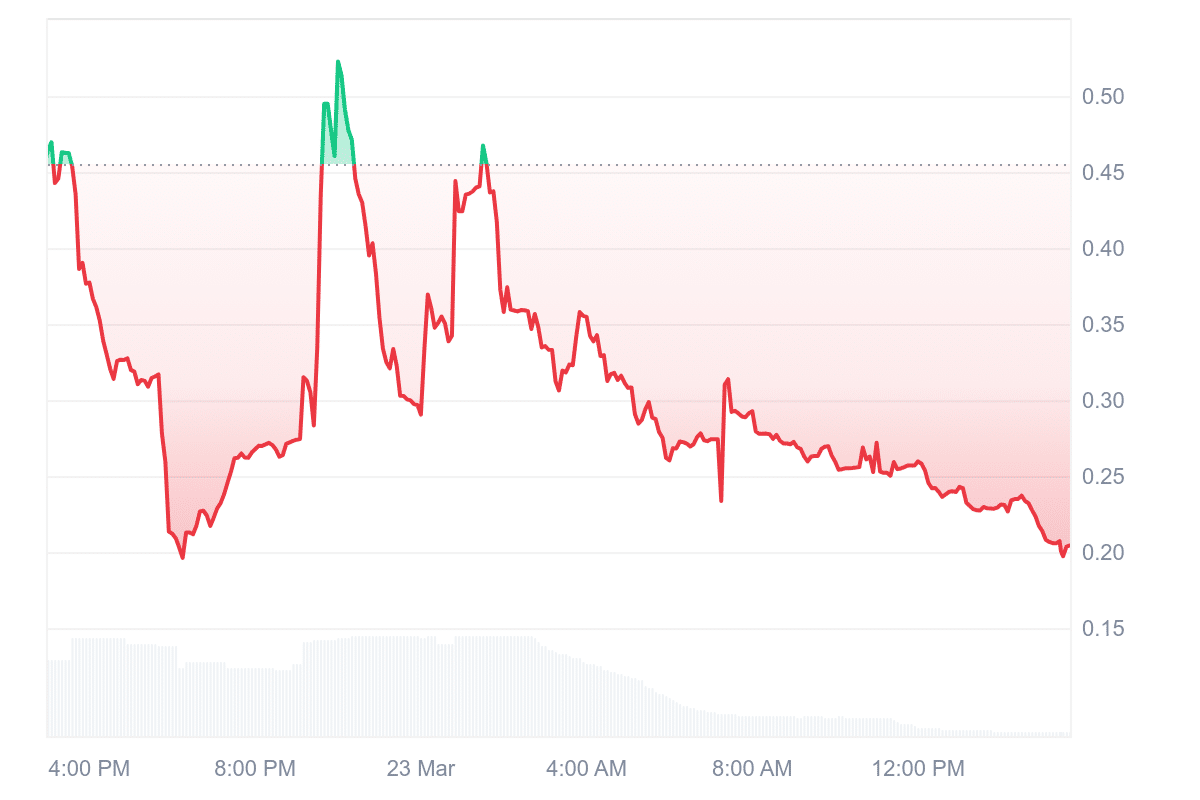
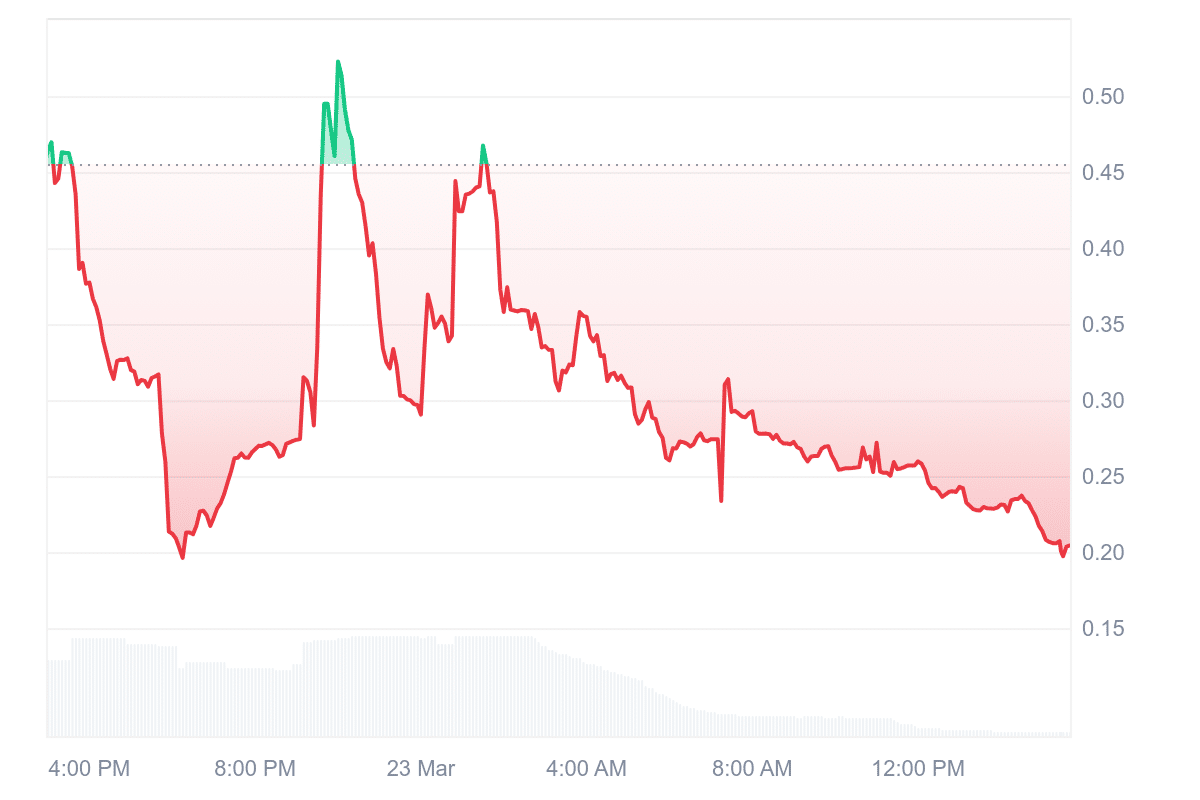
At the time of writing, USR was trading near $0.19, down more than 56% over 24 hours, according to CoinMarketCap data. The sharp decline reflects a repricing of the token as supply expanded beyond its collateral base.
Source: CoinMarketCap

Trading activity has also weakened significantly, with volumes dropping as users exit positions or avoid exposure during the recovery process.

Recovery efforts underway as redemptions planned

Resolv said it is preparing to enable redemptions for pre-incident USR holders, starting with allowlisted users.

The protocol currently holds approximately $141M in assets, and the team is working with partners, analytics firms, and law enforcement to trace and contain illicitly minted tokens.

Users have been advised not to trade USR or related assets during the recovery phase. Post-exploit activity could impact the outcome of the process.

Stablecoin integrity under scrutiny

The incident highlights a broader risk in DeFi systems where critical safeguards depend on off-chain controls rather than enforced on-chain limits.

Although Resolv’s collateral pool remains intact, the ability to mint unbacked tokens has undermined confidence in the system’s accounting.

As the situation unfolds, the key challenge will be restoring trust in USR’s backing and stabilizing its supply.


Final Summary

  • The Resolv exploit inflated USR supply by $80M without draining collateral, exposing risks tied to off-chain control mechanisms.
  • USR’s sharp depeg reflects a loss of market confidence, with recovery now dependent on isolating illicit supply and restoring backing integrity.


Trending Cryptos

Related Questions

QWhat was the primary method used by the attacker to exploit the Resolv protocol?

AThe attacker gained unauthorized access to Resolv's infrastructure through a compromised private key, which allowed them to mint approximately $80M in uncollateralized USR tokens.

QHow did the exploit mechanism in this incident differ from a typical DeFi attack?

AUnlike typical DeFi exploits that drain protocol funds, this incident centered on supply inflation by minting new, unbacked tokens rather than stealing existing collateral.

QWhat was the immediate market consequence of the exploit on the USR stablecoin?

AThe USR stablecoin lost its dollar peg, trading near $0.19 at the time of writing, which represents a decline of more than 56% over 24 hours.

QWhat key vulnerability in the protocol's design did this exploit expose?

AThe exploit exposed a vulnerability where a privileged role could authorize token issuance without sufficient on-chain validation of collateral backing, relying instead on trusted off-chain controls.

QWhat are the main steps Resolv is taking for recovery according to the article?

AResolv has paused the protocol, burned approximately 9M USR held by the attacker, is preparing to enable redemptions for pre-incident holders, and is working with partners and law enforcement to trace illicitly minted tokens.

Related Reads

Goldman Sachs Comments on SanDisk and Western Digital Earnings: Strong Performance, But Market Expectations Too High

Highsmith commented on Sandisk and Western Digital's earnings reports, noting that while both companies delivered strong quarterly results, excessively high market expectations are likely to prevent their stock prices from benefiting. The firm anticipates downward pressure on both stocks following the earnings releases. The core issue, according to Highsmith, is not a deterioration in fundamentals but rather market expectations that have overshot reality. Despite impressive beats on revenue, gross margin, and EPS for the quarter, guidance that simply meets or falls slightly below lofty expectations is being interpreted negatively. For Western Digital, Q2 revenue was largely in line with forecasts, while gross margin and EPS beat estimates. However, its Q3 revenue guidance midpoint matched consensus, and gross margin/EPS guidance was only slightly above. Highsmith views this as "not surprising enough" given pre-earnings optimism, maintaining a Neutral rating and a $650 price target. Sandisk's Q2 results significantly exceeded consensus for revenue and EPS. However, its Q3 guidance disappointed, with revenue and gross margin midpoints below Highsmith's forecasts and consensus. Although the stock has declined ~40% from its June peak, Highsmith believes the below-consensus guidance will lead to further pressure, while maintaining a Buy rating and a $2,200 target due to longer-term potential. Highsmith also warns of a negative spillover effect on Micron Technology's stock due to its similar end-market exposure to Sandisk.

marsbit34m ago

Goldman Sachs Comments on SanDisk and Western Digital Earnings: Strong Performance, But Market Expectations Too High

marsbit34m ago

After the Lending Markets Disappear, What's Left for These Public Chains?

"The Lending Market Vanishes: What Remains for These Blockchains?" Last week, Aave announced the closure of its lending markets on six blockchains where each generated less than $5,000 in quarterly revenue. This move highlights a critical trend: while the DeFi lending sector is growing overall, it is becoming highly concentrated on a few leading chains like Ethereum, Base, and Arbitrum. The article analyzes the cascading effects when a major lending protocol like Aave exits a chain. Past examples, such as Harmony Protocol and Fantom (later rebranded as Sonic), demonstrate that losing core lending infrastructure leads to a complete collapse of the credit ecosystem. This is because a functional lending market relies on a costly, interconnected stack of services—including reliable price oracles (often maintained by the largest protocol), deep DEX liquidity for liquidations, and stablecoin issuers willing to support native minting and redemption. Once the primary lending demand disappears, maintaining this infrastructure becomes commercially unviable, triggering an exodus of other service providers. The six chains Aave is leaving (including Soneium, Aptos, zkSync, and Scroll) are in an even weaker position than Harmony or Fantom were. They never developed substantial native lending demand despite significant initial funding. Aave's departure will likely accelerate the withdrawal of oracle providers, market makers, and stablecoin issuers, as their business cases depend on a functioning credit market. This creates a self-reinforcing cycle of centralization, where resources and activity consolidate on the most viable chains. The dilemma mirrors challenges in traditional finance, such as global banks withdrawing correspondent banking services from small countries due to high fixed compliance costs. However, unlike the traditional system where institutions like the World Bank can provide subsidies, there is no such safety net in the decentralized crypto space. The key takeaway is that while launching a new blockchain is cheap, operating a full-featured, sustainable credit infrastructure on it is extremely expensive. Aave has now set a minimum annual revenue threshold of $2 million for new chain deployments, roughly covering these fixed costs. The future for many smaller chains may be a fragmented ecosystem with flawed, unofficial forks of major protocols, or they may be left with nothing at all as DeFi lending continues its aggressive consolidation.

marsbit38m ago

After the Lending Markets Disappear, What's Left for These Public Chains?

marsbit38m ago

Trading

Spot

Hot Articles

How to Buy RESOLV

Welcome to HTX.com! We've made purchasing Resolv (RESOLV) simple and convenient. Follow our step-by-step guide to embark on your crypto journey.Step 1: Create Your HTX AccountUse your email or phone number to sign up for a free account on HTX. Experience a hassle-free registration journey and unlock all features.Get My AccountStep 2: Go to Buy Crypto and Choose Your Payment MethodCredit/Debit Card: Use your Visa or Mastercard to buy Resolv (RESOLV) instantly.Balance: Use funds from your HTX account balance to trade seamlessly.Third Parties: We've added popular payment methods such as Google Pay and Apple Pay to enhance convenience.P2P: Trade directly with other users on HTX.Over-the-Counter (OTC): We offer tailor-made services and competitive exchange rates for traders.Step 3: Store Your Resolv (RESOLV)After purchasing your Resolv (RESOLV), store it in your HTX account. Alternatively, you can send it elsewhere via blockchain transfer or use it to trade other cryptocurrencies.Step 4: Trade Resolv (RESOLV)Easily trade Resolv (RESOLV) on HTX's spot market. Simply access your account, select your trading pair, execute your trades, and monitor in real-time. We offer a user-friendly experience for both beginners and seasoned traders.

5.4k Total ViewsPublished 2025.06.11Updated 2026.06.02

How to Buy RESOLV

Discussions

Welcome to the HTX Community. Here, you can stay informed about the latest platform developments and gain access to professional market insights. Users' opinions on the price of RESOLV (RESOLV) are presented below.

活动图片