Barry Sternlicht Says U.S. Crypto Regulations Are Blocking Starwood’s Real Estate Tokenization Plans

TheNewsCryptoPublished on 2026-02-19Last updated on 2026-02-19

Abstract

Barry Sternlicht, founder and CEO of Starwood Capital, stated that his firm is prepared to tokenize real estate but is being blocked by unclear U.S. crypto regulations. Speaking at the World Liberty Forum, he described tokenization—converting physical asset ownership into digital tokens on a blockchain—as a "fantastic" innovation that represents the future of finance. It enables fractional ownership, improves liquidity, increases transparency, and allows smaller investors to participate. However, Sternlicht emphasized that regulatory uncertainty is the major obstacle preventing large firms from entering the market. Deloitte estimates that up to $4 trillion in real estate could be tokenized by 2035, signaling significant potential growth if clear regulations are established.

Barry Sternlicht, who was the founder and CEO of Starwood Capital, says his company is ready to tokenize real-world assets, but U.S. regulations are blocking it. His company manages more than $125 billion in assets. He shared his plans on RWA and made comments on the current U.S. rules on crypto at the World Liberty Forum in Florida.

What Tokenization means

Tokenization is a process of turning the ownership of physical assets into digital tokens in the blockchain. Instead of buying an entire building, an investor could buy a small portion in a digital share that can be traded more easily. Supporters say tokenization for the large firms could make it easier to raise money and allow small investors to participate. It also reduces the paperwork and improves transparency.

Currently, the U.S. has not fully adopted tokenization in real estate. Consulting firm Deloitte estimates that $4 trillion worth of real estate could be tokenized by 2035, and Proppy has also announced a plan to expand its blockchain-based real estate services. In 2024, less than $0.3 trillion of real estate was tokenized, which signals that the market could grow significantly over the next decade.

According to Sternlicht, he described tokenization as “fantastic” and said it represents the future of finance. He compared tokenization to artificial intelligence but said it is still at an early stage of development. He said the biggest challenge is the lack of clear U.S. regulation around digital assets and tokenized securities, which creates uncertainty for large financial firms.

Sternlich’s statement shows that the U.S. regulations are the major issue that blocks large firms from entering the real estate tokenization. If the U.S. lawmakers provide clear rules, then tokenized RWA could become a major market in the upcoming years.

Highlighted Crypto News:

CoinFello Unveils AI Smart Contract Agent at ETHDenver with BuffiBot Preview

TagsBlockchainCryptocurrencyUS crypto

Trending Cryptos

Related Questions

QWhat is Barry Sternlicht's main concern regarding real estate tokenization in the U.S.?

ABarry Sternlicht's main concern is that the lack of clear U.S. regulations around digital assets and tokenized securities is blocking large financial firms, including his company Starwood Capital, from entering the real estate tokenization market.

QHow does tokenization work for real estate assets?

ATokenization is the process of converting ownership of physical real estate assets into digital tokens on a blockchain. This allows investors to buy small digital shares of a property rather than the entire building, making it easier to trade, raise funds, and enable participation from small investors while reducing paperwork and improving transparency.

QWhat is the estimated potential value of tokenized real estate by 2035 according to Deloitte?

AConsulting firm Deloitte estimates that up to $4 trillion worth of real estate could be tokenized by 2035.

QHow much real estate was tokenized in 2024, and what does this indicate?

AIn 2024, less than $0.3 trillion of real estate was tokenized, which indicates significant growth potential for the market over the next decade.

QWhat did Sternlicht compare tokenization to, and what stage of development did he say it is in?

ASternlicht compared tokenization to artificial intelligence (AI) but stated that it is still at an early stage of development.

Related Reads

CATL Invests in a 00s Graduate from Harbin Institute of Technology

Contemporary Amperex Technology Co., Limited (CATL) has exclusively invested in the Pre-A round of RoboParty, a company founded by 22-year-old Huang Yi. A former student at Harbin Institute of Technology, Huang built a bipedal humanoid robot in his dorm room and later dropped out to launch RoboParty in Shanghai. The company focuses on developing a fully open-source platform for humanoid robots, combining self-developed hardware, operating systems (Party OS), and foundational models. RoboParty's strategy emphasizes open-source collaboration to accelerate development and build a developer ecosystem, positioning itself as foundational infrastructure for embodied AI. Since its 2025 founding, the team—composed largely of top-tier university graduates—has secured six funding rounds in eight months, with investors including Matrix Partners, Xiaomi, and now CATL. This investment by CATL's corporate venture arm signals strong industry confidence in RoboParty's potential for real-world manufacturing and complex scenarios. Huang Yi prioritizes technological excellence and developer community growth over rapid commercialization. The company has already garnered significant interest from developers and research institutions globally. With a focus on continuous, rapid iteration and open innovation, RoboParty aims to prove the versatility of humanoid robots and drive the field toward an open-source future.

marsbit3m ago

CATL Invests in a 00s Graduate from Harbin Institute of Technology

marsbit3m ago

Will SpaceX's First Quarterly Report Rescue Its Stock Price Under the Pressure of 1.2 Billion Shares Unlocking?

SpaceX is set to release its first quarterly earnings report since going public, a key test for its stock which has declined 20% from its IPO price. Approximately 9.12 billion shares are set to unlock on August 6, with an additional 3.19 billion following a week later, creating potential selling pressure from early investors. A strong report may be the only catalyst to reverse the downtrend. The report will cover three segments: Space, Connectivity (Starlink), and AI. The AI business, centered on the merged xAI, is the biggest uncertainty. While it generated $818 million in revenue last quarter, it also reported a $2.5 billion operating loss and $7.7 billion in capital expenditures. New data center rental agreements with Anthropic and Google, particularly the substantial $1.25 billion monthly deal with Anthropic, add significant revenue variability this quarter. Investors await guidance on AI's future outlook and the timeline for launching AI computing satellites via Starship. Starlink remains the stable profit driver, ending last quarter with 10.3 million subscribers. Key metrics will be user growth, average revenue per user (ARPU), and enterprise/government contract backlogs. The Space segment, which posted a $657 million operating loss last quarter, will be scrutinized for updates on Starship development following its 13th test flight and the pace of Falcon 9 launches, many of which support internal Starlink deployment. Wall Street expects Q2 revenue of around $6.9 billion and EBITDA of $2.1 billion. However, as this is the first earnings report, analyst forecasts lack a historical baseline and could see significant variance. With a current market cap of ~$1.4 trillion and a high valuation, the market's reaction post-earnings will hinge on the report's strength, the magnitude of post-lockup selling, and ongoing investor concerns.

marsbit3m ago

Will SpaceX's First Quarterly Report Rescue Its Stock Price Under the Pressure of 1.2 Billion Shares Unlocking?

marsbit3m ago

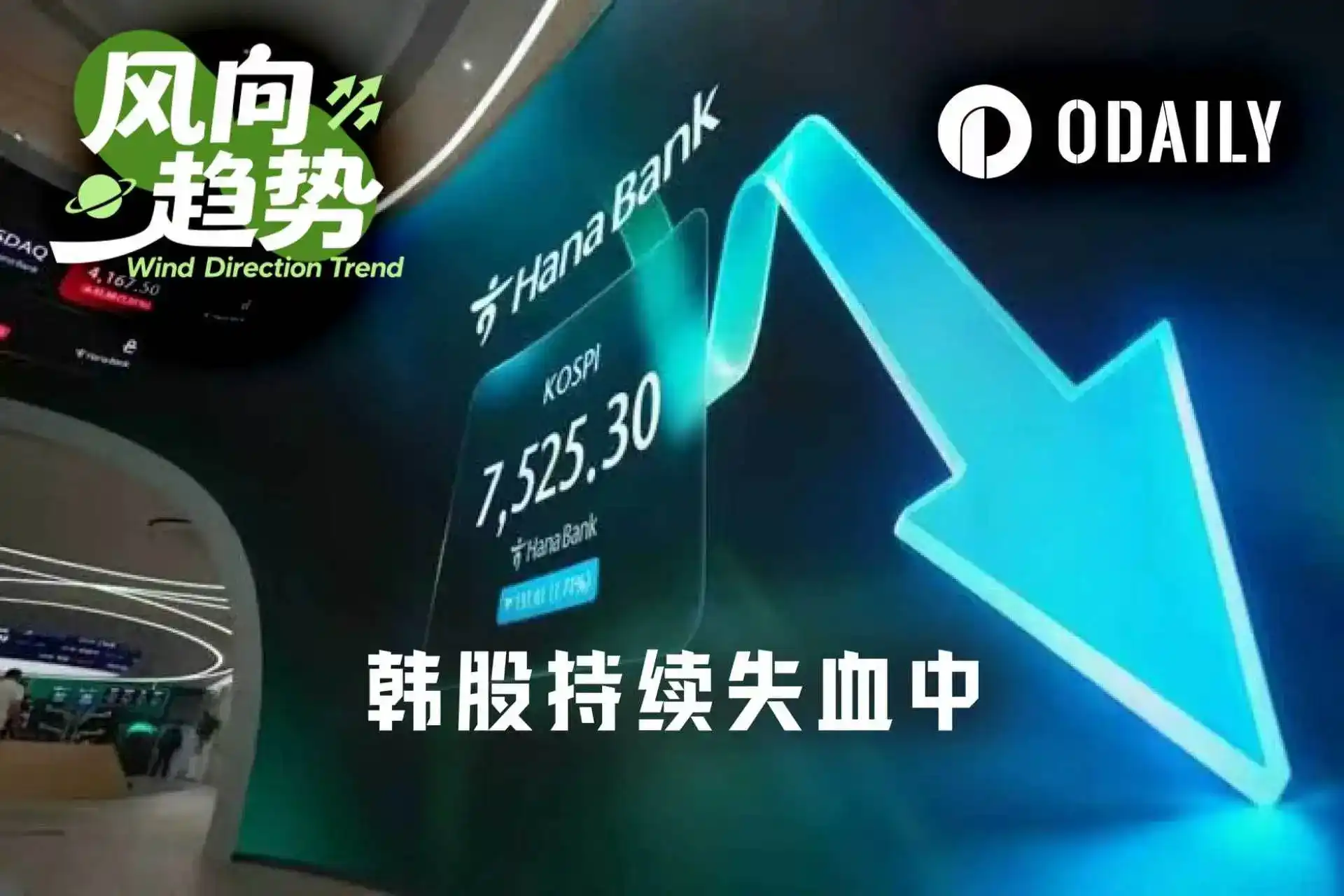
Soaring 20% Then Dropping 5%: When Will the Bottom of the Korean Stock Market Be?

"South Korean stocks face a turbulent period as the KOSPI index, after a 20% surge, fell 5% to 6257 points. The market is grappling with severe issues: over 500,000 leveraged retail accounts have been liquidated, and more than 24 trillion won has flowed from stocks into bank deposits for safety. This reflects a significant loss of market liquidity and shaken investor confidence. In response, Korean financial regulators are taking action. They have tripled the minimum保证金 (margin) requirement for single-stock leveraged ETF trades to 30 million won and are considering granting themselves "emergency intervention" powers. These could include capping leverage ratios and setting investment limits on these ETFs, seen by many as amplifying market volatility. Initial results show a 75% drop in these products' trading volume post-regulation. The market downturn has political repercussions, pushing President Yoon Suk-yeol's approval rating to a new low. Meanwhile, foreign investors made a record net purchase of 7.18 trillion won during a recent rebound, while domestic retail investors sold off massively. Morgan Stanley has upgraded South Korean stocks to "overweight," citing the ongoing "leverage unwinding" and potential for a 36% upside, with giants like Samsung Electronics and SK Hynix providing valuation support. However, analysts caution that the market's structure remains vulnerable to foreign capital flows, and the current low may not be the bottom."

marsbit18m ago

Soaring 20% Then Dropping 5%: When Will the Bottom of the Korean Stock Market Be?

marsbit18m ago

Goldman Sachs Stakes a Clear Position: This Is the Largest Capital Demand Cycle in Human History, and the Fed Is Just an Observer

Goldman Sachs argues that the world is entering the most capital-intensive investment cycle in history, driven by concurrent massive demands from AI infrastructure, reindustrialization, defense reinvestment, power grid rebuilding, supply chain realignment, and sovereign debt financing. This structural competition for capital is pushing its cost higher, fundamentally altering investment paradigms. Goldman's Mark Wilson states that the Federal Reserve is merely a "passenger, not the driver" in this shift, with rising yields rooted in these real economy demands rather than just monetary policy. While major indices appeared calm in July, underlying market movements were historic, featuring extreme stock dispersion and a severe momentum factor crash, leading to significant de-risking by fund managers. Wilson cautions against expecting a quick reversal in August, citing ongoing digestion of higher rates, disrupted risk models, and typically muted market performance ahead of US midterm elections. Corporate fundamentals remain robust with strong earnings, though growth rates are peaking in the US while accelerating in Europe. Notably, hyperscale cloud companies like Amazon and Microsoft are announcing staggering capital expenditure projections for 2027-2028, justified by explosive AI-related revenue growth and high returns. Amazon revealed its AI revenue run-rate exceeds $25 billion, growing triple-digits annually, and expressed confidence that AWS could become a trillion-dollar revenue business. The report concludes that a transitional period is underway, marked by a growing tension between aggressively investing private tech giants and increasingly capital-constrained sovereign governments. The AI super-cycle continues, with August likely being a consolidation phase.

marsbit24m ago

Goldman Sachs Stakes a Clear Position: This Is the Largest Capital Demand Cycle in Human History, and the Fed Is Just an Observer

marsbit24m ago

Trading

Spot

Hot Articles

How to Buy COMP

Welcome to HTX.com! We've made purchasing Compound (COMP) simple and convenient. Follow our step-by-step guide to embark on your crypto journey.Step 1: Create Your HTX AccountUse your email or phone number to sign up for a free account on HTX. Experience a hassle-free registration journey and unlock all features.Get My AccountStep 2: Go to Buy Crypto and Choose Your Payment MethodCredit/Debit Card: Use your Visa or Mastercard to buy Compound (COMP) instantly.Balance: Use funds from your HTX account balance to trade seamlessly.Third Parties: We've added popular payment methods such as Google Pay and Apple Pay to enhance convenience.P2P: Trade directly with other users on HTX.Over-the-Counter (OTC): We offer tailor-made services and competitive exchange rates for traders.Step 3: Store Your Compound (COMP)After purchasing your Compound (COMP), store it in your HTX account. Alternatively, you can send it elsewhere via blockchain transfer or use it to trade other cryptocurrencies.Step 4: Trade Compound (COMP)Easily trade Compound (COMP) on HTX's spot market. Simply access your account, select your trading pair, execute your trades, and monitor in real-time. We offer a user-friendly experience for both beginners and seasoned traders.

4.2k Total ViewsPublished 2024.03.29Updated 2026.06.02

How to Buy COMP

Discussions

Welcome to the HTX Community. Here, you can stay informed about the latest platform developments and gain access to professional market insights. Users' opinions on the price of COMP (COMP) are presented below.

活动图片