Internet Computer (ICP) Rockets 15%: From $4 and Climbing, How Much Upside Is Left?

TheNewsCryptoPublished on 2026-01-15Last updated on 2026-01-15

Abstract

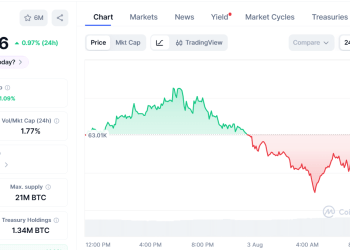
Amid a mixed market where major cryptocurrencies like Bitcoin and Ethereum are trading at $96.3K and $3.3K respectively, Internet Computer (ICP) has surged over 15%, reaching around $4.28. Its market cap stands at $2.34 billion, with trading volume exploding by 174.85% to $816.44 million. Technical indicators suggest bullish momentum: the MACD shows a positive shift, the CMF indicates mild buying pressure, and the RSI at 74.90 signals overbought conditions with potential for a short-term pullback. Key resistance lies at $4.38, with support at $4.18. While bulls currently dominate, the high RSI warns of possible corrections ahead.

Recently, the digital assets have been navigating with the bears, unable to escape the hold. Even the bullish fluctuations are ending up in modest spikes. The tokens are charted in both red and green, including Bitcoin and Ethereum, currently hovering at $96.3K and $3.3K, respectively. Concurrently, the Internet Computer (ICP) has jumped by over 15.35% in value.

The asset opened the day trading at a low level of $3.63. As the bulls entered the ICP market, they tested some of the resistance between $3.68 and $4.75, and triggered the price to rise to a high range of $4.80. If the bullish pressure continues for a long period, the price will be set to climb and acquire more gains.

At press time, Internet Computer is trading at around $4.28, and the market cap has settled at $2.34 billion. Besides, the daily trading volume has reached the $816.44 million mark after an explosion of over 174.85%. According to the Coinglass data, the market has witnessed a 24-hour liquidation of $3.43 million worth of ICP.

Are Internet Computer Bulls Strong Enough to Sustain This Surge?

With a classic bullish signal, the Internet Computer price might climb to its key resistance range at around $4.38. If the strong upside pressure activates, the golden cross could emerge and take the price above $4.49. Upon a reversal, a bearish signal unfolds, and the price of Internet Computer could fall and test the support at $4.18. Assuming the downside correction gains more strength, the death cross might form, and the price moves below $4.07.

The recent technical chart of Internet Computer reveals that the MACD line has moved above the signal line, implying a bullish shift. Also, the trend may continue upward with a potential buy signal. In addition, the CMF indicator at 0.12 shows mild buying pressure in the ICP market. Notably, money is flowing into the asset more than out, pointing to accumulation, but it is not very strong. If it rises, it supports a more bullish outlook.

Moreover, the daily RSI resting at 74.90 indicates ICP is in the overbought territory. Significantly, this reflects strong bullish momentum, but it has a higher risk of a short-term pullback. Internet Computer’s BBP reading of 0.702 suggests that the bulls are in control. As the buyers currently have the upper hand, the market exhibits positive momentum, though the strength is moderate, not extreme.

Top Updated Crypto News

Zcash (ZEC) Bulls Take Charge: Can Momentum Sustain Gains Toward $450?

TagsAltcoinCryptocurrencyICPICP PriceInternet Computer

Trending Cryptos

Related Questions

QWhat is the current trading price and market capitalization of Internet Computer (ICP) as mentioned in the article?

AAt press time, Internet Computer (ICP) is trading at around $4.28, and the market cap has settled at $2.34 billion.

QBy what percentage did the daily trading volume of ICP increase, and what was the final volume figure?

AThe daily trading volume reached $816.44 million after an explosion of over 174.85%.

QWhat does the daily RSI value of 74.90 indicate about the ICP market?

AThe daily RSI resting at 74.90 indicates that ICP is in the overbought territory, reflecting strong bullish momentum but also a higher risk of a short-term pullback.

QWhat is the significance of the MACD line moving above the signal line on ICP's technical chart?

AThe MACD line moving above the signal line implies a bullish shift in the market and suggests that the upward trend may continue with a potential buy signal.

QAccording to the technical analysis, what are the key resistance and support levels for ICP's price mentioned in the article?

AThe key resistance level is at around $4.38, and the support level is at $4.18. A strong upside could push the price above $4.49, while a downside correction could see it fall below $4.07.

Related Reads

Financing Weekly Report | 11 Public Financing Events, Stablecoin Payment Infrastructure Company Trace Finance Completes $32 Million Series A Round Led by CoinFund

Financing Weekly Report | 11 public funding events recorded, with a total scale exceeding $264 million. The stablecoin payment infrastructure sector remains a hot spot. Key Deals: - Trace Finance, a stablecoin payment infrastructure firm, raised $32 million in a Series A round led by CoinFund to expand in Latin America and Asia-Pacific. - Galaxy Ventures co-led a $140 million Series A round for Karta, a US credit card provider for global travelers without requiring an SSN. - Instant payment platform Interchecks completed a $50 million Series C round. - Paradigm led a $9 million Series A for Latin American cross-border payment app El Dorado. - Range, a stablecoin compliance startup, raised $8.3 million in an oversubscribed Series A. - RWA infrastructure project Renaiss raised $1.5 million to expand its on-chain collectibles platform. Sector Breakdown: - Infrastructure & Tools: 6 deals, including the above-mentioned Trace Finance, Range, and Renaiss. - Centralized Finance (CeFi): 3 deals, led by Karta's $140 million round. - DeFi: 1 deal – reinsurance protocol Re secured strategic investment from Coinbase Ventures. - Prediction Markets: 1 deal – K25.ai completed a $10 million Pre-A round from NewGen. Other notable transactions include digital asset depository RDC raising $7 million, ad-tech startup EarnOS securing $6 million, and a $1 million strategic investment in LitVM, a ZK Layer 2 for Litecoin. The report highlights sustained investor interest in stablecoin payment infrastructure, compliant on-chain finance, and real-world asset (RWA) tokenization.

marsbit17m ago

Financing Weekly Report | 11 Public Financing Events, Stablecoin Payment Infrastructure Company Trace Finance Completes $32 Million Series A Round Led by CoinFund

marsbit17m ago

When Transfers Become Truly Frictionless: How Sui Uses 'Zero Gas' to Become the Underlying Infrastructure for Stablecoin Payments

Title: Sui Launches Zero-Gas Stablecoin Transfers to Become the Foundation for Stablecoin Payments Sui has introduced a zero-gas fee feature for peer-to-peer stablecoin transfers, eliminating the need for users or businesses to hold separate SUI tokens to pay transaction costs. This innovation, built on a new underlying account architecture called Address Balances, significantly reduces validator processing costs for eligible transactions. Currently, the feature applies to a whitelist of stablecoins for transfers meeting a minimum amount, effectively preventing spam. This development aims to unlock mainstream payment use cases for stablecoins—such as everyday purchases, remittances, and subscriptions—by removing cost and complexity barriers. It is also positioned to benefit high-frequency micro-payments for AI agents and institutional B2B payments, reducing operational friction. Major custody provider Fireblocks has already announced support. The move follows Sui processing over $1 trillion in stablecoin transfer volume since August 2025. Looking ahead, Sui plans to enhance this infrastructure with protocol-level confidential transactions later in 2026, aiming to provide scalable, free, and privacy-preserving payments. Together, these advancements strengthen Sui's goal of becoming the default settlement layer for stablecoin payments.

marsbit19m ago

When Transfers Become Truly Frictionless: How Sui Uses 'Zero Gas' to Become the Underlying Infrastructure for Stablecoin Payments

marsbit19m ago

Ethereum Is Retracing the Path of the Internet and Linux: No One Yields, and the Neutral Party Ultimately Prevails

This article argues that Ethereum is following the historical path of open, neutral systems like the Internet and Linux, which eventually triumphed over proprietary, centrally-controlled alternatives. Major financial institutions like JPMorgan, Stripe, and Circle are building their own proprietary blockchains or networks (e.g., Tempo, Arc), but will never agree to build on a competitor's controlled infrastructure. This creates the perfect opportunity for Ethereum as the only neutral, credibly neutral settlement layer that no single entity controls. The piece draws parallels to the 1990s, when experts like Bill Gates predicted proprietary networks (from Microsoft, Oracle) would win over the open Internet, and when Sun Microsystems' Unix lost to the open-source "bazaar" development model of Linux. This model, described in Eric Raymond's "The Cathedral and the Bazaar," thrives on permissionless innovation where countless contributors improve the system, outpacing any centralized competitor. Ethereum embodies this through its decentralized development, broad validator distribution, and credible neutrality—rules that are transparent, equally applied, hard to change, and open to all. This has attracted over a million developers and major institutions like Coinbase, BlackRock, and JPMorgan, who choose Ethereum for its security, ecosystem, and sovereignty (the inability of any single party to change the rules). While proprietary chains offer initial speed and control, they inherit the downsides of both centralization and decentralization without the long-term innovation benefits. The article concludes that, just as open systems historically win, Ethereum is poised to become the foundational, neutral settlement layer for global finance.

marsbit28m ago

Ethereum Is Retracing the Path of the Internet and Linux: No One Yields, and the Neutral Party Ultimately Prevails

marsbit28m ago

Kalshi's Biggest Rival is Not Polymarket

Kalshi's CEO Tarek Mansour has identified the company's primary competitors not as the crypto-based prediction market Polymarket, but as established financial and gaming giants: CME Group, Robinhood, and DraftKings. This reflects a shift in the prediction market landscape, where the 2026 FIFA World Cup is expected to bring massive new trading volume. Traditional platforms are increasingly integrating prediction markets as a feature within their existing ecosystems. Robinhood has seen rapid growth with its prediction markets, contributing significantly to its "other transaction revenue." Similarly, Interactive Brokers (IBKR) integrates contracts from Kalshi and CME Group, while DraftKings and FanDuel (via CME) have launched their own prediction products. This allows these firms to leverage their vast user bases and infrastructure at low marginal cost, turning prediction markets from standalone apps into embedded functionalities. In response, prediction market platforms are evolving along two paths. First, they are expanding into new event categories like sports (e.g., the World Cup) and financial data to reduce reliance on election cycles. Second, they are moving towards becoming infrastructure and liquidity providers for distribution platforms. Kalshi's lead over Polymarket in trading volume is partly attributed to this channel strategy, integrating with brokers like Robinhood, Coinbase, and Webull. However, this strategy faces a challenge as distributors like Robinhood begin building their own in-house prediction market capabilities (e.g., Rothera), potentially threatening the value of pure infrastructure providers. The situation parallels historical tech battles, such as Zoom competing with Microsoft Teams and Google Meet, where embedded features in larger platforms reshape market dynamics. The future of standalone prediction market leaders like Kalshi and Polymarket will depend on their ability to navigate this new competitive landscape dominated by integrated financial and gaming titans.

链捕手35m ago

Kalshi's Biggest Rival is Not Polymarket

链捕手35m ago

Trading

Spot
Futures

Hot Articles

How to Buy 4

Welcome to HTX.com! We've made purchasing 4 (4) simple and convenient. Follow our step-by-step guide to embark on your crypto journey.Step 1: Create Your HTX AccountUse your email or phone number to sign up for a free account on HTX. Experience a hassle-free registration journey and unlock all features.Get My AccountStep 2: Go to Buy Crypto and Choose Your Payment MethodCredit/Debit Card: Use your Visa or Mastercard to buy 4 (4) instantly.Balance: Use funds from your HTX account balance to trade seamlessly.Third Parties: We've added popular payment methods such as Google Pay and Apple Pay to enhance convenience.P2P: Trade directly with other users on HTX.Over-the-Counter (OTC): We offer tailor-made services and competitive exchange rates for traders.Step 3: Store Your 4 (4)After purchasing your 4 (4), store it in your HTX account. Alternatively, you can send it elsewhere via blockchain transfer or use it to trade other cryptocurrencies.Step 4: Trade 4 (4)Easily trade 4 (4) on HTX's spot market. Simply access your account, select your trading pair, execute your trades, and monitor in real-time. We offer a user-friendly experience for both beginners and seasoned traders.

4.4k Total ViewsPublished 2025.10.20Updated 2026.06.02

How to Buy 4

Discussions

Welcome to the HTX Community. Here, you can stay informed about the latest platform developments and gain access to professional market insights. Users' opinions on the price of 4 (4) are presented below.

活动图片