Zcash's ETF Gilding: How a Privacy Coin Was Packaged by Wall Street into a Compliant Asset

marsbitPublished on 2026-08-25Last updated on 2026-08-25

Abstract

The article traces the decade-long path of Zcash (ZEC), a privacy-focused cryptocurrency, to its potential launch as the first privacy coin spot ETF, with Grayscale's ZCSH filing in August 2026. It argues ZEC's suitability stemmed not from regulatory acceptance of its privacy technology, but from its centralized, institutional structure from inception—a commercial company (ECC) with venture capital backing and a Founder's Reward—making it easier to package than decentralized alternatives. Three key institutions, intertwined in a network, drove the process: Grayscale (owned by DCG, an early ZEC investor), which had held ZEC in a trust since 2017; Coinbase, providing custody, prime brokerage, derivatives, and venture investment; and ZODL, a new for-profit entity formed in 2026 when ECC's core development team split from the non-profit foundation. The major regulatory hurdle was SEC scrutiny (2023-2026) over ZEC's historical structure, which resembled an unregistered investment contract due to automatic block rewards to ECC and the Foundation. This was resolved through governance changes (NU6 upgrade in 2024) that ended direct funding and shifted control to community voting, coinciding with a broader shift in SEC enforcement policy. Notably, the law firm Davis Polk represented both the Zcash Foundation in its SEC defense and Grayscale in the ETF filing. The push is also driven by DCG's dire financial needs amid Genesis bankruptcy lawsuits, seeking high-fee products (the ZEC ...

Author: Fugui

Origin

August 21, 2026. Grayscale submitted its fifth S-3 amendment to the SEC. Annual fee: 2.5%. Ticker: ZCSH. Listing: NYSE Arca. Custodian: Coinbase Custody. Transfer Agent: BNY Mellon. Expected to start trading around August 25th, pending SEC approval.

On the same day, ZEC price surged to an eight-year high, with weekly gains nearing 40%. Media headlines were uniform: The world's first privacy coin spot ETF is coming.

But this story didn't start on August 21st. Nor in 2026. The starting point goes back ten years.

A more important correction is that many people view this event as the first time a privacy coin has been accepted by Wall Street. That's not accurate either. DOT's spot ETF started trading this past March, and LTC's US spot product appeared even earlier. What's truly special about ZEC is not that it won the race, but that it cleared a hurdle other chains haven't: the three-year-old securities law cloud hanging over privacy coins.

How was this case resolved? Who contributed? Who ultimately benefited? It's worth laying it out piece by piece.

The Origin Problem: A Seed Naturally Suited for Packaging

Many think ZEC got its ETF because privacy coin technology was finally recognized by regulators.

That's not how it happened.

The real people pushing the cart were never cryptographers. It was three entities, plus a network. But before discussing the pushers, we must look at the cart itself—Zcash was born with a tainted file.

Bitcoin was born from a group of people coding around a mining rig—no company, no shareholders, no VC. Zcash was not. It started as a cryptography paper discussing a zero-knowledge proof called zk-SNARK, which could hide transaction details while proving their validity. After the paper came a commercial company: the Electric Coin Company (ECC). After the company came round after round of venture capital: Digital Currency Group, Barry Silbert, Pantera, Naval Ravikant, Fenbushi, Fred Ehrsam, Roger Ver. In the 2016 round, 17 investors pooled $2 million.

After the blockchain launched, for the first four years, 20% of each block's reward went directly to the founding team, employees, advisors, and early shareholders—industry insiders call this the Founder's Reward. Over four years, that was 2.1 million ZEC, one-tenth of the final supply.

This is the problem. Bitcoin's cleanliness lies in the absence of a single "who" to hold accountable. Zcash is different. It has a clear company, clear shareholders, a clear historical distribution record. Any securities lawyer applying the Howey Test could ask the same question: Doesn't this constitute an unregistered investment contract?

That's exactly what the SEC later asked.

But the flip side of the same coin is: precisely because Zcash was never a "wild" anonymous coin from day one—it has a corporate entity, early equity investors, a foundation, a development team—its organizational structure is far more institutionalized than a purely community-driven project like Monero. The technologically most private coin is, organizationally, the most suited for institutionalization.

This is no coincidence. This is the first layer of why Zcash was chosen.

Who's Pushing the Cart: Three Entities, One Network

The first is Grayscale. This company created a Zcash Trust back in 2017, placing ZEC into a closed-end trust. Back then, most people didn't even know what ZEC was. Grayscale's parent company is DCG, whose founder is Barry Silbert. This man invested in Zcash's seed round in 2016 and was one of the earliest investors.

So you see, Grayscale didn't suddenly discover ZEC in 2026. It packaged this asset into a financial product box seven or eight years ago; it's just that back then, the box was called a Trust, not an ETF. Now the label on the box has changed, but the contents are the same.

The second is Coinbase. Coinbase occupies four positions simultaneously regarding ZEC. As custodian, it's the ETF's custodian. As prime broker, it's the prime broker. For derivatives, Coinbase Derivatives filed for ZEC perpetual futures with the CFTC in January 2026 and they are now trading. For investment, Coinbase Ventures invested in ZODL.

A single institution simultaneously positioned across trading, custody, derivatives, and investment. This isn't about being bullish on a coin. It's about being able to collect fees at every stage of that coin's financialization.

The third is ZODL. This name only appeared in January 2026. The entire engineering team from the original Electric Coin Company collectively left to form the Zcash Open Development Lab, renaming the original Zashi wallet to Zodl. The leader is Josh Swihart, former CEO of ECC.

The official reason for the departure was to escape the constraints of the Development Fund. Translated into plain language: a non-profit structure can't raise VC money, can't hire top talent, can't build products. For the team to work like a startup, they had to jump out of the foundation system.

On January 7, 2026, the entire ECC engineering and product team resigned. Swihart publicly criticized the board of Bootstrap, the non-profit governing ECC, on social media, accusing them of "malicious governance" and forcing the team into a "forced resignation." The trigger was the wallet. ECC wanted to spin off its flagship wallet, Zashi, from the non-profit structure into an independent commercial company to raise funds and expand. The Bootstrap board disagreed, citing legal risks for a 501(c)(3) non-profit privatizing assets for external capital, with donors potentially suing.

One side wanted to do business, the other wanted to follow the rules—a representative conflict: continue relying on grants or learn to make money. The team chose the latter, announcing a new venture the same day they left. Upon the news, ZEC dropped over 10%, briefly falling below $400.

It dropped, but that didn't stop fundraising. Two months later, in March, ZODL announced raising over $25 million in a seed round. The investor list was eye-catching: Paradigm, a16z crypto, Winklevoss Capital, Coinbase Ventures, Cypherpunk Technologies, Maelstrom (Arthur Hayes's fund), Balaji Srinivasan, David Friedberg, Haseeb Qureshi. A development team that walked out of a non-profit system transformed into a startup backed by both Silicon Valley and Wall Street.

These three aren't operating independently. They form a network. Grayscale's custodian is Coinbase. Coinbase invested in ZODL. ZODL's investors include Winklevoss. Winklevoss, through Cypherpunk, controls about 18% of Zcash's network hashrate. DCG is Grayscale's parent company and also one of Zcash's earliest investors.

Every node in this network wants ZEC's price to rise, liquidity to improve, and institutions to enter. Because every node profits from it.

Breaking the Shackles: The Split, the Divorce, and the Dismissal of a Subpoena

ZEC's biggest regulatory risk was never "it's a privacy coin."

It was its historical structure.

Founder's Reward, Development Fund, ECC being a commercial company, the Foundation directly receiving protocol-layer rewards, early equity investors. Put together, any securities lawyer could piece together an investment contract.

In 2020, a community vote passed ZIP 1014, establishing a development fund—still 20% of block rewards, split three ways: roughly 7% to ECC, 5% to the Foundation, 8% to a Major Grants community grant pool. The Foundation's share never swallowed the entire 20%—but the issue isn't the split; it's the mechanism itself. ECC and the Foundation received funds regardless of performance, with shared control over the trademark making changes nearly impossible for the community. In the SEC's eyes, this was perfect evidence of a "continuing investment contract."

On August 31, 2023, the SEC issued a subpoena to the Zcash Foundation. Case number SF-04569, full title "In the Matter of Certain Crypto Asset Offerings." The investigation lasted over two years.

In 2024, the old structure was dismantled. ECC unilaterally announced it would no longer accept direct grants. At year-end, the NU6 upgrade went live. The new allocation became: 80% to miners, 8% to the community grant pool, and 12% into a protocol lockbox—money no one can touch until ZEC holders vote to release it, expiring at the third halving in 2028, requiring another vote then. ECC and the Foundation no longer receive automatic block rewards. That same year, both also relinquished dual-signature control over the trademark.

The solution, frankly, was shifting "who gets the money" from two entities to a voting mechanism.

On January 14, 2026, the Zcash Foundation announced the SEC had closed its review and would not recommend enforcement action or other measures. The significance of this outcome is greater than many realize. It's not the SEC saying "Zcash is fine." The SEC did not provide such a substantive conclusion. It said it "does not intend to recommend enforcement action." But in practical effect, this removed ZEC's biggest regulatory tail risk.

Why did it close after over two years? Not because the SEC finished investigating and found Zcash innocent. Because the regulatory environment changed. When the subpoena was issued in 2023, SEC Chair was still Gensler, on a "regulation by enforcement" path. With a new administration in 2025, the SEC formed a Crypto Task Force, significantly scaling back enforcement. After new SEC Chair Paul Atkins took over, lawsuits against Coinbase and Kraken were dropped, investigations into Robinhood, Uniswap Labs, OpenSea, Gemini were closed, and the Ondo Finance case faded away. The Zcash Foundation wasn't granted a special pardon; it was one in a batch being let through.

The timing is telling. The SEC announced closure on January 14th. One week earlier, on January 7th, Zcash's core development team had just resigned en masse from ECC, causing an uproar. Regulatory good news and governance bad news arrived back-to-back. A protocol being torn apart while receiving a clean bill of health—these two events together look like a pre-arranged changing of the seasons.

For the SEC, ZODL's funding announcement itself was the best answer: you worried about institutions monopolizing distribution long-term; now there are no institutions, just an ordinary company raising equity and self-sustaining. You worried developers had guaranteed income from protocol rewards; now they must earn cash flow from swap fees in their wallet, from cross-chain payments via CrossPay, from offline payments via Flexa integration. The narrative shifted from "the foundation supports developers" to "VCs fund a startup," and the regulatory concerns were conveniently solved by this divorce.

The lawyers' shadow here has a detail worth highlighting separately.

In the Zcash Foundation's 2023 Form 990, legal fees explicitly state over $317,000 paid to Davis Polk & Wardwell LLP. This was the law firm the Foundation hired to handle the SEC investigation.

And in Grayscale's current ZEC ETF legal documents, Davis Polk & Wardwell LLP appears again. Also present is Richards, Layton & Finger for Delaware law matters.

The same law firm. On one side, defending the Zcash Foundation against an SEC investigation. On the other, drafting legal documents for Grayscale's ZEC ETF.

This isn't illegal. Large firms serving multiple clients is normal. But if you're drawing a relationship map, this overlap must be marked. What's Davis Polk's weight in the crypto ETF space? Its lawyer Joseph A. Hall helped get the first-ever Bitcoin ETF across the line. Another lawyer, Zachary Zweihorn, represented Grayscale Bitcoin Trust in winning an appeal that overturned the SEC's rejection of GBTC's conversion to an ETF, a case involving $12.4 billion in assets.

So you're not seeing two independent legal events. You're seeing the same set of lawyers, on the same timeline, first helping a client defuse a regulatory landmine, then helping another client package the asset into an ETF.

The Bleeding Party: DCG's Calculations

To understand why DCG and Grayscale are pushing the ZEC ETF so hard, you must first look at their own situation.

DCG hasn't had a good few years.

In November 2022, DCG's crypto lending platform Genesis froze withdrawals. In January 2023, Genesis filed for Chapter 11 bankruptcy protection, owing $3.5 billion. The direct cause was $1.1 billion in loans to Three Arrows Capital going bad. But the deeper issue was DCG using Genesis as its personal piggy bank.

Post-bankruptcy litigation documents were clear. DCG borrowed $575 million from Genesis for investments. DCG also spent over $770 million buying GBTC shares on the secondary market to try narrowing its discount to NAV. When Genesis became insolvent, DCG covered an $1.1 billion hole with a ten-year, low-interest promissory note, then publicly claimed everything was fine.

In January 2025, DCG paid the SEC $38.5 million to settle. The same month, DCG reached a $2 billion settlement with the New York Attorney General.

In May 2025, Genesis's Litigation Oversight Committee sued DCG and Barry Silbert simultaneously in Delaware's Chancery Court and Bankruptcy Court, alleging fraud, breach of fiduciary duty, unjust enrichment, seeking $3.3 billion. The lawsuit claimed Silbert and crew "treated the insolvent Genesis as DCG's treasury."

In July 2026, a federal court ruled that securities fraud class actions against Silbert and DCG could proceed.

Just this month, Barry Silbert reassumed the role of Grayscale Chairman. Because Grayscale is preparing for an IPO, valued at $33 billion. The Genesis lawsuit could derail this IPO.

So you see, what does DCG need most now? It needs new Assets Under Management (AUM), new management fee revenue, a growth story to tell Wall Street to support the IPO valuation and offset the financial black hole from the Genesis lawsuit.

BTC and ETH ETFs are already a red ocean, with fees compressed below 0.2%. But the ZEC ETF is different. A 2.5% annual fee. That's five to ten times the fee rate of Bitcoin ETFs. And ZEC currently has almost no competitors; Grayscale has a monopoly.

A bleeding party finds a product that can still charge 2.5% management fees. Would they push it hard? You bet.

But DCG's role is even more layered. Its mining subsidiary Fortitude is losing money and hiding debt, while its Grayscale arm plans to inject about 200,000 ZEC (worth ~$110 million at the time, potentially ~34% of the expanded fund) held by its subsidiary DCG International Investments into this very ETF it's raising. The left hand is a loss-making miner, the right hand is a trust needing the price propped up, separated only by different corporate licenses. Everyone wants ZEC's price to hold up—the logic isn't complicated.

Hashrate and Holdings: The Miner's Ledger

On August 18, 2026, a Nasdaq-listed company called Cypherpunk Technologies announced it had launched the world's largest Zcash mining facility.

4.2 GSol/s of Equihash hashrate, about 18% of the Zcash network. Miners are Bitmain's Z15 Pro, all deployed in the US. Funding came from a $33.33 million equity investment by Winklevoss Capital, structured via pre-funded warrants, with Winklevoss's stake capped at 19.99%.

What does 18% mean? In a PoW network, a single entity controlling nearly one-fifth of the hashrate is no ordinary participant. It has substantial influence over network upgrade direction, governance votes, and block production pace.

And Cypherpunk isn't just mining. It's itself one of the largest corporate holders of ZEC, holding approximately 323,000 ZEC, over 1.9% of circulating supply. It publicly stated its goal is to reach 5% of circulating ZEC.

Mining plus holdings. A single entity controls both network hashrate and tokens. This is unthinkable in Bitcoin's ecosystem. But for Zcash, it happened, and happened the week before the ETF's final push.

The timing is no coincidence.

The name Cypherpunk Technologies sounds punk, but its shell isn't punk at all. This Nasdaq-listed company went public via a reverse merger with a biotech shell—Leap Therapeutics—and its real controllers are Gemini exchange founders Cameron and Tyler Winklevoss. They have close ties with DCG's Barry Silbert, all part of the same crypto circle. In other words, Cypherpunk isn't some random miner popping up; it's another node in that network, just one that happens to hold both hashrate and tokens.

Why are miners suddenly flocking to ZEC? The ledger is more honest than belief.

The new head of Cypherpunk's mining business, Kevin Zhang, a veteran miner since Bitcoin in 2014 and Zcash in 2016, laid out the ledger plainly: Currently, for each megawatt-hour, a Zcash miner earns $450. The same megawatt-hour powering an AI data center earns only $223, and mining Bitcoin earns only $133. For capital expenditure, Zcash mining hardware for one megawatt-hour costs about $2.4 million; AI infrastructure requires $10-12 million.

This math doesn't require cryptography. With Bitcoin's halving, hashrate competition squeezing miner profits thin, and AI data centers requiring astronomical upfront capital with scary long payback periods, mining ZEC isn't just cheaper; it offers the highest returns. Miners didn't suddenly fall in love with privacy; they found mining other coins unprofitable, while this one still pays. That's the simple motive behind "supporting Zcash."

And before Cypherpunk's high-profile entry, DCG's Fortitude Mining Holdings had quietly laid a longer line.

Fortitude specializes in mining ZEC, spun off from DCG's Bitcoin mining giant Foundry in early 2025. In June this year, Fortitude released a fundraising pitch deck proudly stating the company was "debt-free." The deck was on its website, founder Barry Silbert posted "Great day for Zcash" on social media the same day.

The problem: because Fortitude is merging with a public shell company, HeartSciences, to go public on Nasdaq via a SPAC, it's subject to SEC disclosure rules and had to submit fuller financial data. The data showed this "debt-free" company had, three weeks before the deck's release on June 1st, just signed a $26 million credit facility and already drawn over $8.3 million in actual debt—making the "debt-free" claim false the moment the deck was printed. Digging deeper, the company has been losing money annually since 2024, with a net loss of $4.6 million in Q1 this year, and its reported Adjusted EBITDA conveniently excluded $32 million in depreciation.

This isn't a small-time mining operation. Fortitude spent $4.7 million acquiring a 12.5 MW data center in Nebraska, boosting its owned power capacity past 60 MW, and placed a $31.5 million order with Bitmain for 9,000 Antminer Z15 Pros specialized for ZEC mining, aiming for over 28% of network hashrate, with a target to push mining cost per ZEC down to around $40. Losses on the books, debt underreported, yet heavy expansion and bold promises—these two things happening in the same company aren't contradictory, as long as ZEC's price keeps rising; today's losses become tomorrow's paper gains.

Four Gateways: How the Rules Loosened

The SEC closing its case alone couldn't open the ETF gate. Supporting rules had to align. Coincidentally, they all came together in the last couple of years.

First gateway: In March 2026, the SEC and CFTC jointly issued an interpretive statement, placing a batch of assets—BTC, BCH, LTC, DOT, AVAX, SOL—into the "digital commodity" basket. ZEC wasn't on the initial list, but the overall loosening of the policy environment benefited it.

Second gateway: Last September, NYSE Arca received SEC approval for Generic Listing Standards, meaning eligible commodity-based crypto ETPs no longer need to fight approval battles case-by-case. This drastically cut approval costs and timelines.

Third gateway: Grayscale's Zcash Trust, established back in 2017, wasn't a last-minute new product but a nearly decade-old trust with a complete SEC filing history, existing custody, and market-making arrangements. Converting it via the 19b-4 path was far easier than applying for a brand-new ETF from scratch.

Fourth gateway: In Congress, the CLARITY Act, a bill specifically classifying digital assets, has been moving through the process. Although not finalized, the direction is clear: the regulatory line is moving toward "first give the asset a clear identity, then discuss the rest."

These four gateways converging made the August sprint possible. Looking at any single one cannot support the statement "privacy coins were suddenly recognized."

The Ten-Year Timeline

Putting everything in chronological order reveals it's not scattered events but a single line.

2016: Zcash launches. ECC operates, VC-funded, Founder's Reward begins. DCG and Barry Silbert are early investors.

2017: Grayscale establishes the Zcash Trust. ZEC is placed into a financial product box.

2020: ZIP 1014 passes, 20% Development Fund established. ECC and Foundation continue receiving block rewards.

August 2023: SEC subpoenas Zcash Foundation. SF-04569.

2024: NU6 upgrade. 80% to miners, 8% to community grants, 12% into protocol lockbox. ECC and Foundation no longer receive direct block rewards. This directly addressed SEC concerns about a "continuing investment contract."

September 2025: SEC approves NYSE Arca's Generic Listing Standards. Eligible crypto commodity ETPs no longer require case-by-case approval.

January 2026: SEC closes Zcash Foundation investigation, takes no action. Same month, entire ECC team departs, forms ZODL.

January-March 2026: Coinbase Derivatives lists ZEC perpetual futures. ZODL closes $25M+ seed round. SEC and CFTC issue joint digital commodity classification statement.

May 12, 2026: Grayscale first files S-3, applying to convert Zcash Trust to spot ETF.

August 18, 2026: Cypherpunk launches world's largest Zcash mining facility, 18% of network hashrate. Winklevoss-backed.

August 19, 2026: ETF filings disclose DCG subsidiary discussing injecting ~200,000 ZEC (~$110M value) into the fund, currently non-binding discussion. If completed, DCG ecosystem could hold ~34% of fund shares.

August 21, 2026: Grayscale submits fifth S-3 amendment. 2.5% annual fee, ticker ZCSH, expected listing August 25, pending SEC approval.

This line stretches from 2016 to 2026. De-risking regulation. Restructuring governance. Capitalizing. Closing infrastructure loops. Financializing. Each step created conditions for the next.

It wasn't a single mastermind. Every node in a network exerted force in the same direction, and the combined effort pushed things to where they are now.

The Irony: The Gilding is Complete

ZEC's core technical property is privacy. Zero-knowledge proofs. Shielded addresses. Untraceable transactions.

But the ETF's ZEC holdings all sit in transparent addresses at Coinbase. No shielded addresses used. Auditable, traceable, compliant.

Institutions aren't buying privacy transaction capability. They're buying price exposure and the label "compliant representative of the privacy narrative."

Wall Street doesn't need anonymous ZEC. Wall Street needs packageable ZEC.

Grayscale's ETF holds ZEC that doesn't touch the shielded pool or use privacy features. Wall Street isn't buying "hidden money"; it's buying price exposure to "the act of hiding money"—an option on the concept of privacy, not privacy itself.

Zcash's original mission was to create money even transaction records couldn't see. Now, to squeeze into a fund tradable on the NYSE, it must first expose its holdings to sunlight—whose addresses, how much in and out, clearly listed on the custodian's ledger for auditors, regulators, and every retail investor buying shares to inspect. It didn't lose by having privacy negated; precisely by voluntarily sheathing its privacy features did it buy this ticket.

And Zcash was chosen precisely because it was never a "wild" anonymous coin from day one. It has a clear corporate entity, early equity investors, a foundation, a development team, a long-standing trust, compliant custody, regulated derivatives. Its organizational structure is far more institutionalized than purely community-driven projects like Monero.

The technologically most private coin is, organizationally, the most suited for institutionalization.

Gilding was never the gold's desire; it's the craftsman's skill.

Ultimately, this isn't about privacy coins finally being accepted by Wall Street. It's about Wall Street proactively reshaping Zcash into what it needed—regulatory de-risking, governance restructuring, miners expanding, capital clustering with connections, finally landing as a trust product charging 2.5% annual fees. Zcash had no choice; it was merely placed into that box. As for the unverified speculations in public documents, like whether the case closure and ETF filing were pre-coordinated, we can't say that now—evidence is insufficient. All that can be said is this: at almost every step along this road, someone was calculating, and calculating very clearly.

Wall Street didn't bring privacy into financial markets. It made "privacy" itself into an asset that can be priced, custodied, and traded.

Trending Cryptos

Related Questions

QAccording to the article, what was the primary legal and regulatory hurdle that Zcash had to overcome to be considered for an ETF, and how was it resolved?

AThe primary legal hurdle was its historical structure, which included elements like the Founder's Reward, a Development Fund funded by block rewards, and clear corporate entities (ECC and Zcash Foundation). This made it a potential "investment contract" under the Howey Test in the eyes of the SEC. The investigation (SF-04569) was resolved through governance changes, most notably the NU6 upgrade in 2024. This change eliminated automatic block reward payouts to ECC and the Foundation, routing future funding through a community-voted mechanism. Combined with a shift in the SEC's enforcement posture under new leadership in 2025/2026, the SEC closed its investigation without recommending enforcement action in January 2026.

QWhat three key institutions, along with their network, does the article identify as the main drivers behind the push for a Zcash ETF?

AThe three key institutions are: 1) Grayscale (and its parent company DCG), which had packaged ZEC in a trust since 2017. 2) Coinbase, which acts as custodian, prime broker, derivatives exchange (via Coinbase Derivatives), and investor (via Coinbase Ventures in ZODL). 3) ZODL (Zcash Open Development Lab), the commercial spin-off of the original ECC development team, backed by major VC firms. These entities form a network through overlapping investments, business relationships, and shared interests in ZEC's financialization.

QWhy does the article suggest DCG and Grayscale are particularly motivated to launch a Zcash ETF, beyond simply expanding their product line?

ADCG is facing significant financial and legal pressures, including a $20 billion settlement with the New York Attorney General, a $33 billion lawsuit from Genesis' bankruptcy committee, and a struggling mining subsidiary (Fortitude). A successful ZEC ETF offers a high-fee (2.5%) product in a non-competitive niche, which can generate crucial new management fee revenue. This revenue and growth story are vital to support DCG's planned Grayscale IPO (valued at $33 billion) and to help offset the financial losses and liabilities from its other troubled ventures.

QThe article describes a certain irony in Zcash's path to an ETF. What is this central irony?

AThe central irony is that Zcash, a cryptocurrency whose core technological value proposition is privacy and untraceable transactions via shielded addresses, must completely relinquish that functionality to become a compliant, institutional asset. The ETF will hold ZEC in transparent, non-shielded addresses on Coinbase Custody, making all holdings auditable and traceable. Thus, Wall Street is not adopting the privacy features of Zcash; it is adopting a sanitized, price-exposure version of it. The asset is being valued for the *concept* of privacy, not for the practical use of privacy.

QWhat role does mining play in the Zcash ETF narrative presented in the article, specifically regarding the entities Cypherpunk Technologies and Fortitude?

AMining plays a crucial role in consolidating control and ensuring economic incentives align with the ETF's success. Cypherpunk Technologies (backed by Winklevoss Capital) controls ~18% of the network's hash rate and is a major ZEC holder, giving it significant influence. DCG's mining subsidiary, Fortitude, is also aggressively expanding its ZEC hash rate. These mining entities, which are connected to the broader pro-ETF network, have a direct financial interest in maintaining or increasing ZEC's price and network security. Their expansion, timed around the ETF launch, signals a calculated effort to control key infrastructure and benefit from the anticipated price appreciation and institutional demand.

Related Reads

U.S. Aims at Iran's Crypto Sector Due to Oil Payments Exceeding $100 Billion

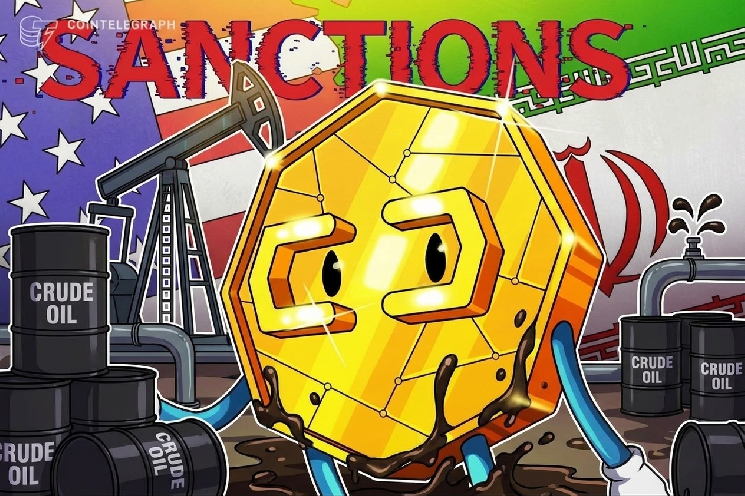
The U.S. Treasury Department has expanded sanctions on Iran to target its digital asset sector, citing over $100 million in cryptocurrency payments allegedly used to facilitate Iranian oil sales. The Treasury’s Office of Foreign Assets Control (OFAC) announced new sectoral sanctions covering digital assets, technology, gold, aviation, and shipping, alongside sanctions against nearly 60 entities, individuals, and vessels linked to nuclear, missile, cyber, and oil networks. The move allows OFAC to sanction foreign persons and firms operating in or supporting Iran’s crypto sector, which the Treasury stated is increasingly used as a "tool of choice" to circumvent sanctions, including by the Islamic Revolutionary Guard Corps (IRGC). Specific targets include Ukrainian broker Ivan Obukhov and his UAE-registered firm Foscom FZE, accused of processing over $100 million in crypto payments to facilitate oil sales for the IRGC’s Quds Force. This follows recent U.S. actions against Iran-linked crypto exchanges, including sanctions against UK-based Zedcex and Zedxion in January, four Iranian exchanges including Nobitex in June, and exchanges Shelbit and Aban Tether in August. Unlike previous targeted sanctions, the new measures establish a framework to penalize broader involvement in Iran’s crypto sector, significantly expanding OFAC’s authority under Executive Order 13902. Designated persons’ U.S.-linked property will be blocked, and foreign banks facilitating significant transactions for them may face U.S. account restrictions.

cryptonews.ru37m ago

U.S. Aims at Iran's Crypto Sector Due to Oil Payments Exceeding $100 Billion

cryptonews.ru37m ago

Conversation with Charles Zhang: Amidst the AI Frenzy, Why Pursue 'Anti-Efficiency' Content?

Dialogue with Charles Zhang: In the Era of AI's Sprint, Why Create "Anti-Efficiency" Content Standing out among China's early internet pioneers, Charles Zhang, founder and CEO of Sohu, maintains a distinct personal identity. He keeps a consistent public presence and embodies traits of high-energy individuals: sleeping only 4-5 hours daily, running 5km or marathons, and hosting frequent offline tech forums and dialogues with Nobel laureates. He has shifted focus from external business expansion to internal self-reconstruction, adhering to his own pace. "People aren't afraid of being busy; the busier you are, the better your health. Having nothing to do can lead to emotional issues and poor health." Marking the 10th anniversary of his live-streamed "Charles Zhang's English Class," he recently took it offline for a real-world classroom session. Following this, he discussed the course's decade-long journey, Sohu Video's content ecosystem, and the value of content in the AI era. **Pen and Mouth Diligence: A Class Against Instant Mastery** His English class began in August 2016 on "Qianfan Live." He spends about 40 minutes daily preparing, reviewing dozens of news headlines, reading five in detail, and selecting three for the lesson. Over ten years, he has completed over 2000 live sessions totaling more than 110,000 minutes, with over 52 million views. Initially, the stream was a way to "talk more" and combat emotional struggles. He started by repeating after TV news anchors, then moved to live-streaming with the launch of Qianfan Live. It was 40% for personal emotional regulation ("like a monk chanting sutras"), 30% to deliver authentic news, and 30% to promote the new platform. This daily "ritual" helped him overcome depression, leading to what he calls his "peak life state." From a product perspective, it was counter-intuitive—launched without prior market research or growth strategies, based on the founder's personal need that resonated with users. Yet, his content creation follows a strict routine. The decade of covering geopolitics, economics, tech, health, and society has built a vast "knowledge compound interest" system. In an age of AI summaries and algorithmic content, Zhang insists on "hard work": meticulous reading, handwritten notes, and manually created teaching materials, refusing AI-generated content. The English class is now a fixed daily rhythm; preparing for his weekly physics class requires a full day of solitary deduction on a blackboard. In his live streams, Zhang positions himself as a "content creator," not a CEO or teacher. He sees physics as extreme brain training and English as a "sensor" to understand the world. This explains why a top entrepreneur persists for a decade in seemingly "unprofessional" pursuits—it's the information input and psychological healing method he found during a low point. It's fundamentally an "anti-efficiency" commitment. He believes the meaning of reading lies in finding community and spiritual support, not just fleeting conversation points. For today's media, he states: "Reading news isn't the goal. As humans with many confusions, we need reference points, to find a group, find kindred spirits, or seek support and spiritual nourishment. Large language models can't satisfy these starting points; they only give you information." This offers solace and a value defense for media professionals impacted by AI summaries. **"Don't Think Earth Stops Turning Because AI Arrived"** A content creator expressed anxiety: after feeding their article to AI, it produced a more comprehensive, profound version, making their work feel valueless. Zhang responded with an analogy: "Carrots from the market, with a bit of soil, not glossy, taste delicious and flavorful. Tomatoes forced by chemical fertilizer have no taste at all." He sees AI giving world content a "plastic feel," but acknowledges its significant role in improving information access efficiency, especially in physics and social science research where he often queries AI for quick professional answers. The key, Zhang stresses, is that the outside world still needs to guide our perspective. LLMs provide "information," while the outside world offers "viewpoints." He cares deeply about *what* that external viewpoint is and *how* someone thinks about an issue. "Don't think the Earth stops turning because AI arrived," he analyzes. AI currently replaces rule-based work, noting significant impact on the software industry with many programmers laid off as even less experienced people can now write decent code. However, AI cannot yet replace arts, social sciences, emotions, and creative content. "Hollywood remains thriving, producing great works. Oscars will continue, Nobel Literature Prizes will still be awarded—all by real people, with works conceived by real people." While wary of AI, Zhang isn't anti-technology and is open to its applications. Sohu itself has launched AI assistants. In Sohu's AI practice, Zhang defines his role as a "large language model corpus provider." He believes LLM training is inseparable from human-original content as its data foundation, so original content retains irreplaceable value. "The era of self-media indeed offers everyone new ways to discover their strengths and achieve growth." He suggests every young person should consider self-media. Most importantly, the bottom line of content creation should be "authenticity." If using AI avatars, they must be clearly labeled; not doing so and misleading viewers wastes their time, especially when people still prefer real human content. Behind AI's sprint lie unavoidable realities. As AI quickly provides seemingly perfect answers, people grow accustomed to accepting "summarized" results, omitting processes of questioning, deduction, and trial-and-error, leading to a decline in deep thinking. Zhang's "anti-efficiency" practice with his two live-streamed classes is his answer to AI's狂奔: In an algorithm-driven era chasing ultimate efficiency, don't expect AI to fill inner voids. Read books, speak in front of a camera, sweat on a running track, and build connections with real people.

marsbit47m ago

Conversation with Charles Zhang: Amidst the AI Frenzy, Why Pursue 'Anti-Efficiency' Content?

marsbit47m ago

Trading

Spot

Hot Articles

What is SONIC

Sonic: Pioneering the Future of Gaming in Web3 Introduction to Sonic In the ever-evolving landscape of Web3, the gaming industry stands out as one of the most dynamic and promising sectors. At the forefront of this revolution is Sonic, a project designed to amplify the gaming ecosystem on the Solana blockchain. Leveraging cutting-edge technology, Sonic aims to deliver an unparalleled gaming experience by efficiently processing millions of requests per second, ensuring that players enjoy seamless gameplay while maintaining low transaction costs. This article delves into the intricate details of Sonic, exploring its creators, funding sources, operational mechanics, and the timeline of significant events that have shaped its journey. What is Sonic? Sonic is an innovative layer-2 network that operates atop the Solana blockchain, specifically tailored to enhance the existing Solana gaming ecosystem. It accomplishes this through a customised, VM-agnostic game engine paired with a HyperGrid interpreter, facilitating sovereign game economies that roll up back to the Solana platform. The primary goals of Sonic include: Enhanced Gaming Experiences: Sonic is committed to offering lightning-fast on-chain gameplay, allowing players and developers to engage with games at previously unattainable speeds. Atomic Interoperability: This feature enables transactions to be executed within Sonic without the need to redeploy Solana programmes and accounts. This makes the process more efficient and directly benefits from Solana Layer1 services and liquidity. Seamless Deployment: Sonic allows developers to write for Ethereum Virtual Machine (EVM) based systems and execute them on Solana’s SVM infrastructure. This interoperability is crucial for attracting a broader range of dApps and decentralised applications to the platform. Support for Developers: By offering native composable gaming primitives and extensible data types - dining within the Entity-Component-System (ECS) framework - game creators can craft intricate business logic with ease. Overall, Sonic's unique approach not only caters to players but also provides an accessible and low-cost environment for developers to innovate and thrive. Creator of Sonic The information regarding the creator of Sonic is somewhat ambiguous. However, it is known that Sonic's SVM is owned by the company Mirror World. The absence of detailed information about the individuals behind Sonic reflects a common trend in several Web3 projects, where collective efforts and partnerships often overshadow individual contributions. Investors of Sonic Sonic has garnered considerable attention and support from various investors within the crypto and gaming sectors. Notably, the project raised an impressive $12 million during its Series A funding round. The round was led by BITKRAFT Ventures, with other notable investors including Galaxy, Okx Ventures, Interactive, Big Brain Holdings, and Mirana. This financial backing signifies the confidence that investment foundations have in Sonic’s potential to revolutionise the Web3 gaming landscape, further validating its innovative approaches and technologies. How Does Sonic Work? Sonic utilises the HyperGrid framework, a sophisticated parallel processing mechanism that enhances its scalability and customisability. Here are the core features that set Sonic apart: Lightning Speed at Low Costs: Sonic offers one of the fastest on-chain gaming experiences compared to other Layer-1 solutions, powered by the scalability of Solana’s virtual machine (SVM). Atomic Interoperability: Sonic enables transaction execution without redeployment of Solana programmes and accounts, effectively streamlining the interaction between users and the blockchain. EVM Compatibility: Developers can effortlessly migrate decentralised applications from EVM chains to the Solana environment using Sonic’s HyperGrid interpreter, increasing the accessibility and integration of various dApps. Ecosystem Support for Developers: By exposing native composable gaming primitives, Sonic facilitates a sandbox-like environment where developers can experiment and implement business logic, greatly enhancing the overall development experience. Monetisation Infrastructure: Sonic natively supports growth and monetisation efforts, providing frameworks for traffic generation, payments, and settlements, thereby ensuring that gaming projects are not only viable but also sustainable financially. Timeline of Sonic The evolution of Sonic has been marked by several key milestones. Below is a brief timeline highlighting critical events in the project's history: 2022: The Sonic cryptocurrency was officially launched, marking the beginning of its journey in the Web3 gaming arena. 2024: June: Sonic SVM successfully raised $12 million in a Series A funding round. This investment allowed Sonic to further develop its platform and expand its offerings. August: The launch of the Sonic Odyssey testnet provided users with the first opportunity to engage with the platform, offering interactive activities such as collecting rings—a nod to gaming nostalgia. October: SonicX, an innovative crypto game integrated with Solana, made its debut on TikTok, capturing the attention of over 120,000 users within a short span. This integration illustrated Sonic’s commitment to reaching a broader, global audience and showcased the potential of blockchain gaming. Key Points Sonic SVM is a revolutionary layer-2 network on Solana explicitly designed to enhance the GameFi landscape, demonstrating great potential for future development. HyperGrid Framework empowers Sonic by introducing horizontal scaling capabilities, ensuring that the network can handle the demands of Web3 gaming. Integration with Social Platforms: The successful launch of SonicX on TikTok displays Sonic’s strategy to leverage social media platforms to engage users, exponentially increasing the exposure and reach of its projects. Investment Confidence: The substantial funding from BITKRAFT Ventures, among others, emphasizes the robust backing Sonic has, paving the way for its ambitious future. In conclusion, Sonic encapsulates the essence of Web3 gaming innovation, striking a balance between cutting-edge technology, developer-centric tools, and community engagement. As the project continues to evolve, it is poised to redefine the gaming landscape, making it a notable entity for gamers and developers alike. As Sonic moves forward, it will undoubtedly attract greater interest and participation, solidifying its place within the broader narrative of blockchain gaming.

2.4k Total ViewsPublished 2024.04.04Updated 2024.12.03

What is SONIC

What is $S$

Understanding SPERO: A Comprehensive Overview Introduction to SPERO As the landscape of innovation continues to evolve, the emergence of web3 technologies and cryptocurrency projects plays a pivotal role in shaping the digital future. One project that has garnered attention in this dynamic field is SPERO, denoted as SPERO,$$s$. This article aims to gather and present detailed information about SPERO, to help enthusiasts and investors understand its foundations, objectives, and innovations within the web3 and crypto domains. What is SPERO,$$s$? SPERO,$$s$ is a unique project within the crypto space that seeks to leverage the principles of decentralisation and blockchain technology to create an ecosystem that promotes engagement, utility, and financial inclusion. The project is tailored to facilitate peer-to-peer interactions in new ways, providing users with innovative financial solutions and services. At its core, SPERO,$$s$ aims to empower individuals by providing tools and platforms that enhance user experience in the cryptocurrency space. This includes enabling more flexible transaction methods, fostering community-driven initiatives, and creating pathways for financial opportunities through decentralised applications (dApps). The underlying vision of SPERO,$$s$ revolves around inclusiveness, aiming to bridge gaps within traditional finance while harnessing the benefits of blockchain technology. Who is the Creator of SPERO,$$s$? The identity of the creator of SPERO,$$s$ remains somewhat obscure, as there are limited publicly available resources providing detailed background information on its founder(s). This lack of transparency can stem from the project's commitment to decentralisation—an ethos that many web3 projects share, prioritising collective contributions over individual recognition. By centring discussions around the community and its collective goals, SPERO,$$s$ embodies the essence of empowerment without singling out specific individuals. As such, understanding the ethos and mission of SPERO remains more important than identifying a singular creator. Who are the Investors of SPERO,$$s$? SPERO,$$s$ is supported by a diverse array of investors ranging from venture capitalists to angel investors dedicated to fostering innovation in the crypto sector. The focus of these investors generally aligns with SPERO's mission—prioritising projects that promise societal technological advancement, financial inclusivity, and decentralised governance. These investor foundations are typically interested in projects that not only offer innovative products but also contribute positively to the blockchain community and its ecosystems. The backing from these investors reinforces SPERO,$$s$ as a noteworthy contender in the rapidly evolving domain of crypto projects. How Does SPERO,$$s$ Work? SPERO,$$s$ employs a multi-faceted framework that distinguishes it from conventional cryptocurrency projects. Here are some of the key features that underline its uniqueness and innovation: Decentralised Governance: SPERO,$$s$ integrates decentralised governance models, empowering users to participate actively in decision-making processes regarding the project’s future. This approach fosters a sense of ownership and accountability among community members. Token Utility: SPERO,$$s$ utilises its own cryptocurrency token, designed to serve various functions within the ecosystem. These tokens enable transactions, rewards, and the facilitation of services offered on the platform, enhancing overall engagement and utility. Layered Architecture: The technical architecture of SPERO,$$s$ supports modularity and scalability, allowing for seamless integration of additional features and applications as the project evolves. This adaptability is paramount for sustaining relevance in the ever-changing crypto landscape. Community Engagement: The project emphasises community-driven initiatives, employing mechanisms that incentivise collaboration and feedback. By nurturing a strong community, SPERO,$$s$ can better address user needs and adapt to market trends. Focus on Inclusion: By offering low transaction fees and user-friendly interfaces, SPERO,$$s$ aims to attract a diverse user base, including individuals who may not previously have engaged in the crypto space. This commitment to inclusion aligns with its overarching mission of empowerment through accessibility. Timeline of SPERO,$$s$ Understanding a project's history provides crucial insights into its development trajectory and milestones. Below is a suggested timeline mapping significant events in the evolution of SPERO,$$s$: Conceptualisation and Ideation Phase: The initial ideas forming the basis of SPERO,$$s$ were conceived, aligning closely with the principles of decentralisation and community focus within the blockchain industry. Launch of Project Whitepaper: Following the conceptual phase, a comprehensive whitepaper detailing the vision, goals, and technological infrastructure of SPERO,$$s$ was released to garner community interest and feedback. Community Building and Early Engagements: Active outreach efforts were made to build a community of early adopters and potential investors, facilitating discussions around the project’s goals and garnering support. Token Generation Event: SPERO,$$s$ conducted a token generation event (TGE) to distribute its native tokens to early supporters and establish initial liquidity within the ecosystem. Launch of Initial dApp: The first decentralised application (dApp) associated with SPERO,$$s$ went live, allowing users to engage with the platform's core functionalities. Ongoing Development and Partnerships: Continuous updates and enhancements to the project's offerings, including strategic partnerships with other players in the blockchain space, have shaped SPERO,$$s$ into a competitive and evolving player in the crypto market. Conclusion SPERO,$$s$ stands as a testament to the potential of web3 and cryptocurrency to revolutionise financial systems and empower individuals. With a commitment to decentralised governance, community engagement, and innovatively designed functionalities, it paves the way toward a more inclusive financial landscape. As with any investment in the rapidly evolving crypto space, potential investors and users are encouraged to research thoroughly and engage thoughtfully with the ongoing developments within SPERO,$$s$. The project showcases the innovative spirit of the crypto industry, inviting further exploration into its myriad possibilities. While the journey of SPERO,$$s$ is still unfolding, its foundational principles may indeed influence the future of how we interact with technology, finance, and each other in interconnected digital ecosystems.

439 Total ViewsPublished 2024.12.17Updated 2024.12.17

What is $S$

What is AGENT S

Agent S: The Future of Autonomous Interaction in Web3 Introduction In the ever-evolving landscape of Web3 and cryptocurrency, innovations are constantly redefining how individuals interact with digital platforms. One such pioneering project, Agent S, promises to revolutionise human-computer interaction through its open agentic framework. By paving the way for autonomous interactions, Agent S aims to simplify complex tasks, offering transformative applications in artificial intelligence (AI). This detailed exploration will delve into the project's intricacies, its unique features, and the implications for the cryptocurrency domain. What is Agent S? Agent S stands as a groundbreaking open agentic framework, specifically designed to tackle three fundamental challenges in the automation of computer tasks: Acquiring Domain-Specific Knowledge: The framework intelligently learns from various external knowledge sources and internal experiences. This dual approach empowers it to build a rich repository of domain-specific knowledge, enhancing its performance in task execution. Planning Over Long Task Horizons: Agent S employs experience-augmented hierarchical planning, a strategic approach that facilitates efficient breakdown and execution of intricate tasks. This feature significantly enhances its ability to manage multiple subtasks efficiently and effectively. Handling Dynamic, Non-Uniform Interfaces: The project introduces the Agent-Computer Interface (ACI), an innovative solution that enhances the interaction between agents and users. Utilizing Multimodal Large Language Models (MLLMs), Agent S can navigate and manipulate diverse graphical user interfaces seamlessly. Through these pioneering features, Agent S provides a robust framework that addresses the complexities involved in automating human interaction with machines, setting the stage for myriad applications in AI and beyond. Who is the Creator of Agent S? While the concept of Agent S is fundamentally innovative, specific information about its creator remains elusive. The creator is currently unknown, which highlights either the nascent stage of the project or the strategic choice to keep founding members under wraps. Regardless of anonymity, the focus remains on the framework's capabilities and potential. Who are the Investors of Agent S? As Agent S is relatively new in the cryptographic ecosystem, detailed information regarding its investors and financial backers is not explicitly documented. The lack of publicly available insights into the investment foundations or organisations supporting the project raises questions about its funding structure and development roadmap. Understanding the backing is crucial for gauging the project's sustainability and potential market impact. How Does Agent S Work? At the core of Agent S lies cutting-edge technology that enables it to function effectively in diverse settings. Its operational model is built around several key features: Human-like Computer Interaction: The framework offers advanced AI planning, striving to make interactions with computers more intuitive. By mimicking human behaviour in tasks execution, it promises to elevate user experiences. Narrative Memory: Employed to leverage high-level experiences, Agent S utilises narrative memory to keep track of task histories, thereby enhancing its decision-making processes. Episodic Memory: This feature provides users with step-by-step guidance, allowing the framework to offer contextual support as tasks unfold. Support for OpenACI: With the ability to run locally, Agent S allows users to maintain control over their interactions and workflows, aligning with the decentralised ethos of Web3. Easy Integration with External APIs: Its versatility and compatibility with various AI platforms ensure that Agent S can fit seamlessly into existing technological ecosystems, making it an appealing choice for developers and organisations. These functionalities collectively contribute to Agent S's unique position within the crypto space, as it automates complex, multi-step tasks with minimal human intervention. As the project evolves, its potential applications in Web3 could redefine how digital interactions unfold. Timeline of Agent S The development and milestones of Agent S can be encapsulated in a timeline that highlights its significant events: September 27, 2024: The concept of Agent S was launched in a comprehensive research paper titled “An Open Agentic Framework that Uses Computers Like a Human,” showcasing the groundwork for the project. October 10, 2024: The research paper was made publicly available on arXiv, offering an in-depth exploration of the framework and its performance evaluation based on the OSWorld benchmark. October 12, 2024: A video presentation was released, providing a visual insight into the capabilities and features of Agent S, further engaging potential users and investors. These markers in the timeline not only illustrate the progress of Agent S but also indicate its commitment to transparency and community engagement. Key Points About Agent S As the Agent S framework continues to evolve, several key attributes stand out, underscoring its innovative nature and potential: Innovative Framework: Designed to provide an intuitive use of computers akin to human interaction, Agent S brings a novel approach to task automation. Autonomous Interaction: The ability to interact autonomously with computers through GUI signifies a leap towards more intelligent and efficient computing solutions. Complex Task Automation: With its robust methodology, it can automate complex, multi-step tasks, making processes faster and less error-prone. Continuous Improvement: The learning mechanisms enable Agent S to improve from past experiences, continually enhancing its performance and efficacy. Versatility: Its adaptability across different operating environments like OSWorld and WindowsAgentArena ensures that it can serve a broad range of applications. As Agent S positions itself in the Web3 and crypto landscape, its potential to enhance interaction capabilities and automate processes signifies a significant advancement in AI technologies. Through its innovative framework, Agent S exemplifies the future of digital interactions, promising a more seamless and efficient experience for users across various industries. Conclusion Agent S represents a bold leap forward in the marriage of AI and Web3, with the capacity to redefine how we interact with technology. While still in its early stages, the possibilities for its application are vast and compelling. Through its comprehensive framework addressing critical challenges, Agent S aims to bring autonomous interactions to the forefront of the digital experience. As we move deeper into the realms of cryptocurrency and decentralisation, projects like Agent S will undoubtedly play a crucial role in shaping the future of technology and human-computer collaboration.

1.1k Total ViewsPublished 2025.01.14Updated 2025.01.14

What is AGENT S

Discussions

Welcome to the HTX Community. Here, you can stay informed about the latest platform developments and gain access to professional market insights. Users' opinions on the price of S (S) are presented below.

活动图片