Yilihua | Trend Research Latest Report: Wall Street Has Secretly Built Positions, Is Your ETH Still on Board?

marsbitPublished on 2025-12-12Last updated on 2025-12-12

Abstract

Following the market crash in October, the crypto sector has been subdued, but institutional momentum—particularly from Wall Street—is accelerating. U.S. SEC Chair Paul Atkins recently stated that the entire U.S. financial market could migrate on-chain within years, highlighting benefits like transparent ownership and T+0 settlement. A clear narrative is emerging: U.S. political and financial elites are driving a flow of capital from Treasury bonds → stablecoins → Ethereum and RWA protocols → ETH and L2 networks. Ethereum dominates RWA TVL, accounting for 64.5% of the total. The Fusaka upgrade represents a major step in improving Ethereum’s value capture. By introducing a dynamic base fee for blobs (EIP-7918), it ties L2 transaction costs to L1 fees, ensuring more consistent ETH burning. Blob fees now contribute 98% of burn volume, potentially returning ETH to a deflationary model as L2 activity grows. Technically, ETH appears stronger: leverage is near historic lows at 4%, exchange reserves are down, and the ETH/BTC ratio has held steady since November, reducing the effectiveness of popular short-ETH strategies. With anticipated monetary easing in both the U.S. and China, along with supportive regulation, ETH may be entering a favorable accumulation zone.

Since the market crash on October 11th, the entire crypto market has been sluggish, with market makers and investors suffering heavy losses. The recovery of capital and sentiment will take time. However, the crypto market is never short of new fluctuations and opportunities, and we remain optimistic about the future market. This is because the trend of mainstream crypto assets integrating with traditional finance to form new business models has not changed; instead, it has been rapidly building moats during the market downturn.

1. Wall Street Consensus Strengthens

On December 3rd, U.S. SEC Chairman Paul Atkins stated in an exclusive interview with FOX at the New York Stock Exchange: "In the coming years, the entire U.S. financial market may migrate on-chain."

Atkins mentioned:

(1) The core advantage of tokenization is that if assets exist on the blockchain, the ownership structure and asset attributes will be highly transparent. Currently, publicly listed companies often do not know who their shareholders are, where they are located, or where the shares are held.

(2) Tokenization also has the potential to achieve "T+0" settlement, replacing the current "T+1" trading settlement cycle. In principle, the delivery-versus-payment (DVP)/receive-versus-payment (RVP) mechanism on-chain can reduce market risks and improve transparency. The time gap between clearing, settlement, and fund delivery is currently a source of systemic risk.

(3) He believes tokenization is an inevitable trend in financial services, and mainstream banks and brokerages are already moving toward tokenization. The world may not even need 10 years... perhaps it will become a reality in just a few years. We are actively embracing new technologies to ensure the U.S. remains at the forefront in areas like cryptocurrency.

In reality, Wall Street and Washington have already built a deep capital network for crypto, forming a new narrative chain: U.S. political and economic elites → U.S. bonds (Treasury bonds) → stablecoins / crypto treasury companies → Ethereum + RWA + L2
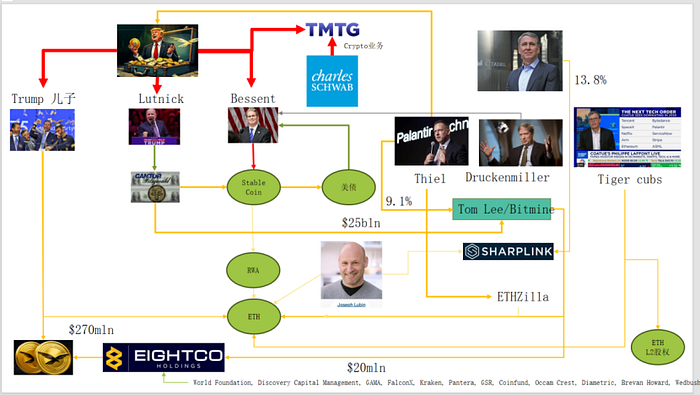
This diagram shows the intricate connections between the Trump family, traditional bond market makers, the Treasury, tech companies, and crypto companies, with the green elliptical links forming the backbone:

(1) Stablecoins (USDT, USDC, dollar assets behind WLD, etc.)

The majority of reserve assets are short-term U.S. bonds + bank deposits, held through brokers like Cantor.

(2) U.S. Bonds (U.S. Treasuries)

Issued and managed by the Treasury / Bessent side.

Used by Palantir, Druckenmiller, Tiger Cubs, etc., as low-risk interest rate base holdings.

Also the yield assets pursued by stablecoins / treasury companies.

(3) RWA

From U.S. bonds, mortgages, accounts receivable to housing finance.

Tokenized through Ethereum L1 / L2 protocols.

(4) ETH & ETH L2 Equity

Ethereum is the main chain for RWA, stablecoins, DeFi, and AI-DeFi.

L2 equity / tokens represent claims on future trading volume and fee cash flows.

This chain expresses:

U.S. dollar credit → U.S. bonds → stablecoin reserves → various crypto treasuries / RWA protocols → ultimately settled on ETH / L2.

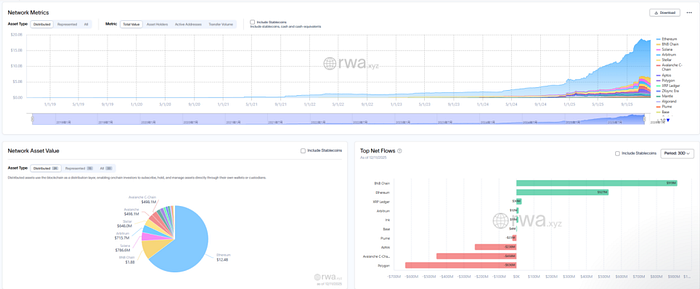
In terms of RWA TVL, compared to other public chains that declined after the October 11th crash, ETH is the only public chain that quickly recovered and rose. Its current TVL is $12.4 billion, accounting for 64.5% of the total crypto market.

2. Ethereum Explores Value Capture

The recent Ethereum Fusaka upgrade did not cause much stir in the market, but from the perspective of network structure and economic model evolution, it is a "milestone event." Fusaka is not just about scaling through EIPs like PeerDAS; it attempts to address the issue of insufficient value capture on the L1 mainnet caused by L2 development.
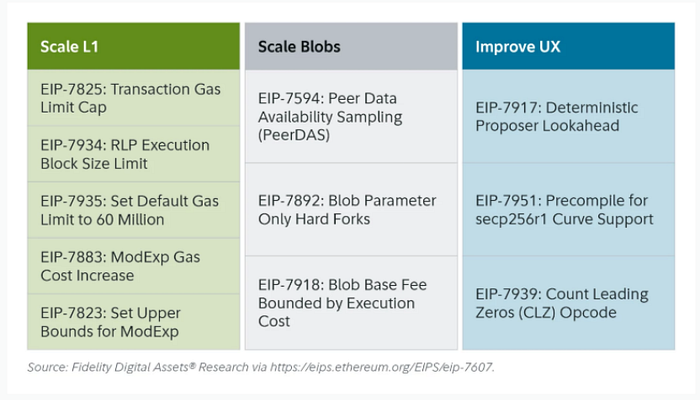
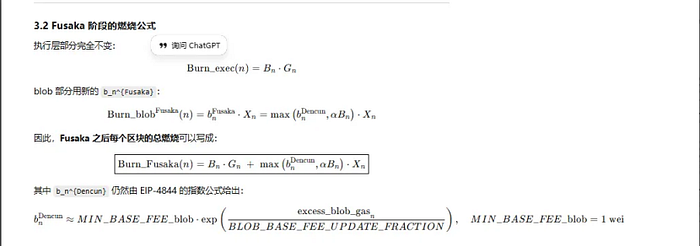
Through EIP-7918, ETH introduces a "dynamic floor price" for blob base fees, binding its lower limit to the L1 execution layer base fee, requiring blobs to pay DA fees at a unit price of at least approximately 1/16 of the L1 base fee. This means Rollups can no longer occupy blob bandwidth at near-zero cost for extended periods, and the corresponding fees will be burned and returned to ETH holders.


There are three upgrades related to "burning" in Ethereum:

(1) London (single-dimension): Only burns the execution layer; ETH begins to experience structural burning due to L1 usage.

(2) Dencun (dual-dimension + independent blob market): Burns execution layer + blob; L2 data written to blobs also burns ETH, but during low demand, the blob portion is almost zero.

(3) Fusaka (dual-dimension + blob bound to L1): To use L2 (blob), one must pay at least a fixed proportion of the L1 base fee, which is burned. L2 activity is more stably mapped to ETH burning.
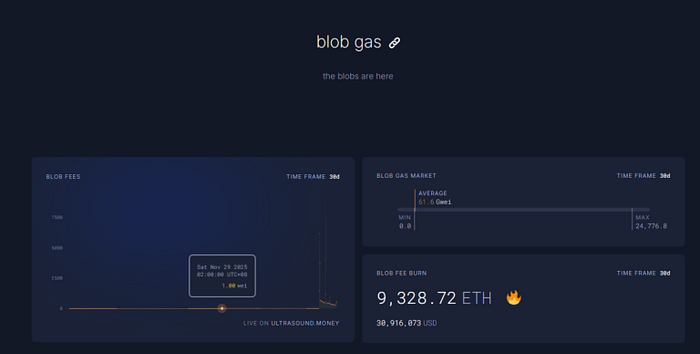
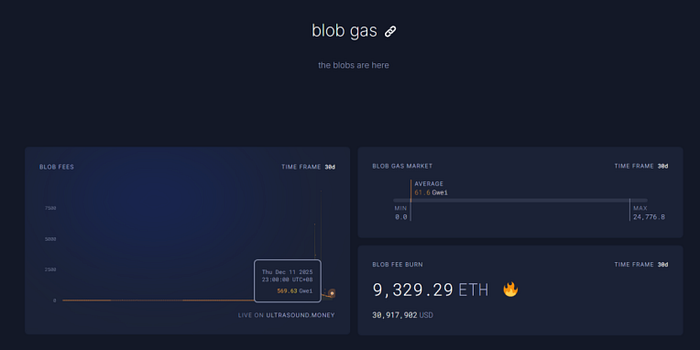
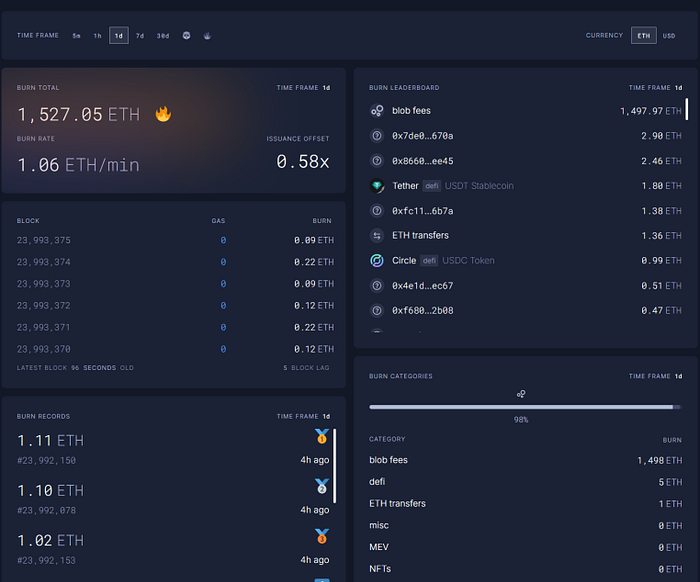
As of December 11th, 23:00, the 1-hour blob fees have increased by 569.63 billion times compared to pre-Fusaka upgrade, burning 1,527 ETH in one day. Blob fees now contribute the highest proportion to burning, accounting for 98%. As ETH L2 activity further increases, this upgrade is expected to return ETH to deflation.

3. Ethereum Technical Strength Improves

During the October 11th crash, ETH futures leverage was thoroughly cleared, eventually reaching the leverage of spot holdings. At the same time, many with insufficient faith in ETH led to early OG investors reducing their positions. According to Coinbase data, speculative leverage in the crypto space has dropped to a historically low region of 4%.

Press enter or click to view image in full size
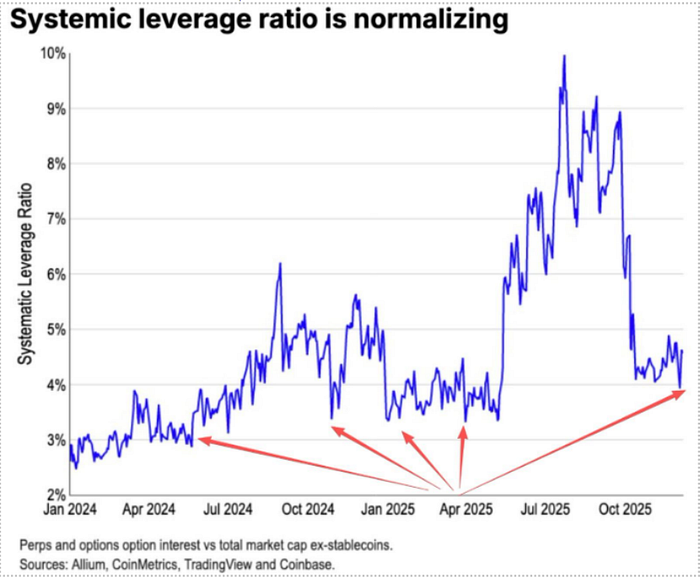
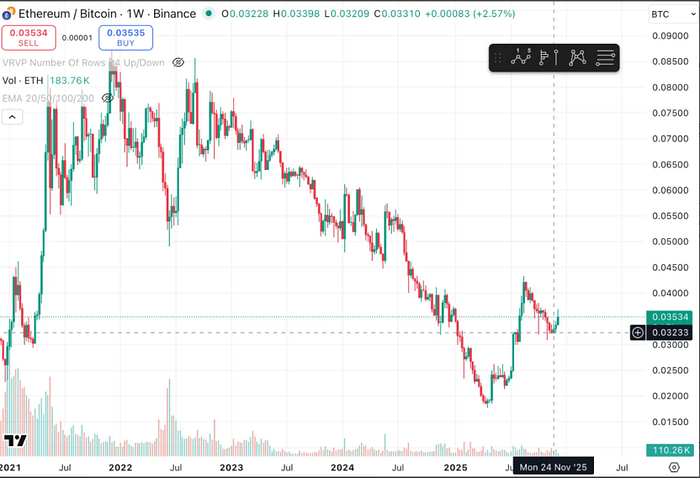
In the past, a significant portion of ETH short positions came from traditional Long BTC/Short ETH paired trades, which generally performed well during bear markets. However, this time, an unexpected change occurred. The ETH/BTC ratio has maintained a sideways resistance trend since November.


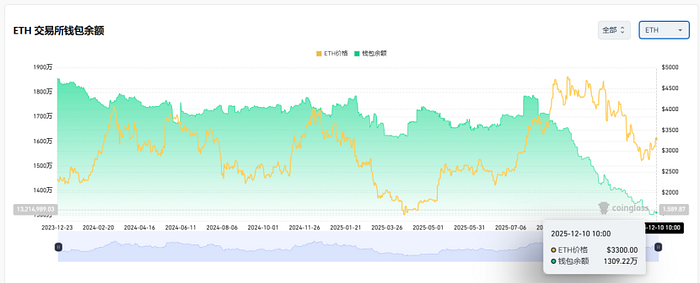
ETH currently has 13 million tokens on exchanges, about 10% of the total supply, which is at a historical low. As the Long BTC/Short ETH pairing has failed since November, during extreme market panic, a "short squeeze" opportunity may gradually emerge.


As we approach 2025–2026, the future monetary and fiscal policies of both China and the U.S. have released friendly signals:

The U.S. will actively pursue tax cuts, interest rate reductions, and relaxed crypto regulations, while China will adopt appropriate easing and financial stability measures (suppressing volatility).

Amid expectations of relative easing in both China and the U.S., and scenarios of suppressing downward asset volatility, ETH remains in a favorable "buying sweet spot" during extreme panic, with capital and sentiment not yet fully recovered.


Related Questions

QWhat is the core argument of the Trend Research report regarding Wall Street's involvement in crypto?

AThe report argues that Wall Street and Washington have established a deep capital network for crypto, forming a new narrative chain: US political and economic elites → US Treasury bonds → Stablecoins / Crypto Treasury Companies → Ethereum + RWA + L2. This signifies that dollar credit is flowing into US Treasuries, which back stablecoin reserves, and is ultimately deployed into various crypto treasuries and RWA protocols, settling on Ethereum and its Layer 2s.

QAccording to the report, what problem did the Ethereum Fusaka upgrade aim to solve?

AThe Fusaka upgrade aimed to address the problem of insufficient value capture by the L1 mainnet caused by the development of Layer 2 solutions. It introduced mechanisms, like EIP-7918, to ensure L2 activity more stably translates into ETH being burned, thereby capturing more value for ETH holders.

QHow did the Fusaka upgrade change the economic model for Ethereum's data blobs?

AFusaka introduced a 'dynamic floor price' for blob base fees via EIP-7918, binding its lower limit to the L1 execution layer base fee. It requires blobs to be paid for at a minimum price of approximately 1/16th of the L1 base fee. This prevents Rollups from long-term, near-zero cost usage of blob bandwidth and ensures fees are burned, benefiting ETH holders.

QWhat does the report indicate about the current state of leverage in the ETH market?

AThe report states that speculative leverage in the crypto market has been reduced to a historically low area of 4% on Coinbase. This indicates that both futures and spot leverage positions for ETH were heavily liquidated during the market downturn, leaving the market with very little speculative borrowing.

QWhat is the significance of the ETH/BTC trading pair's recent performance mentioned in the report?

AThe report highlights that the ETH/BTC ratio has maintained a sideways, resistant trend since November. This is significant because the 'Long BTC/Short ETH' paired trade, which typically performed well in past bear markets, has recently failed. This breakdown could create conditions for a potential short squeeze on ETH if market panic intensifies.

Related Reads

Bankless Co-founder: Why I Sold All My ETH

Author David Hoffman, founder of Bankless, explains his decision to sell all his ETH, despite being a prominent figure in the Ethereum ecosystem. He clarifies that his move is not a bearish take on Ethereum itself, which he remains highly optimistic about as a network. His core argument is that the "ETH is money" thesis, which he helped popularize, has largely played out. Hoffman argues that ETH has achieved the market valuation it deserves based on Ethereum's current success and competitive position. He details several reasons for this view. First, the path for ETH to become global money required nearly flawless execution and sustained dominance across Ethereum's entire technical and social stack—a coordination challenge he now believes had a narrower window for success than anticipated. Second, market data shows a strong correlation between L1 chain activity/fees and the price of its native asset; Ethereum's fee dominance has been challenged by competitors like Solana. Third, the "strong version" of crypto (decentralized, native crypto economies) that ETH's monetary thesis relied upon has struggled to maintain a positive mainstream narrative and stable adoption beyond a brief period. Finally, Ethereum's architecture as a "giver"—providing secure block space and tokenization capabilities at cost to L2s and applications—means it doesn't capture premium value directly. Its rollup-centric roadmap further directs most profits to L2s and applications ("fat app theory"). In conclusion, Hoffman believes the opportunity for ETH to be revalued significantly upward as money has diminished. He sold not because ETH will fail, but because its monetary thesis has matured, and he seeks to allocate capital to other opportunities he finds more compelling.

链捕手32m ago

Bankless Co-founder: Why I Sold All My ETH

链捕手32m ago

From Issuer to Infrastructure Owner: Circle's Arc Strategy and the Fatal Gap in the GENIUS Act

Circle raised $222 million for its proprietary Layer-1 blockchain, Arc, positioning itself not just as a stablecoin issuer but as the owner of the settlement infrastructure USDC relies on. This move, backed by investors like BlackRock and Apollo, highlights a significant structural conflict unaddressed by the GENIUS Act of 2025. While the act focuses on stablecoin reserves and issuer oversight, it remains silent on the market structure implications of an issuer controlling the underlying network—a scenario akin to a currency issuer also owning the payment rails. Traditionally, financial regulations separate issuers from settlement infrastructure to ensure neutrality. With Arc, Circle gains control over transaction ordering, fees, and network rules, potentially favoring USDC over competitors. The article argues that this creates a permanent structural temptation, even if no abuse occurs. The solution lies in applying established market infrastructure principles: mandating neutral transaction ordering, transparent fee schedules, and governance separated from Circle’s commercial interests. The current pre-mainnet phase offers a critical window for regulators to establish these rules before Arc becomes entrenched. Once operational, enforcing changes would be costly and disruptive. The core question remains: should a regulated stablecoin issuer be allowed to own the settlement network its competitors must use? The GENIUS Act doesn’t answer this, but Circle’s Arc strategy makes it urgent.

marsbit38m ago

From Issuer to Infrastructure Owner: Circle's Arc Strategy and the Fatal Gap in the GENIUS Act

marsbit38m ago

What Are the Key Variables Determining the AI Bull Market?

Title: What Determines the AI Bull Market? Key Variables Revealed Despite rising oil prices above $100/barrel, persistent inflation, and fragile Fed rate cut expectations—a traditionally hostile environment for high-valuation tech stocks—the AI sector continues to drive the market to new highs. According to analysts, the current AI boom is in a phase of "rational fervor": while bubbles exist, they are not yet out of control. The crucial shift is the emergence of Agentic AI, which is evolving from an assisting tool (Copilot) to an autonomous execution tool (Autopilot), creating a clearer commercial path from investment to revenue. This shift accelerates Token consumption and inference computing demand while boosting revenue forecasts for leading firms. The market is now rewarding capital expenditure as it transforms from a burden into a competitive moat, supporting hardware chains like GPUs, optical modules, and storage. However, valuations have already priced in growth expectations for 2027-2028. The forward P/E ratio for the "Magnificent Seven" tech giants is about 35x, compared to 25x for the rest of the S&P 500. This premium implies AI adoption must occur 5 to 8 times faster than past technological revolutions—a scenario with little room for error. The sustainability of the AI bull market hinges on three key variables: 1. **Short-term liquidity shocks**: Risks include sustained high oil prices, resurgent inflation, rising interest rates, and potential unwinding of the yen carry trade. The critical question is whether the upward revision speed of Annual Recurring Revenue (ARR) can outpace the rise in interest rates. 2. **Mid-term industry realization**: Can the actual pace of AI adoption and commercialization match the current lofty valuations? Historically, general-purpose technology revolutions follow a non-linear path with periods of acceleration and deceleration. 3. **Long-term structural constraints**: These include energy and power grid limitations, employment displacement and consumer purchasing power, social acceptance and potential backlash, and potential hardware technology breakthroughs that could disrupt current supply chains. While the long-term prospects for AI remain optimistic with potential for significant productivity gains, the stock market's pricing depends not just on the vision but on the actual speed of realization amid these growing constraints. The direction is clear, but the pace of execution will determine whether the bubble remains controlled or spirals out of control.

marsbit38m ago

What Are the Key Variables Determining the AI Bull Market?

marsbit38m ago

Trading

Spot
Futures

Hot Articles

Discussions

Welcome to the HTX Community. Here, you can stay informed about the latest platform developments and gain access to professional market insights. Users' opinions on the price of ETH (ETH) are presented below.

活动图片