Yilihua | Trend Research Latest Report: Wall Street Has Secretly Built Positions, Is Your ETH Still on Board?

marsbitPublished on 2025-12-12Last updated on 2025-12-12

Abstract

Following the market crash in October, the crypto sector has been subdued, but institutional momentum—particularly from Wall Street—is accelerating. U.S. SEC Chair Paul Atkins recently stated that the entire U.S. financial market could migrate on-chain within years, highlighting benefits like transparent ownership and T+0 settlement. A clear narrative is emerging: U.S. political and financial elites are driving a flow of capital from Treasury bonds → stablecoins → Ethereum and RWA protocols → ETH and L2 networks. Ethereum dominates RWA TVL, accounting for 64.5% of the total. The Fusaka upgrade represents a major step in improving Ethereum’s value capture. By introducing a dynamic base fee for blobs (EIP-7918), it ties L2 transaction costs to L1 fees, ensuring more consistent ETH burning. Blob fees now contribute 98% of burn volume, potentially returning ETH to a deflationary model as L2 activity grows. Technically, ETH appears stronger: leverage is near historic lows at 4%, exchange reserves are down, and the ETH/BTC ratio has held steady since November, reducing the effectiveness of popular short-ETH strategies. With anticipated monetary easing in both the U.S. and China, along with supportive regulation, ETH may be entering a favorable accumulation zone.

Since the market crash on October 11th, the entire crypto market has been sluggish, with market makers and investors suffering heavy losses. The recovery of capital and sentiment will take time. However, the crypto market is never short of new fluctuations and opportunities, and we remain optimistic about the future market. This is because the trend of mainstream crypto assets integrating with traditional finance to form new business models has not changed; instead, it has been rapidly building moats during the market downturn.

1. Wall Street Consensus Strengthens

On December 3rd, U.S. SEC Chairman Paul Atkins stated in an exclusive interview with FOX at the New York Stock Exchange: "In the coming years, the entire U.S. financial market may migrate on-chain."

Atkins mentioned:

(1) The core advantage of tokenization is that if assets exist on the blockchain, the ownership structure and asset attributes will be highly transparent. Currently, publicly listed companies often do not know who their shareholders are, where they are located, or where the shares are held.

(2) Tokenization also has the potential to achieve "T+0" settlement, replacing the current "T+1" trading settlement cycle. In principle, the delivery-versus-payment (DVP)/receive-versus-payment (RVP) mechanism on-chain can reduce market risks and improve transparency. The time gap between clearing, settlement, and fund delivery is currently a source of systemic risk.

(3) He believes tokenization is an inevitable trend in financial services, and mainstream banks and brokerages are already moving toward tokenization. The world may not even need 10 years... perhaps it will become a reality in just a few years. We are actively embracing new technologies to ensure the U.S. remains at the forefront in areas like cryptocurrency.

In reality, Wall Street and Washington have already built a deep capital network for crypto, forming a new narrative chain: U.S. political and economic elites → U.S. bonds (Treasury bonds) → stablecoins / crypto treasury companies → Ethereum + RWA + L2
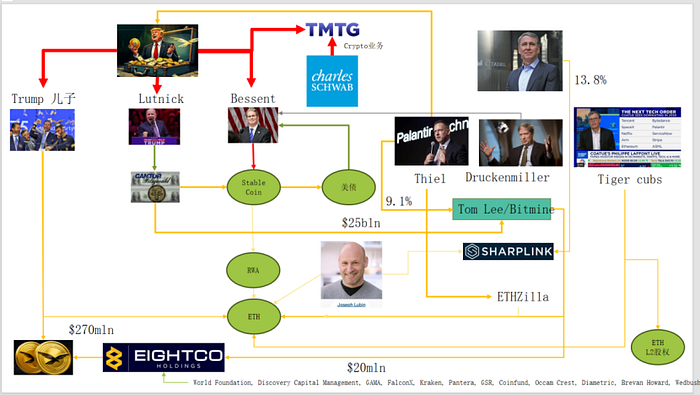
This diagram shows the intricate connections between the Trump family, traditional bond market makers, the Treasury, tech companies, and crypto companies, with the green elliptical links forming the backbone:

(1) Stablecoins (USDT, USDC, dollar assets behind WLD, etc.)

The majority of reserve assets are short-term U.S. bonds + bank deposits, held through brokers like Cantor.

(2) U.S. Bonds (U.S. Treasuries)

Issued and managed by the Treasury / Bessent side.

Used by Palantir, Druckenmiller, Tiger Cubs, etc., as low-risk interest rate base holdings.

Also the yield assets pursued by stablecoins / treasury companies.

(3) RWA

From U.S. bonds, mortgages, accounts receivable to housing finance.

Tokenized through Ethereum L1 / L2 protocols.

(4) ETH & ETH L2 Equity

Ethereum is the main chain for RWA, stablecoins, DeFi, and AI-DeFi.

L2 equity / tokens represent claims on future trading volume and fee cash flows.

This chain expresses:

U.S. dollar credit → U.S. bonds → stablecoin reserves → various crypto treasuries / RWA protocols → ultimately settled on ETH / L2.

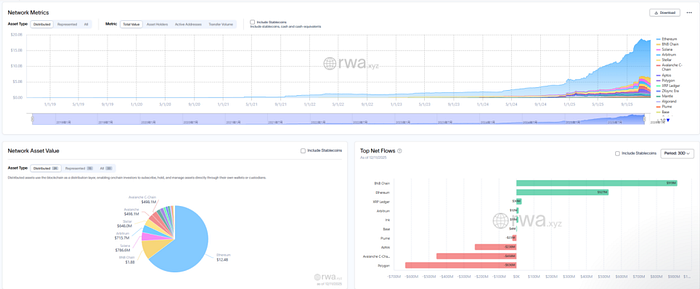
In terms of RWA TVL, compared to other public chains that declined after the October 11th crash, ETH is the only public chain that quickly recovered and rose. Its current TVL is $12.4 billion, accounting for 64.5% of the total crypto market.

2. Ethereum Explores Value Capture

The recent Ethereum Fusaka upgrade did not cause much stir in the market, but from the perspective of network structure and economic model evolution, it is a "milestone event." Fusaka is not just about scaling through EIPs like PeerDAS; it attempts to address the issue of insufficient value capture on the L1 mainnet caused by L2 development.
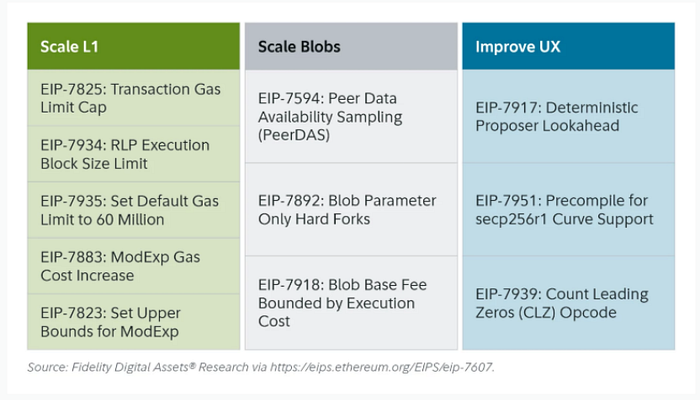
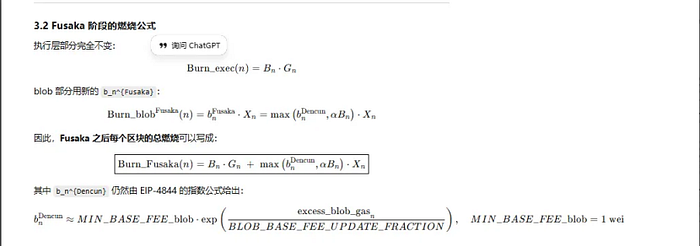
Through EIP-7918, ETH introduces a "dynamic floor price" for blob base fees, binding its lower limit to the L1 execution layer base fee, requiring blobs to pay DA fees at a unit price of at least approximately 1/16 of the L1 base fee. This means Rollups can no longer occupy blob bandwidth at near-zero cost for extended periods, and the corresponding fees will be burned and returned to ETH holders.


There are three upgrades related to "burning" in Ethereum:

(1) London (single-dimension): Only burns the execution layer; ETH begins to experience structural burning due to L1 usage.

(2) Dencun (dual-dimension + independent blob market): Burns execution layer + blob; L2 data written to blobs also burns ETH, but during low demand, the blob portion is almost zero.

(3) Fusaka (dual-dimension + blob bound to L1): To use L2 (blob), one must pay at least a fixed proportion of the L1 base fee, which is burned. L2 activity is more stably mapped to ETH burning.
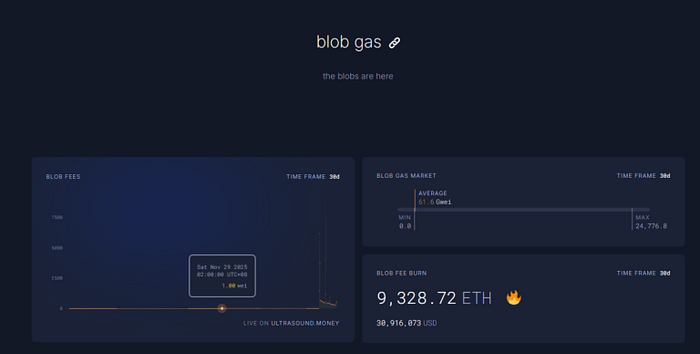
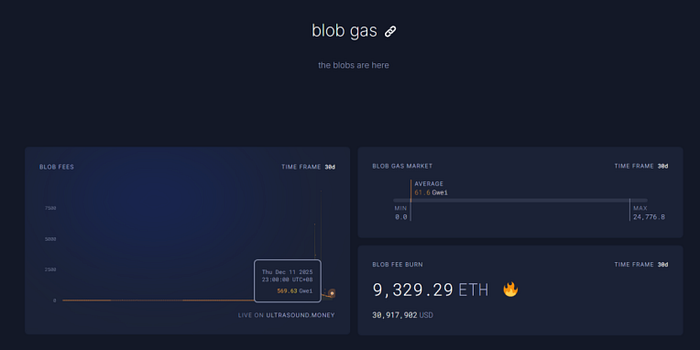
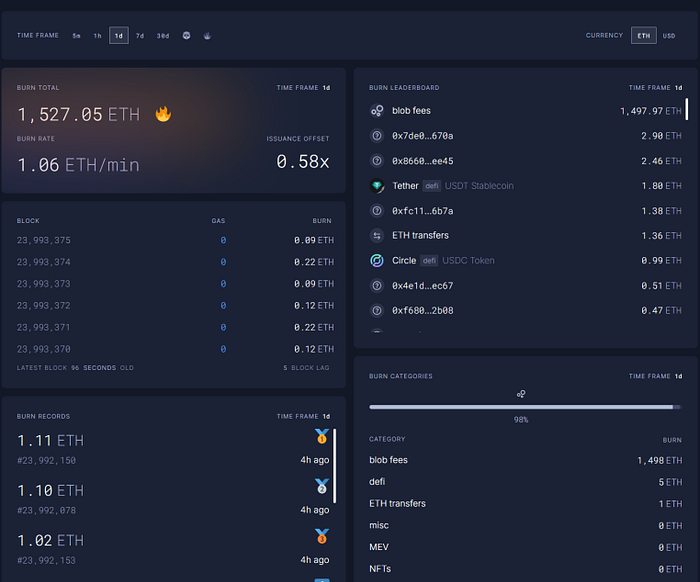
As of December 11th, 23:00, the 1-hour blob fees have increased by 569.63 billion times compared to pre-Fusaka upgrade, burning 1,527 ETH in one day. Blob fees now contribute the highest proportion to burning, accounting for 98%. As ETH L2 activity further increases, this upgrade is expected to return ETH to deflation.

3. Ethereum Technical Strength Improves

During the October 11th crash, ETH futures leverage was thoroughly cleared, eventually reaching the leverage of spot holdings. At the same time, many with insufficient faith in ETH led to early OG investors reducing their positions. According to Coinbase data, speculative leverage in the crypto space has dropped to a historically low region of 4%.

Press enter or click to view image in full size
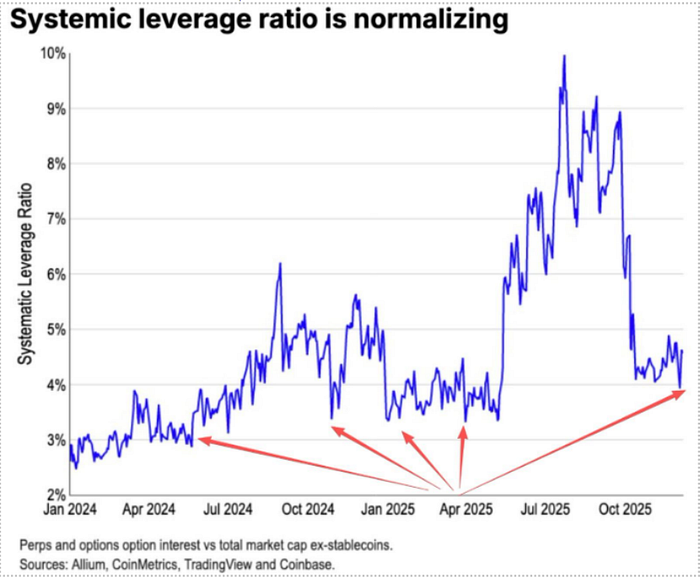
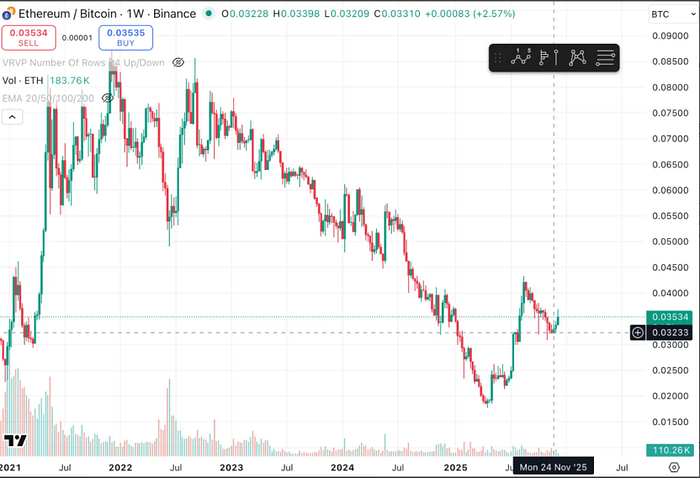
In the past, a significant portion of ETH short positions came from traditional Long BTC/Short ETH paired trades, which generally performed well during bear markets. However, this time, an unexpected change occurred. The ETH/BTC ratio has maintained a sideways resistance trend since November.


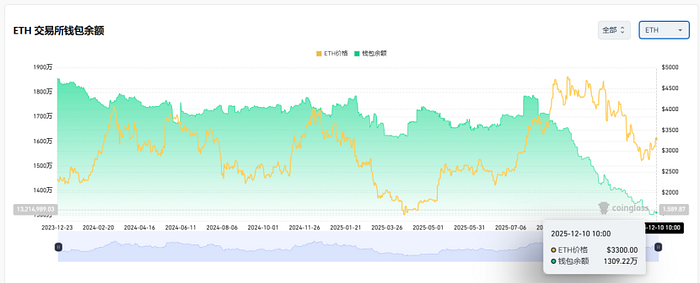
ETH currently has 13 million tokens on exchanges, about 10% of the total supply, which is at a historical low. As the Long BTC/Short ETH pairing has failed since November, during extreme market panic, a "short squeeze" opportunity may gradually emerge.


As we approach 2025–2026, the future monetary and fiscal policies of both China and the U.S. have released friendly signals:

The U.S. will actively pursue tax cuts, interest rate reductions, and relaxed crypto regulations, while China will adopt appropriate easing and financial stability measures (suppressing volatility).

Amid expectations of relative easing in both China and the U.S., and scenarios of suppressing downward asset volatility, ETH remains in a favorable "buying sweet spot" during extreme panic, with capital and sentiment not yet fully recovered.


Trending Cryptos

Related Questions

QWhat is the core argument of the Trend Research report regarding Wall Street's involvement in crypto?

AThe report argues that Wall Street and Washington have established a deep capital network for crypto, forming a new narrative chain: US political and economic elites → US Treasury bonds → Stablecoins / Crypto Treasury Companies → Ethereum + RWA + L2. This signifies that dollar credit is flowing into US Treasuries, which back stablecoin reserves, and is ultimately deployed into various crypto treasuries and RWA protocols, settling on Ethereum and its Layer 2s.

QAccording to the report, what problem did the Ethereum Fusaka upgrade aim to solve?

AThe Fusaka upgrade aimed to address the problem of insufficient value capture by the L1 mainnet caused by the development of Layer 2 solutions. It introduced mechanisms, like EIP-7918, to ensure L2 activity more stably translates into ETH being burned, thereby capturing more value for ETH holders.

QHow did the Fusaka upgrade change the economic model for Ethereum's data blobs?

AFusaka introduced a 'dynamic floor price' for blob base fees via EIP-7918, binding its lower limit to the L1 execution layer base fee. It requires blobs to be paid for at a minimum price of approximately 1/16th of the L1 base fee. This prevents Rollups from long-term, near-zero cost usage of blob bandwidth and ensures fees are burned, benefiting ETH holders.

QWhat does the report indicate about the current state of leverage in the ETH market?

AThe report states that speculative leverage in the crypto market has been reduced to a historically low area of 4% on Coinbase. This indicates that both futures and spot leverage positions for ETH were heavily liquidated during the market downturn, leaving the market with very little speculative borrowing.

QWhat is the significance of the ETH/BTC trading pair's recent performance mentioned in the report?

AThe report highlights that the ETH/BTC ratio has maintained a sideways, resistant trend since November. This is significant because the 'Long BTC/Short ETH' paired trade, which typically performed well in past bear markets, has recently failed. This breakdown could create conditions for a potential short squeeze on ETH if market panic intensifies.

Related Reads

Shanghai's $10 Billion Unicorn Is About to Go Public

Shanghai-based automotive-grade millimeter-wave radar chip unicorn Calterah Microelectronics Technology (Shanghai) Co., Ltd. has filed for an IPO on Shanghai's STAR Market, aiming to raise 3.49 billion yuan. Founded in 2014 by Chen Jiashu, a UC Berkeley PhD graduate, and his professor Ali Niknejad, Calterah pioneered CMOS technology for 77GHz radar chips, breaking the decades-long monopoly of international giants like Texas Instruments. Its low-cost, highly integrated solutions enabled millimeter-wave radar to move from luxury to mass-market vehicles. By 2025, Calterah captured a 31.1% share in China's automotive millimeter-wave radar chip market (second domestically, fourth globally), with cumulative shipments exceeding 30 million units. Its client list includes BYD, Geely, Nio, and Volvo. The company has undergone 11 funding rounds, attracting high-profile investors such as the National Integrated Circuit Industry Investment Fund Phase II, China Capital Management, and GD Capital. Its valuation has reached tens of billions of yuan, with a projected post-IPO valuation of approximately 14 billion yuan. Despite rapid revenue growth—increasing from 206 million yuan in 2023 to 632 million yuan in 2025 with a 75.28% CAGR—Calterah remains unprofitable. It reported net losses of 323 million yuan, 334 million yuan, and 193 million yuan from 2023 to 2025, accumulating over 900 million yuan in losses over three and a half years. These losses are primarily attributed to heavy R&D investment, which totaled over 1.039 billion yuan in the reporting period, often exceeding annual revenue. The company faces significant risks, including high customer concentration (its top five customers accounted for over 99% of revenue from 2023-2025, with BYD alone representing over 50% in 2025) and supply chain concentration. Revenue pressure from key customers and dependencies on overseas suppliers for EDA tools and IP pose challenges to sustainable growth. The IPO is seen as crucial for securing capital to expand production, diversify its customer base, and reduce supply chain dependencies.

marsbit12m ago

Shanghai's $10 Billion Unicorn Is About to Go Public

marsbit12m ago

Ray Dalio's Latest Macro Analysis Full Text: Buy More Gold, Add Some Bitcoin

In his latest macro analysis, Ray Dalio applies his framework from "How Countries Go Broke: The Big Cycle" to the current global debt environment. He highlights recent events like Japan selling U.S. Treasuries and rising U.S. long-term yields as signs of an unsustainable debt dynamic. Dalio explains that excessive government debt leads to either unacceptably high interest rates, severe economic downturns, or significant currency debasement through central bank money printing. He summarizes the U.S. fiscal situation: with $5.5 trillion in revenue, $7.5 trillion in spending, a $2 trillion deficit, and total debt at six times annual revenue, debt servicing costs are immense. Without correction, U.S. debt could reach $55-$60 trillion in a decade. Dalio proposes a "3% Three-Way" solution: reducing the budget deficit to 3% of GDP through balanced spending cuts, tax increases, and interest rate reductions to avoid a traumatic adjustment. In response to FAQs, he argues that the risk of a U.S. debt crisis is high and could materialize within a few years if the current path continues. He dismisses the notion that the dollar's reserve status makes the U.S. immune, citing historical precedents of reserve currency declines. He is also unconvinced by Japan's high-debt stability, noting poor returns for yen-denominated assets. For investors, Dalio recommends diversifying globally, underweighting bonds, and overweighting assets like gold and a small allocation to Bitcoin (around 10-15% to gold) to hedge against currency debasement and poor debt returns.

marsbit1h ago

Ray Dalio's Latest Macro Analysis Full Text: Buy More Gold, Add Some Bitcoin

marsbit1h ago

Stripe’s 16-Year Chronicle: From 7 Lines of Code to a $100 Billion Valuation

Stripe's 16-year journey began with a simple promise: "7 lines of code to accept payments." Founded by Patrick and John Collison, the company started by hiding the complexity of bank integrations and merchant accounts behind a clean API, initially targeting developers at startups. This early focus on user experience and technical simplicity fueled rapid adoption. A key early milestone was establishing vital bank partnerships, a challenge overcome by hiring Billy Alvarado, who brought crucial institutional relationship skills. From this foundation, Stripe systematically expanded its product boundaries. It launched Connect for platform payments, Atlas for company formation, Radar for fraud prevention, and Billing for subscriptions. This transformed Stripe from a payment processor into a broader financial infrastructure suite for internet businesses. The COVID-19 pandemic accelerated growth but also led to over-hiring. A 14% layoff in 2022 marked a period of organizational correction. Subsequently, Stripe shifted its growth strategy towards strategic acquisitions to enter new domains quickly. It acquired Bridge (stablecoin infrastructure), Privy (wallet infrastructure), Metronome (usage-based billing), and agreed to buy OpenRouter (AI model routing). These moves signal Stripe's ambition to build a "programmable money system" for the emerging AI and agent-based economy, managing not just currency flows but also the measurement and pricing of computational resources like AI tokens. Internally, Stripe leverages AI agents (like "Minions") to boost engineering productivity. Despite scaling to nearly 8,000 employees and processing $1.9 trillion in payment volume annually, the company remains private. A recent employee tender offer valued it at $159 billion. The core question for Stripe's future is whether it can successfully integrate its expanding product matrix—spanning payments, crypto, and AI infrastructure—into a cohesive platform, positioning itself as the foundational economic layer for autonomous software agents.

marsbit1h ago

Stripe’s 16-Year Chronicle: From 7 Lines of Code to a $100 Billion Valuation

marsbit1h ago

Treasury Secretary's Move to Suppress Treasury Yields Ignites 'Currency Debasement Trade'! Gold Hits Three-Month High, Bitcoin Surges Over 25% in a Single Week

US Treasury Secretary Besant's efforts to lower long-term Treasury yields by announcing expanded buybacks had only a brief market impact. However, this move fueled a "currency devaluation trade," weakening the US dollar while boosting both gold (to a three-month high) and Bitcoin (up over 25% for the week). Analysts attribute this reaction to deepening market concerns over the massive US fiscal deficit and structural pressures keeping long-term rates elevated, including fierce competition for capital from global government borrowing and massive AI sector financing. Despite the Treasury's actions, fundamental forces like growth, inflation, and capital demand are seen as limiting its ability to sustainably suppress yields. Bitcoin's strong positive correlation with gold has reinforced its narrative as a hedge against devaluation. While equity markets have shown resilience, some strategists warn that Treasury yields nearing 5% increase pressure on the dollar and high-leverage assets. Figures like Ray Dalio have advised reducing bond exposure in favor of gold and some Bitcoin, citing US debt risks. Market opinions are divided on the sustainability of the devaluation trade, with some noting the lack of a near-term catalyst for its next leg higher. The underlying tension between the Treasury's desire for lower borrowing costs and the Federal Reserve's focus on inflation and reducing market intervention remains a key theme. Upcoming events like Nvidia's earnings and the Jackson Hole symposium will test whether AI profits can continue supporting stocks and if the Fed aligns more with Washington's preference for easier financial conditions.

华尔街日报3h ago

Treasury Secretary's Move to Suppress Treasury Yields Ignites 'Currency Debasement Trade'! Gold Hits Three-Month High, Bitcoin Surges Over 25% in a Single Week

华尔街日报3h ago

Trading

Spot

Hot Articles

Discussions

Welcome to the HTX Community. Here, you can stay informed about the latest platform developments and gain access to professional market insights. Users' opinions on the price of ETH (ETH) are presented below.

活动图片