XRP shorts feel the heat – Why THIS is turning into a squeeze zone

ambcryptoPublished on 2026-01-23Last updated on 2026-01-23

Abstract

XRP shorts are under pressure as the token stabilizes near $1.95, with negative funding rates indicating bearish sentiment. Historical patterns show that such conditions often lead to sharp rebounds. Liquidation clusters are concentrated around $2.00–$2.05, increasing the risk of a short squeeze. Unlike previous cycles driven by speculation, current strength is supported by regulatory clarity, institutional adoption, XRP ETF inflows, and Ripple’s expanding ecosystem. These factors reinforce a structurally stronger market setup, making near-term upside momentum the most probable outcome. A flip to positive funding rates would confirm sustained bullish strength.

Ripple [XRP] shorts are facing mounting pressure as the token stabilizes around $1.95 and begins pushing higher.

Short positions have built up as funding rates stay negative. As a result, the recent bounce is forcing cover and fueling near-term upside momentum.

XRP Funding Rates turned negative as sellers crowded derivatives markets during price consolidation.

First, between August and September 2024, declining Spot momentum pushed perpetual funding below zero, signaling bearish positioning.

Then, a similar pattern reappeared during the April 2025 correction, as uncertainty and profit-taking intensified downside hedging.

Consequently, sentiment skewed defensive, while long holders stepped aside and volatility compressed. However, history shows this negativity often exhausts sellers.

As funding normalized, the price rebounded sharply, reflecting risk appetite. If negative funding persists, investors should watch for drawdowns and rising open interest.

Conversely, a flip back to positive rates warrants strategic reaccumulation.

XRP derivatives signal risk-off sentiment

According to CoinGlass data, XRP Funding Rates and price have exhibited closely correlated movement across market cycles.

From 2021 to mid-2023, XRP traded near $0.40-$0.60 while funding stayed flat to mildly negative, reflecting low conviction.

Then, in late 2024, the price surged above $3.00 as funding spiked toward +0.10%, signaling aggressive long positioning.

However, that imbalance preceded sharp pullbacks. During 2025, XRP corrected toward the $2.00-$2.50 range while funding slipped back below zero.

As a result, traders reduced leverage and shifted defensively. Mildly negative funding suggests cautious sentiment, historically associated with base building and potential trend resets.

What’s different this time?

Unlike past XRP cycles shaped by hype or regulatory drag, 2026 reflects a structurally stronger setup.

The regulatory overhang disappeared after the SEC case against Ripple closed in 2025, restoring the U.S. institutional access.

Spot XRP ETFs launched soon after and absorbed $1.3–1.4 billion in steady inflows, effectively tightening the liquid supply.

Meanwhile, Ripple’s acquisitions, RLUSD stablecoin expansion, and new licenses reinforced real-world settlement use.

Together, these shifts validate a higher price regime, as demand is now anchored in infrastructure, liquidity, and institutional adoption rather than speculative excess.

Liquidation clusters signal rising short squeeze risk

The Heatmap showed both clumps of liquidation that are concentrated around the range between $1.98 and $2.05, with the most populous at slightly above $2.00.

These levels were similar to the previous XRP structures in periods of extreme negative funding. The price was trading around $1.95 at press time, but downside liquidation pockets were not very strong, as they were below $1.90.

This imbalance matters. Short exposure at a price is accumulating overhead because the price is greater than $1.93-1.94. Every step of consolidation puts a strain on the market.

In the past, when XRP was under heavy accumulations such as this, even small spot bids would cause cascading short liquidations. Consequently, the $2.00 to $2.05 zone is gradually becoming a squeeze trigger instead of resistance.

To sum up, timing currently dominates, as squeeze risk and seller exhaustion outweigh pure directional conviction.

As a result, near-term upside momentum remains the highest-probability outcome despite ongoing consolidation.

Investors should watch out for the funding flip to positive as confirmation of sustained trend strength.


Final Thoughts

  • Negative funding and concentrated liquidation clusters above $2.00 signal rising short squeeze risk as XRP holds near $1.95 with limited downside liquidity.
  • At the same time, regulatory clarity, ETF inflows, and Ripple’s ecosystem expansion tighten supply, reinforcing upside resilience and favoring continuation over breakdown.


Trending Cryptos

Related Questions

QWhat is the current price level of XRP and why is it causing pressure on short positions?

AXRP is stabilizing around $1.95 and pushing higher, which is causing mounting pressure on short positions that have built up with negative funding rates. This price movement is forcing short covers and fueling near-term upside momentum.

QHow have XRP Funding Rates behaved during recent market cycles and what do they indicate?

AXRP Funding Rates turned negative during price consolidation periods in August-September 2024 and April 2025, signaling bearish positioning and defensive trading. Historically, this negativity often exhausts sellers, and when funding normalizes, the price tends to rebound sharply, reflecting renewed risk appetite.

QWhat fundamental factors make the current XRP cycle different from previous ones according to the article?

AUnlike previous cycles driven by hype or regulatory concerns, the 2026 cycle reflects a structurally stronger setup with regulatory clarity after the SEC case closure, spot XRP ETFs with $1.3-1.4 billion in inflows, Ripple's acquisitions, RLUSD stablecoin expansion, and new licenses that reinforce real-world settlement use.

QWhere are the key liquidation clusters concentrated and what risk do they signal?

ALiquidation clusters are concentrated between $1.98 and $2.05, with the most populous area slightly above $2.00. These clusters signal rising short squeeze risk as XRP trades near $1.95, and even small spot bids could trigger cascading short liquidations in this zone.

QWhat should investors watch for as confirmation of sustained trend strength in XRP?

AInvestors should watch for the funding rate flip back to positive as confirmation of sustained trend strength, which would warrant strategic reaccumulation and indicate a shift from defensive to aggressive positioning.

Related Reads

Foundation Steps Back, Ethlabs Steps Forward: Ethereum Undergoes Its Largest Restructuring in History

On June 23rd, the Ethereum ecosystem witnessed two major shifts, signaling a significant governance realignment. First, former Ethereum Foundation researchers established Ethlabs, a new independent non-profit. Backed by major ETH holders like Bitmine and SharpLink, Ethlabs aims to address practical needs for institutional adoption, including faster settlement, native asset issuance, cross-chain transactions, and mainnet scaling. Secondly, the Ethereum Foundation announced a major restructuring, laying off 54 employees (20% of its staff) to become a leaner entity focused on protocol governance and maintenance rather than being the primary builder. This move represents a pivotal correction. Criticisms had mounted over the Foundation's perceived slowness, lack of clear strategy, and over-reliance on Vitalik Buterin's influence. Ethlabs emerges as a more execution-oriented, "industrialized" layer focused on market adoption—bridging the gap between research and real-world use. Notably, Vitalik Buterin is absent from its list of supporters, interpreted as an intentional step to avoid excessive personal endorsement and allow the organization to build independent credibility. The Ethereum Foundation's downsizing and redefinition mark a retreat from its former central coordinating role. It now aims to share the "privilege of stewarding Ethereum" with other emerging groups like Ethlabs, the Ethereum Applications Guild, and The Ethereum Economic Zone. Analysts frame this dual shift as the Foundation ensuring Ethereum remains "correct" (credibly neutral), while Ethlabs must prove it remains "effective" (competitive and attractive for capital and adoption). This addresses community "shareholder-like anxiety" about ETH's market performance. While risks exist—such as concerns over shifting from Foundation centrality to large-holder influence—the consensus is that the greater risk for Ethereum was inaction, caught between technical idealism and organizational inertia. These steps aim to create a more multi-stakeholder, execution-driven future for the network.

链捕手4h ago

Foundation Steps Back, Ethlabs Steps Forward: Ethereum Undergoes Its Largest Restructuring in History

链捕手4h ago

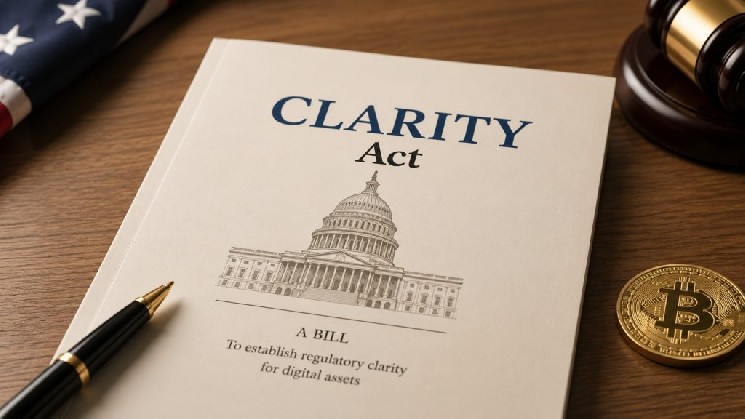
Second Half of U.S. Crypto Policy: The Clarity Act Aims for 60 Votes, CFTC's "One-Person Commission" Becomes Biggest Variable

In a pivotal year for US crypto policy, the "CLARITY Act" is advancing in the Senate but faces a high hurdle, needing 60 votes to pass. Key challenges include bridging partisan divides on ethics and swaying undecided Republican senators within a tight legislative calendar of only about 40 working days. The policy "second half" involves intense negotiations on a broader framework for Web3 and DeFi, including crypto tax reforms and the Blockchain Regulatory Certainty Act. A significant uncertainty is the understaffed CFTC, operating with four commissioner vacancies, which complicates regulatory clarity. Meanwhile, the departure of key "crypto champions"—SEC Commissioner Hester Peirce and Senator Cynthia Lummis—will impact ongoing policy efforts. Industry experts are cautiously optimistic but realistic. Sara K. Weed notes that while progress is being made, CLARITY is unlikely to pass this Congress, pushing agencies like the SEC and CFTC to provide more guidance. Sulolit Mukherjee suggests meaningful crypto tax legislation is more likely to be attached to larger must-pass bills. Rashan Colbert discusses the jurisdictional debate over prediction markets, emphasizing the need for a regulatory framework that fosters their development as financial tools rather than treating them broadly as gambling. The clock is ticking, but opportunities remain for substantive progress through continued bipartisan dialogue and pragmatic efforts.

marsbit7h ago

Second Half of U.S. Crypto Policy: The Clarity Act Aims for 60 Votes, CFTC's "One-Person Commission" Becomes Biggest Variable

marsbit7h ago

Research Report Analysis: Morgan Stanley Details SanDisk SNDK, The Truth About Cloud Data Center Pricing Power and AI Inference Benefits

Morgan Stanley raised its price target for SanDisk (SNDK) from $1100 to $1750 on June 22, maintaining an Overweight rating. The upgrade is driven by AI inference demand reshaping the NAND market, particularly for KV Cache and context window storage in cloud data centers. These cloud clients exhibit price inelasticity and sign long-term contracts, granting SanDisk significant pricing power. SanDisk's New Business Model (NBM) agreements, covering over one-third of FY27 bit shipments with 3-5 year terms and fixed price/price collar structures, are crucial. They are projected to sustain gross margins around 80% even at floor prices, providing a buffer against cyclical downturns. Morgan Stanley forecasts gross margins to surge from 30.3% in FY25 to 86.7% in FY27e. With NAND supply expected to remain tight into 2026/2027 and cloud/data centers becoming the largest end-market, SanDisk holds supply-side pricing power. The company targets 15-19% bit growth via technology transitions, not capacity expansion. Revenue is projected to grow ~6.6x from FY25 to FY27, with EPS rising from $2.74 to $14.73, driven by high-margin cloud business. Key upside catalysts include faster enterprise SSD adoption and edge AI growth. Downside risks involve slower industry growth, competitor capex increases, market share loss, and competition from Chinese players like YMTC. The investment thesis rests on AI-driven structural demand, NBM's margin protection, and sustained supply tightness. The $1750 target implies ~28x FY27e P/E.

marsbit8h ago

Research Report Analysis: Morgan Stanley Details SanDisk SNDK, The Truth About Cloud Data Center Pricing Power and AI Inference Benefits

marsbit8h ago

Trading

Spot
Futures

Hot Articles

What is XRP 2.0

XRP 2.0: A New Frontier in the Cryptocurrency Landscape Introduction to XRP 2.0 In the ever-evolving realm of cryptocurrency, new projects continuously emerge, vying for attention and adoption. One such promising initiative is XRP 2.0, a novel cryptocurrency project designed to leverage advanced blockchain technology and robust encryption methodologies. While the name draws parallels with Ripple’s XRP, it’s crucial to note that XRP 2.0 operates independently, focusing on enhancing transaction security, privacy, and scalability. As the digital financial landscape increasingly embraces decentralized solutions, XRP 2.0 aims to contribute meaningfully to web3 and the overall expansion of crypto projects. What is XRP 2.0? At its core, XRP 2.0 is a cryptocurrency project that aims to create a secure and decentralized digital currency ecosystem. Its foundational technology integrates sophisticated blockchain principles with cutting-edge encryption techniques. The overarching goal of XRP 2.0 is to establish itself as a reliable and efficient platform enabling swift transaction execution while prioritizing enhanced privacy protections for its users. The project is promoted as a solution to many limitations faced by existing cryptocurrencies, proposing a system that can handle a higher volume of transactions with improved speed and privacy. This versatility positions XRP 2.0 as a significant contender in a marketplace riddled with various digital currencies. Who is the Creator of XRP 2.0? The identity of the creator behind XRP 2.0 has been flagged as ‘Wilbur.’ However, comprehensive details regarding Wilbur or their associated entity remain elusive. The anonymity of many cryptocurrency creators is not an uncommon phenomenon in the industry, often designed to maintain a degree of privacy and security. Who are the Investors of XRP 2.0? As of now, specific information related to the investment foundations or organizations supporting XRP 2.0 is not publicly available. In the cryptocurrency sector, the backing by reputed investors can significantly influence a project's credibility and success, yet the transparency regarding the financial supporters of XRP 2.0 has not been established. How Does XRP 2.0 Work? XRP 2.0 stands out by employing a combination of blockchain technology and advanced encryption algorithms that ensures secure and decentralized transactions. Its innovative structure includes unique features designed to foster user engagement and broaden functionalities beyond conventional cryptocurrency transactions. Among these features, XRP 2.0 incorporates AI-powered capabilities, such as text-to-image and text-to-speech functionalities. These additions are designed to enhance the interactive experience for users, promoting broader applicability across various sectors. By bridging technological advancements with user-centered design, XRP 2.0 aims to capture the attention of a diverse range of individuals and enterprises looking to integrate cryptocurrency solutions into their operational frameworks. Timeline of XRP 2.0 Understanding XRP 2.0 requires examining the milestones that have defined its journey thus far: July 23, 2023: XRP 2.0 is introduced as a novel cryptocurrency project, aiming to revolutionize secure and decentralized transaction capabilities in the blockchain domain. September 8, 2023: The launching of another project, XRP20, occurs, marking the emergence of an ERC-20 token on the Ethereum blockchain that remains unrelated to XRP 2.0. November 13, 2023: The XRP Ledger undergoes a significant update with the release of rippled server software version 2.0.0. It is essential to note that this development is disconnected from the XRP 2.0 cryptocurrency project. Key Points About XRP 2.0 To distill the essence of XRP 2.0, several critical factors emerge: Unique Features: The inclusion of features like AI-powered text-to-image and text-to-speech further diversifies the potential applications of XRP 2.0. Blockchain Technology: The framework utilizes advanced blockchain mechanisms and encryption protocols, ensuring a secure and decentralized environment for transactions. Scalability and Privacy: XRP 2.0 prioritizes enhanced privacy protections in transaction processes and the scalability necessary to accommodate a growing user base. No Affiliation with Ripple: Importantly, despite its name, XRP 2.0 does not have any allegiance or collaboration with Ripple’s XRP, distinguishing its operational framework and objectives within the cryptocurrency ecosystem. Conclusion XRP 2.0 represents an ambitious venture into the cryptocurrency sphere, aiming to offer a combination of security, privacy, and efficiency in digital transactions. By integrating sophisticated technologies and user-friendly features, the project sets out to broaden the horizons of what cryptocurrency can achieve in today's digital economy. While the anonymity of its creator and lack of disclosed investors might raise questions for some, XRP 2.0's focus on advanced functionalities and decentralisation enhances its appeal amidst an increasingly crowded crypto market. As the cryptocurrency landscape continues to evolve, XRP 2.0 may yet emerge as a pivotal player in the expansion of secure and scalable blockchain solutions.

985 Total ViewsPublished 2024.04.01Updated 2024.12.03

What is XRP 2.0

Discussions

Welcome to the HTX Community. Here, you can stay informed about the latest platform developments and gain access to professional market insights. Users' opinions on the price of XRP (XRP) are presented below.

活动图片