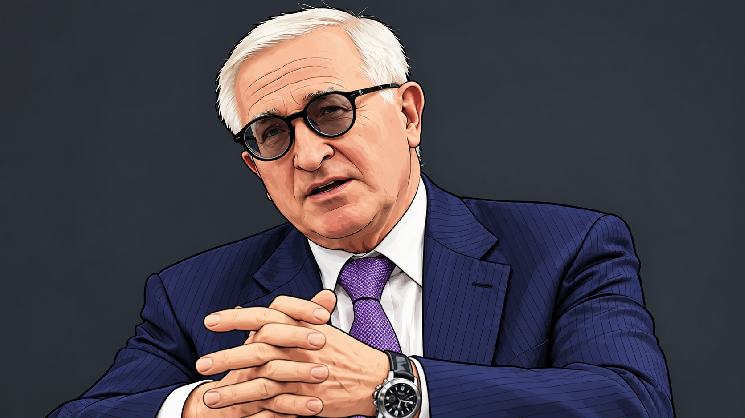
Joe Lonsdale is a co-founder of Palantir and a member of the "PayPal Mafia." Although he was 15 years younger than Peter Thiel and 12 years younger than Elon Musk during his time at PayPal, making him a "Junior kid," he witnessed up close the working styles of these two legendary figures and was personally involved in the early startup journey of Palantir.
Palantir is an American big data analytics company co-founded by Peter Thiel, Alex Karp, Joe Lonsdale, and others. The company focuses on providing customized AI platforms for government and commercial clients.
Here are his recollections of those years.
I. Elon and Peter: Two Completely Different Leaders
"Honestly, I usually didn't have meetings with Elon," Joe admitted. "But these are people with very strong opinions, very interested, very ambitious, and who move incredibly fast. They have zero tolerance for broken things. You have to fix it immediately. You get everything done today; there's no discussion about what to do next week."
Regarding the difference between the two, Joe described it this way:
"Peter is more like a strategist, philosopher, thinker. He's not a technical person. Elon is more like a hands-on doer. A few weeks ago I was in Palo Alto, and Elon was doing engineering reviews behind X.AI, he was right there working. He's more of a 'heads-down person'—pushing forward, solving technical problems in detail."
Who was the hardest worker?
"Elon has always been one of the hardest workers I've ever seen. But there were other engineers who were always there grinding away. In that kind of 'execution mode,' people like Max Levchin and others, as far as I could see, were always working."
Joe recalled the early PayPal atmosphere: "People would stay late into the night solving problems; they were passionate about the work."
The team was mostly in their 20s at the time. Joe noted that 16 different companies later spun out of PayPal, all rapidly growing into billion-dollar businesses—YouTube (Chad and Steve), LinkedIn (Reid Hoffman), Tesla and SpaceX (Elon), IronPort..."
"So much was born there."
II. The Palantir Startup Story
How did Joe become a co-founder of Palantir?
He was working at Peter Thiel's hedge fund at the time. "That fund was a bit of a mess, and I started bringing my smartest friends to help. They weren't interested in finance; they found it too boring."
Meanwhile, Peter and Joe often talked about their PayPal experiences: they had had to stop Russian and Chinese mafias from stealing money, which led them to meet people from the Secret Service and the FBI. Shortly after that, 9/11 happened.
"The government was spending $38 billion a year collecting data, analyzing data, and failed to stop the terrorists, while also abusing civil liberties. It was a complete mess."
They realized: Silicon Valley, Google, and PayPal's technology was far ahead of the government's. This was a problem, but also an opportunity.
"A, I want to stop bad guys from attacking us again, to catch them; B, I don't want everyone in the government to be able to see all my data without control. That's insane."
So they said: "Why don't we just do it ourselves?"
Joe started having that group of friends help build a prototype. It sounded crazier than finance, but at least it was interesting.
They went to VCs for funding—toured all of Sand Hill Road.
"Accel said no, Sequoia said no. The guy at Kleiner Perkins laughed at us on the phone because Alex Karp didn't have a technical degree. He said, 'You guys don't even know what you're doing. He's a Ph.D., but not even a relevant Ph.D.'"
Joe recalled that period: "Basically, they laughed us out of the room."
Peter Thiel told Joe: "This could be a good thing—it gives you a bigger chip on your shoulder, making you even more determined to succeed after being laughed at and rejected."
But Peter alone couldn't fund it all. Later they found the CIA's venture arm, which gave them a little money, and Peter gave more. "That was absolutely critical."
Joe revealed that the name Palantir came from Peter Thiel.
"When we were creating this thing, we said: 'This is a dangerous thing.' But we believed it was worth creating. That took a lot of courage."
They could have done many other things to make money, but what truly mattered was helping.
"We probably helped eliminate as many as 10,000 terrorists. We worked side-by-side with various government teams, helping them with technology and capability. We helped protect civil liberties, making sure the government watchers were also being watched."
Of course, he also acknowledged: "If this technology fell into the wrong hands, and the audit trail was turned off, who knows what bad things could be done with it. So, there's a good side and a bad side."
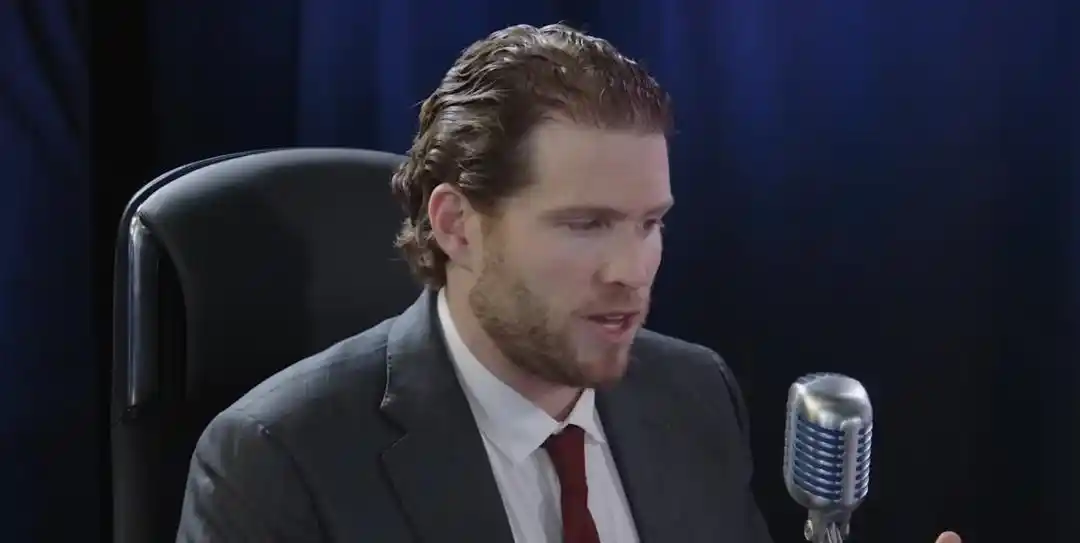
From PayPal to Palantir, Joe Lonsdale witnessed firsthand how two of Silicon Valley's most influential figures—Peter Thiel and Elon Musk—shaped culture, drove execution, and pursued mission. He also lived through how an idea that "everyone said was impossible" eventually became a giant that changed how governments fight terrorism.
And his summary perhaps carries the most weight: "When we were rejected by over 30 investors, laughed out the door, Peter said it could be a good thing—it makes you more driven to prove them wrong. He was right."
This article is from the WeChat public account "Backwave Evolution Planet," author: Mark