Was Ripple a Threat to Epstein and Co.? Why Traders Believe New Files Could Serve ‘Bullish for XRP’

ccn.comPublished on 2026-02-02Last updated on 2026-02-02

Abstract

Recent disclosures from the "Epstein Files" have reignited discussions about early power struggles in the cryptocurrency industry. A 2014 email revealed that figures tied to Bitcoin infrastructure, including Blockstream co-founder Austin Hill, viewed Ripple and Stellar as threats to their strategic vision. The correspondence, which included Jeffrey Epstein as a recipient, suggested that supporting these projects created a conflict of interest for investors aligned with Bitcoin-centric ventures. Some XRP traders argue these documents validate long-held claims that Ripple posed a serious competitive challenge to Bitcoin-aligned interests, interpreting this as "bullish" for the token. Ripple's former CTO, David Schwartz, suggested the email might be "the tip of a giant iceberg," indicating broader early opposition to Ripple. However, the documents do not show Epstein took any action against Ripple, only that he was included in high-level discussions. Despite trader optimism, XRP's price remains under pressure, trading around $1.64 with a bearish technical structure. Analysts note that reclaiming key resistance levels would be necessary for a significant recovery.

Recent disclosures from the “Epstein Files” have reignited debate over early power struggles in the cryptocurrency industry, after a 2014 email revealed that figures tied to Bitcoin infrastructure viewed Ripple and similar projects as a threat to their strategic vision.

The correspondence has prompted some XRP traders to argue that the documents validate long-held claims that Ripple posed a serious competitive challenge to Bitcoin-aligned interests—an interpretation they claim is “bullish” for the token.

Try Our Recommended Crypto Exchanges
Sponsored
Disclosure
We sometimes use affiliate links in our content, when clicking on those we might receive a commission at no extra cost to you. By using this website you agree to our terms and conditions and privacy policy.
"}' data-trk="67adf8d4f12aaec7e4808bf5" href="https://links.ccn.com/links?code=693291aa4a5bcb62319448b2" rel="nofollow" target="_blank">
Bitget"}' data-trk="67adf8d4f12aaec7e4808bf5" href="https://links.ccn.com/links?code=693291aa4a5bcb62319448b2" rel="nofollow" target="_blank">

Bitget

promotions
New user rewards up to 6,200 USDT."}' data-trk="67adf8d4f12aaec7e4808bf5" href="https://links.ccn.com/links?code=693291aa4a5bcb62319448b2" rel="nofollow" target="_blank"> New user rewards up to 6,200 USDT.
Coins
88
  • Bitcoin
  • Ethereum
  • Tether
  • Litecoin
  • Bitcoin Cash
  • TRON
  • Ripple
  • Cardano
  • Binance USD
  • USD Coin
  • Polkadot
  • Shiba Inu
  • Basic Attention Token
  • Qtum
  • Ethereum Classic
  • Chainlink
  • Solana
  • Polygon Matic
  • Cosmos
  • Wrapped Bitcoin
  • PancakeSwap
  • The Sandbox
  • Storj
  • iExec RLC
  • Bancor
  • Uniswap
  • Enjin Coin
  • 1inch Network
  • Chiliz
  • Aave
  • Synthetix
  • Maker
  • Compound
  • Theta Network
  • Celo
  • Curve DAO Token
  • Decentraland
  • JUST
  • Axie Infinity
  • Gala
  • Internet Computer
  • The Graph
  • Filecoin
  • dYdX
  • Mask Network
  • Lido DAO Token
  • Reserve Rights
  • Chromia
  • Ankr
  • Ocean Protocol
  • Adventure Gold
  • Origin Protocol
  • Celer Network
  • NKN
  • Bitget Token

  • Alchemix
  • Immutable
  • Ethereum Name Service
  • Avalanche
  • Zilliqa
  • JasmyCoin
  • Toncoin
  • Convex Finance
  • Spell Token
  • Holo
  • Render Token
  • SushiSwap
  • MetisDAO
  • Audius
  • Illuvium
  • ARPA Chain
  • Osmosis
  • Fantom
  • Neo
  • Arweave
  • Algorand
  • Kusama
  • XDC Network
  • APEcoin
  • MultiversX
  • THORChain
  • NEAR Protocol
  • Nexo
  • Amp
  • Livepeer
  • PAX Gold
  • TrueUSD
  • BitTorrent
  • Golem
  • FLUX
  • Helium
  • Dai
  • Build'N'Build
No result
Claim Offer
"}' data-trk="6899b9831836d97539c51aa6" href="https://links.ccn.com/links?code=693293fa4a5bcb6231949c97" rel="nofollow" target="_blank">
Bitunix"}' data-trk="6899b9831836d97539c51aa6" href="https://links.ccn.com/links?code=693293fa4a5bcb6231949c97" rel="nofollow" target="_blank">

Bitunix

promotions
Receive up to $100,000 worth of exclusive gifts for newcomers upon registration."}' data-trk="6899b9831836d97539c51aa6" href="https://links.ccn.com/links?code=693293fa4a5bcb6231949c97" rel="nofollow" target="_blank"> Receive up to $100,000 worth of exclusive gifts for newcomers upon registration.
Coins
151
  • Bitcoin
  • Ethereum
  • Tether
  • USD Coin
  • Solana
  • Ripple
  • Dogecoin
  • Cardano
  • Toncoin
  • Shiba Inu
  • Avalanche
  • TRON
  • Chainlink
  • Polygon Matic
  • Polkadot
  • Wrapped Bitcoin
  • Litecoin
  • Dai
  • NEAR Protocol
  • Bitcoin Cash
  • Stellar
  • Cosmos
  • Filecoin
  • Ethereum Classic
  • Aptos
  • Hedera Hashgraph
  • Immutable
  • Optimism
  • Arbitrum
  • VeChain
  • The Sandbox
  • Decentraland
  • Axie Infinity
  • Injective Protocol
  • Render
  • The Graph
  • Maker
  • Aave
  • Chiliz
  • Helium
  • PAX Gold
  • Compound
  • Lido DAO Token
  • Sui
  • Conflux Network
  • Lido Staked ETH
  • OKB
  • Uniswap
  • Pepe
  • Ondo
  • Mantle
  • First Digital USD
  • XDC Network
  • Artificial Superintelligence Alliance
  • Jupiter
  • Quant
  • Worldcoin
  • Bonk
  • Tether Gold
  • JITO
  • JasmyCoin
  • Core
  • Floki Inu
  • Ethereum Name Service
  • SushiSwap
  • 1inch Network
  • Tezos
  • Algorand
  • Flow
  • Trust Wallet Token
  • Curve DAO Token
  • MultiversX
  • Basic Attention Token
  • Enjin Coin
  • Ethena
  • Ethena Staked USDe
  • Audius
  • Alchemy Pay
  • Arkham
  • API3
  • Bounce Token
  • Altlayer
  • Aergo
  • Amp
  • Aevo
  • Ankr
  • Axelar
  • Alpaca Finance
  • Blur
  • Biconomy
  • Tranchess
  • Celer Network
  • Shentu
  • Civic
  • Convex Finance
  • Cartesi
  • Cyber
  • COTI
  • DIA
  • dYdX
  • ether.fi
  • FLUX
  • Ampleforth
  • Golem
  • Holo
  • Illuvium
  • JUST
  • Livepeer
  • Memecoin
  • Manta Network
  • Treasure
  • Mask Network
  • Origin Protocol
  • ORDI
  • Ontology
  • Phala Network
  • Pendle
  • Portal
  • Pyth Network
  • ConstitutionDAO
  • iExec RLC
  • Reserve Rights
  • Ravencoin
  • Storj
  • Status
  • Spell Token
  • Sun (New)
  • SuperVerse
  • Tellor
  • LayerZero
  • Scroll
  • Usual
  • Eigenlayer
  • Hamster Kombat
  • Catizen
  • Berachain
  • KAITO
  • Pudgy Penguins
  • Solayer
  • Bio Protocol
  • ChainGPT
  • Cookie DAO
  • Solv Protocol
  • Movement
  • DeXe
  • Nexo
  • Hyperliquid
  • STEPN
  • Synthetix
  • Neo
  • APEcoin
  • Gala
  • Internet Computer
  • Pi Network
  • IoTex
  • Build'N'Build
No result
Claim Offer
"}' data-trk="68f8c175c334f42ea614a1a4" href="https://links.ccn.com/links?code=693294144a5bcb623194a054" rel="nofollow" target="_blank">
BTCC"}' data-trk="68f8c175c334f42ea614a1a4" href="https://links.ccn.com/links?code=693294144a5bcb623194a054" rel="nofollow" target="_blank">

BTCC

promotions
Get up to 10,055 USDT when you register, verify, and make the first deposit and the first trades."}' data-trk="68f8c175c334f42ea614a1a4" href="https://links.ccn.com/links?code=693294144a5bcb623194a054" rel="nofollow" target="_blank"> Get up to 10,055 USDT when you register, verify, and make the first deposit and the first trades.
Coins
162
  • Ethereum
  • Tether
  • USD Coin
  • Solana
  • Ripple
  • Dogecoin
  • Cardano
  • Toncoin
  • Shiba Inu
  • Avalanche
  • TRON
  • Chainlink
  • Polygon Matic
  • Polkadot
  • Litecoin
  • NEAR Protocol
  • Bitcoin Cash
  • Stellar
  • Cosmos
  • Filecoin
  • Ethereum Classic
  • Aptos
  • Immutable
  • Optimism
  • Arbitrum
  • VeChain
  • The Sandbox
  • Decentraland
  • Axie Infinity
  • Injective Protocol
  • The Graph
  • Hedera Hashgraph
  • Render Token
  • Aave
  • Chiliz
  • PAX Gold
  • Compound
  • Lido DAO Token
  • THORChain
  • Stacks
  • Arweave
  • Sui
  • Conflux Network
  • Uniswap
  • Pepe
  • Ondo
  • Mantle
  • First Digital USD
  • Bittensor
  • Kaspa
  • Celestia
  • Artificial Superintelligence Alliance
  • Jupiter
  • Quant
  • Worldcoin
  • PayPal USD
  • Bonk
  • Rocket Pool ETH
  • Tether Gold
  • Sei
  • JITO
  • JasmyCoin
  • PancakeSwap
  • Floki Inu
  • Ethereum Name Service
  • SushiSwap
  • 1inch Network
  • Algorand
  • Flow
  • Trust Wallet Token
  • Curve DAO Token
  • Basic Attention Token
  • Enjin Coin
  • Ethena
  • Ethena USDe
  • Pi Network
  • Adventure Gold
  • Audius
  • Acala Token
  • Alchemy Pay
  • Arkham
  • API3
  • Bounce Token
  • Altlayer
  • Amp
  • Aevo
  • ARPA Chain
  • Ankr
  • Blur
  • Biconomy
  • Chromia
  • Celer Network
  • Celo
  • Civic
  • Convex Finance
  • Cartesi
  • COTI
  • DigiByte
  • DIA
  • Dymension
  • dYdX
  • ether.fi
  • FUNToken
  • FLUX
  • Ampleforth
  • Golem
  • GMX
  • Holo
  • IoTex
  • Illuvium
  • JUST
  • Liquity
  • Livepeer
  • Memecoin
  • Manta Network
  • Treasure
  • Mask Network
  • NKN
  • Neutron
  • Ocean Protocol
  • Origin Protocol
  • ORDI
  • Osmosis
  • Powerledger
  • Phala Network
  • Pendle
  • Portal
  • Pyth Network
  • ConstitutionDAO
  • iExec RLC
  • Rocket Pool
  • Reserve Rights
  • Storj
  • Starknet
  • Spell Token
  • Sun (New)
  • Saga
  • SuperVerse
  • Toko Token
  • Tellor
  • LayerZero
  • Usual
  • Cetus Protocol
  • Eigenlayer
  • Hamster Kombat
  • Neiro - First Neiro on Ethereum
  • Catizen
  • Berachain
  • KAITO
  • Pudgy Penguins
  • Solayer
  • Alchemix
  • Bitcoin
  • Bitcoin SV
  • Movement
  • Nexo
  • Hyperliquid
  • Nervos Network
  • TrueUSD
  • Mina
  • STEPN
  • Synthetix
  • APEcoin
  • Gala
  • Cronos
  • Internet Computer
  • Build'N'Build
No result
Claim Offer
Explore All Offers

Epstein Emails Show Pushback Against Ripple and Stellar

At the center of the renewed discussion is a July 31, 2014 email sent by Austin Hill, a co-founder and then chief executive of Bitcoin infrastructure firm Blockstream, to a small group that included Jeffrey Epstein, MIT Media Lab director Joi Ito and LinkedIn co-founder Reid Hoffman.

In the message, Hill warned that investor exposure to both Bitcoin-focused ventures and competing blockchain projects, specifically Ripple and Stellar, created what he described as a strategic and reputational conflict.

The email in question from the “Epstein Files.” | Credit: U.S. Department of Justice

Ripple, already operating as a cross-border payments network at the time, and Stellar, a newly launched project founded by former Ripple co-founder Jed McCaleb, were portrayed as misaligned with what Hill referred to as “the ecosystem we are building.”

Hill argued that investors effectively backing “two horses in the same race” risked undermining confidence among Bitcoin-centric developers and stakeholders.

David Schwartz, Ripple’s former chief technology officer, said the 2014 email could represent only a small portion of broader opposition Ripple faced during the industry’s early years.

Suggesting the document could be “the tip of a giant iceberg,” Schwartz said the message suggested that hostility toward Ripple and similar projects may have been more widespread than the correspondence alone indicates.

“This is an email from Austin Hill to Jeffrey Epstein explaining that Hill felt that support for Ripple or Stellar made someone an enemy/opponent,” Schwartz wrote on X.

“It seems quite likely that Hill and others expressed similar views to many other people,” he added.

He added that the “sad part” was that “we really are all in this together and this kind of attitude hurts everyone in the space.”

Broader Backlash Within Elite Networks

At the time, Bitcoin-aligned firms such as Blockstream were focused on building infrastructure tightly coupled to the Bitcoin network, while Ripple and Stellar pursued alternative ledger designs aimed at payments and financial institutions.

Epstein was included as a recipient. However, the released material provides no evidence that he authored the email, shaped its arguments, or directed any action against Ripple.

The documents only show that he received copies of discussions about perceived conflicts of interest among investors in rival crypto projects.

Bullish For XRP?

On X, some XRP supporters have seized on the documents as proof that powerful early industry players viewed Ripple as a threat.

“All of this information today from the Epstein Files makes me extremely bullish on XRP,” wrote one user.

Adding: “They were real deal out to get Ripple. They understand the power this company holds.”

Another user framed the revelations more starkly, suggesting that Epstein’s exposure to the debate implied recognition of Ripple’s significance.

“This is seriously bullish for XRP. They knew all along that we were going to the top, and wanted to stop Ripple.”

Traders bullish on XRP argue that the documents reinforce a narrative in which Ripple was not a fringe project but a serious competitor to Bitcoin-centric infrastructure efforts, even in the industry’s earliest stages.

For these traders, the emails show proof of early resistance to non-Bitcoin blockchain models, a resistance they say will likely be bullish for XRP’s price in the future.

What the Epstein Ripple Emails Do—And Do Not—Show

The released correspondence does not demonstrate that Epstein personally viewed Ripple as a threat, nor does it show that he took any action related to the concerns raised.

The documents show he participated in high-level discussions with technology investors and executives navigating a rapidly evolving crypto landscape.

The emails add context to long standing rivalries within the sector but stop short of establishing intent or influence beyond information sharing.

As with other materials from the Epstein Files, the disclosures have fueled speculation well beyond what the documents explicitly support.

XRP Price Outlook

At the time of reporting, XRP was trading at around $1.64, down around 13% in the last seven days.

Despite renewed optimism among some traders, XRP’s near-term price structure remains under pressure, according to technical analysis from Victor Olanrewaju, an analyst at CCN, who said bearish momentum continues to dominate the chart.

“On the daily chart, XRP has continued to print lower highs and lower lows,” Olanrewaju said on Friday.

He added that upside attempts have repeatedly failed.

“Each rebound has been capped at progressively lower levels, keeping bullish momentum weak and short-lived,” he said.

Fibonacci retracement levels suggest XRP is testing a critical area of support.

“The asset continues to trend lower and now hovers near the zero Fib level at $1.71,” Olanrewaju said, describing the zone as one that “often acts as the final support in a corrective move.”

He warned that a breakdown below that level could accelerate losses.

“Failure to hold this level would expose XRP to a deeper downside, with limited historical support below,” he said.

Olanrewaju noted that XRP could shift its market structure if it reclaims key resistance.

“If XRP pushes above its immediate resistance at $2.19, the bearish structure would begin to weaken, potentially opening the door to a broader recovery,” he said. “A sustained move beyond this level would suggest that buyers are finally absorbing sell pressure.”

“In a situation like that,” he added, “XRP’s price might rise toward $3.”

Top Picks for XRP
  • Best Exchanges for XRP Get A Great Offer When You Join These Exchanges
  • Buy XRP Fast & Easy How To Buy XRP With a Credit Card Now
  • Best Online Casinos for XRP See Our Picks for the Best Crypto Gambling Sites

Trending Cryptos

Related Questions

QWhat did the 2014 email from Austin Hill reveal about the perception of Ripple and Stellar within the Bitcoin community?

AThe 2014 email from Austin Hill, a co-founder of Blockstream, revealed that figures tied to Bitcoin infrastructure viewed Ripple and Stellar as a threat to their strategic vision. Hill warned that investor exposure to both Bitcoin-focused ventures and competing projects like Ripple and Stellar created a strategic and reputational conflict, arguing it risked undermining confidence among Bitcoin-centric developers and stakeholders.

QHow have some XRP traders interpreted the release of the 'Epstein Files'?

ASome XRP traders have interpreted the release of the 'Epstein Files' as validation that Ripple posed a serious competitive challenge to Bitcoin-aligned interests. They argue this is 'bullish' for the token, believing it proves powerful early industry players saw Ripple as a significant threat and that this early resistance could positively impact XRP's future price.

QWhat did Ripple's former CTO, David Schwartz, suggest about the email's significance?

ADavid Schwartz suggested that the 2014 email could be 'the tip of a giant iceberg,' indicating that hostility toward Ripple and similar projects may have been more widespread than the correspondence alone shows. He stated that Hill and others likely expressed similar views to many people, and he lamented that such an adversarial attitude hurts everyone in the cryptocurrency space.

QWhat does the article state about Jeffrey Epstein's direct involvement with the concerns raised about Ripple?

AThe article states that the released documents provide no evidence that Jeffrey Epstein authored the email, shaped its arguments, or directed any action against Ripple. The documents only show that he was included as a recipient of discussions about perceived conflicts of interest among investors in rival crypto projects, indicating he participated in high-level discussions but did not necessarily take action.

QWhat is the current technical analysis outlook for XRP's price according to the article?

AAccording to technical analyst Victor Olanrewaju, XRP's near-term price structure remains under pressure with bearish momentum dominating. XRP was trading around $1.64, down 13% in the last week, and was testing a critical support level at $1.71. A breakdown below this level could accelerate losses, while a move above the immediate resistance of $2.19 could weaken the bearish structure and potentially lead to a recovery toward $3.

Related Reads

Debate: Korean Workers Fear Unemployment, While Musk Envisions a Society 'Without Work'?

While South Korean auto workers fear job losses from robotics, Elon Musk envisions a future where AI and robots render most work optional. This article explores the growing tension between immediate anxieties over automation and long-term visions of a post-work society. The piece begins with recent strikes at Hyundai's Korean plants, where unions, amid standard wage negotiations, also sought job guarantees against advancing robotics—specifically mentioning Boston Dynamics' Atlas. This reflects how anxiety about technological displacement is emerging even before robots are fully capable of replacing skilled labor on assembly lines. The author argues that while current robotics still struggle with the nuanced, experiential knowledge of veteran workers, the *perception* of imminent replacement is fueling social conflict prematurely. This modern "Luddite" sentiment is compared to the 19th-century English textile workers who smashed machines. Historically, Luddites weren't simply anti-technology; they were protesting the rapid devaluation of their skills and the unequal distribution of productivity gains. Similarly, today's workers ask who will bear the cost of transition and share in the new wealth created by machines. In contrast, figures like Elon Musk propose an optimistic endpoint: with AI and robotics driving extreme abundance, the link between work and survival could break. He suggests concepts like "Universal High Income" could allow society to share the technological bounty, transforming work from a necessity into a choice. The core challenge, however, lies in the transition. The author notes that technology's benefits diffuse slowly, while its disruptive costs—job losses, skill obsolescence—can be concentrated and immediate. The risk is a painful interim period where productivity gains are captured by a few before new social contracts, safety nets, and retraining systems are established. The conclusion calls for proactive governance. Just as past industrial revolutions gave rise to labor standards and social safety nets, the robotics era needs its own frameworks. These should address job transition support, distribution of productivity gains, safety liability, and ethical deployment. Embracing such "constraints" is not opposition to progress but a necessary step to ensure technology benefits society broadly. The discussion sparked by Hyundai's workers, therefore, is not premature but essential.

marsbit3m ago

Debate: Korean Workers Fear Unemployment, While Musk Envisions a Society 'Without Work'?

marsbit3m ago

CATL Invests in a 00s Graduate from Harbin Institute of Technology

Contemporary Amperex Technology Co., Limited (CATL) has exclusively invested in the Pre-A round of RoboParty, a company founded by 22-year-old Huang Yi. A former student at Harbin Institute of Technology, Huang built a bipedal humanoid robot in his dorm room and later dropped out to launch RoboParty in Shanghai. The company focuses on developing a fully open-source platform for humanoid robots, combining self-developed hardware, operating systems (Party OS), and foundational models. RoboParty's strategy emphasizes open-source collaboration to accelerate development and build a developer ecosystem, positioning itself as foundational infrastructure for embodied AI. Since its 2025 founding, the team—composed largely of top-tier university graduates—has secured six funding rounds in eight months, with investors including Matrix Partners, Xiaomi, and now CATL. This investment by CATL's corporate venture arm signals strong industry confidence in RoboParty's potential for real-world manufacturing and complex scenarios. Huang Yi prioritizes technological excellence and developer community growth over rapid commercialization. The company has already garnered significant interest from developers and research institutions globally. With a focus on continuous, rapid iteration and open innovation, RoboParty aims to prove the versatility of humanoid robots and drive the field toward an open-source future.

marsbit6m ago

CATL Invests in a 00s Graduate from Harbin Institute of Technology

marsbit6m ago

Will SpaceX's First Quarterly Report Rescue Its Stock Price Under the Pressure of 1.2 Billion Shares Unlocking?

SpaceX is set to release its first quarterly earnings report since going public, a key test for its stock which has declined 20% from its IPO price. Approximately 9.12 billion shares are set to unlock on August 6, with an additional 3.19 billion following a week later, creating potential selling pressure from early investors. A strong report may be the only catalyst to reverse the downtrend. The report will cover three segments: Space, Connectivity (Starlink), and AI. The AI business, centered on the merged xAI, is the biggest uncertainty. While it generated $818 million in revenue last quarter, it also reported a $2.5 billion operating loss and $7.7 billion in capital expenditures. New data center rental agreements with Anthropic and Google, particularly the substantial $1.25 billion monthly deal with Anthropic, add significant revenue variability this quarter. Investors await guidance on AI's future outlook and the timeline for launching AI computing satellites via Starship. Starlink remains the stable profit driver, ending last quarter with 10.3 million subscribers. Key metrics will be user growth, average revenue per user (ARPU), and enterprise/government contract backlogs. The Space segment, which posted a $657 million operating loss last quarter, will be scrutinized for updates on Starship development following its 13th test flight and the pace of Falcon 9 launches, many of which support internal Starlink deployment. Wall Street expects Q2 revenue of around $6.9 billion and EBITDA of $2.1 billion. However, as this is the first earnings report, analyst forecasts lack a historical baseline and could see significant variance. With a current market cap of ~$1.4 trillion and a high valuation, the market's reaction post-earnings will hinge on the report's strength, the magnitude of post-lockup selling, and ongoing investor concerns.

marsbit6m ago

Will SpaceX's First Quarterly Report Rescue Its Stock Price Under the Pressure of 1.2 Billion Shares Unlocking?

marsbit6m ago

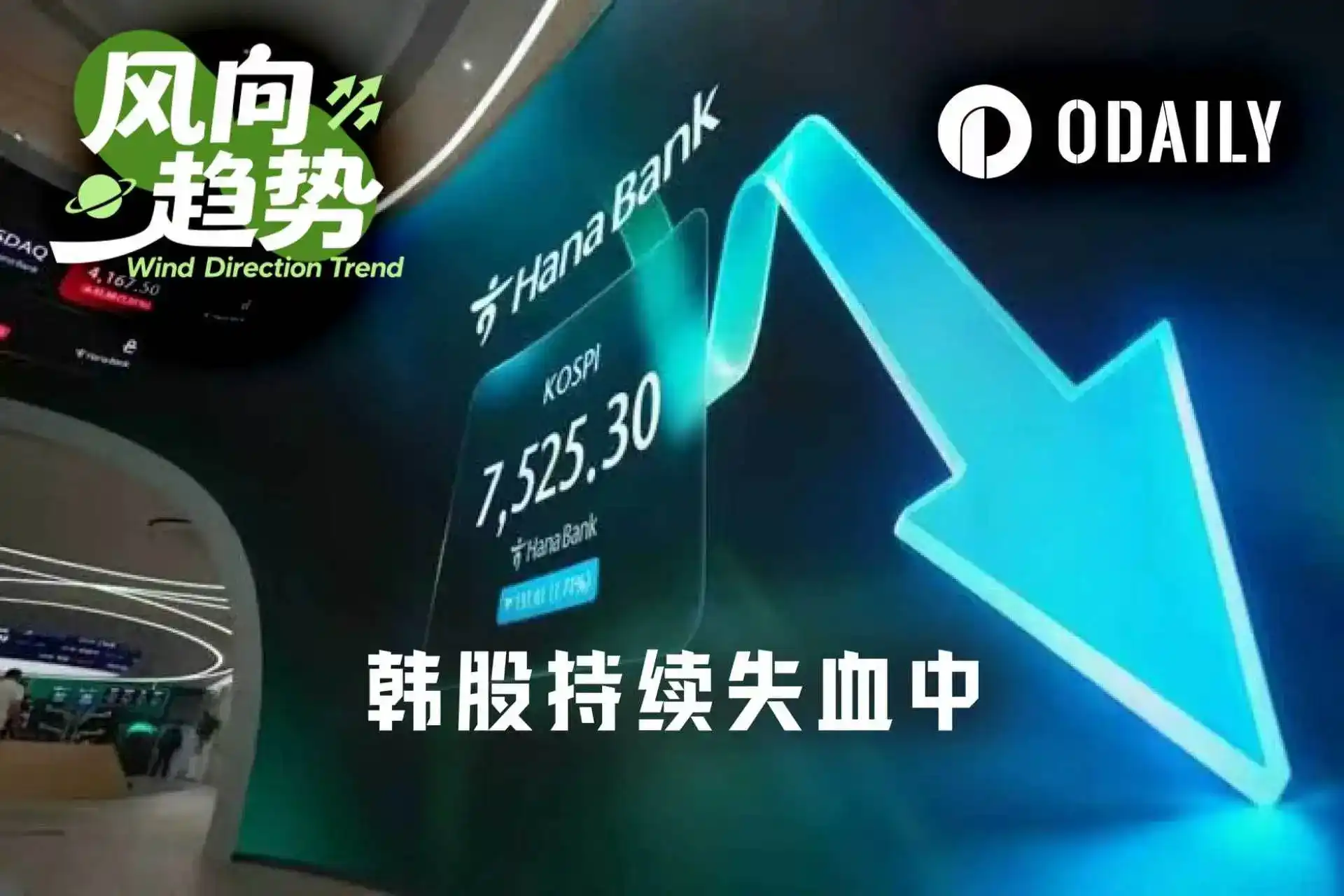
Soaring 20% Then Dropping 5%: When Will the Bottom of the Korean Stock Market Be?

"South Korean stocks face a turbulent period as the KOSPI index, after a 20% surge, fell 5% to 6257 points. The market is grappling with severe issues: over 500,000 leveraged retail accounts have been liquidated, and more than 24 trillion won has flowed from stocks into bank deposits for safety. This reflects a significant loss of market liquidity and shaken investor confidence. In response, Korean financial regulators are taking action. They have tripled the minimum保证金 (margin) requirement for single-stock leveraged ETF trades to 30 million won and are considering granting themselves "emergency intervention" powers. These could include capping leverage ratios and setting investment limits on these ETFs, seen by many as amplifying market volatility. Initial results show a 75% drop in these products' trading volume post-regulation. The market downturn has political repercussions, pushing President Yoon Suk-yeol's approval rating to a new low. Meanwhile, foreign investors made a record net purchase of 7.18 trillion won during a recent rebound, while domestic retail investors sold off massively. Morgan Stanley has upgraded South Korean stocks to "overweight," citing the ongoing "leverage unwinding" and potential for a 36% upside, with giants like Samsung Electronics and SK Hynix providing valuation support. However, analysts caution that the market's structure remains vulnerable to foreign capital flows, and the current low may not be the bottom."

marsbit21m ago

Soaring 20% Then Dropping 5%: When Will the Bottom of the Korean Stock Market Be?

marsbit21m ago

Trading

Spot

Hot Articles

What is XRP 2.0

XRP 2.0: A New Frontier in the Cryptocurrency Landscape Introduction to XRP 2.0 In the ever-evolving realm of cryptocurrency, new projects continuously emerge, vying for attention and adoption. One such promising initiative is XRP 2.0, a novel cryptocurrency project designed to leverage advanced blockchain technology and robust encryption methodologies. While the name draws parallels with Ripple’s XRP, it’s crucial to note that XRP 2.0 operates independently, focusing on enhancing transaction security, privacy, and scalability. As the digital financial landscape increasingly embraces decentralized solutions, XRP 2.0 aims to contribute meaningfully to web3 and the overall expansion of crypto projects. What is XRP 2.0? At its core, XRP 2.0 is a cryptocurrency project that aims to create a secure and decentralized digital currency ecosystem. Its foundational technology integrates sophisticated blockchain principles with cutting-edge encryption techniques. The overarching goal of XRP 2.0 is to establish itself as a reliable and efficient platform enabling swift transaction execution while prioritizing enhanced privacy protections for its users. The project is promoted as a solution to many limitations faced by existing cryptocurrencies, proposing a system that can handle a higher volume of transactions with improved speed and privacy. This versatility positions XRP 2.0 as a significant contender in a marketplace riddled with various digital currencies. Who is the Creator of XRP 2.0? The identity of the creator behind XRP 2.0 has been flagged as ‘Wilbur.’ However, comprehensive details regarding Wilbur or their associated entity remain elusive. The anonymity of many cryptocurrency creators is not an uncommon phenomenon in the industry, often designed to maintain a degree of privacy and security. Who are the Investors of XRP 2.0? As of now, specific information related to the investment foundations or organizations supporting XRP 2.0 is not publicly available. In the cryptocurrency sector, the backing by reputed investors can significantly influence a project's credibility and success, yet the transparency regarding the financial supporters of XRP 2.0 has not been established. How Does XRP 2.0 Work? XRP 2.0 stands out by employing a combination of blockchain technology and advanced encryption algorithms that ensures secure and decentralized transactions. Its innovative structure includes unique features designed to foster user engagement and broaden functionalities beyond conventional cryptocurrency transactions. Among these features, XRP 2.0 incorporates AI-powered capabilities, such as text-to-image and text-to-speech functionalities. These additions are designed to enhance the interactive experience for users, promoting broader applicability across various sectors. By bridging technological advancements with user-centered design, XRP 2.0 aims to capture the attention of a diverse range of individuals and enterprises looking to integrate cryptocurrency solutions into their operational frameworks. Timeline of XRP 2.0 Understanding XRP 2.0 requires examining the milestones that have defined its journey thus far: July 23, 2023: XRP 2.0 is introduced as a novel cryptocurrency project, aiming to revolutionize secure and decentralized transaction capabilities in the blockchain domain. September 8, 2023: The launching of another project, XRP20, occurs, marking the emergence of an ERC-20 token on the Ethereum blockchain that remains unrelated to XRP 2.0. November 13, 2023: The XRP Ledger undergoes a significant update with the release of rippled server software version 2.0.0. It is essential to note that this development is disconnected from the XRP 2.0 cryptocurrency project. Key Points About XRP 2.0 To distill the essence of XRP 2.0, several critical factors emerge: Unique Features: The inclusion of features like AI-powered text-to-image and text-to-speech further diversifies the potential applications of XRP 2.0. Blockchain Technology: The framework utilizes advanced blockchain mechanisms and encryption protocols, ensuring a secure and decentralized environment for transactions. Scalability and Privacy: XRP 2.0 prioritizes enhanced privacy protections in transaction processes and the scalability necessary to accommodate a growing user base. No Affiliation with Ripple: Importantly, despite its name, XRP 2.0 does not have any allegiance or collaboration with Ripple’s XRP, distinguishing its operational framework and objectives within the cryptocurrency ecosystem. Conclusion XRP 2.0 represents an ambitious venture into the cryptocurrency sphere, aiming to offer a combination of security, privacy, and efficiency in digital transactions. By integrating sophisticated technologies and user-friendly features, the project sets out to broaden the horizons of what cryptocurrency can achieve in today's digital economy. While the anonymity of its creator and lack of disclosed investors might raise questions for some, XRP 2.0's focus on advanced functionalities and decentralisation enhances its appeal amidst an increasingly crowded crypto market. As the cryptocurrency landscape continues to evolve, XRP 2.0 may yet emerge as a pivotal player in the expansion of secure and scalable blockchain solutions.

1.3k Total ViewsPublished 2024.04.01Updated 2024.12.03

What is XRP 2.0

Discussions

Welcome to the HTX Community. Here, you can stay informed about the latest platform developments and gain access to professional market insights. Users' opinions on the price of XRP (XRP) are presented below.

活动图片