Variant: Bitcoin, Ethereum, and ZCash Highly Likely to Become Major Stores of Value

marsbitPublished on 2026-06-03Last updated on 2026-06-03

Abstract

At Variant, our investment philosophy centers on enabling individuals to own their money, identity, and data. We believe all tokens fall into two categories: stores of value (SOV) or equity-like instruments. The SOV framework is particularly useful for evaluating Layer 1 (L1) blockchains, which are major monetary coordination protocols. A good store of value should possess: 1) Technical durability, 2) Scarcity, 3) Censorship resistance, 4) Economic productivity, 5) Strong memetics, and 6) Liquidity. The total addressable market for SOV assets is massive, with gold alone valued at $31 trillion. Three L1 assets stand out as prime candidates for becoming major stores of value: Bitcoin (BTC), Ethereum (ETH), and ZCash (ZEC). Bitcoin excels in memetic dominance as "digital gold." Ethereum demonstrates superior technical durability and adaptability through its upgradeable roadmap. ZCash offers exceptional censorship resistance and privacy via its shielded transactions. While digital SOVs outperform traditional ones like gold on many metrics, they still represent a small fraction of the overall SOV market, presenting a significant growth opportunity.

Author: Alana Levin, Variant

Compiled by: Hu Tao, ChainCatcher

At Variant, the core of our investment philosophy is the belief that people should be able to own their money, identity, and data.

We seek out large markets that can support and expand the ability of individuals and organizations to access and own the resources they need for daily life. Our investments in crypto networks have turned many of these ideas into reality. These networks are coordination protocols centered on sovereignty and autonomy.

However, many questions remain about how to evaluate the value of these networks. Different protocols and projects vary greatly in their goals, so the key fundamental metrics for tracking success and predicting growth also differ.

We believe all tokens can be categorized into one of two types: Store of Value (SOV) assets or equity-like instruments. In particular, we find the Store of Value framework very useful for evaluating first-layer blockchains (L1s)—one of the largest and most important monetary coordination protocols in the modern financial system.

Through in-depth discussion, we have identified a series of fundamental metrics for understanding, evaluating, and tracking the future development of these networks. This article aims to elaborate on part of this thought process, hoping to provide a useful reference for others thinking about these assets.

L1 Assets Can Serve as Stores of Value

One of our core frameworks is that L1s can be analyzed and modeled as stores of value.

So, what kind of asset qualifies as a good store of value? Our key fundamentals are as follows (roughly in order of importance):

Technical Durability: Will this asset still exist in 5-10 years? To what extent will its appearance/function remain unchanged?

Scarcity: Is this asset widely available and easy to obtain? How easily can this asset be inflated? How predictable is its inflation curve?

Censorship Resistance: How easy is it for a single entity to seize this asset? To what extent can economic activity associated with this asset be prevented or shut down?

Economic Productivity: Can this asset be used to facilitate economic activity? How useful is it in finance, for example, does it have collateral value?

Memetics: Do others consider this asset to have store-of-value functionality? An important characteristic of any currency is social consensus on its value and utility.

Liquidity: Is this asset widely accessible to all who wish to include it in their portfolio (regardless of size)? We consider this last because it is often a downstream effect of mimetic behavior; liquidity tends to beget more liquidity, and the greater the interest in a given asset, the more likely its scale (relative to inflationary currencies) is to grow. Bitcoin was not very liquid in its first few years, but it is now one of the most liquid assets in the world.

Few markets are larger than the total addressable market (TAM) for stores of value. Gold—the largest and most widely recognized store of value—has a market capitalization of $31 trillion. Silver also has a market cap of $4 trillion. We believe that some L1s have the potential to become superior stores of value.

Sovereign Wealth Fund Assets

Currently, three L1 assets stand out as highly likely to become major stores of value: Bitcoin (BTC), Ethereum (ETH), and ZEC. In our framework, they each excel in different dimensions.

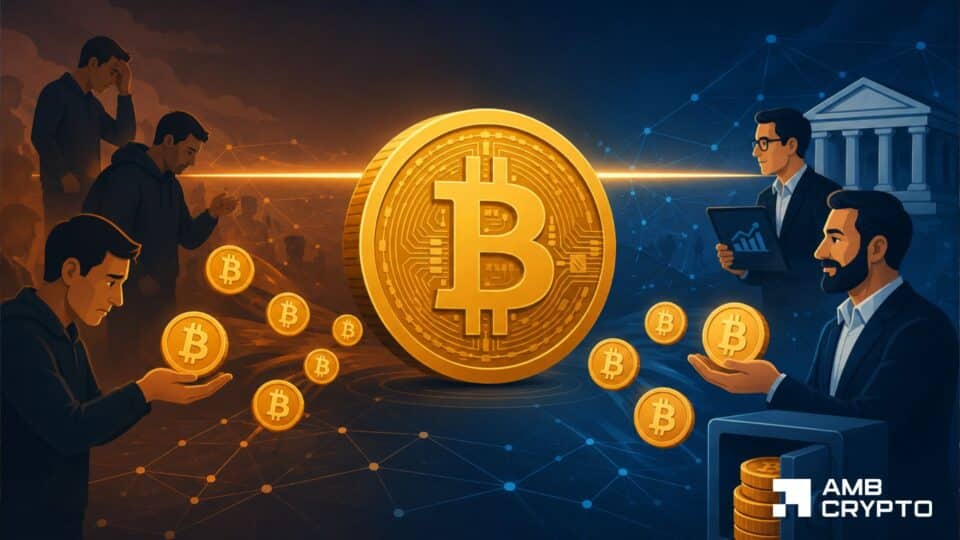
Bitcoin dominates in memetic recognition, earning the moniker 'digital gold.' The powerful reflexivity of strong memes is a potent force and an important fundamental consideration for any store-of-value contender: the more people believe Bitcoin has store-of-value properties, the more likely peripheral groups are to believe it as well. Over the past fifteen years, individuals, funds, corporations, institutions, and even nations have invested in this belief.

Ethereum may be more technically durable than Bitcoin. It is easier to upgrade, and its roadmap provides transparent, trackable, and verifiable insight into the future plans of its developer community. Looking ahead—and at new risks posed by innovations like quantum computing—we view this adaptability as a strength, not a flaw. The core belief of any high-quality sovereign asset is that it will still exist in ten years. Ethereum has already demonstrated strong resilience, enduring significant technical and social challenges—such as The DAO hack, The Merge, etc.—and we believe it will continue to thrive in this regard.

ZCash excels in censorship resistance and privacy. The mere option provided by its shielded pools (ZCash's private transaction feature) allows individuals to avoid risks of future wealth confiscation or pervasive state surveillance. This is an enduring advantage of ZCash, offering individuals a long-term path to protect their assets.

Overall, stores of value are a multi-trillion dollar market. This is evident from the current state. We believe this sector will continue to grow at a high speed, and multiple stores of value can coexist.

However, surveying today's market landscape, despite digital sovereign stores of value (SOVs) surpassing gold or silver on many of the aforementioned fundamental metrics, they still represent only a small fraction of the total SOV market. For us, this presents an ambitious and exciting opportunity.

Related Questions

QAccording to the article, what are the two main categories that all tokens can be classified into?

AAll tokens can be classified into one of two categories: store-of-value (SOV) assets or equity-like instruments.

QWhat are the six key attributes, roughly ordered by importance, that define a good store-of-value asset according to the author's framework?

AThe six key attributes are: technical durability, scarcity, censorship-resistance, economic productivity, memetics, and liquidity.

QWhich three layer-1 (L1) assets are highlighted in the article as most likely to become major stores of value, and what is the primary strength of each?

AThe three L1 assets are Bitcoin (BTC), Ethereum (ETH), and ZEC. Bitcoin's primary strength is its dominant memetic perception as 'digital gold'. Ethereum's strength is its superior technical durability and adaptability. ZCash's strength is its excellence in censorship-resistance and privacy protection.

QWhat is the estimated total market capitalization of gold, cited in the article as the largest store-of-value?

AThe estimated total market capitalization of gold is $31 trillion.

QWhy does the article consider the store-of-value (SOV) market to be an ambitious and exciting opportunity for digital assets?

ADespite digital sovereign assets excelling on many fundamental metrics compared to gold or silver, they still represent a very small proportion of the total SOV market. This gap represents a significant growth opportunity.

Related Reads

The Rally That Wasn't

The article analyzes Bitcoin's sharp decline amid a shift in macroeconomic expectations, with strong US job data leading markets to price out Fed rate cuts. Bitcoin fell 13% to around $67,000, triggering significant outflows from US spot ETFs and indicating institutional de-risking. On-chain data confirms a bearish structure. Price has dropped back into the "bear market range," with the Short-Term Holder Cost Basis falling below a key mean level—a pattern last seen in early 2022. The profitability bias has collapsed, with loss realization now dominating, mirroring a panic wave from February. Recent buyers who accumulated near the $82k top are under pressure, and loss realization is accelerating across both short-term and long-term holder cohorts. Off-chain, the rally failed at the aggregate US ETF cost basis near $83k, turning it into resistance. Spot market demand has deteriorated sharply, with sellers dominating order books. While a major long liquidation event cleared over $400M in leverage, spot buyers have not returned to absorb supply. Options markets show sustained demand for downside protection (elevated put premiums) but not panic, with volatility premiums near three-month highs. The conclusion is that the market remains fragile, with overhead supply from trapped ETF investors, weak spot demand, and accelerating losses. Without a return of spot buying and a reclaim of key cost bases, Bitcoin is vulnerable to further downside within the prevailing bear market structure.

insights.glassnode1h ago

The Rally That Wasn't

insights.glassnode1h ago

Trading

Spot
Futures

Hot Articles

What is $BITCOIN

DIGITAL GOLD ($BITCOIN): A Comprehensive Analysis Introduction to DIGITAL GOLD ($BITCOIN) DIGITAL GOLD ($BITCOIN) is a blockchain-based project operating on the Solana network, which aims to combine the characteristics of traditional precious metals with the innovation of decentralized technologies. While it shares a name with Bitcoin, often referred to as “digital gold” due to its perception as a store of value, DIGITAL GOLD is a separate token designed to create a unique ecosystem within the Web3 landscape. Its goal is to position itself as a viable alternative digital asset, although specifics regarding its applications and functionalities are still developing. What is DIGITAL GOLD ($BITCOIN)? DIGITAL GOLD ($BITCOIN) is a cryptocurrency token explicitly designed for use on the Solana blockchain. In contrast to Bitcoin, which provides a widely recognized value storage role, this token appears to focus on broader applications and characteristics. Notable aspects include: Blockchain Infrastructure: The token is built on the Solana blockchain, known for its capacity to handle high-speed and low-cost transactions. Supply Dynamics: DIGITAL GOLD has a maximum supply capped at 100 quadrillion tokens (100P $BITCOIN), although details regarding its circulating supply are currently undisclosed. Utility: While precise functionalities are not explicitly outlined, there are indications that the token could be utilized for various applications, potentially involving decentralized applications (dApps) or asset tokenization strategies. Who is the Creator of DIGITAL GOLD ($BITCOIN)? At present, the identity of the creators and development team behind DIGITAL GOLD ($BITCOIN) remains unknown. This situation is typical among many innovative projects within the blockchain space, particularly those aligning with decentralized finance and meme coin phenomena. While such anonymity may foster a community-driven culture, it intensifies concerns about governance and accountability. Who are the Investors of DIGITAL GOLD ($BITCOIN)? The available information indicates that DIGITAL GOLD ($BITCOIN) does not have any known institutional backers or prominent venture capital investments. The project seems to operate on a peer-to-peer model focused on community support and adoption rather than traditional funding routes. Its activity and liquidity are primarily situated on decentralized exchanges (DEXs), such as PumpSwap, rather than established centralized trading platforms, further highlighting its grassroots approach. How DIGITAL GOLD ($BITCOIN) Works The operational mechanics of DIGITAL GOLD ($BITCOIN) can be elaborated on based on its blockchain design and network attributes: Consensus Mechanism: By leveraging Solana’s unique proof-of-history (PoH) combined with a proof-of-stake (PoS) model, the project ensures efficient transaction validation contributing to the network's high performance. Tokenomics: While specific deflationary mechanisms have not been extensively detailed, the vast maximum token supply implies that it may cater to microtransactions or niche use cases that are still to be defined. Interoperability: There exists the potential for integration with Solana’s broader ecosystem, including various decentralized finance (DeFi) platforms. However, the details regarding specific integrations remain unspecified. Timeline of Key Events Here is a timeline that highlights significant milestones concerning DIGITAL GOLD ($BITCOIN): 2023: The initial deployment of the token occurs on the Solana blockchain, marked by its contract address. 2024: DIGITAL GOLD gains visibility as it becomes available for trading on decentralized exchanges like PumpSwap, allowing users to trade it against SOL. 2025: The project witnesses sporadic trading activity and potential interest in community-led engagements, although no noteworthy partnerships or technical advancements have been documented as of yet. Critical Analysis Strengths Scalability: The underlying Solana infrastructure supports high transaction volumes, which could enhance the utility of $BITCOIN in various transaction scenarios. Accessibility: The potential low trading price per token could attract retail investors, facilitating wider participation due to fractional ownership opportunities. Risks Lack of Transparency: The absence of publicly known backers, developers, or an audit process may yield skepticism regarding the project's sustainability and trustworthiness. Market Volatility: The trading activity is heavily reliant on speculative behavior, which can result in significant price volatility and uncertainty for investors. Conclusion DIGITAL GOLD ($BITCOIN) emerges as an intriguing yet ambiguous project within the rapidly evolving Solana ecosystem. While it attempts to leverage the “digital gold” narrative, its departure from Bitcoin's established role as a store of value underscores the need for a clearer differentiation of its intended utility and governance structure. Future acceptance and adoption will likely depend on addressing the current opacity and defining its operational and economic strategies more explicitly. Note: This report encompasses synthesised information available as of October 2023, and developments may have transpired beyond the research period.

363 Total ViewsPublished 2025.05.13Updated 2025.05.13

What is $BITCOIN

Discussions

Welcome to the HTX Community. Here, you can stay informed about the latest platform developments and gain access to professional market insights. Users' opinions on the price of BTC (BTC) are presented below.

活动图片