As H2 unfolds, liquidity is emerging as the market’s defining variable.
From a technical standpoint, the TOTAL crypto market cap has fallen more than 25% from its $3.3 trillion peak. That coincided with Bitcoin’s [BTC] nearly 35% decline from its $97k high in H1, marking its worst first-half performance since the 2022 bear market, when BTC ended the year down 65%. So, if the market sees another H1-style sell-off in H2, it could match or even exceed the losses from the 2022 bear cycle.
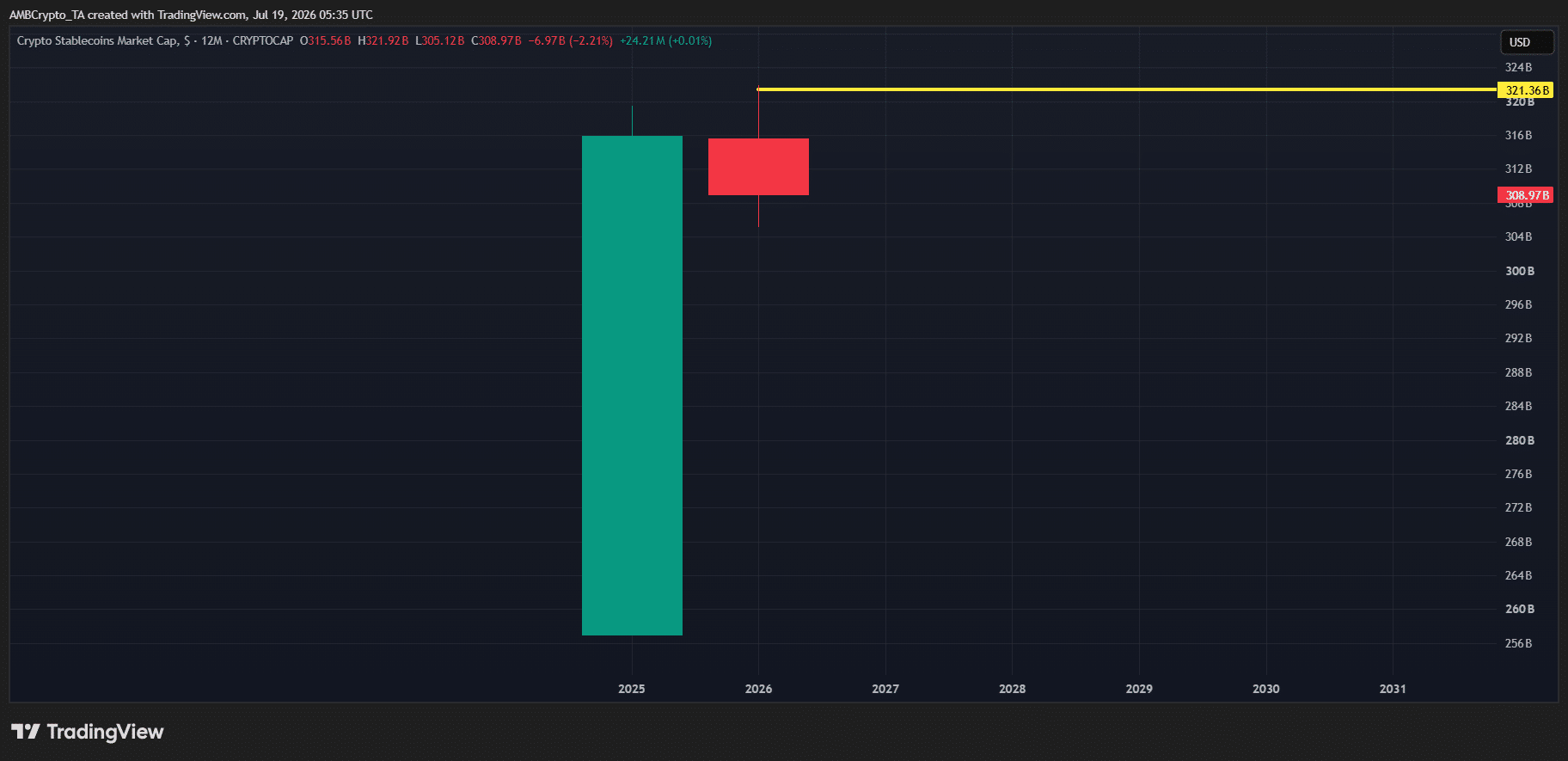
The key question is: What are the odds? Notably, liquidity is where the picture begins to change. The stablecoin market has contracted by nearly $15 billion so far in 2026, pulling the total stablecoin market cap below $310 billion. In essence, stablecoin outflows suggest capital is leaving the crypto ecosystem, reducing the liquidity available to support a sustained market recovery.
Solana [SOL], however, is telling a different story.
According to SolanaFloor, Circle minted another $250 million worth of USDC on Solana over the past 24 hours, pushing the network’s stablecoin market cap back above $15 billion. More notably, Circle has minted over $70 billion worth of USDC on Solana so far in 2026. In essence, while liquidity is tightening across the broader market, it continues to flow in the Solana ecosystem.
Notably, this liquidity growth has been accompanied by strong on-chain activity. Solana’s monthly active users, for instance, are back above 100 million, with the network adding another 37 million monthly active users in just the past month. This alignment between rising USDC supply and growing network usage suggests fresh liquidity is being deployed rather than sitting idle.
The key question is whether USDC supply is emerging as Solana’s key H2 catalyst.
Growing USDC supply is reshaping Solana’s H2 outlook
Typically, rising liquidity across a Layer 1 network is a bullish signal.
However, Solana’s price action hasn’t caught up. Despite a sharp increase in USDC liquidity, SOL remained down more than 35% in 2026, underperforming Bitcoin’s decline by over 1.3x. The divergence suggests liquidity alone hasn’t been enough to drive a sustained recovery.
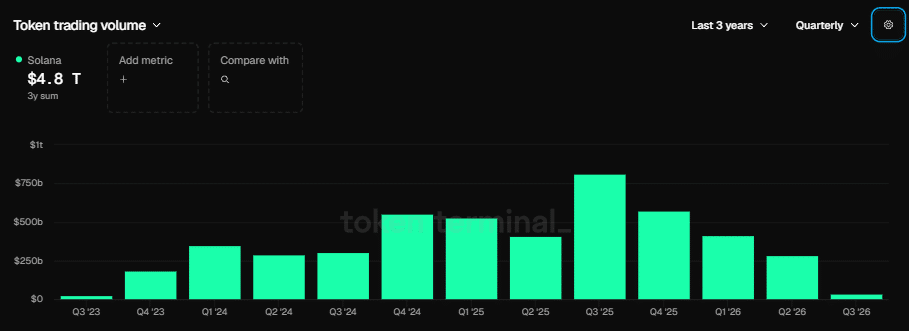
The same trend appears on-chain. Solana processed 25.3 billion transactions in Q1, followed by 24.3 billion in Q2. Q3 has recorded 4.9 billion transactions so far, pointing to a slowdown in network activity. The slowdown is also evident in trading activity. As the chart below shows, Solana’s trading volume declined by 50% QoQ, falling from $410 billion in Q1 to around $284 billion in Q2.
In essence, rising USDC supply isn’t translating into rising on-chain activity.
At the same time, monthly active users tell a different story. The divergence suggests speculative activity is picking up, even as transaction count and trading volume remain below their Q1 levels. This imbalance helps explain SOL’s technical weakness.
While Circle has minted $70 billion USDC on Solana, the liquidity has yet to translate into a meaningful recovery in on-chain activity or sustained price strength. If speculation continues to dominate, the growing USDC supply could become a headwind for SOL, weakening its H2 outlook.
Final Summary
- Circle has minted over $70 billion in USDC on Solana in 2026, driving a strong increase in network liquidity.
- However, weaker on-chain activity and SOL’s 35% decline suggest the extra liquidity hasn’t translated into stronger demand.