US Senators Press Bank Regulators For ‘Fair’ Crypto Capital Rules

bitcoinistPublished on 2026-06-05Last updated on 2026-06-05

Abstract

A group of U.S. Senate Republicans, led by Senator Cynthia Lummis, is urging federal bank regulators to establish clear and fair capital rules for banks involved with crypto assets. In a letter to the Federal Reserve, FDIC, and OCC, the lawmakers criticized the international Basel Committee's standards, which impose a punitive 1,250% risk weight on crypto assets, calling it a de facto ban not based on actual risk. They applauded recent interagency guidance that granted tokenized securities the same capital treatment as traditional ones, arguing this risk-based principle should apply consistently to all digital assets. The senators called on the agencies to develop a new capital framework, aligning with recent legislative progress on crypto market structure. Their push coincides with testimonies from top regulators, who emphasized a shift toward more risk-based supervision and responsible innovation, while also addressing stablecoin oversight under new proposals.

A group of Senate Republicans is pressing bank regulators to build on recent regulatory progress by creating a clearer capital framework for crypto activities and asset treatment.

US Senators Call For Clear Crypto Capital Rules

On Thursday, Senate Banking Subcommittee on Digital Assets Chair Cynthia Lummis and Senators Dan Sullivan, Bill Hagerty, Bernie Moreno, Ted Budd, and Jon Husted shared a recent letter urging key financial agencies to move toward “clear and fair” capital rules for banks engaged in crypto asset activities.

The letter, addressed to Federal Reserve Vice Chair for Supervision Miki Bowman, Federal Deposit Insurance Corporation (FDIC) Chairman Travis Hill, and Comptroller of the Currency Jonathan Gould, criticized the international Basel Committee on Bank Supervision’s capital standards, which gave “the most punitive classification in the capital framework” to crypto assets.

Notably, the standard assigned a 1,250% risk weight, used to determine how much a bank must hold against a certain asset, on crypto assets. To the senators, “This classification was not derived from a calibrated assessment of the actual risk profile of digital assets.

Instead, it “appears to be a blanket penalty assigned by asset category as a de facto ban on banks holding this asset class, in direct tension with a technology-neutral approach” that agencies like the Office of the Comptroller of the Currency (OCC) and the FDIC have disclosed over the past year.

The lawmakers applauded the regulatory agencies for their recent interagency guidance on tokenized securities, which clarified the capital treatment of these assets. In March, the FDIC, the OCC, and the Federal Reserve jointly said that tokenized securities should generally receive the same capital treatment as their non-tokenized counterparts, affirming that capital treatment should reflect the risk characteristics of the underlying asset, not the technology used to record ownership.

“That principle should apply consistently—including to other digital assets,” the letter stated. Citing this position and recent progress on the crypto market structure bill, which would expand banks’ ability to engage in balance-sheet crypto asset activities, the senators urged the FDIC, OCC, and Federal Reserve to begin developing a new capital framework for such activities.

Top Regulators Shift To ‘Risk-Based’ Supervision

The senators’ call for new crypto capital rules came as the three regulators testified before the House Financial Services Committee on Thursday morning, updating lawmakers on their broader effort to revisit and ease several bank rules implemented after the 2008 financial crisis.

In prepared remarks, the FDIC chair noted that the agency is implementing several changes to reform its approach to a more “effective and efficient” supervisory framework that continues to support the safety of individual institutions and the broader system.

Hill stated that strong capital standards play a critical role in ensuring a resilient banking system, while driving economic growth and supporting their customers. Regarding crypto assets, he stated that the agency has issued several proposed rules to regulate and oversee subsidiaries of FDIC-supervised Insured depository institutions (IDIs) approved to issue payment stablecoins under the GENIUS Act.

Similarly, the OCC Chief affirmed that it is “returning to risk-based supervision rooted in law and emphasizing examiner judgment, not arbitrary checklists,” and reviewing past supervisory criticisms and enforcement actions.

“Our job is to facilitate, not stymie, responsible innovation,” Gould said, adding that “Our banking system will only remain relevant and trusted if it resists pressures to deny access based on political or religious beliefs or lawful business activity. We have made considerable progress in reviewing the activities of the largest national banks and are investigating complaints of alleged debanking, consistent with the President’s executive order.”
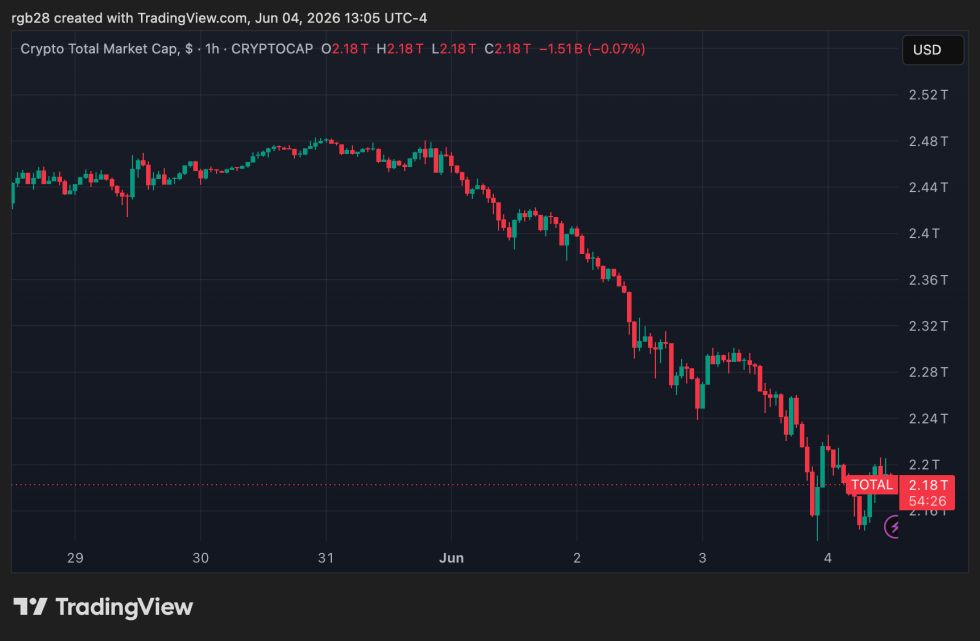
The total crypto market capitalization is at $2.18 trillion in the one-week chart. Source: TOTAL on TradingView


Trending Cryptos

Related Questions

QWhat are the main concerns of the US Senators regarding the current capital rules for crypto assets?

AThe Senators criticize the Basel Committee's standards for assigning a punitive 1,250% risk weight to crypto assets, arguing it appears to be a blanket penalty and a de facto ban rather than a calibrated assessment of actual risk.

QWhich regulatory agencies did the senators' letter address, and what recent guidance did they praise?

AThe letter was addressed to Federal Reserve Vice Chair Miki Bowman, FDIC Chairman Travis Hill, and Comptroller of the Currency Jonathan Gould. They praised the agencies' recent interagency guidance on tokenized securities, which clarified that tokenized securities should receive the same capital treatment as their non-tokenized counterparts.

QAccording to the letter, what principle should apply to the capital treatment of digital assets?

AThe principle that capital treatment should reflect the risk characteristics of the underlying asset, not the technology used to record ownership, should apply consistently to digital assets.

QWhat broader regulatory shift was mentioned in the testimony of the FDIC and OCC heads?

AThe FDIC and OCC heads indicated a shift towards more 'risk-based' supervision. The FDIC is moving to a more 'effective and efficient' framework, and the OCC is 'returning to risk-based supervision rooted in law and emphasizing examiner judgment, not arbitrary checklists.'

QWhat did OCC Comptroller Jonathan Gould state about the role of regulators regarding innovation and access?

AGould stated that the regulator's job is 'to facilitate, not stymie, responsible innovation,' and that the banking system must resist denying access based on political or religious beliefs or lawful business activity to remain relevant and trusted.

Related Reads

In Jinjiang, Fujian, a Storage Super Unicorn Lies Quiet

In Fujian's Jinjiang, a city known for sportswear, lies a quiet semiconductor giant: Fujian Jinhua Integrated Circuit Co. (JHICC). Once a promising domestic DRAM manufacturer alongside Yangtze Memory and ChangXin Memory Technologies (CXMT), its journey was derailed in 2018 when the U.S. placed it on an Entity List and filed criminal charges for alleged trade secret theft. This halted production for years. A turning point came in February 2024 when a U.S. federal court found JHICC not guilty. However, it had lost crucial time. While CXMT soared to become a top-valued A-share company in 2024, JHICC, with an estimated valuation of 80 billion RMB, was just restarting. Its current output is primarily customized DDR4 chips, not the advanced DDR5/HBM demanded for AI, but it still benefits from the broader memory chip upcycle. JHICC's story is tied to Chen Zhengkun, a veteran engineer who left Micron to lead the venture. Founded in 2016 with state-backed funding, JHICC partnered with Taiwan's UMC to develop DRAM technology. Rapid progress was cut short by the U.S. actions, which Micron initiated, partly due to its heavy reliance on the Chinese market. Post-sanctions, Chen's team worked to rebuild the production line with reduced reliance on U.S. technology. According to its records, JHICC achieved small-scale production and revenue growth under immense pressure. It now focuses on the stable "niche" DRAM market (e.g., TVs, routers) with a monthly capacity of ~40,000 wafers, aiming for 60,000 by 2026. It holds over 1,000 patents but remains on the Entity List. For Jinjiang, investing in JHICC was a bold industrial leap. The local government provided unwavering financial and logistical support during the crisis, helping the company survive. JHICC has become the anchor for a growing local semiconductor cluster. Though its scale lags behind domestic peers, JHICC's persistence symbolizes a hard-won foothold in a global market long dominated by Samsung, SK Hynix, and Micron. Having missed one boom, it seeks a place in the new AI-driven memory supercycle.

marsbit4m ago

In Jinjiang, Fujian, a Storage Super Unicorn Lies Quiet

marsbit4m ago

Must-Watch Events Next Week|CLARITY Act Could Face Senate Vote; SpaceX, Circle to Report Earnings (8.3-8.9)

**Summary: Key Events and Developments to Watch (August 3-9)** The upcoming week is marked by significant financial disclosures, key legislative deadlines, and notable product updates. **Major Financial Events:** Several companies are scheduled to release their Q2 2026 earnings. American Bitcoin (ABTC) will report on August 3, followed by SpaceX and Hut 8 Mining Corp. on August 4, and Circle on August 5. Notably, a significant portion of SpaceX shares (up to 12% of total shares) will be unlocked on August 6 following their earnings release. **Key Legislative Deadline:** The U.S. Senate faces an August 7 deadline to secure 60 votes for the CLARITY Act, a bipartisan bill aiming to establish a federal regulatory framework for cryptocurrencies. The Senate may hold a full vote on the bill during the week. **Economic Data:** The U.S. July Non-Farm Payrolls report will be released on August 7, providing crucial labor market data. **Technology & Product Updates:** * **Shutdowns:** DeFi portfolio tracker Zapper and wallet app Ctrl Wallet will cease operations on August 3. * **Upgrades:** LayerZero will deprecate its v1 relayers on August 3. XRP Ledger's new version 3.3.0, featuring five new functions, is expected next week. * **AI:** Elon Musk announced that the advanced Grok 4.6 AI model is set for release around August 7. * **Bitcoin:** The BIP-110 forced signaling for a potential Bitcoin network change is scheduled to begin around August 8. **Other Notable Events:** Chinese robotics firm Unitree Tech has set its preliminary price inquiry for its IPO for August 5. South Korean exchange Upbit will delist AQT and AERGO tokens on August 3.

marsbit2h ago

Must-Watch Events Next Week|CLARITY Act Could Face Senate Vote; SpaceX, Circle to Report Earnings (8.3-8.9)

marsbit2h ago

Trading

Spot

Hot Articles

What is $BANK

Bank AI: A Revolutionary Step in the Future of Banking Introduction In an era marked by rapid advancements in technology, Bank AI stands at the intersection of artificial intelligence (AI) and banking services. This innovative project seeks to redefine the financial landscape, enhancing operational efficiency, security measures, and customer experiences through the power of AI. As we embark on this exploration of Bank AI, we will delve into what the project entails, its operational dynamics, its historical context, and significant milestones. What is Bank AI? At its core, Bank AI represents a transformative initiative aimed at integrating artificial intelligence into various banking operations. This project harnesses the capabilities of AI to automate processes, improve risk management protocols, and enhance customer interaction through personalised services. The primary objectives of Bank AI include: Automation of Banking Functions: By leveraging AI technologies, Bank AI aims to automate routine tasks, reducing the burden on human resources and enhancing efficiency. Enhanced Risk Management: The project utilises AI algorithms to predict and identify risks, thereby fortifying security measures against fraud and other threats. Personalisation of Banking Services: Bank AI focuses on offering tailored financial products and services by analysing customer data and behaviours. Improving Customer Experience: The implementation of AI-driven solutions, such as chatbots and virtual assistants, aims to provide users with more human-like interactions, revolutionising the way customers engage with banks. With these goals, Bank AI positions itself as a crucial player in rendering banking more efficient, secure, and user-centric. Who is the Creator of Bank AI? Details regarding the creator of Bank AI remain unknown. As such, no specific individual or organisation has been identified in the available information. The anonymity surrounding the project's inception raises questions but does not detract from its ambitious vision and objectives. Who are the Investors of Bank AI? Similar to the project's creator, specific information regarding the investors or supporting organisations of Bank AI has not been disclosed. Without this information, it is challenging to outline the financial backing and institutional support that might be propelling the project forward. Nevertheless, the importance of having a robust investment foundation is pivotal for sustaining development in such an innovative field. How Does Bank AI Work? Bank AI operates on several innovative fronts, focusing on unique factors that differentiate it from traditional banking frameworks. Below are key operational features: Automation: By applying machine learning algorithms, Bank AI automates various manual processes within banks. This results in reduced operational costs and allows human workers to redirect their efforts towards more strategic activities. Advanced Risk Management: The integration of AI into risk management practices equips banks with tools to accurately predict potential threats such as fraud, ensuring that customer information and assets remain secure. Tailored Financial Recommendations: Through continuous learning from customer interactions, the AI systems develop a nuanced understanding of user needs, enabling them to offer tailored advice on financial decisions. Enhanced Customer Interactions: Utilizing chatbots and virtual assistants powered by AI, Bank AI enables a more engaging customer experience, allowing users to have their queries resolved quickly, thus reducing wait times and improving satisfaction levels. Together, these operational features position Bank AI as a pioneer in the banking sector, establishing new benchmarks for service delivery and operational excellence. Timeline of Bank AI Understanding the trajectory of Bank AI requires a look at its historical context. Below is a timeline highlighting important milestones and developments: Early 2010s: The conceptualisation of AI integration into banking services began to gain attention as banking institutions recognised the potential benefits. 2018: A marked increase in the implementation of AI technologies occurred when banks started using AI tools like chatbots for basic customer service and risk management systems for improved security handling. 2023: The sophistication of AI continued to advance, with generative AI being introduced for more complex tasks such as document processing and real-time investment analysis. This year marked a significant leap in the capabilities afforded to banks by AI technology. 2024-Current Status: As of this year, Bank AI is on an upward trajectory, with ongoing research and developments poised to further enhance capabilities in banking operations. Continued exploration of AI applications hints at exciting developments yet to come. Key Points About Bank AI Integration of AI in Banking: Bank AI focuses on adopting artificial intelligence to streamline banking processes and improve user experiences. Automation and Risk Management Focus: The project strongly emphasises these areas, aiming to shift the burden of routine tasks while enhancing security frameworks through predictive analytics. Personalised Banking Solutions: By harnessing customer data, Bank AI enables tailored banking services that cater to individual user needs. Commitment to Development: Bank AI remains committed to ongoing research and development efforts, ensuring its adaptability and ongoing relevance as technology continues to evolve. Conclusion In summary, Bank AI exemplifies a crucial step forward in the banking industry, leveraging artificial intelligence to reshape operational paradigms, enhance security, and promote customer satisfaction. Despite gaps in information surrounding the creator and investors, the clear objectives and functional mechanisms of Bank AI provide a strong foundation for its ongoing evolution. As AI technology continues to advance and merge with the banking sector, Bank AI is well-positioned to significantly impact the future of financial services, enhancing the way we understand and interact with banking.

236 Total ViewsPublished 2024.04.06Updated 2024.12.03

What is $BANK

Discussions

Welcome to the HTX Community. Here, you can stay informed about the latest platform developments and gain access to professional market insights. Users' opinions on the price of BANK (BANK) are presented below.

活动图片












