US government ‘tech force’ gets backup from Coinbase, Robinhood

cointelegraphPublished on 2025-12-17Last updated on 2025-12-17

Abstract

The US government has launched a "Tech Force" initiative to address critical skill shortages in AI, cybersecurity, and software engineering by recruiting private sector talent. Crypto exchange Coinbase and trading platform Robinhood are among nearly 30 initial partners, which also include major firms like Apple, Nvidia, and OpenAI. This signals a government need for crypto expertise as the technology integrates into finance. The program will place about 1,000 early-career and experienced workers in federal agencies for one- to two-year stints. Agencies will hire and fund the tech teams, while private companies provide training. The initiative aims to revitalize the government workforce, where only 7% are early-career professionals, compared to nearly a quarter in the private sector.

Crypto exchange Coinbase and trading platform Robinhood are among a group of tech companies lending a hand to the US government’s new “Tech Force.”

The launch of the Tech Force on Monday aims to tap the private sector’s talent to plug “critical skills gaps” in the government across artificial intelligence, cybersecurity and software engineering.

Big Tech firms will lend their workers to serve one- to two-year stints at federal agencies, with the government seeking 1,000 early-career candidates and “experienced managers.”

Coinbase and Robinhood were named among nearly 30 “initial private sector partners,” which included Apple, Amazon Web Services, Nvidia and OpenAI, a sign that the government needs crypto expertise as the technology has rapidly integrated into the financial system.

Tech Force to deploy across government

The Office of Personnel Management (OPM) said the new tech workers would be inserted across a vast range of agencies, from the Treasury, the Commerce Department and the IRS.

The tech teams would be hired and funded by the agencies and report to their heads, with the private sector providing training.

“As we have people retiring from government, we’re not doing a great job of bringing in the next generation of leaders in government,” OPM director Scott Kupor told CNBC.
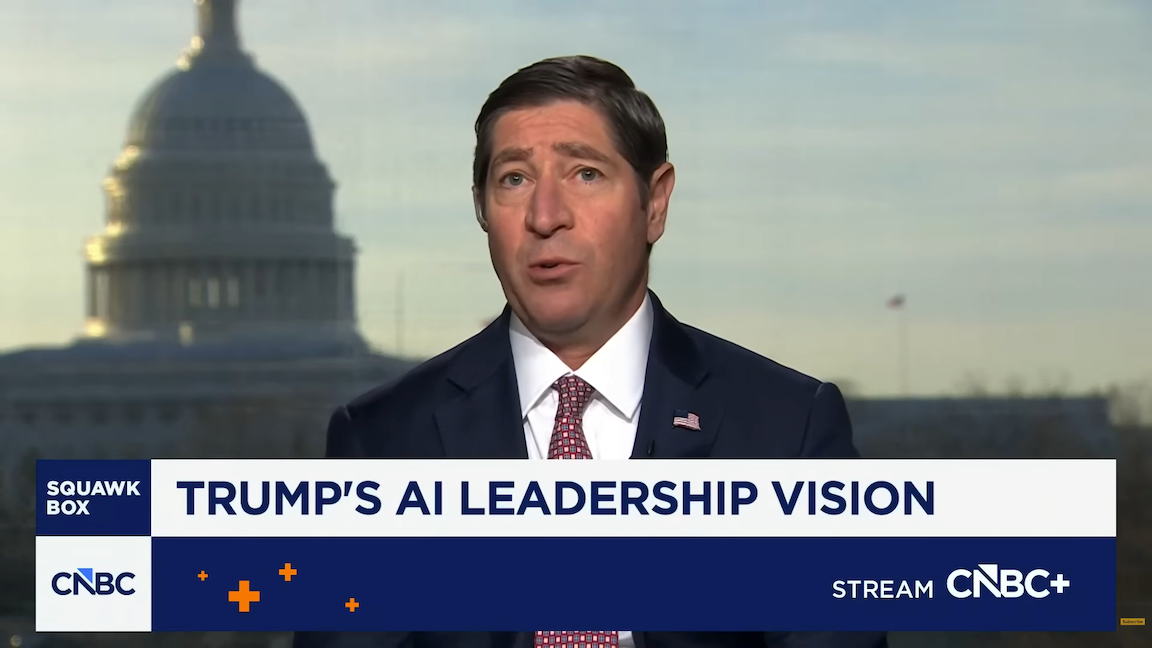
OPM director Scott Kupor speaking to CNBC’s “Squawk Box.” Source: YouTube

He said about 7% of the US government workforce are in their early career, those with five to seven years of work experience, compared to almost a quarter in the rest of the workforce.

Kupor added that the OPM and its private sector partners would put on a job fair for the workers after they completed their terms in the government.

“What we’re really trying to demonstrate is that the work that you can do in government is both challenging, complex, and that if you decide ultimately you want to go into the private sector, that’s great, that work is valued,” he said. “You’ll have the opportunity to take that as the next stage of your career.”

Related: Warren sounds alarm on DeFi, cites PancakeSwap amid market structure delay

Alongside Coinbase and Robinhood, the private sector partners also include Adobe, Amazon Web Services, AMD, Anduril, Apple, Box, C3.ai, Databricks, Dell Technologies, Docusign, Google Public Sector, IBM, Meta, Microsoft, Nvidia, OpenAI, Oracle, Palantir, Salesforce, SAP, ServiceNow, Snowflake, Synopsys, Uber, Workday, xAI, and Zoom.

Crypto companies, particularly blockchain analytics firms, have frequently assisted the US government with expertise in tracking and tracing cryptocurrency flows in criminal and regulatory investigations.

US market regulators under the Trump administration have also consulted with the crypto sector on how to develop their approaches as the policy environment toward the industry has warmed.

Magazine: Quitting Trump’s top crypto job wasn’t easy: Bo Hines

Related Reads

You Bet on the News, the Pros Read the Rules: The True Cognitive Gap in Losing Money on Polymarket

The article explains that the key to profiting on Polymarket, a prediction market platform, lies not just predicting real-world events correctly, but in meticulously understanding the specific rules that govern how each market will be resolved. It illustrates this with examples, such as a market on Venezuela's 2026 leader, where the official rules defining "officially holds" the office overruled the intuitive answer of who was in practical control. Other examples include debates over the definition of a "token" or what constitutes an "agreement." The core argument is that a "reality vs. rules" gap creates pricing discrepancies that savvy traders ("车头" or "whales") exploit. The platform has a formal dispute resolution process managed by UMA token holders to settle ambiguous outcomes. This process involves proposal submission, a challenge window, a discussion period, and a final vote. However, the article highlights a critical flaw in this system compared to a traditional court: the lack of separation between the arbiters (UMA voters) and the interested parties (traders with financial stakes in the outcome). This conflict of interest undermines the discussion phase, leads to herd mentality, and results in opaque final decisions without explanatory rulings. Consequently, the system lacks a body of precedent, making it difficult for users to learn from past disputes. The ultimate takeaway is that success on Polymarket requires a lawyer-like scrutiny of the rules to identify and capitalize on the cognitive gap between how events appear and how they are contractually defined for settlement.

marsbit20m ago

You Bet on the News, the Pros Read the Rules: The True Cognitive Gap in Losing Money on Polymarket

marsbit20m ago

Will the Fed Still Cut Interest Rates? Tonight's Data Is Crucial

The core debate surrounding the Federal Reserve's potential interest rate cuts is intensifying amid geopolitical conflict and rebounding inflation. The key question is whether high energy prices will cause persistent inflation or weaken consumer demand enough to force the Fed to cut rates. Citigroup presents a bullish case for cuts, arguing that oil supply disruptions from the Strait of Hormuz are temporary and will not lead to lasting inflationary pressure. They point to receding bond yields and oil prices as evidence the market is pricing in a short-lived shock. Citi's data also shows tightening financial conditions, a stabilizing labor market, and healthy tax returns, supporting their view that the path to lower rates remains open. Conversely, Deutsche Bank offers a starkly contrasting, more hawkish outlook. They argue the Fed's current policy is already neutral and expect rates to remain unchanged indefinitely. Their view is based on stalled disinflation progress and a shift toward more hawkish rhetoric from key Fed officials like Waller, who cited risks from prolonged Middle East conflict and tariffs. Other officials, including Williams and Hammack, signaled rates would likely stay on hold for a "considerable time." The market pricing has shifted dramatically, now forecasting zero cuts in 2026. The imminent release of the March retail sales "control group" data is highlighted as a critical test. This metric, which excludes gas station sales, will reveal if high gasoline prices are eroding consumer spending in other areas. A weak reading could support the case for imminent rate cuts, while a strong one would bolster the argument for the Fed to hold steady. This data is pivotal for determining the near-term policy path.

marsbit40m ago

Will the Fed Still Cut Interest Rates? Tonight's Data Is Crucial

marsbit40m ago

Trading

Spot
Futures

Hot Articles

How to Buy US

Welcome to HTX.com! We've made purchasing Talus Network (US) simple and convenient. Follow our step-by-step guide to embark on your crypto journey.Step 1: Create Your HTX AccountUse your email or phone number to sign up for a free account on HTX. Experience a hassle-free registration journey and unlock all features.Get My AccountStep 2: Go to Buy Crypto and Choose Your Payment MethodCredit/Debit Card: Use your Visa or Mastercard to buy Talus Network (US) instantly.Balance: Use funds from your HTX account balance to trade seamlessly.Third Parties: We've added popular payment methods such as Google Pay and Apple Pay to enhance convenience.P2P: Trade directly with other users on HTX.Over-the-Counter (OTC): We offer tailor-made services and competitive exchange rates for traders.Step 3: Store Your Talus Network (US)After purchasing your Talus Network (US), store it in your HTX account. Alternatively, you can send it elsewhere via blockchain transfer or use it to trade other cryptocurrencies.Step 4: Trade Talus Network (US)Easily trade Talus Network (US) on HTX's spot market. Simply access your account, select your trading pair, execute your trades, and monitor in real-time. We offer a user-friendly experience for both beginners and seasoned traders.

4.4k Total ViewsPublished 2025.12.11Updated 2025.12.11

How to Buy US

Discussions

Welcome to the HTX Community. Here, you can stay informed about the latest platform developments and gain access to professional market insights. Users' opinions on the price of US (US) are presented below.

活动图片