UK targets crypto network behind Southeast Asia scam centres in first-of-its-kind sanctions move

ambcryptoPublished on 2026-03-26Last updated on 2026-03-26

Abstract

The UK government has imposed first-of-its-kind sanctions on the cryptocurrency platform Xinbi for its role in enabling large-scale scam operations in Southeast Asia. Announced on March 26, the measures target a network providing crypto-based services to fraud centres, including the sale of stolen data and tools to target individuals. The action also focuses on individuals linked to a major scam compound in Cambodia, known as “#8 Park,” which can house up to 20,000 workers—many of whom are reportedly trafficked and forced to conduct scams. Authorities stated that Xinbi played a central role in facilitating payments and laundering proceeds from these illicit activities, which include romance frauds targeting global victims. The platform has also been associated with moving crypto assets connected to North Korea. This move is part of a broader crackdown that has already led to over £1 billion in asset freezes and seizures, following coordinated efforts with international partners like the US. The sanctions aim to isolate such platforms from the legitimate crypto ecosystem, disrupt financial channels, and freeze UK-based assets of sanctioned individuals. This action reflects a strategic shift toward targeting the financial infrastructure behind illicit operations, not just the perpetrators, signaling increased regulatory focus on crypto-enabled crime.

The UK government has imposed new sanctions on a cryptocurrency-linked network tied to large-scale scam operations in Southeast Asia. It marks one of the first instances of direct action against a crypto-based marketplace enabling fraud.

In a statement released on 26 March, authorities confirmed sanctions against Xinbi. This platform provides cryptocurrency-based services to scam centres. The services include the sale of stolen personal data and tools used to target victims.

The move forms part of a broader crackdown on transnational fraud networks operating across the region.

Officials said the sanctions are designed to isolate the platform from the legitimate crypto ecosystem, limiting its ability to send and receive funds and disrupting its role in facilitating illicit activity.

UK sanctions crypto marketplace tied to scam centres

The action also targets individuals and entities linked to a major scam compound known as “#8 Park.” It is believed to be one of the largest such facilities in Cambodia, with the capacity to house up to 20,000 workers.

According to the UK government, scam centres across Southeast Asia use coordinated online schemes, including romance fraud, to target victims globally.

Many workers operating these schemes are reportedly trafficked individuals forced to carry out scams under coercion.

The sanctions build on earlier measures taken in coordination with international partners, including the United States. It led to asset freezes and seizures exceeding £1 billion and triggered investigations across multiple jurisdictions.

Crypto infrastructure used to enable fraud operations

Authorities said Xinbi played a central role in enabling these operations by offering cryptocurrency-based services. It facilitated payments and laundering proceeds linked to scams.

The platform has also been associated with the movement of illicit crypto assets connected to North Korea.

The UK pointed to previous enforcement outcomes as evidence of impact. They noted that BYEX, another platform used for laundering scam proceeds, shut down following earlier sanctions.

The latest measures are intended to further restrict financial channels used by these networks, including freezing assets such as UK-based properties tied to sanctioned individuals.

Move signals broader crackdown on crypto-enabled illicit finance

Authorities said the move reflects a wider strategy to target not only individuals behind scam operations, but also the financial infrastructure that supports them.

The action underscores a shift in enforcement approach, in which crypto platforms facilitating illicit activity are increasingly treated as sanctionable entities.


Final Summary

  • The UK has sanctioned a crypto-based marketplace tied to scam centres, aiming to disrupt fraud networks at the infrastructure level.
  • The move signals growing regulatory focus on crypto platforms used to enable illicit finance, not just the actors behind it.


Trending Cryptos

Related Questions

QWhat is the name of the cryptocurrency platform sanctioned by the UK government and what was its role in the scam operations?

AThe sanctioned platform is called Xinbi. It provided cryptocurrency-based services to scam centres, including facilitating payments, laundering proceeds, and the sale of stolen personal data and tools used to target victims.

QWhich major scam compound, including its location and scale, was also targeted by the UK sanctions?

AThe sanctions also targeted individuals and entities linked to a major scam compound known as '8 Park' in Cambodia, which is one of the largest such facilities with the capacity to house up to 20,000 workers.

QAccording to the UK government, what is the reported status of many workers operating the scams in these Southeast Asian centres?

AMany workers operating these schemes are reportedly trafficked individuals who are forced to carry out scams under coercion.

QWhat previous enforcement outcome was cited as evidence that such sanctions can have an impact?

AThe UK government noted that another platform, BYEX, which was used for laundering scam proceeds, shut down following earlier sanctions.

QWhat broader strategic shift in enforcement does this action against Xinbi represent?

AThe action represents a shift in enforcement to target not only the individuals behind scam operations, but also the financial infrastructure that supports them, treating crypto platforms facilitating illicit activity as sanctionable entities.

Related Reads

Once-Popular Web3 Enters Wave of Layoffs

The once-hot Web3 industry is experiencing a severe wave of layoffs. While many companies attribute job cuts to AI-driven restructuring, the primary reason is often financial pressure. The Web3 sector, at the intersection of tech and finance, has been hit particularly hard. Employees at major cryptocurrency exchanges report sudden, impersonal layoffs—often with system access revoked overnight—and minimal or no severance. Common tactics include setting impossible performance targets or terminating employees for minor policy violations. The working atmosphere has become toxic, marked by intense monitoring, excessive meetings, and management obsessed with control and internal politics rather than product innovation. The industry's core business model is collapsing. Exchange revenue from trading fees and listing charges has plummeted due to a decline in quality projects and retail investor exodus. Events like the massive forced liquidation on October 10th further shattered confidence. Competition from on-chain derivatives platforms and prediction markets is intensifying the downturn. As layoffs continue, displaced workers struggle to find new opportunities. Many transition to the AI sector, but face significant bias from traditional finance and even some AI firms, which view crypto industry experience with suspicion. The current downturn appears more structural than cyclical, driven by unsustainable practices, internal strife, and a failure to innovate, raising questions about the industry's future trajectory.

marsbit47m ago

Once-Popular Web3 Enters Wave of Layoffs

marsbit47m ago

Sales Drop 26% But Prices Rise? Xiaomi's Dilemma

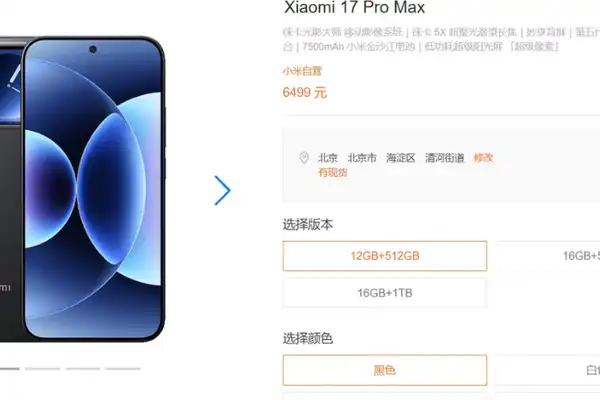
Xiaomi, facing a significant 26.3% year-on-year decline in global smartphone shipments in Q2 2026, has implemented its third price hike of the year. On August 2nd, prices were raised for nine models, including the flagship Mi 17 series (up 400-500 yuan) and Redmi K90/Turbo 5 series (up 300 yuan). This move completes a pattern where cost pressure, originating from surging memory chip prices, has climbed from entry-level to mid-range and now flagship products. The primary driver is a severe supply squeeze on consumer-grade DRAM and NAND flash memory, as major manufacturers like Samsung shift advanced capacity to more profitable HBM for AI applications. According to Xiaomi President Lu Weibing, memory prices for the same configuration have skyrocketed nearly fourfold since Q1 2025, adding roughly 1500 yuan to the cost of a mainstream 12GB+512GB phone. IDC estimates consumer memory costs have risen nearly 300% year-on-year. While the price increases hurt demand and contributed to the sales slump, Xiaomi's strategy of reducing entry-level models and upgrading its product mix also played a role. Domestically, its market share in China fell to 12% (5th place), while leaders Huawei and Apple saw shipments grow over 24%. To mitigate future risks, Xiaomi is accelerating its in-house "Surge" chip development and optimizing memory configurations across its lineup. Xiaomi is not alone; major brands like OPPO, vivo, and Apple have already raised prices in 2026, with industry insiders predicting another round of increases (200-800 yuan) in the second half. A full-scale industry-wide涨价 cycle is underway, forcing both manufacturers and consumers to recalibrate their strategies and purchasing decisions amid sustained cost pressures.

marsbit58m ago

Sales Drop 26% But Prices Rise? Xiaomi's Dilemma

marsbit58m ago

Trading

Spot

Hot Articles

How to Buy T

Welcome to HTX.com! We've made purchasing Threshold Network Token (T) simple and convenient. Follow our step-by-step guide to embark on your crypto journey.Step 1: Create Your HTX AccountUse your email or phone number to sign up for a free account on HTX. Experience a hassle-free registration journey and unlock all features.Get My AccountStep 2: Go to Buy Crypto and Choose Your Payment MethodCredit/Debit Card: Use your Visa or Mastercard to buy Threshold Network Token (T) instantly.Balance: Use funds from your HTX account balance to trade seamlessly.Third Parties: We've added popular payment methods such as Google Pay and Apple Pay to enhance convenience.P2P: Trade directly with other users on HTX.Over-the-Counter (OTC): We offer tailor-made services and competitive exchange rates for traders.Step 3: Store Your Threshold Network Token (T)After purchasing your Threshold Network Token (T), store it in your HTX account. Alternatively, you can send it elsewhere via blockchain transfer or use it to trade other cryptocurrencies.Step 4: Trade Threshold Network Token (T)Easily trade Threshold Network Token (T) on HTX's spot market. Simply access your account, select your trading pair, execute your trades, and monitor in real-time. We offer a user-friendly experience for both beginners and seasoned traders.

12.7k Total ViewsPublished 2024.03.29Updated 2026.06.02

How to Buy T

Discussions

Welcome to the HTX Community. Here, you can stay informed about the latest platform developments and gain access to professional market insights. Users' opinions on the price of T (T) are presented below.

活动图片