Two Ethereum "Whales" Sell $63 Million in Assets Amid Intensifying Selling Pressure

cryptonews.ruPublished on 2026-08-21Last updated on 2026-08-21

Abstract

Two major "whale" entities sold a combined $63 million worth of Ethereum (ETH) and staked ETH (stETH) on Friday amid ongoing market selling pressure. Blockchain analytics platform Lookonchain reported that a large investor known as "7 Siblings" sold 14,000 ETH for $32.85 million. This entity, tracked since 2024, typically buys ETH during sharp declines and takes profits through coordinated large transfers. At its peak, this wallet held assets worth approximately $2.8 billion in ETH. Separately, wallet 0xFD10 sold 11,252 stETH and 1,824 ETH for a combined $30.78 million. Unlike 7 Siblings, this wallet's market exit motives are unclear. These sales occurred as ETH traded near $2,350. The report notes a broader trend of large ETH holders selling during the 2026 rally, viewing price stability as an opportunity to reduce positions. Despite the sales, 7 Siblings remains a major known ETH holder, and its past behavior suggests further large transactions are possible if prices move significantly. A sustained break below $2,300 could refocus attention on the $2,000 zone, while a bounce would indicate the sales were routine profit-taking.

Blockchain analytics platform Lookonchain reported that a major investor, known as "7 Siblings," sold 14,000 $ETH for $32.85 million at an average price of $2,346. This account has been tracked by on-chain market analysts since 2024 due to its characteristic pattern: buying $ETH during sharp declines and then taking profits through large, coordinated transfers.
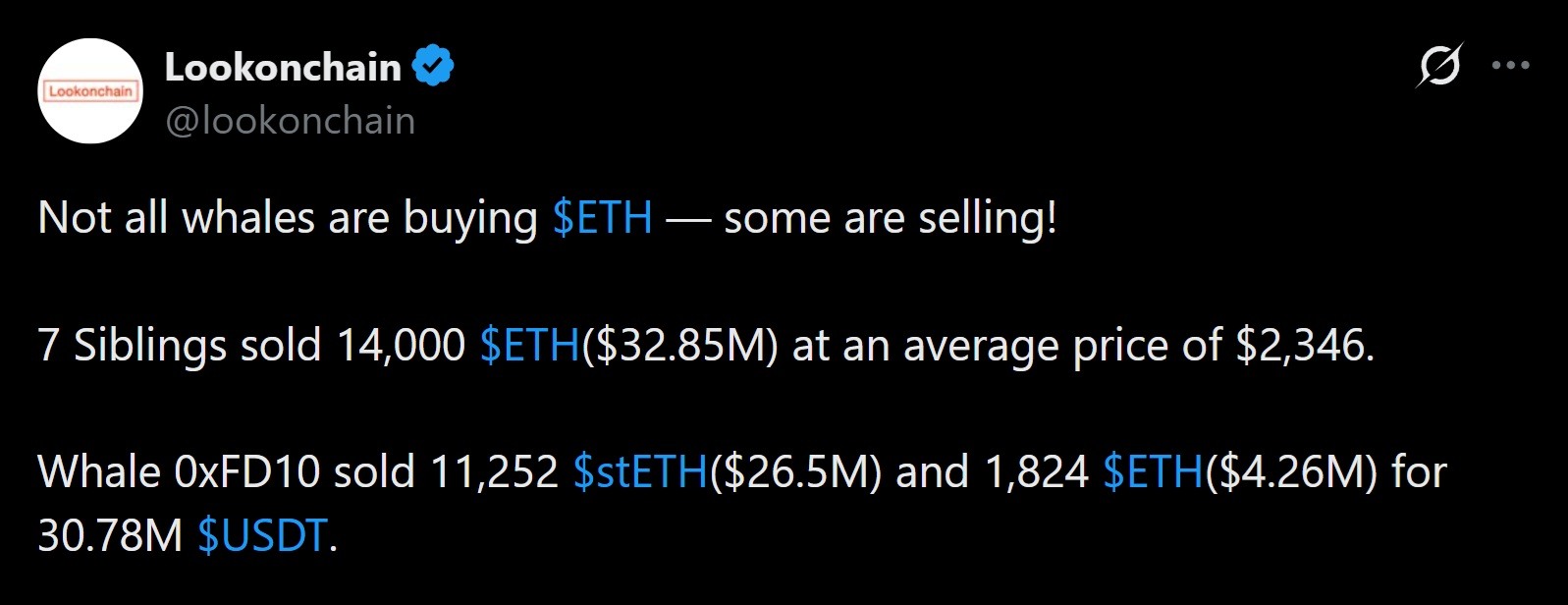
Image Source: X

At its peak, this entity's assets were valued at approximately 1.15 million $ETH worth about $2.8 billion, although its position has fluctuated significantly as the wallet shifted between accumulation and distribution phases. In August 2025, this organization was recognized as an "Ethereum billionaire" after transferring $47 million worth of $ETH to a new wallet and then selling most of it within minutes.

Friday's sale fits the same pattern, with the swing trader apparently locking in decent profits rather than fully exiting the position (at least, based on this entity's trading history).

Second "Whale" Joins the Exit

A few hours later, another wallet, 0xFD10, sold 11,252 stETH for $26.5 million and an additional 1,824 $ETH for $4.26 million, resulting in total proceeds of $30.78 million in USDT. Staked ether (stETH) is a liquid staking token representing $ETH staked with Lido Finance, the largest Ethereum staking protocol, which can be traded or used in decentralized finance (DeFi) while the underlying $ETH remains locked.
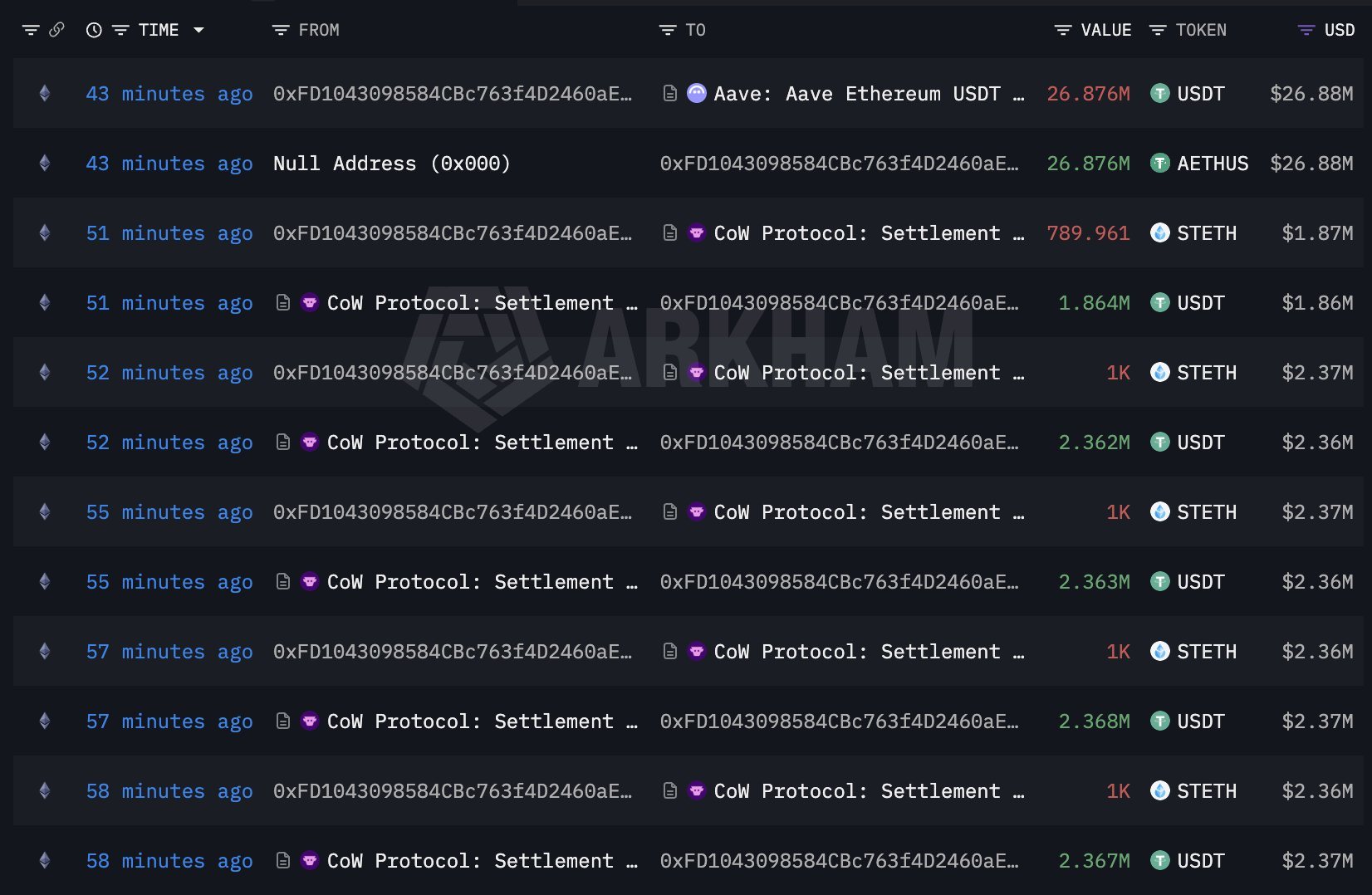
Image Source: Arkham Intelligence

Unlike 7 Siblings, which has a long history of public trading, the 0xFD10 wallet has not been extensively analyzed by on-chain analytics platforms before, and the motives for its market exit remain unclear.

Following the sales, $ETH continued trading around the $2,350 mark, a sharp jump from its price just hours earlier when it traded at $2,286.60. The average selling price indicated in transactions from both wallets ranged from $2,334 to $2,354 per coin.

Broader Selling Trend

Bitcoin.com News recently reported that another major Ethereum holder capitulated after three years of staking, incurring losses exceeding $19 million on one position earlier this month. Other large holders have also been cashing out during the 2026 rally, including one wallet that sold 55,000 $ETH and 9,442 wstETH for a total of $136 million in May.

All these actions appear to indicate that both long-term holders and swing traders view the rally and local price stability as opportunities to reduce positions, even though some of these same entities have historically bought coins back during subsequent dips.

Despite Friday's sale, 7 Siblings remains one of the largest known $ETH-holding wallets, and its past behavior suggests that if the price of $ETH diverges sharply from current levels, further large transactions in either direction are likely.

Finally, a significant break below the $2,300 level amid continued selling by "whales" would bring the $2,000 zone back into focus. However, a sustained bounce would suggest that Friday's sales were merely profit-taking rather than the start of a deeper distribution phase.

end-content

Trending Cryptos

Related Questions

QAccording to the article, who sold 14,000 ETH for $32.85 million and what is their known trading pattern?

AAccording to the article, a large investor known as '7 Siblings' sold 14,000 ETH for $32.85 million. Their known pattern is buying ETH during sharp price declines and then taking profits through large, coordinated transfers.

QWhat did the second major wallet, identified as 0xFD10, sell and for what total amount in USDT?

AThe second major wallet, 0xFD10, sold 11,252 stETH and 1,824 ETH, resulting in total proceeds of 30.78 million USDT.

QWhat is stETH as described in the article, and how does it relate to Lido Finance?

AAs described in the article, stETH (staked ether) is a liquid staking token representing ETH staked in Lido Finance, the largest Ethereum staking protocol. It can be traded or used in DeFi while the underlying ETH remains locked.

QWhat broader market trend do the sales by these large holders ('whales') indicate, according to the analysis in the article?

AAccording to the article's analysis, these sales indicate that both long-term holders and swing traders are viewing price rallies and local price stability as opportunities to reduce their positions, even though some have historically bought back coins during subsequent declines.

QWhat price level for ETH would bring the $2,000 zone back into focus, and what would a sustained rebound suggest about the recent sales?

AA significant break below the $2,300 level amid ongoing whale sales would bring the $2,000 zone back into focus. A sustained rebound would suggest the recent sales were ordinary profit-taking rather than the start of a deeper distribution phase.

Related Reads

You'll Be Surprised How Much WeChat's Architecture Differs from Telegram's

An article compares the core architectural philosophies of WeChat and Telegram, highlighting fundamental differences in data storage, monetization, and developer ecosystems. **Data Storage:** Telegram offers unlimited, synchronized cloud storage for seamless access across all devices. In contrast, WeChat stores chat history locally on each device, requiring a manual migration process for transfer and tethering desktop sessions to an active smartphone. **Features & Ecosystem:** Telegram's open Bot API allows for easy, free bot creation, while WeChat's massive ecosystem of over 4.8 million "mini-programs" operates within a closed, curated, and more regulated platform. Commenting also differs: Telegram uses integrated discussion threads for channels, whereas WeChat relies on pre-moderated comments for official accounts and separate chats for interaction. **File Sharing & Payments:** Telegram supports large file transfers (up to 4GB for Premium), while WeChat limits most files to 200MB. A key divergence is in payments: WeChat Pay is deeply integrated into daily life and commerce in China, whereas Telegram lacks a comparable built-in fiat payment system, focusing instead on third-party bots and crypto. **Analysis:** The comparison reveals two distinct models: WeChat is a tightly integrated, closed ecosystem deeply embedded in the real economy, while Telegram prioritizes open protocols, flexible data handling, and low barriers for developers. An added perspective notes that WeChat's fusion of messaging and payments in a single interface without end-to-end encryption for chats potentially broadens the attack surface, raising security questions as more functions converge.

cryptonews.ru6m ago

You'll Be Surprised How Much WeChat's Architecture Differs from Telegram's

cryptonews.ru6m ago

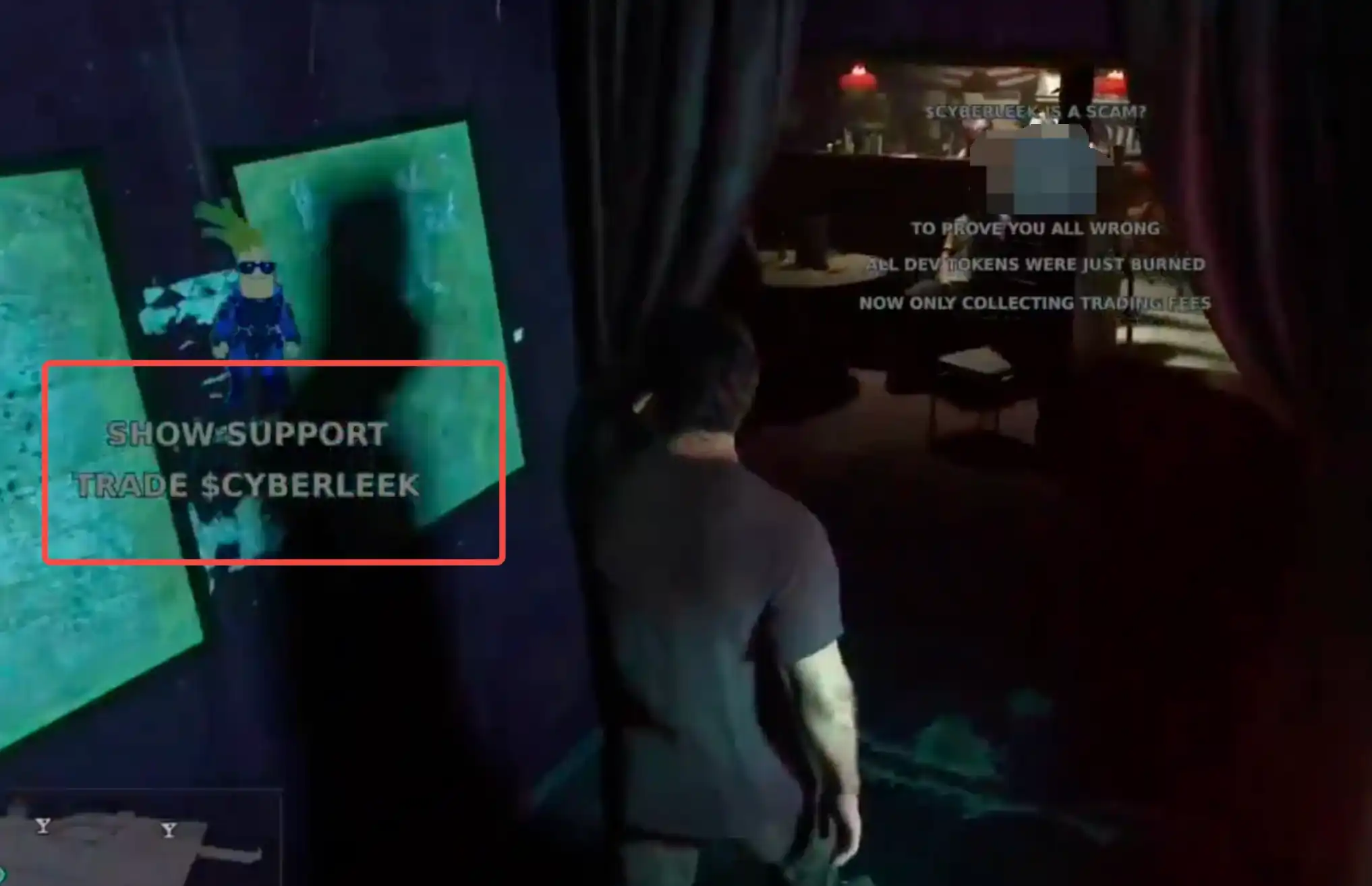
Hacker Leaks GTA6 and Launches a Token: Leaked Videos Become Ad Space for $CYBERLEEK, Must Buy Tokens to Vote for Next Clip

A hacker group called "CyberLeek" has leaked gameplay footage of the highly anticipated video game *GTA 6*, which is slated for release in 2026. Simultaneously, the group launched a meme token, $CYBERLEEK, on Solana. The leaks, which include maps and gameplay clips, are heavily watermarked with advertisements urging viewers to buy the token. Investigations of blockchain data reveal that the token was created and funded from a single wallet approximately eight hours before the first leak was released, suggesting a coordinated plan. The group has implemented a voting system where token holders can "vote" for the next type of content to be leaked by sending $CYBERLEEK tokens to a designated wallet—a process that permanently transfers the tokens to the hackers. This creates a self-sustaining cycle where interest in the leaks drives token purchases. Financially, the operation involved minimal upfront costs (less than $3,500 in out-of-pocket expenses) but generated significant revenue. On its first day, the token saw $15 million in trading volume, netting the creators an estimated $30,000 from transaction fees alone. While the group later burned a large portion of its developer-held tokens (worth over $1 million) to build trust, the fee-generating mechanism remains intact. The game's publisher, Take-Two Interactive, has initiated legal proceedings to identify the hackers. Despite this, the case demonstrates a new model where leaked intellectual property is used as leverage to promote and profit from a cryptocurrency, with meme token markets serving as an additional revenue stream.

marsbit2h ago

Hacker Leaks GTA6 and Launches a Token: Leaked Videos Become Ad Space for $CYBERLEEK, Must Buy Tokens to Vote for Next Clip

marsbit2h ago

Trading

Spot

Hot Articles

Discussions

Welcome to the HTX Community. Here, you can stay informed about the latest platform developments and gain access to professional market insights. Users' opinions on the price of ETH (ETH) are presented below.

活动图片