Trump Pushes Digital Assets Into U.S. Banking System

TheNewsCryptoPublished on 2026-05-20Last updated on 2026-05-20

Abstract

President Trump has issued an executive order directing federal agencies to revise financial regulations to integrate digital assets and fintech into the traditional banking and payments system. The policy aims to streamline rules, lower barriers to entry, and encourage collaboration between fintech firms, banks, and regulators. A key directive is for financial regulators to identify and amend any rules that unfairly prevent fintech companies from partnering with federally regulated banks. Specifically, the order requires the Federal Reserve Board to evaluate its system for providing payment accounts and services to non-bank financial institutions. This review includes examining whether Federal Reserve banks can issue such accounts independently, which could benefit entities like Wyoming's Special Purpose Depository Institutions (SPDIs). The move follows recent limited master account access granted to the crypto exchange Kraken and ongoing Fed efforts to establish a more formal framework for such access.

On Tuesday, US President Donald Trump issued an executive order directing the federal government to revise its regulatory frameworks in order to incorporate “digital assets and innovative technology into traditional financial services and payment systems.”

The order said:

“It is therefore the policy of the United States to streamline regulatory processes, reduce unnecessary barriers to entry, and encourage collaboration between fintech firms, federally regulated financial institutions, and Federal financial regulators.”

Expanding Crypto-linked Access to Fed Payment Services

The document recommends that the United States integrate financial technology services into its preexisting payment and banking infrastructure.

Over the next three months, the chiefs of financial regulators are required by the order to evaluate their current laws and identify any regulations or documents that unfairly prevent fintech companies from forming relationships with banks authorized by the federal government.

As a consequence of the evaluation, Trump ordered regulators to take action within six months to promote innovation. Among these measures is a request that the Federal Reserve Board of Governors examine the current system for providing payment accounts and services to non-bank financial enterprises and uninsured depository institutions.

Additionally, this evaluation inquires as to whether or not the twelve Federal Reserve banks have the authority to issue payment accounts apart from the board. Special purpose depository institutions in Wyoming and other jurisdictions with comparable structures may be particularly well-served by this provision. An SPDI based in Wyoming, Kraken, was earlier this year allowed access to a restricted version of the Federal Reserve Bank of Kansas’s so-called master account. Similar access has been requested by other firms.

After unveiling a plan in December to provide access to some businesses, the Federal Reserve is now hard at work creating a more official “skinny” master account.

Highlighted Crypto News Today:

Bitcoin Faces Pressure as Retail BTC Activity Hits Record Low

TagsAltcoinBitcoin

Related Questions

QWhat did the executive order issued by President Trump aim to do regarding digital assets?

AThe executive order aimed to direct the federal government to revise its regulatory frameworks to incorporate digital assets and innovative technology into traditional financial services and payment systems.

QWhat are the three main policy goals stated in Trump's order for encouraging fintech?

AThe policy goals are to streamline regulatory processes, reduce unnecessary barriers to entry, and encourage collaboration between fintech firms, federally regulated financial institutions, and Federal financial regulators.

QWhat specific action did the order require the Federal Reserve Board of Governors to examine?

AThe order required the Federal Reserve Board of Governors to examine the current system for providing payment accounts and services to non-bank financial enterprises and uninsured depository institutions.

QWhich recent development for a specific type of institution is mentioned as being well-served by the order's provisions?

AThe order's provisions may particularly well-serve Special Purpose Depository Institutions (SPDIs) in Wyoming and other jurisdictions with comparable structures, referencing Kraken's earlier access to a restricted Fed master account.

QWhat is the Federal Reserve currently working on regarding master accounts, according to the article?

AFollowing a plan unveiled in December, the Federal Reserve is now hard at work creating a more official 'skinny' master account to provide access to certain businesses.

Related Reads

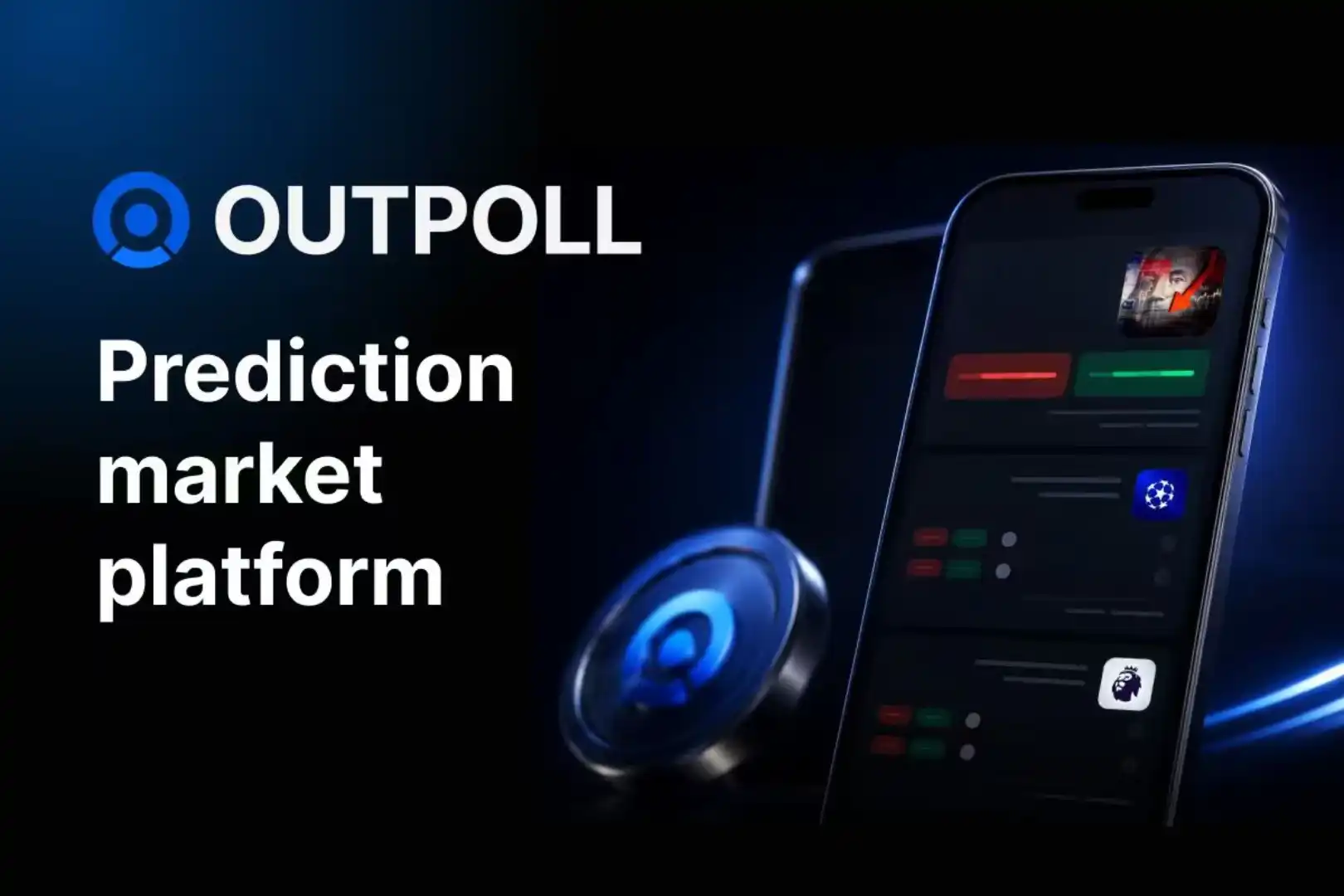
Outpoll Review: A Prediction Market Platform Built for Active Traders

Outpoll Review: A Prediction Market Platform Built for Active Traders In recent years, prediction markets have grown from a niche sector to a mainstream arena, attracting billions in trading volume and institutional capital. However, the user experience and tools for traders have not kept pace. Outpoll, a new global prediction market platform, aims to fill this gap by providing enhanced trading infrastructure for active and professional traders. Built on standard prediction market principles, Outpoll allows users to trade on the outcome of specific events. It uses fully collateralized contracts with USDC settlement, charges a competitive 0.1% fee per trade, and provides clear settlement rules upfront to minimize disputes. A key focus for Outpoll is its professional-grade trading tools. The platform supports limit and market orders, as well as take-profit and stop-loss orders for open positions—features uncommon in prediction markets. For automated trading, Outpoll offers comprehensive REST and WebSocket APIs, enabling portfolio management, price arbitrage, and integration with existing tools. The platform also features a creator-led market model, where approved experts and community leaders can create and manage markets for niche topics under platform supervision. Its integrated interface combines news feeds directly with trading functions, allowing users to monitor events and manage positions seamlessly. Outpoll launched with a native Android app (available on Google Play) and plans an iOS version later this year. In summary, Outpoll distinguishes itself with trader-focused tools, practical APIs, transparent and collateralized markets, integrated news, and an expanding creator program. For active traders, its advanced order types and API access alone make it a platform worth watching. Outpoll is now globally accessible via outpoll.com and Google Play.

marsbit8m ago

Outpoll Review: A Prediction Market Platform Built for Active Traders

marsbit8m ago

Bitwise: Crypto Becomes a Contrarian Investment, Three Logics to Understand the Current Market

**Summary** Matt Hougan, Bitwise's CIO, analyzes the current crypto market through three key lenses, arguing it has shifted from a momentum-driven to a contrarian investment. **1) Crypto Becomes a Contrarian Play:** The market is weak, with major assets like Bitcoin and Ethereum down significantly. Capital has moved to hot sectors like AI, leaving crypto as an "unloved" asset class. This transforms crypto investing from trend-following to a test of patience and fundamental analysis. Investors now favor projects with solid fundamentals (e.g., Hyperliquid) over speculative ones. **2) Regulatory Overhang:** The uncertain fate of the U.S. CLARITY Act, a major crypto regulatory framework, is a key headwind. With its passage in 2024 seen as far from guaranteed (estimates range from 30-55%), institutional capital remains on the sidelines, choosing less risky alternatives like AI stocks. The market needs clarity—whether the bill passes or fails—more than any specific outcome to move decisively. **3) Capital Rotates to New Fundamentals:** This cycle differs from past bear markets where money fled to Bitcoin. Now, capital seeks smaller assets with strong use cases. While major cryptos fell in May 2024, tokens like Hyperliquid (+72%), Zcash (+50%), and XLM (+44%) rallied on their specific fundamentals. This rotation confirms the new contrarian, fundamentals-driven logic and signals the bear market may be in its later stages. **Conclusion:** Short-term pressure persists due to regulatory uncertainty and competition from AI narratives. Investing in crypto now requires a contrarian mindset—acting against the crowd and focusing on fundamental value. Patience and targeting high-quality projects based on their merits are essential for capturing long-term gains.

marsbit51m ago

Bitwise: Crypto Becomes a Contrarian Investment, Three Logics to Understand the Current Market

marsbit51m ago

ChatGPT Might Be Disappearing Soon

OpenAI announced at its "Intelligence at Work" event that its coding assistant, Codex, will be fully integrated into the ChatGPT app within weeks. This move marks a strategic shift from a conversational AI (Chat) towards a unified "agentic" platform capable of execution. Codex, originally launched to compete with Anthropic's Claude Code, has grown rapidly to 5 million weekly active users, with 20% being non-developers like analysts and designers. Its enterprise revenue now constitutes 40% of OpenAI's total. The integration is the first step in creating a super-app combining ChatGPT (interface), Codex (execution engine), and the Atlas browser (web access). OpenAI also unveiled new Codex features: specialized Agent plugins for six professional roles, an "Annotations" tool for direct document editing, and a "Sites" function to turn work into shareable web apps. Internally, this reflects a power shift; the Codex team now leads core product strategy. While the ChatGPT brand remains for its vast user base, the platform's future is focused on autonomous agents that perform tasks, not just chat. The article notes that competition with Claude Code pushed OpenAI's development, with Codex competing on cost-effectiveness and accessibility rather than raw coding quality. It concludes that the essence of "ChatGPT" is evolving from a chatbot into an AI agent platform, with the name potentially becoming a legacy symbol of its original function.

marsbit1h ago

ChatGPT Might Be Disappearing Soon

marsbit1h ago

WWDC26 Ultimate Preview: The All-New Siri is the Main Course, iOS 27 is Another Year of Refinements

Apple has confirmed WWDC26 will begin on June 8, with the keynote at 10 AM PT (1 AM Beijing Time, June 9). This year's focus is expected to shift significantly from routine OS updates to Apple's progress in AI, particularly a major overhaul of Siri. Reports indicate the highlight will be a new Siri, reportedly powered by Google's Gemini technology. This upgraded assistant is expected to appear as a lightweight bubble from the Dynamic Island and be accessible via a unified "Search or Ask" system-wide entry point. It aims to deeply integrate with iOS 27, iPadOS 27, and macOS 27, accessing personal data like messages, photos, and documents, with a potential standalone Siri app also in development. For iOS 27, leaks suggest incremental improvements rather than major redesigns. Key updates may include a redesigned, more customizable Camera app, enhanced photo editing tools within the Photos app, and potential early system optimizations for a future foldable iPhone. The update is also rumored to prioritize bug fixes, stability, and performance optimization. iPadOS 27 is anticipated to focus on improving productivity features like window management, file systems, and external display support to better utilize the iPad's hardware. macOS 27 is seen as a core platform for Apple Intelligence, likely receiving an optimized Siri, new AI features, and continued refinement of the "Liquid Glass" design language. Notably, macOS 27 may finally drop support for Intel-based Macs. The overarching theme for WWDC26 is whether Apple can effectively integrate AI across its ecosystem. The success of the new Siri and Apple Intelligence will be judged on their ability to move beyond standalone features and become a cohesive, context-aware system layer that understands user workflows across iPhone, iPad, Mac, and other devices, while maintaining Apple's emphasis on privacy and stability. The conference represents Apple's critical attempt to catch up and redefine the AI assistant experience after a perceived slow start in the generative AI era.

marsbit1h ago

WWDC26 Ultimate Preview: The All-New Siri is the Main Course, iOS 27 is Another Year of Refinements

marsbit1h ago

Trading

Spot
Futures
活动图片