Topping GitHub's Trending, the Essential Guide for Claude Code Users

marsbitPublished on 2026-05-18Last updated on 2026-05-18

Abstract

The CLAUDE.md file, trending on GitHub, is a project-level guide for Claude Code designed to dramatically improve its accuracy and efficiency. It addresses key issues like repetitive context explanations, unauthorized code changes, and forgotten decisions across sessions. By placing this plain-text file in a project root, Claude Code reads it automatically at the start of each session. The guide includes rules to eliminate redundant explanations, enforce strict behavioral constraints (e.g., no modifications outside the requested scope without confirmation), and establish a "memory" system using companion files like MEMORY.md and ERRORS.md to log past decisions and failures. It also locks in the project's specific tech stack to prevent inappropriate tool recommendations. Highlighted are four foundational rules from Andrej Karpathy that reportedly increased coding accuracy from 65% to 94%: always ask for clarity first, implement the simplest solution, never touch unrelated code, and explicitly flag uncertainties. The article quantifies significant weekly cost savings for developers and teams by eliminating wasted time on re-explaining context, rolling back unauthorized edits, and re-evaluating previously rejected solutions. The core message is that a small, upfront investment in creating a CLAUDE.md file leads to a more predictable, controlled, and cost-effective AI programming assistant.

Editor's Note: The biggest problem many people face when using Claude Code isn't that the model isn't powerful enough, but that they start from scratch every time.

You need to repeatedly tell it the project background, tech stack, code conventions, which parts must not be touched, and which approaches have already been tried. As long as this information isn't fixed, Claude will work by guessing, potentially modifying files it shouldn't, refactoring code you didn't ask it to, or even recommending tools unsuitable for the current project.

The CLAUDE.md introduced in this article is a user manual written for Claude Code. You just need to place it in your project's root directory, and Claude will automatically read it on each startup. It tells Claude in advance: how to answer, how to write code, when to ask questions first, which operations cannot be performed without permission, what tech stack the project uses, and what important decisions were made in the past.

In short, the purpose of CLAUDE.md is to: reduce repeated explanations, limit the model's overreach, and make AI programming more stable and controllable.

If you are using Claude Code, you can start with the 4 rules summarized by Karpathy: ask if unsure, do the simplest solution first, don't touch unrelated code, and clearly state uncertainty. Start by writing these rules into CLAUDE.md, then gradually add to it based on your project, and you'll see a clear improvement in your experience.

The original text follows:

A file named CLAUDE.md topped GitHub's Trending list.

82k stars, 7.8k forks.

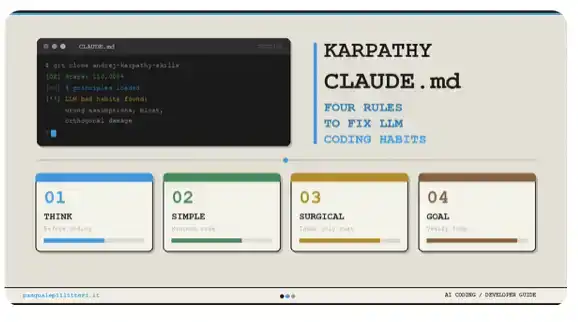
This began with Andrej Karpathy. He is the former Head of AI at Tesla and a founding member of OpenAI. He summarized four behaviors that would cause Claude Code to fail and wrote them into a file.

Later, a developer expanded upon these four rules and publicly released this file. It quickly went viral.

The reason is straightforward: coding accuracy increased from 65% to 94%.

But most developers who use Claude Code daily have never actually set this up. They start from zero every session: re-explaining the same context, cleaning up unnecessary scope changes, rolling back unrequested refactors.

Here is the complete file.
The Setup Most Developers Miss

Every time you open Claude Code, it starts knowing nothing by default.

It doesn't know your tech stack, your coding conventions, your project background, what you've already tried, let alone decisions you explicitly ruled out three sessions ago.

So it can only guess. And once it starts guessing, it might refactor code you didn't ask to be touched, recommend frameworks that would break your existing architecture, delete files without confirmation, or even overturn decisions you've already made.

CLAUDE.md is a plain text file placed in the project's root directory. Claude Code will automatically read it at the start of every session.

Set it up once, avoid repeated explanations, and fix three types of costly errors.

Default Settings: You're Spending $375 a Week Just Repeating Yourself

The average developer spends about 30 minutes a day re-explaining context to Claude.

Tech stack, coding conventions, project background, methods already tried—unless you write this information down once and have Claude read it automatically each time, it won't persist across sessions.

At a developer's hourly rate of $150:

· 30 minutes a day is $75;

· $375 per week.

· For a 5-person team, that's $1,875 in hidden costs weekly.
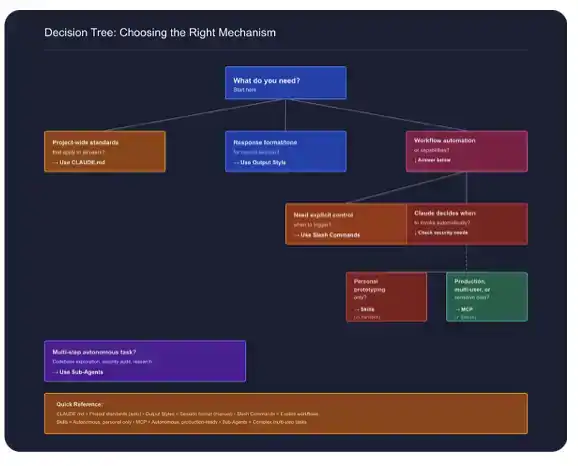
The following 7 rules should be placed at the top of the CLAUDE.md file.

→ Skip the Fluff

Don't start answers with "Great question," "Sure," "No problem," or similar prefaces. Get straight to the answer. No pleasantries, no restating the question.

→ Match Answer Length to Task

Answer length should match task complexity. Simple questions get direct, short answers; complex tasks get complete, detailed explanations. Don't pad length by restating the question or adding repetitive concluding remarks.

→ Give Options Before Acting

Before starting any significant task, first present 2–3 viable paths. Wait for my selection before proceeding.

→ Admit Uncertainty Before It Costs

If you are uncertain about any fact, data, date, or technical information, explicitly say so before referencing it. Don't fill knowledge gaps with plausible-sounding information. When in doubt, simply say you're unsure.

→ Who I Am, What I Know

About Me: [Name] / Role: [Your Role] / Background: [Domain].

I'm Proficient At: [What you're familiar with].

I'm Still Learning: [Knowledge gaps].

Adjust the depth of each answer based on this information. Don't over-explain what I already know, and don't skip context I need.

→ Current Project Context

I'm Working On: [Project Name] / Goal: [Specific Outcome] / Audience: [Who will use it] / Tech Stack Context: [Relevant Constraints] / Avoid: [List].

Apply this context to every task. If a request conflicts with the context, point it out before executing.

→ Lock Down Your Writing Style

My Writing Style Is: [Describe your style].

Sentence Length: [Preference].

Words I Use Often: [Examples].

Words I Never Use: [Examples].

Format: [Prose or Structured].

When writing anything on my behalf, you must strictly match this style. Do not default to your own expressive patterns.

Daily time spent re-explaining context: 30 minutes

At $150/hour developer rate: $75 / day

Weekly: $375 per developer

5-person team: $1,875 per week

Time to set up this part of CLAUDE.md: 45 minutes total

Mistake to avoid: Don't write CLAUDE.md from scratch. Start with the prompt below, then edit the output:

Based on what I've told you about myself, my project, and how I want to work, please write a complete CLAUDE.md file for me. Include: who I am, my technical background, my communication preferences, and default behaviors to follow each session. Be specific, plain text, under 500 words.

Behavioral Constraints: Those Unauthorized $150/Hour Changes

You ask Claude to fix a function.

It ends up refactoring three files, renaming variables, reorganizing imports, and rewriting comments you spent time on.

All without your confirmation.

Reviewing and rolling back these unnecessary changes might take an hour, which is $150. Happening three times a week is $450. For a 5-person team, that's $2,250 per week spent cleaning up unauthorized changes.
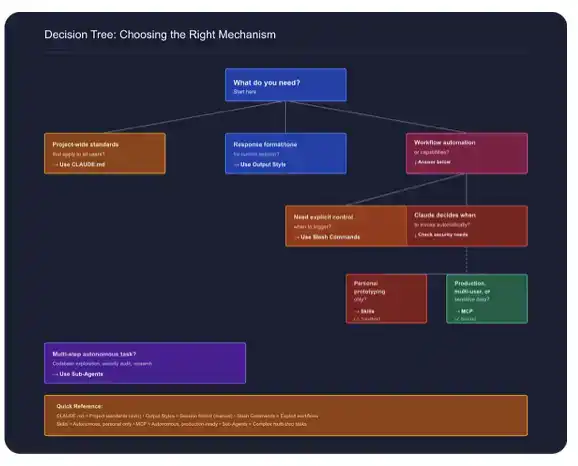
The following 7 rules should go in the Behavioral Constraints section of CLAUDE.md.

→ Strict Scope Control

Only modify files, functions, and lines of code directly relevant to the current task. Do not refactor, rename, reorganize, reformat, or "optimize" anything I have not explicitly asked you to change.

If you see something else worth fixing, note it at the end. Do not touch it. Never.

→ Ask Before Major Changes

Before making significant changes to content I've already created—including rewriting sections, deleting paragraphs, restructuring, changing tone—you must pause, precisely state what you plan to change and why. Wait for my confirmation before proceeding.

→ Must Confirm Before Any Destructive Action

Before deleting any file, overwriting existing code, deleting database records, or removing dependencies, you must pause, list what will be specifically affected, and request my explicit confirmation. You may proceed only if I say "yes" in the current message.

"You mentioned earlier" does not equal confirmation.

→ Mandatory Pause for Production Operations

The following operations require explicit confirmation within the current session, without exception:

· Deploying or pushing to any environment;

· Running migrations or database schema changes;

· Sending any external API calls;

· Executing any command with irreversible side effects.

· I must explicitly say "yes" in the current message.

→ Always Show What Changed

After completing any coding task, the end must include:

Files Modified: List all touched files;

What Changed: One sentence per file;

Files Intentionally Not Modified;

Follow-Up Items.

→ Do Not Act on My Behalf Without Explicit Confirmation

Do not send, post, share, or schedule anything on my behalf without my explicit confirmation in the current message. This includes emails, calendar invites, document shares, or any action happening outside the current conversation. I must explicitly say "yes" in the current message.

→ Think Before Coding

For tasks involving architectural decisions, complex problem debugging, or non-trivial feature development, first reason through the problem step-by-step before writing code. Show your reasoning, point out uncertainties, and then execute.

Weekly rollback of unnecessary scope changes: $150

Weekly manual diff checks: $75

Behavior-related waste per developer: $225 / week

5-person team: $1,125 / week

Time to set up CLAUDE.md Behavior section: 30 minutes

Memory & Tech Stack: The Setup That Makes Claude Code Truly Reliable

Claude forgets everything between sessions.

Every decision you've made, every approach that failed, why you chose Prisma over Drizzle six months ago, and why a particular constraint comes from a specific client requirement—it forgets it all.

Then, it re-proposes options you've long since ruled out.

This section is the closest thing to providing Claude with "real memory" for the current context, while also locking down your tech stack to prevent it from recommending tools that would break your existing architecture.
→ MEMORY.md Decision Log

Maintain a file named MEMORY.md in the project. Whenever an important decision is made, add a new entry:

· What was decided;

· Why it was decided that way;

· What was ruled out, and why.

Read MEMORY.md at the start of each session. Do not conflict with recorded decisions without prompting.

→ Session End Summary

When I say "session end," "wrapping up," or "let's stop here," write a session summary to MEMORY.md, including:

· What was handled;

· What was completed;

· What is still in progress;

· What decisions were made;

· Priorities for the next session.

→ ERRORS.md Failure Log

Maintain a file named ERRORS.md. When an approach has been tried more than twice without success, record it:

· What didn't work;

· What finally worked;

· What to watch for next time.

Check ERRORS.md before proposing solutions for similar tasks.

→ Permanent Fact List

The following facts are always true for this project and must be applied to every session without exception:

[Your permanent constraints, architectural decisions, and rules]

If a task conflicts with these facts, point it out before executing.

→ Lock Down the Tech Stack

The project's tech stack is as follows. Always use these tools. Do not recommend alternatives unless I explicitly ask:

Language: [e.g., TypeScript]

Framework: [e.g., Next.js 14]

Package Manager: [e.g., pnpm]

Database: [e.g., PostgreSQL with Prisma]

Testing: [e.g., Vitest]

Styling: [e.g., Tailwind CSS]

If a tool seems unsuitable, you can point it out. But unless I explicitly state otherwise, you must use the defined tech stack.

→ Enable Extended Thinking for Difficult Decisions

For problems involving system architecture, performance trade-offs, database design, or long-term technical decisions, use the extended thinking mode.

Analyze the problem step-by-step, point out trade-offs I might not have considered, identify assumptions that might not hold at scale, and then give your recommendation.

→ The 4 Viral Rules

Karpathy summarized 4 behaviors that cause Claude Code to fail. A developer distilled them into these 4 lines of rules. Coding accuracy increased from 65% to 94% as a result.

Ask, don't assume.
If anything is unclear, ask before writing the first line of code. Do not make silent assumptions about intent, architecture, or requirements.

Do the simplest thing first.
Always implement the simplest solution that works first. Do not add abstraction layers or flexibility not explicitly requested.

Don't touch unrelated code.
If a file or function is not directly related to the current task, don't modify it. Even if you think it could be optimized, leave it alone.

Explicitly mark uncertainty.
If you are unsure about a solution or technical detail, state it before proceeding. Acting confident without certainty causes more damage than admitting a knowledge gap.

· Weekly recovery cost from forgotten decisions and bad advice: $300 per developer

· Wrong tech stack recommendations and incompatible tools: $75 per week

· Memory-related waste per developer: $375 / week

· 5-person team: $1,875 / week

· MEMORY.md + ERRORS.md + Tech Stack setup time: 20 minutes

Conclusion

The full cost breakdown is as follows:

· Weekly cost of re-explaining context: $375

· Weekly cost of rolling back unauthorized changes: $225

· Weekly cost of handling problems from forgotten decisions: $375

· Total waste per developer per week: $975.

For a 5-person dev team: $4,875 per week. $253,500 per year.

Setting up CLAUDE.md only takes 2 hours in total.

Karpathy's 4 rules alone increased coding accuracy from 65% to 94%.

A plain text file, 21 rules, two hours of work.

Developers who complete this setup are effectively using a more reliable Claude: one that remembers decisions, controls task scope, asks for confirmation before destructive actions, and doesn't recommend frameworks that would break the existing architecture.

Those who haven't set it up are still spending $975 a week repeating themselves.

P.S.: Start with Karpathy's 4 rules. Just these 4. Paste them into a new file named CLAUDE.md in your project's root directory right now. It takes 2 minutes. Then gradually supplement it each week based on the gaps you discover.

Bookmark this before it gets lost in your feed. And if you find it useful, share it with someone who genuinely needs it.


Related Questions

QWhat is CLAUDE.md and what problem does it solve for Claude Code users?

ACLAUDE.md is a plain text file placed in a project's root directory. It serves as an instruction manual for Claude Code, which automatically reads it at the start of each session. It solves the problem of developers having to repeatedly re-explain project context, tech stack, code standards, previous decisions, and constraints to Claude Code in every new session. This reduces repetitive explanations, prevents the AI from making incorrect assumptions or unauthorized changes, and makes AI-assisted programming more stable and controllable.

QAccording to the article, what are the four core rules from Andrej Karpathy that significantly improve Claude Code's accuracy?

AThe four core rules from Andrej Karpathy are: 1. Ask first, don't assume: If anything is unclear, ask before writing the first line of code. Do not make silent assumptions about intent, architecture, or requirements. 2. Do the simplest thing first: Always implement the simplest solution that works. Do not add abstraction layers or flexibility that weren't explicitly requested. 3. Don't touch unrelated code: If a file or function is not directly related to the current task, do not modify it. Even if you think it could be optimized, leave it alone. 4. Explicitly mark uncertainty: If you are unsure about a solution or technical detail, state it before proceeding. Acting confidently without certainty causes more harm than admitting a knowledge gap.

QWhat is the estimated weekly financial waste per developer mentioned in the article for not using CLAUDE.md?

AThe article estimates a weekly financial waste of $975 per developer for not using CLAUDE.md. This breaks down into three categories: $375 for repeating contextual explanations, $225 for rolling back unauthorized changes, and $375 for dealing with problems caused by forgotten decisions and wrong suggestions.

QWhat specific behaviors should be prevented according to the 'Behavioral Constraints' section of an ideal CLAUDE.md file?

AAccording to the 'Behavioral Constraints' section, an ideal CLAUDE.md file should enforce rules to prevent Claude Code from: 1. Making changes outside the direct scope of the task (e.g., unauthorized refactoring, renaming, reformatting). 2. Executing significant modifications (rewrites, deletions, structural changes) without prior confirmation. 3. Performing any destructive operations (deleting files, overwriting code, database changes) without explicit, in-session confirmation. 4. Taking production environment actions (deployments, migrations, external API calls) without mandatory pause and confirmation. 5. Failing to clearly list all changes made after a coding task. 6. Acting on the user's behalf (sending emails, sharing documents) without explicit confirmation. 7. Writing code for complex tasks without first showing reasoning and identifying uncertainties.

QWhat are the MEMORY.md and ERRORS.md files used for, as suggested in the article?

AThe article suggests using MEMORY.md and ERRORS.md files to provide Claude Code with a form of 'memory'. MEMORY.md is a decision log where important project decisions (what was decided, why, and what was excluded) are recorded. Claude should read this at the start of each session and avoid conflicting with logged decisions. It should also write a session summary to this file when a session ends. ERRORS.md is a failure log. When a solution attempt fails more than twice, it should be recorded (what didn't work, what finally worked, what to watch for next). Claude should check this file before proposing solutions for similar tasks.

Related Reads

What's New in Jensen Huang's 'Agent Factory'?

In a keynote at COMPUTEX 2026, NVIDIA CEO Jensen Huang shifted the company's focus from hardware "full-stack" solutions to the era of AI Agents. The centerpiece is the Vera Rubin platform, now in production, which is designed specifically for Agent workloads and offers 10x the efficiency of its predecessor. The platform features the new Vera CPU, built for AI, and incorporates Spectrum-X Ethernet Photonics with CPO technology for improved networking and energy efficiency. NVIDIA introduced DSX, an integrated toolkit for designing, simulating, and operating AI data centers, aiming to streamline "AI factory" deployment and management. For end-user deployment, the company unveiled DGX Station for Windows, a desktop AI supercomputer for running Agents locally, and the RTX Spark SoC for AI PCs. On the software front, NVIDIA launched the 550B-parameter Nemotron 3 Ultra model for enterprise Agents and the Cosmos 3 foundation model for physical AI, unifying visual reasoning and action prediction. In robotics, a partnership with Unitree yielded the H2 Plus, a reference humanoid robot built on the Isaac GR00T platform to lower development barriers. Security was emphasized with enhanced confidential computing for Vera Rubin and new data path security features for the BlueField-4 STX storage platform. The presentation highlighted a strategic pivot: NVIDIA is reorganizing its entire technology stack—from chips and data centers to models, software, and robots—around the emerging ecosystem of autonomous, practical AI Agents.

marsbit19m ago

What's New in Jensen Huang's 'Agent Factory'?

marsbit19m ago

The Era of Bitcoin Dominating Crypto Is Over

The era of Bitcoin's dominance over the entire crypto market is ending. The crypto economy is now bifurcating into two distinct camps: endogenous assets and exogenous assets. Endogenous assets, like Bitcoin and many traditional cryptocurrencies, derive their value primarily from the broader crypto market's price movements. Their fortunes rise and fall with the market cycle. Exogenous assets, however, are increasingly decoupled from crypto market volatility. These projects, while technically part of the crypto space, have business models and value drivers that operate independently. Examples include Venice, which monetizes private AI inference services; Figure, a fintech firm using blockchain to streamline home equity loans; and stablecoin-related companies like BVNK and Bridge, which see growth unrelated to crypto bull or bear markets. This shift is fundamental. Past narratives of a "blockchain over Bitcoin" focus failed because they lacked sustainable, quantifiable demand and revenue streams that could translate to token value. The current cycle is different: exogenous projects generate real revenue from paying users, and investors are beginning to evaluate them based on fundamentals rather than mere market narrative. While endogenous assets will remain relevant—akin to gold and gold mining stocks in a portfolio—their performance drivers are now distinct from those of exogenous assets. Consequently, analyzing exogenous assets requires a traditional, fundamentals-based approach: examining user bases, unit economics, and competitive moats, much like a fintech investor would. Bitcoin's price is no longer the primary reference point. Promising exogenous sectors include on-chain exchanges/brokerages, AI/crypto fusion, tokenization of real-world assets, new digital banks, lending platforms, payment channels, non-financial crypto-consumer products, and the agent economy. Currently, investing in company equity is often the most direct way to gain exposure, though token mechanisms are evolving. The core trend is clear: the crypto market's drivers are diversifying from a single factor to multiple factors. Industry analysis must now focus on deep business fundamentals, not just interpreting Bitcoin's price charts.

marsbit36m ago

The Era of Bitcoin Dominating Crypto Is Over

marsbit36m ago

Trading

Spot
Futures

Hot Articles

What is SONIC

Sonic: Pioneering the Future of Gaming in Web3 Introduction to Sonic In the ever-evolving landscape of Web3, the gaming industry stands out as one of the most dynamic and promising sectors. At the forefront of this revolution is Sonic, a project designed to amplify the gaming ecosystem on the Solana blockchain. Leveraging cutting-edge technology, Sonic aims to deliver an unparalleled gaming experience by efficiently processing millions of requests per second, ensuring that players enjoy seamless gameplay while maintaining low transaction costs. This article delves into the intricate details of Sonic, exploring its creators, funding sources, operational mechanics, and the timeline of significant events that have shaped its journey. What is Sonic? Sonic is an innovative layer-2 network that operates atop the Solana blockchain, specifically tailored to enhance the existing Solana gaming ecosystem. It accomplishes this through a customised, VM-agnostic game engine paired with a HyperGrid interpreter, facilitating sovereign game economies that roll up back to the Solana platform. The primary goals of Sonic include: Enhanced Gaming Experiences: Sonic is committed to offering lightning-fast on-chain gameplay, allowing players and developers to engage with games at previously unattainable speeds. Atomic Interoperability: This feature enables transactions to be executed within Sonic without the need to redeploy Solana programmes and accounts. This makes the process more efficient and directly benefits from Solana Layer1 services and liquidity. Seamless Deployment: Sonic allows developers to write for Ethereum Virtual Machine (EVM) based systems and execute them on Solana’s SVM infrastructure. This interoperability is crucial for attracting a broader range of dApps and decentralised applications to the platform. Support for Developers: By offering native composable gaming primitives and extensible data types - dining within the Entity-Component-System (ECS) framework - game creators can craft intricate business logic with ease. Overall, Sonic's unique approach not only caters to players but also provides an accessible and low-cost environment for developers to innovate and thrive. Creator of Sonic The information regarding the creator of Sonic is somewhat ambiguous. However, it is known that Sonic's SVM is owned by the company Mirror World. The absence of detailed information about the individuals behind Sonic reflects a common trend in several Web3 projects, where collective efforts and partnerships often overshadow individual contributions. Investors of Sonic Sonic has garnered considerable attention and support from various investors within the crypto and gaming sectors. Notably, the project raised an impressive $12 million during its Series A funding round. The round was led by BITKRAFT Ventures, with other notable investors including Galaxy, Okx Ventures, Interactive, Big Brain Holdings, and Mirana. This financial backing signifies the confidence that investment foundations have in Sonic’s potential to revolutionise the Web3 gaming landscape, further validating its innovative approaches and technologies. How Does Sonic Work? Sonic utilises the HyperGrid framework, a sophisticated parallel processing mechanism that enhances its scalability and customisability. Here are the core features that set Sonic apart: Lightning Speed at Low Costs: Sonic offers one of the fastest on-chain gaming experiences compared to other Layer-1 solutions, powered by the scalability of Solana’s virtual machine (SVM). Atomic Interoperability: Sonic enables transaction execution without redeployment of Solana programmes and accounts, effectively streamlining the interaction between users and the blockchain. EVM Compatibility: Developers can effortlessly migrate decentralised applications from EVM chains to the Solana environment using Sonic’s HyperGrid interpreter, increasing the accessibility and integration of various dApps. Ecosystem Support for Developers: By exposing native composable gaming primitives, Sonic facilitates a sandbox-like environment where developers can experiment and implement business logic, greatly enhancing the overall development experience. Monetisation Infrastructure: Sonic natively supports growth and monetisation efforts, providing frameworks for traffic generation, payments, and settlements, thereby ensuring that gaming projects are not only viable but also sustainable financially. Timeline of Sonic The evolution of Sonic has been marked by several key milestones. Below is a brief timeline highlighting critical events in the project's history: 2022: The Sonic cryptocurrency was officially launched, marking the beginning of its journey in the Web3 gaming arena. 2024: June: Sonic SVM successfully raised $12 million in a Series A funding round. This investment allowed Sonic to further develop its platform and expand its offerings. August: The launch of the Sonic Odyssey testnet provided users with the first opportunity to engage with the platform, offering interactive activities such as collecting rings—a nod to gaming nostalgia. October: SonicX, an innovative crypto game integrated with Solana, made its debut on TikTok, capturing the attention of over 120,000 users within a short span. This integration illustrated Sonic’s commitment to reaching a broader, global audience and showcased the potential of blockchain gaming. Key Points Sonic SVM is a revolutionary layer-2 network on Solana explicitly designed to enhance the GameFi landscape, demonstrating great potential for future development. HyperGrid Framework empowers Sonic by introducing horizontal scaling capabilities, ensuring that the network can handle the demands of Web3 gaming. Integration with Social Platforms: The successful launch of SonicX on TikTok displays Sonic’s strategy to leverage social media platforms to engage users, exponentially increasing the exposure and reach of its projects. Investment Confidence: The substantial funding from BITKRAFT Ventures, among others, emphasizes the robust backing Sonic has, paving the way for its ambitious future. In conclusion, Sonic encapsulates the essence of Web3 gaming innovation, striking a balance between cutting-edge technology, developer-centric tools, and community engagement. As the project continues to evolve, it is poised to redefine the gaming landscape, making it a notable entity for gamers and developers alike. As Sonic moves forward, it will undoubtedly attract greater interest and participation, solidifying its place within the broader narrative of blockchain gaming.

1.6k Total ViewsPublished 2024.04.04Updated 2024.12.03

What is SONIC

What is $S$

Understanding SPERO: A Comprehensive Overview Introduction to SPERO As the landscape of innovation continues to evolve, the emergence of web3 technologies and cryptocurrency projects plays a pivotal role in shaping the digital future. One project that has garnered attention in this dynamic field is SPERO, denoted as SPERO,$$s$. This article aims to gather and present detailed information about SPERO, to help enthusiasts and investors understand its foundations, objectives, and innovations within the web3 and crypto domains. What is SPERO,$$s$? SPERO,$$s$ is a unique project within the crypto space that seeks to leverage the principles of decentralisation and blockchain technology to create an ecosystem that promotes engagement, utility, and financial inclusion. The project is tailored to facilitate peer-to-peer interactions in new ways, providing users with innovative financial solutions and services. At its core, SPERO,$$s$ aims to empower individuals by providing tools and platforms that enhance user experience in the cryptocurrency space. This includes enabling more flexible transaction methods, fostering community-driven initiatives, and creating pathways for financial opportunities through decentralised applications (dApps). The underlying vision of SPERO,$$s$ revolves around inclusiveness, aiming to bridge gaps within traditional finance while harnessing the benefits of blockchain technology. Who is the Creator of SPERO,$$s$? The identity of the creator of SPERO,$$s$ remains somewhat obscure, as there are limited publicly available resources providing detailed background information on its founder(s). This lack of transparency can stem from the project's commitment to decentralisation—an ethos that many web3 projects share, prioritising collective contributions over individual recognition. By centring discussions around the community and its collective goals, SPERO,$$s$ embodies the essence of empowerment without singling out specific individuals. As such, understanding the ethos and mission of SPERO remains more important than identifying a singular creator. Who are the Investors of SPERO,$$s$? SPERO,$$s$ is supported by a diverse array of investors ranging from venture capitalists to angel investors dedicated to fostering innovation in the crypto sector. The focus of these investors generally aligns with SPERO's mission—prioritising projects that promise societal technological advancement, financial inclusivity, and decentralised governance. These investor foundations are typically interested in projects that not only offer innovative products but also contribute positively to the blockchain community and its ecosystems. The backing from these investors reinforces SPERO,$$s$ as a noteworthy contender in the rapidly evolving domain of crypto projects. How Does SPERO,$$s$ Work? SPERO,$$s$ employs a multi-faceted framework that distinguishes it from conventional cryptocurrency projects. Here are some of the key features that underline its uniqueness and innovation: Decentralised Governance: SPERO,$$s$ integrates decentralised governance models, empowering users to participate actively in decision-making processes regarding the project’s future. This approach fosters a sense of ownership and accountability among community members. Token Utility: SPERO,$$s$ utilises its own cryptocurrency token, designed to serve various functions within the ecosystem. These tokens enable transactions, rewards, and the facilitation of services offered on the platform, enhancing overall engagement and utility. Layered Architecture: The technical architecture of SPERO,$$s$ supports modularity and scalability, allowing for seamless integration of additional features and applications as the project evolves. This adaptability is paramount for sustaining relevance in the ever-changing crypto landscape. Community Engagement: The project emphasises community-driven initiatives, employing mechanisms that incentivise collaboration and feedback. By nurturing a strong community, SPERO,$$s$ can better address user needs and adapt to market trends. Focus on Inclusion: By offering low transaction fees and user-friendly interfaces, SPERO,$$s$ aims to attract a diverse user base, including individuals who may not previously have engaged in the crypto space. This commitment to inclusion aligns with its overarching mission of empowerment through accessibility. Timeline of SPERO,$$s$ Understanding a project's history provides crucial insights into its development trajectory and milestones. Below is a suggested timeline mapping significant events in the evolution of SPERO,$$s$: Conceptualisation and Ideation Phase: The initial ideas forming the basis of SPERO,$$s$ were conceived, aligning closely with the principles of decentralisation and community focus within the blockchain industry. Launch of Project Whitepaper: Following the conceptual phase, a comprehensive whitepaper detailing the vision, goals, and technological infrastructure of SPERO,$$s$ was released to garner community interest and feedback. Community Building and Early Engagements: Active outreach efforts were made to build a community of early adopters and potential investors, facilitating discussions around the project’s goals and garnering support. Token Generation Event: SPERO,$$s$ conducted a token generation event (TGE) to distribute its native tokens to early supporters and establish initial liquidity within the ecosystem. Launch of Initial dApp: The first decentralised application (dApp) associated with SPERO,$$s$ went live, allowing users to engage with the platform's core functionalities. Ongoing Development and Partnerships: Continuous updates and enhancements to the project's offerings, including strategic partnerships with other players in the blockchain space, have shaped SPERO,$$s$ into a competitive and evolving player in the crypto market. Conclusion SPERO,$$s$ stands as a testament to the potential of web3 and cryptocurrency to revolutionise financial systems and empower individuals. With a commitment to decentralised governance, community engagement, and innovatively designed functionalities, it paves the way toward a more inclusive financial landscape. As with any investment in the rapidly evolving crypto space, potential investors and users are encouraged to research thoroughly and engage thoughtfully with the ongoing developments within SPERO,$$s$. The project showcases the innovative spirit of the crypto industry, inviting further exploration into its myriad possibilities. While the journey of SPERO,$$s$ is still unfolding, its foundational principles may indeed influence the future of how we interact with technology, finance, and each other in interconnected digital ecosystems.

54 Total ViewsPublished 2024.12.17Updated 2024.12.17

What is $S$

What is AGENT S

Agent S: The Future of Autonomous Interaction in Web3 Introduction In the ever-evolving landscape of Web3 and cryptocurrency, innovations are constantly redefining how individuals interact with digital platforms. One such pioneering project, Agent S, promises to revolutionise human-computer interaction through its open agentic framework. By paving the way for autonomous interactions, Agent S aims to simplify complex tasks, offering transformative applications in artificial intelligence (AI). This detailed exploration will delve into the project's intricacies, its unique features, and the implications for the cryptocurrency domain. What is Agent S? Agent S stands as a groundbreaking open agentic framework, specifically designed to tackle three fundamental challenges in the automation of computer tasks: Acquiring Domain-Specific Knowledge: The framework intelligently learns from various external knowledge sources and internal experiences. This dual approach empowers it to build a rich repository of domain-specific knowledge, enhancing its performance in task execution. Planning Over Long Task Horizons: Agent S employs experience-augmented hierarchical planning, a strategic approach that facilitates efficient breakdown and execution of intricate tasks. This feature significantly enhances its ability to manage multiple subtasks efficiently and effectively. Handling Dynamic, Non-Uniform Interfaces: The project introduces the Agent-Computer Interface (ACI), an innovative solution that enhances the interaction between agents and users. Utilizing Multimodal Large Language Models (MLLMs), Agent S can navigate and manipulate diverse graphical user interfaces seamlessly. Through these pioneering features, Agent S provides a robust framework that addresses the complexities involved in automating human interaction with machines, setting the stage for myriad applications in AI and beyond. Who is the Creator of Agent S? While the concept of Agent S is fundamentally innovative, specific information about its creator remains elusive. The creator is currently unknown, which highlights either the nascent stage of the project or the strategic choice to keep founding members under wraps. Regardless of anonymity, the focus remains on the framework's capabilities and potential. Who are the Investors of Agent S? As Agent S is relatively new in the cryptographic ecosystem, detailed information regarding its investors and financial backers is not explicitly documented. The lack of publicly available insights into the investment foundations or organisations supporting the project raises questions about its funding structure and development roadmap. Understanding the backing is crucial for gauging the project's sustainability and potential market impact. How Does Agent S Work? At the core of Agent S lies cutting-edge technology that enables it to function effectively in diverse settings. Its operational model is built around several key features: Human-like Computer Interaction: The framework offers advanced AI planning, striving to make interactions with computers more intuitive. By mimicking human behaviour in tasks execution, it promises to elevate user experiences. Narrative Memory: Employed to leverage high-level experiences, Agent S utilises narrative memory to keep track of task histories, thereby enhancing its decision-making processes. Episodic Memory: This feature provides users with step-by-step guidance, allowing the framework to offer contextual support as tasks unfold. Support for OpenACI: With the ability to run locally, Agent S allows users to maintain control over their interactions and workflows, aligning with the decentralised ethos of Web3. Easy Integration with External APIs: Its versatility and compatibility with various AI platforms ensure that Agent S can fit seamlessly into existing technological ecosystems, making it an appealing choice for developers and organisations. These functionalities collectively contribute to Agent S's unique position within the crypto space, as it automates complex, multi-step tasks with minimal human intervention. As the project evolves, its potential applications in Web3 could redefine how digital interactions unfold. Timeline of Agent S The development and milestones of Agent S can be encapsulated in a timeline that highlights its significant events: September 27, 2024: The concept of Agent S was launched in a comprehensive research paper titled “An Open Agentic Framework that Uses Computers Like a Human,” showcasing the groundwork for the project. October 10, 2024: The research paper was made publicly available on arXiv, offering an in-depth exploration of the framework and its performance evaluation based on the OSWorld benchmark. October 12, 2024: A video presentation was released, providing a visual insight into the capabilities and features of Agent S, further engaging potential users and investors. These markers in the timeline not only illustrate the progress of Agent S but also indicate its commitment to transparency and community engagement. Key Points About Agent S As the Agent S framework continues to evolve, several key attributes stand out, underscoring its innovative nature and potential: Innovative Framework: Designed to provide an intuitive use of computers akin to human interaction, Agent S brings a novel approach to task automation. Autonomous Interaction: The ability to interact autonomously with computers through GUI signifies a leap towards more intelligent and efficient computing solutions. Complex Task Automation: With its robust methodology, it can automate complex, multi-step tasks, making processes faster and less error-prone. Continuous Improvement: The learning mechanisms enable Agent S to improve from past experiences, continually enhancing its performance and efficacy. Versatility: Its adaptability across different operating environments like OSWorld and WindowsAgentArena ensures that it can serve a broad range of applications. As Agent S positions itself in the Web3 and crypto landscape, its potential to enhance interaction capabilities and automate processes signifies a significant advancement in AI technologies. Through its innovative framework, Agent S exemplifies the future of digital interactions, promising a more seamless and efficient experience for users across various industries. Conclusion Agent S represents a bold leap forward in the marriage of AI and Web3, with the capacity to redefine how we interact with technology. While still in its early stages, the possibilities for its application are vast and compelling. Through its comprehensive framework addressing critical challenges, Agent S aims to bring autonomous interactions to the forefront of the digital experience. As we move deeper into the realms of cryptocurrency and decentralisation, projects like Agent S will undoubtedly play a crucial role in shaping the future of technology and human-computer collaboration.

700 Total ViewsPublished 2025.01.14Updated 2025.01.14

What is AGENT S

Discussions

Welcome to the HTX Community. Here, you can stay informed about the latest platform developments and gain access to professional market insights. Users' opinions on the price of S (S) are presented below.

活动图片












