The Sense of Contrast: The Core Element That Makes Web3 Narratives Stand Out?

比推Published on 2025-12-29Last updated on 2025-12-29

Abstract

The article "The Sense of Contrast: The Core Element That Makes Web3 Narratives Stand Out?" argues that the key to compelling Web3 storytelling is not necessarily creativity, but the effective use of contrast. Many Web3 creators produce content that is too straightforward—listing features, data, and benefits—which fails to engage the audience. The brain is activated by unexpected changes, not linear information. Contrast, defined as a shift or transformation (e.g., from "before" to "after," or from "expectation" to "reality"), creates memorable moments and makes content relatable. The author provides an example: instead of stating "Solana is fast and cheap," a narrative with contrast would describe the personal experience of a transaction completing almost instantly. This approach often requires admitting past mistakes or uncertainties, which feels uncomfortable but builds authenticity and connection with the audience. To incorporate contrast, creators should ask what changed in their story and include elements like a former false assumption, a moment of hesitation, or an unexpected outcome. In the noisy Web3 space, contrast helps content stand out through genuine transformation rather than loud promotion.

Author:Noir

Compiled by: Deep Tide TechFlow

Original title: Today in Web3 Narratives, Everyone Loves the Sense of Contrast


Most Web3 content creators think they are not good at storytelling because they feel they "lack creativity."

But friend, that is usually not the real issue.

In fact, the real problem is:

—Your content lacks contrast.

Hey, either the content:

sounds the same,

feels flat,

or has no variation.

And when nothing changes, there is no story to tell.

What is Contrast?
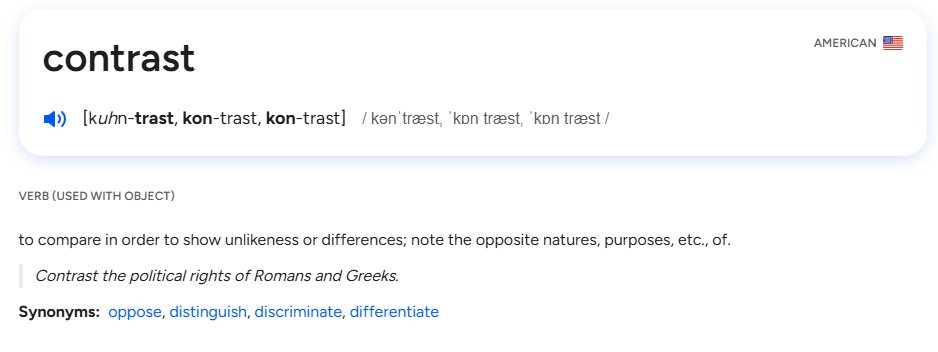
Contrast actually refers to something being different from what came before.

Yes, it's that simple.

It doesn't require:

flowery language,

surprising plot twists,

or background music.

Essentially, contrast is a transformation, such as:

from "before" to "after"

from "expectation" to "reality"

from "belief" to "realization"

Without this transformation, your content is just information.

Yes, maybe it's useful, but memorable? Hmm... unlikely.

Why does a lack of contrast make content weak?

The Web3 world is full of:

features, data, promises, roadmaps......

But most content is presented too straightforwardly:

"This is what it does."

"These are its benefits."

"This is why you should care about it."

However, the brain isn't interested in this linear information.

It wakes up when something unexpected happens.

Why Content Loses Appeal Without Contrast

The Web3 world is flooded with:

features, data, promises, roadmaps......

But most content is presented too directly:

"This is its function."

"Why it's good."

"Why you need to care about it."

However, the brain isn't activated by this straight-line information.

It only wakes up when something unexpected occurs.

A Simple Example of "Contrast"

(You must have seen it countless times)

Expression without contrast:

Solana's transactions are fast and cheap.

Your brain responds: Okay... so what?

Expression with contrast:

I clicked send, switched pages, and then realized the transaction was already completed.

The same idea, but with a completely different impact.

The second expression creates a "moment." Got it?

Why Does "Contrast" Feel Uncomfortable?

(And why this matters)

Contrast often requires you to admit:

You were wrong, you were confused, you underestimated something.

That's why most people avoid it.

But this discomfort is precisely what makes content feel authentic.

People don't like flawless things.

They connect more easily with resonance and vulnerability.

When someone thinks: "Wait... I've felt that way too."

Congratulations, you've succeeded.

How to Add "Contrast" to Your Content?

Before publishing, ask yourself one question:

"What changed here?"

If you can't answer, try adding:

  • A mistaken assumption you once had

  • A moment of hesitation

  • An unexpected result

  • A "small decision" you almost didn't make

It really doesn't require a dramatic plot.

You just need a little relatable change.

Weirdo's Summary

Don't get me wrong, creativity does play an important role in storytelling.

But not everyone is naturally creative. This article is specifically for those who truly want to learn storytelling techniques.

Its core lies in: being sincere enough to show "transformation."

In the complex and noisy world of Web3,

"Contrast" is the way to stand out without having to shout.

Remember to follow me, or else you'll...


Twitter:https://twitter.com/BitpushNewsCN

BitPush TG Group:https://t.me/BitPushCommunity

BitPush TG Subscription: https://t.me/bitpush

Original link:https://www.bitpush.news/articles/7598938

Related Questions

QWhat is the core element that the article suggests makes Web3 narratives stand out?

AThe article suggests that 'contrast' is the core element that makes Web3 narratives stand out.

QAccording to the article, what is the simple definition of 'contrast' in storytelling?

AThe article defines 'contrast' simply as something that is different from what came before it, representing a shift or transformation.

QWhy does the lack of contrast make content uninteresting, as explained in the article?

AThe lack of contrast makes content uninteresting because the human mind is not engaged by straightforward, linear information; it is awakened when something unexpected happens.

QWhat is an example the article gives to demonstrate a narrative with contrast about Solana?

AThe article contrasts a flat statement ('Solana's transactions are fast and cheap') with a narrative that creates a 'moment': 'I clicked send, switched pages, and then realized the transaction was already complete.'

QWhy is the discomfort of admitting being wrong or confused important for creating effective content?

AThis discomfort is important because it makes the content feel authentic and relatable, allowing people to connect with vulnerability and shared experiences rather than perfection.

Related Reads

Trading

Spot
Futures

Hot Articles

How to Buy CORE

Welcome to HTX.com! We've made purchasing CORE (CORE) simple and convenient. Follow our step-by-step guide to embark on your crypto journey.Step 1: Create Your HTX AccountUse your email or phone number to sign up for a free account on HTX. Experience a hassle-free registration journey and unlock all features.Get My AccountStep 2: Go to Buy Crypto and Choose Your Payment MethodCredit/Debit Card: Use your Visa or Mastercard to buy CORE (CORE) instantly.Balance: Use funds from your HTX account balance to trade seamlessly.Third Parties: We've added popular payment methods such as Google Pay and Apple Pay to enhance convenience.P2P: Trade directly with other users on HTX.Over-the-Counter (OTC): We offer tailor-made services and competitive exchange rates for traders.Step 3: Store Your CORE (CORE)After purchasing your CORE (CORE), store it in your HTX account. Alternatively, you can send it elsewhere via blockchain transfer or use it to trade other cryptocurrencies.Step 4: Trade CORE (CORE)Easily trade CORE (CORE) on HTX's spot market. Simply access your account, select your trading pair, execute your trades, and monitor in real-time. We offer a user-friendly experience for both beginners and seasoned traders.

4.7k Total ViewsPublished 2024.03.29Updated 2025.03.21

How to Buy CORE

Discussions

Welcome to the HTX Community. Here, you can stay informed about the latest platform developments and gain access to professional market insights. Users' opinions on the price of CORE (CORE) are presented below.

活动图片