The Game of Giants, The Table for Newcomers: The 7 Hidden Cards of the Prediction Market in 2026

比推Published on 2026-02-12Last updated on 2026-02-12

Abstract

By 2026, new players are expected to enter the prediction market space, competing with established platforms by leveraging seven key differentiators: product quality, market selection, capital efficiency, oracle reliability, liquidity provision, regulatory compliance, and strategic focus (vertical vs. horizontal integration). While leading platforms currently hold advantages in liquidity and regulation, they often suffer from technical debt and inflexibility. New entrants can differentiate through superior user experience, API stability, exclusive markets, yield-generating collateral, innovative oracle systems, and tailored regulatory approaches. Strategies may include embedding with major platforms like Robinhood, offering specialized markets, or building vertically integrated products. The competition mirrors earlier battles in NFTs and perpetual exchanges, where differentiation drove rapid market capture.

Author: Jake Nyquist, Founder of Hook Protocol

Compiled by: Blockchain Knight

Original Title: The Battle of Prediction Markets in 2026: 7 Differentiation Strategies for New Players to Break Through


By 2026, major institutions are launching new prediction markets.

From the competitive battles of NFTs and perpetual contract exchanges over the past five years, we have learned that differentiated products can quickly capture market share.

While existing leading platforms enjoy liquidity and regulatory advantages, they are burdened with heavy technical debt, making it difficult to respond flexibly to new players' challenges.

So how should newcomers compete? In my view, the differentiation in prediction markets revolves around seven key dimensions:

1. Product Quality

Founding teams can differentiate in areas such as front-end user experience, API stability, development documentation, market structure, and fee mechanisms.

Currently, many established platforms have obvious shortcomings: unreasonable tick sizes, opaque fee rules, slow and unstable APIs, and limited order types.

High-quality product experience, especially services for API-based programmatic traders, is itself a lasting core advantage, allowing them to hold their ground even against competitors with stronger channel capabilities.

2. Asset Categories and Market Selection

Currently, the trading volume in prediction markets is mainly concentrated in sports betting and crypto-native markets.
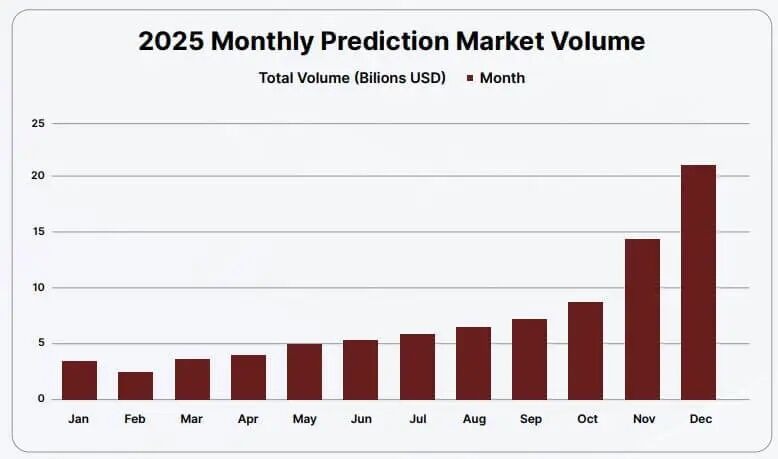
New exchanges can list exclusive markets that other platforms cannot offer. This advantage is further amplified when combined with a vertical strategy (point 7).

3. Capital Efficiency

Capital efficiency determines the effectiveness of traders' collateral usage. Currently, there are two core levers:

First, interest-bearing collateral: Instead of letting idle funds earn only treasury yields, offer higher returns, similar to Lighter supporting LP deposits as collateral or HyENA's USDC-margined perpetual contract model.

Second, margin mechanisms. Due to gap risk, the market generally underestimates the value of leverage in prediction markets, but platforms can offer limited leverage for continuous markets or implement portfolio margin for hedged positions.

Exchanges can also subsidize lending pools or act as market-making counterparties to internalize gap risk, rather than having them distributed among users.

4. Oracles and Market Settlement

Oracle reliability remains a systemic weakness in the industry. Settlement delays and incorrect results significantly amplify trading risks.

Beyond improving stability, platforms can implement innovative oracle mechanisms: human-machine hybrid systems, zero-knowledge proof-based solutions, AI-driven oracles like those from Context, etc., unlocking new markets that traditional oracles cannot support.

5. Liquidity Provision

Exchange survival depends on liquidity. Viable paths include: paying to onboard professional market makers, incentivizing ordinary users to provide liquidity with tokens, or adopting Hyperliquid's HLP aggregated liquidity model.
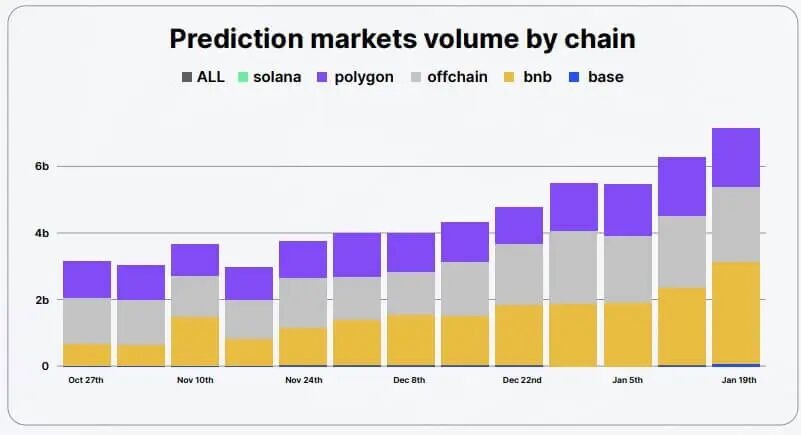
Some platforms can also completely internalize liquidity, emulating FTX's model of relying on Alameda as an internal trading team.

6. Regulatory Compliance

Kalshi, with its US regulatory license, has achieved embedded distribution through Robinhood and Coinbase, capturing retail traffic that Polymarket cannot reach.

There are still numerous jurisdictions and regulatory frameworks available for deployment. Compliant prediction markets can unlock similar channels, such as adapting to US state-level gambling regulations.

7. Vertical Strategy vs. Horizontal Strategy

Horizontal Strategy: Similar to Hyperliquid in the perpetual contracts space, focusing on building top-tier underlying trading infrastructure, inviting third parties to build front-ends and vertical scenarios, and encouraging ecosystem builders to add markets and develop revenue-generating front-ends (e.g., Phantom) through proposals.

Vertical Strategy: Exemplified by Lighter, controlling the front-end themselves, launching mobile apps, and creating a full-process user experience, focusing on integrated experience and direct user connection.

Polymarket's resistance to deep embedded partnerships versus Kalshi's open attitude is a clear reflection of the trade-offs between these two strategies.


Twitter:https://twitter.com/BitpushNewsCN

Bitpush TG Discussion Group:https://t.me/BitPushCommunity

Bitpush TG Subscription: https://t.me/bitpush

Original link:https://www.bitpush.news/articles/7611385

Related Questions

QWhat are the seven key dimensions for differentiation in the prediction market competition according to the article?

AThe seven key dimensions are: 1. Product Quality, 2. Asset Categories and Market Selection, 3. Capital Efficiency, 4. Oracles and Market Settlement, 5. Liquidity Provision, 6. Regulatory Compliance, and 7. Vertical Strategy vs. Horizontal Strategy.

QHow can new prediction market exchanges gain an advantage in 'Asset Categories and Market Selection'?

ANew exchanges can list exclusive markets that other platforms cannot offer, and this advantage can be amplified when combined with a vertical domain strategy.

QWhat are the two main approaches to improving capital efficiency in prediction markets mentioned in the article?

AThe two main approaches are: 1. Interest-bearing collateral, which allows idle funds to earn higher yields, and 2. Margin mechanisms, such as offering limited leverage for continuous markets or portfolio margin for hedging positions.

QWhat role do oracles play in prediction markets, and what innovative solutions are suggested?

AOracles are crucial for reliable market settlement, and their failure can significantly increase trading risk. The article suggests innovative mechanisms like human-machine hybrid systems, zero-knowledge proof-based solutions, and AI-driven oracles to support new types of markets.

QWhat is the difference between a vertical strategy and a horizontal strategy in the context of prediction market platforms?

AA horizontal strategy focuses on building top-tier underlying trading infrastructure and allowing third parties to develop front-ends and vertical scenarios. A vertical strategy involves controlling the entire user experience, including the front-end and mobile applications, to provide an integrated experience directly to users.

Related Reads

Vitalik: We Need to Create Sanctuaries, Not Fight AI

In a recent interview, Vitalik Buterin, founder of Ethereum, addresses the central anxiety of the AI era. He argues the primary risk isn't AI's intelligence, but human passivity—ceding decisions, privacy, and agency to centralized systems or "super AIs" for a sense of "disempowering safety." His solution is not to fight AI, but to build "sanctuary technologies." These are optional, non-totalizing spaces that protect users while preserving their sovereignty and privacy. Ethereum is presented as a prime example, offering a parallel financial system one can freely choose, not a fix for the old one. Reflecting on his journey from a 19-year-old on "autopilot" to an active "pilot," Vitalik notes the world reinvents itself every 5-10 years. To keep up, individuals must actively pilot their lives, not be passive passengers. He stresses that active learning vastly outperforms passive learning, even with equal time invested. His practical advice for builders and individuals in the AI age includes: periodically forcing oneself to do tasks manually to keep the mind engaged; prioritizing active learning and verification over outsourcing answers; building tools that help retain human agency; not outsourcing all strategic thinking to AI; and preserving serendipity through real-world interactions. Ultimately, Buterin redefines Ethereum/crypto's role: not to win against or fix the old world, but to provide a free, optional alternative. The core message is that as AI grows more powerful, the truly scarce resource will be proactive humans who retain their sovereignty, privacy, and capacity for independent thought. The era demands not less tool use, but more intentional and active use of technology.

链捕手2h ago

Vitalik: We Need to Create Sanctuaries, Not Fight AI

链捕手2h ago

Conversation with Patagon Founder: Revealing the Inside Story of Anthropic's Secondary Market

**Summary: Inside Anthropic's Massive, Opaque Secondary Market** In a revealing interview, Patagon founder Dio Casares pulls back the curtain on the booming, high-risk secondary market for shares in companies like Anthropic. This private market, fueled by companies staying private longer and massive funding rounds, is estimated to involve hundreds of billions of dollars. Casares distinguishes between two types of "secondary" trading: 1. **Company-approved SPV (Special Purpose Vehicle) sales:** Where new capital flows into the company, often facilitated by select private equity firms. Anthropic supports this to manage liquidity and pre-IPO selling pressure. 2. **The "gray" market:** Platforms like Hive and Forge that match buyers and sellers, often creating pricing confusion and competing with official funding rounds. These intermediaries are widely disliked by companies. The market structure is complex and fragmented, relying heavily on personal connections. Brokers connect buyers and sellers, often layering multiple SPVs to pool capital, with single transaction fees as high as 10%. Strikingly, some finance professionals earn more from this trading than from their primary investment roles. **Key risks highlighted include:** * **High Fraud Rates:** An estimated 10-20% of transactions involve fake stock certificates or sellers who take payment without having the shares. * **Complex, Risky Structures:** Nested SPVs, "forward contracts" on employee equity, and tokenized private equity create layers of opacity. This is exemplified by a recent incident where an xAI employee's shares were revoked after an espionage allegation, leaving buyers empty-handed. * **Post-IPO "Settlement Hell":** After an IPO, delays in distributing shares through multiple SPV layers and decisions by fund managers to hold onto shares could trigger years of lawsuits as downstream investors are locked out. **For small investors** holding positions through tokenized vehicles or layered SPVs, it's often impossible to verify the underlying asset. Casares advises caution: if the investment feels wrong, consider exiting. As the private market now surpasses IPO fundraising, this "wild west" ecosystem faces a looming reckoning. While it will likely professionalize, the post-IPO period for a company like Anthropic could unleash a wave of disputes, exposing the vulnerabilities built into this frenzied, largely unregulated marketplace.

marsbit4h ago

Conversation with Patagon Founder: Revealing the Inside Story of Anthropic's Secondary Market

marsbit4h ago

Trading

Spot
Futures
活动图片





