The Future Of Tech: How Blockchain AI And Will Converge By Late 2026

bitcoinistPublished on 2025-12-31Last updated on 2025-12-31

Abstract

In a recent article, Sandeep Nailwal, co-founder of Polygon, predicts a major convergence of blockchain, AI, and payment technologies by late 2026 that could "reshape the internet completely." In this vision, AI acts as the decision-maker, blockchain ensures transparency and verifies decisions, and payment systems enable instant value transfer. This integration aims to address AI's opacity by using blockchain as a public, secure ledger and zero-knowledge proofs to maintain privacy. Nailwal also highlights the shift toward proof-based systems, the efficiency of digital currencies for cross-border payments, and the future role of digital wallets in identity and asset management. He concludes that this seamless, trust-integrated convergence will redefine digital experiences, making the internet function more efficiently and reliably.

In a recent piece penned for Entrepreneur, Sandeep Nailwal, the co-founder and CEO of Layer 2 (L2) blockchain Polygon (POL), has made a bold prediction for the technological landscape of 2026.

Nailwal envisions a major convergence of blockchain, artificial intelligence (AI), and payment technologies that could potentially “reshape the internet completely.”

Blockchain’s Transparency Solution

In Nailwal’s vision, AI would assume the role of decision-maker within this cohesive structure. Blockchains would then verify these decisions, ensuring their authenticity, while the payment infrastructure would facilitate the seamless transfer of value to enforce these decisions instantaneously.

The fusion of these technologies is poised to have far-reaching implications. Nailwal highlights the role of AI in shaping various aspects of daily life and business operations, from content curation to supply chain logistics and financial decision-making.

However, the opacity surrounding artificial intelligence systems poses a challenge, with limited transparency into the decision-making process and data integrity.

Blockchains emerge as a solution to this transparency issue, offering a public ledger that provides visibility into transactions, models, and decisions. The security protocols inherent in blockchain technology not only safeguard digital signatures but also verify algorithmic outputs, instilling trust in the decision-making process.

Nailwal emphasizes the importance of zero-knowledge proofs (ZKPs) protocols in ensuring transparency without compromising data privacy, allowing for the verification of rules and decisions without revealing sensitive underlying information.

Future Of Digital Wallets

According to Nailwal’s thesis, the transition from trust-based systems to proof-based systems has already begun, with governments using blockchain platforms to anchor public records and maintain transparency and accountability.

Additionally, blockchain payment systems are being trialed by cities worldwide for various applications, from tax collection to cross-border transfers, ushering in a new era of efficiency and security in financial transactions.

The evolution of payment systems is another area of focus, with digital currencies poised to streamline cross-border transactions by eliminating intermediaries.

Nailwal noted platforms like Polygon, which are currently facilitating seamless stablecoin payments, offering swift and cost-effective transfers for individuals and businesses globally.

Furthermore, Nailwal anticipates a future where digital wallets consolidate identity, data, and financial assets, simplifying everyday tasks like payments and document signings.

The convergence of AI, blockchain, and payment technologies is expected to redefine user experiences, seamlessly integrating trust mechanisms into daily interactions. Nailwal concluded:

The greatest technology shift of 2026 won’t be a new chain or a new model but the unceremonious formation of the converged internet, an infrastructure that can think, verify and pay on its own. Most people won’t notice the change. They’ll just find that the digital world suddenly works as it should — seamlessly.

The 1-D chart shows POL’s price trending downwards. Source: POLUSDT on TradingView.com

At the time of writing, Polygon’s native token, POL, was trading at $0.1025. This represents year-to-date losses of almost 80%, and 92% compared to the all-time high of $1.29.

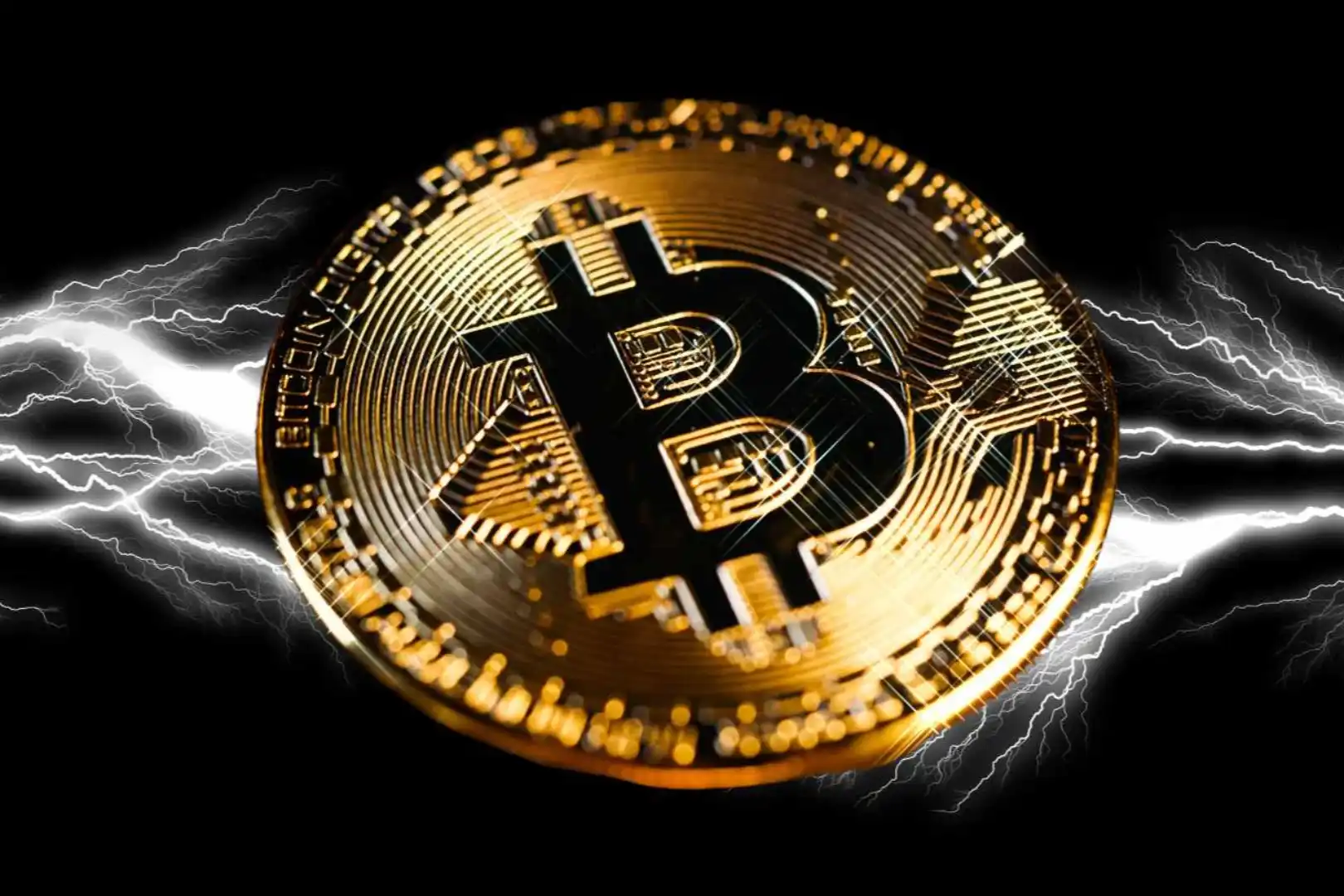
Featured image from DALL-E, chart from TradingView.com

Related Questions

QWhat major technological convergence does Sandeep Nailwal predict will reshape the internet by late 2026?

ASandeep Nailwal predicts a major convergence of blockchain, artificial intelligence (AI), and payment technologies that could potentially reshape the internet completely.

QAccording to Nailwal, what role will blockchain play in the converged system with AI?

ABlockchains will verify the decisions made by AI, ensuring their authenticity and providing transparency through a public ledger that offers visibility into transactions, models, and decisions.

QWhat specific cryptographic protocol does Nailwal highlight as crucial for ensuring transparency without compromising data privacy?

ANailwal emphasizes the importance of zero-knowledge proofs (ZKPs) protocols, which allow for the verification of rules and decisions without revealing sensitive underlying information.

QHow does Nailwal envision the future of digital wallets in this converged technological landscape?

ANailwal anticipates a future where digital wallets consolidate identity, data, and financial assets, simplifying everyday tasks like payments and document signings and seamlessly integrating trust mechanisms into daily interactions.

QWhat is the current trading price and performance of Polygon's native token POL as mentioned in the article?

AAt the time of writing, Polygon's native token POL was trading at $0.1025, representing year-to-date losses of almost 80% and a 92% decline from its all-time high of $1.29.

Related Reads

The Midlife Crisis of Crypto GPs: No PMF, No Next Check from LPs

The article "The Midlife Crisis of Crypto GPs: No PMF, No Next LP Check" analyzes the shifting crypto fundraising landscape. It argues the era of selling grand visions to LPs is over; GPs must now offer products with clear Product-Market Fit (PMF). The author categorizes crypto fundraising products into three types: Primary (VC funds), Liquid (trading strategies), and CeFi/DeFi Native Yield. This summary focuses on the Primary market. Key points include: * **Market Shift:** LPs are impatient, demand immediate returns, and are skeptical of future promises. The "easy money" narrative has faded. * **GP Value Erosion:** LP learning curves have shortened (aided by AI), reducing the value of a GP's basic "crypto knowledge." Superior judgment is now rare. * **Weakened LP Motivations:** Traditional reasons for LPs to invest in crypto VC funds (capturing industry beta, gaining access, leveraging GP judgment) have weakened due to new products like ETFs and increased LP sophistication. * **Surviving in Primary:** The primary market will likely persist for: 1) large funds in endowment mandates treating it as a lottery ticket, 2) family offices/HNWIs using proprietary capital, 3) a few funds with proven recent outperformance, and 4) funds with strong ecosystem "deal-making" capabilities. * **Conclusion:** For most GPs, rebuilding trust requires starting over in a niche, demonstrating alpha-generating ability, or providing concrete value/services to LPs.

marsbit1h ago

The Midlife Crisis of Crypto GPs: No PMF, No Next Check from LPs

marsbit1h ago

Crypto GPs' Midlife Crisis: No PMF, No LP's Next Check

The article "The Midlife Crisis of Crypto GPs: No PMF, No LP's Next Check" analyzes the shifting crypto fundraising landscape. It argues that the era of LPs funding vague "vision" is over; GPs must now offer products with clear Product-Market Fit (PMF) to secure capital. The market has matured. LPs, disillusioned by the last cycle's failures and wary of long lock-up periods, now demand tangible, near-term returns rather than speculative narratives. The proliferation of accessible crypto ETFs and other liquid products has reduced the need for VC blind pools as an entry point. The author categorizes crypto fundraising products into three types: Primary (VC funds, with blind pools or clear pipelines), Liquid (alpha/beta, directional/market-neutral strategies), and CeFi/DeFi Native Yield (crypto-specific mechanisms like staking, farming). Focusing on the Primary market, the piece details why traditional LP rationales for investing in crypto VCs have weakened: easier beta access via ETFs, diminished "access" and "judgement" premiums as LPs build internal teams, and a widespread lack of proven superior returns from GPs. Ultimately, only specific players are likely to remain at the primary VC table: large funds with access to patient endowment capital, family offices/HNWIs investing proprietary capital, the few funds with demonstrable excess returns from the last cycle, and those with clear "deal-making" or ecosystem resource advantages. For others, the path forward is to rebuild trust by proving alpha-generation capability in a niche or providing concrete, valuable services.

链捕手2h ago

Crypto GPs' Midlife Crisis: No PMF, No LP's Next Check

链捕手2h ago

The Age of Decoupling Has Arrived: Bitcoin is No Longer the Sole Compass of Crypto

The era of the cryptocurrency market moving in lockstep with Bitcoin is ending, as the industry splits into two distinct asset categories: endogenous and exogenous. Endogenous assets, like Bitcoin, derive value purely from the crypto market's cycles. Their narratives swing between being "interstellar money" in bull markets and "digital collectibles" in bear markets. Exogenous assets, however, are nominally crypto but operate with independent value drivers. Examples include: * **Venice:** An AI inference service using tokens for payments; its consumer-AI business model is decoupled from crypto price swings. * **Figure:** A fintech lender using blockchain to speed up loan approvals; its core value is in credit, not crypto. * **Stablecoin firms like BVNK:** Acquired by traditional finance giants (Mastercard, Stripe), their growth is tied to payment infrastructure, not market cycles. Hybrid projects like **Hyperliquid** (a decentralized exchange) show a shift, with a growing share of non-crypto trading (e.g., prediction markets). This divergence is fundamental. Endogenous assets remain highly correlated to Bitcoin, similar to gold miners to gold. Exogenous assets are evolving to have their own fundamentals, like the weak correlation between gold and the S&P 500. This changes investment analysis. Evaluating exogenous assets requires traditional fundamental research—assessing user bases, unit economics, and moats—more akin to fintech investing than charting Bitcoin. Promising exogenous sectors include: on-chain exchanges/brokers, AI-crypto fusion, privacy-focused digital banks, lending (institutional/private credit), stablecoins/real-world asset tokenization, payment rails, and non-financial crypto-consumer products. Currently, investing via equity is often safer than via tokens, as token value accrual mechanisms need further regulatory and industry development (e.g., the CLARITY Act). Nonetheless, the core trend is clear: crypto market drivers are diversifying from a single factor (Bitcoin) to multiple fundamentals, ending the era of uniform market moves.

marsbit3h ago

The Age of Decoupling Has Arrived: Bitcoin is No Longer the Sole Compass of Crypto

marsbit3h ago

Trading

Spot
Futures

Hot Articles

Discussions

Welcome to the HTX Community. Here, you can stay informed about the latest platform developments and gain access to professional market insights. Users' opinions on the price of AI (AI) are presented below.

活动图片