Author: Juan Galt
Compiled by: Saoirse, Foresight News
Bitcoin's digital nature is its core strength. Thanks to its programmability, Bitcoin enables self-custody, making it significantly harder for assets to be stolen or seized. Meanwhile, its digital form allows for extremely fast circulation, enabling global value transfer and settlement to be completed in just a few minutes.
However, Bitcoin has also been controversial due to its intangible nature. In its native state, Bitcoin cannot be touched or held in hand; people can only rely on imagination and understanding to perceive it, which has also become a major obstacle to its widespread acceptance. For over a decade, entrepreneurs and creators have continuously attempted to physicalize Bitcoin, striving to preserve its core characteristics similar to cash. Although no one has completely solved all the problems so far, related explorations have yielded many results and have given rise to a large number of classic physical products.
Casascius Coins
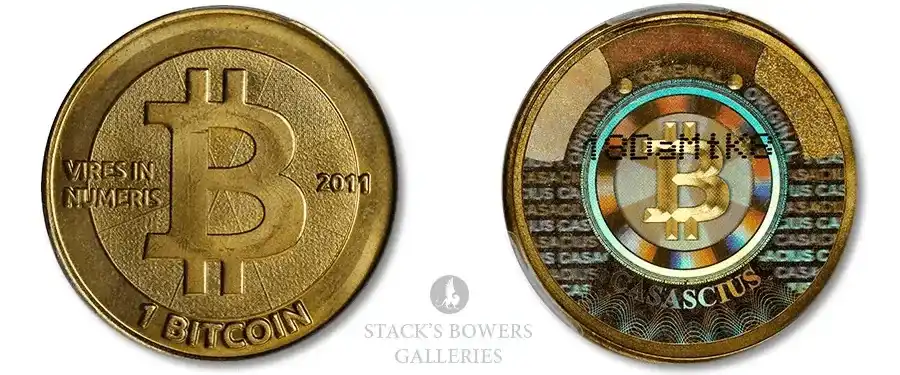
Image source: Stacks Bowers Galleries
Casascius Coins were first minted on September 6, 2011, when the price of a single Bitcoin was only $8. It is undoubtedly the most iconic physical Bitcoin collectible in history, and a large number of imitations have appeared since then. The name originates from Mike Caldwell's username on the Bitcointalk forum. The numerous design concepts established by this coin have also become important references for subsequent various physical Bitcoin products.
A major challenge in creating physical Bitcoin is the safekeeping of the private key. Bitcoin is a native digital asset that operates based on cryptographic public-private key pairs. The private key, as confidential information, can generate the corresponding public key through Bitcoin-specific encryption algorithms. Mike Caldwell used an offline device to generate private keys, printed them, and attached them to precious metal coins, and likely destroyed any private key backups left on the computer. He also detailed the entire set of security measures on his personal website for potential buyers to review.
The printed private key would be covered with a special tamper-evident sticker. Once the sticker is removed, a clear honeycomb-like pattern would remain on the surface. Based on this, buyers could determine whether the private key of a coin purchased from a third party had been previously accessed.
Private key management is the biggest security risk in creating physical Bitcoin. The solution of Casascius Coins relied on user trust in the developer. By the standards of the time, Mike Caldwell was transparent and meticulous, and he still maintains a good reputation today. The trust of users has been rewarded. Such collectibles now command a considerable collector's premium on top of the intrinsic value of the Bitcoin itself and the precious metal value, and holders have thus reaped substantial returns.
In November 2013, Casascius Coins officially ceased production. The Financial Crimes Enforcement Network (FinCEN) under the U.S. Department of the Treasury informed Mike Caldwell that the act of minting physical Bitcoins was considered a money transmission business, requiring strict compliance. The centralized trust mechanism involved in the private key generation process also made him a focus of regulatory attention.
RavenBit Coins

One year after Casascius Coins ceased production, RavenBit was officially launched, aiming to solve the problem of trustworthy minting in the physical Bitcoin space by attempting to decentralize the minting process. RavenBit's appearance is very similar to Casascius Coins, but it did not come pre-installed with a private key, and the tamper-evident sticker was also unsealed. Users could generate their own key pair, paste it onto the coin, and then seal it with the tamper-evident sticker.
Theoretically, this design achieved decentralization of minting rights, which could be considered a breakthrough. However, in practice, it only spawned a large number of unbranded, low-reputation individual minters, and many of the office devices used to generate private keys might have been infected with malware. When you received a RavenBit coin from someone else, you had no way to confirm whether they kept a copy of the private key or if they had implemented proper security measures.
The RavenBit project has long since ceased operations, but it also brought enlightenment to the entire industry: to truly achieve the physicalization of Bitcoin, more advanced technology is needed.
Opendimes
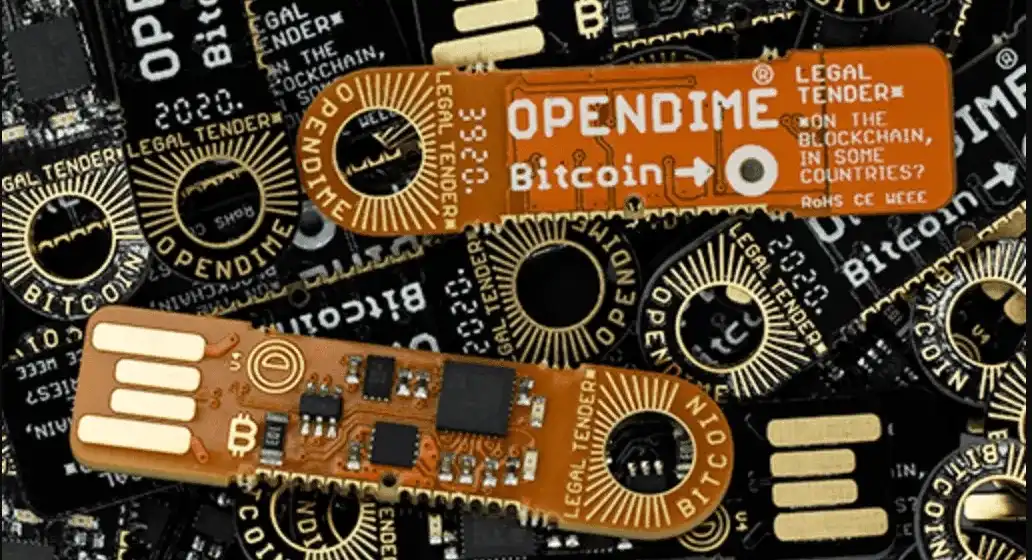
To completely solve the trust problem in minting physical Bitcoin in both centralized and decentralized scenarios, hardware wallet manufacturer Coinkite developed Opendimes. This is a micro hardware device specifically designed to carry Bitcoin bearer assets. NVK, co-founder of Coinkite, discussed the motivation behind the product in an interview with Bitcoin Magazine: "Bitcoin is a digital currency. Everything we do is just to create a physical backup for it. Perhaps someone in the future can manually crack the secp256k1 algorithm, but for now, generating valid Bitcoin keys always requires a computer. The computer is the current 'minting tool.'"
The design of Opendimes is based precisely on this core logic. The device has a built-in chip that can autonomously generate public-private key pairs and securely store the private key using a silicon-based tamper-resistant structure.
When initializing the device, users need to import files or other forms of random entropy. The chip combines this data to generate a Bitcoin wallet. This open-source random key generation logic, paired with high-quality entropy input, further ensures the security of the keys.
Connecting an Opendimes to a computer like a regular USB drive allows viewing the wallet's public key, and the account balance can be queried in real-time on a block explorer. Users can transfer Bitcoin to the device, but to extract the assets, they must physically destroy the device. This action unlocks the circuit to read the private key, while also leaving obvious damage marks on the device.
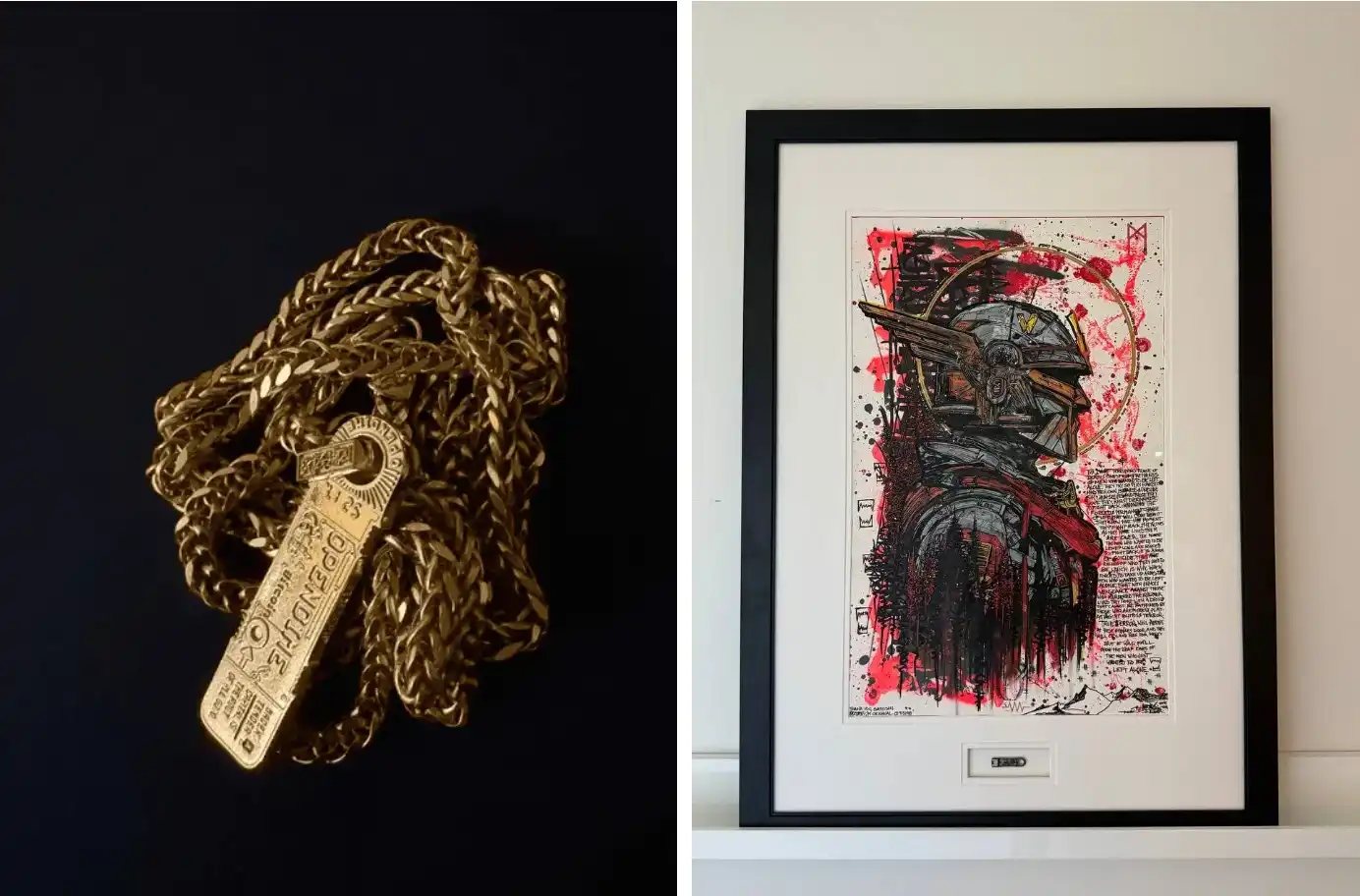
Opendimes is a major breakthrough in bearer asset technology. The product was priced as low as $13 in 2016, and due to inflation, its unit price is now around $20. It has also become an iconic product in the industry, with many artists incorporating it into high-end Bitcoin artworks, and it has gradually become a cultural symbol within the Bitcoin community.
For a hardware wallet, a price of $13 to $20 is not considered high, and the model where users deposit their own coins effectively solves the minting trust problem. However, its price and appearance are still far from everyday cash. Looking solely at hardware cost, the $20 threshold is not low. Referring to the approximately 20% premium standard of Casascius Coins, an Opendimes would need to hold at least $100 worth of Bitcoin to match the hardware cost and have circulation value, which also prevents it from being suitable for most small daily transactions.
Furthermore, while this USB drive-shaped device has a unique style, it cannot intuitively display internal asset information. Each device is unique and lacks the fungibility of cash. The industry has therefore realized the need to develop cheaper, more versatile alternatives.
Satodime
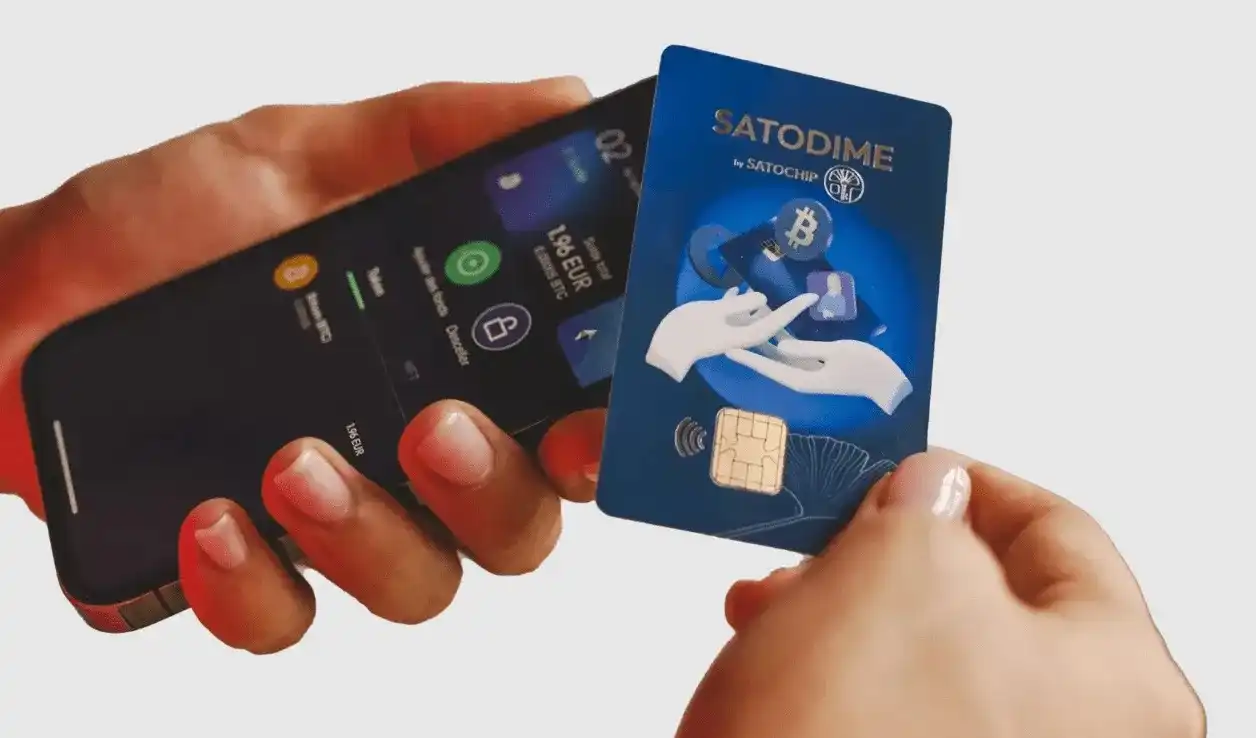
Building on the concept of Opendimes, Belgian hardware wallet manufacturer Satochip launched the more user-friendly, open-source product Satodime. It resembles a bank card in shape, with core functions similar to Opendimes. It can generate Bitcoin public-private key pairs, and some versions also support transaction signing. Users can interact with the device via a mobile app using Near Field Communication (NFC) functionality. The product also comes in forms such as rings and physical coins, with the same chip and functions inside.
In bulk purchases, the hardware unit price of Satodime can be as low as 13 euros, making it more affordable than Opendimes and bringing it a step closer to the standard of everyday cash, though the gap remains significant. Satodime is essentially a high-security hardware wallet, not a cash vehicle intended for daily circulation. The inherently high cost of these high-performance microchips also makes it difficult for the product price to fall below the $10 threshold for now.
The Cost Dilemma: The Underlying Limit Hard to Surpass
What level does the hardware cost need to be reduced to for physical Bitcoin to have commercial popularization value?
According to data from the Federal Reserve, the production cost of a U.S. dollar banknote ranges between 4.1 cents and 11.3 cents. The lower the denomination, the higher the unit production cost, and even a $1 bill can incur a 4.1% manufacturing loss.
Based on this calculation, the hardware cost of a physical Bitcoin carrying 20,000 satoshis (approximately $16 at the current price) must be controlled within $1. However, currently, the vast majority of chips capable of running Bitcoin encryption algorithms cannot meet this cost requirement. Nevertheless, the NTAG X DNA chip launched by NXP has shown the industry a possibility.
This chip uses a thin sticker antenna design, is only a few millimeters thick, and can run various encryption programs like Elliptic Curve Digital Signature Algorithm (ECDSA) and Elliptic Curve Cryptography (ECC), supporting key generation, transaction signing, and information encryption. However, it does not have the Bitcoin-specific secp256k1 encryption curve built-in and cannot natively run Bitcoin-related programs.
Even so, when the 2025 model NTAG chip is in sufficient supply, its unit price is about $3, proving that there is significant room for price reduction in encryption chips.
Unfortunately, the foldable paper money form used in daily life can damage delicate chips. The Coinkite team personally verified this issue during their research and development of Bitcoin bearer asset hardware.
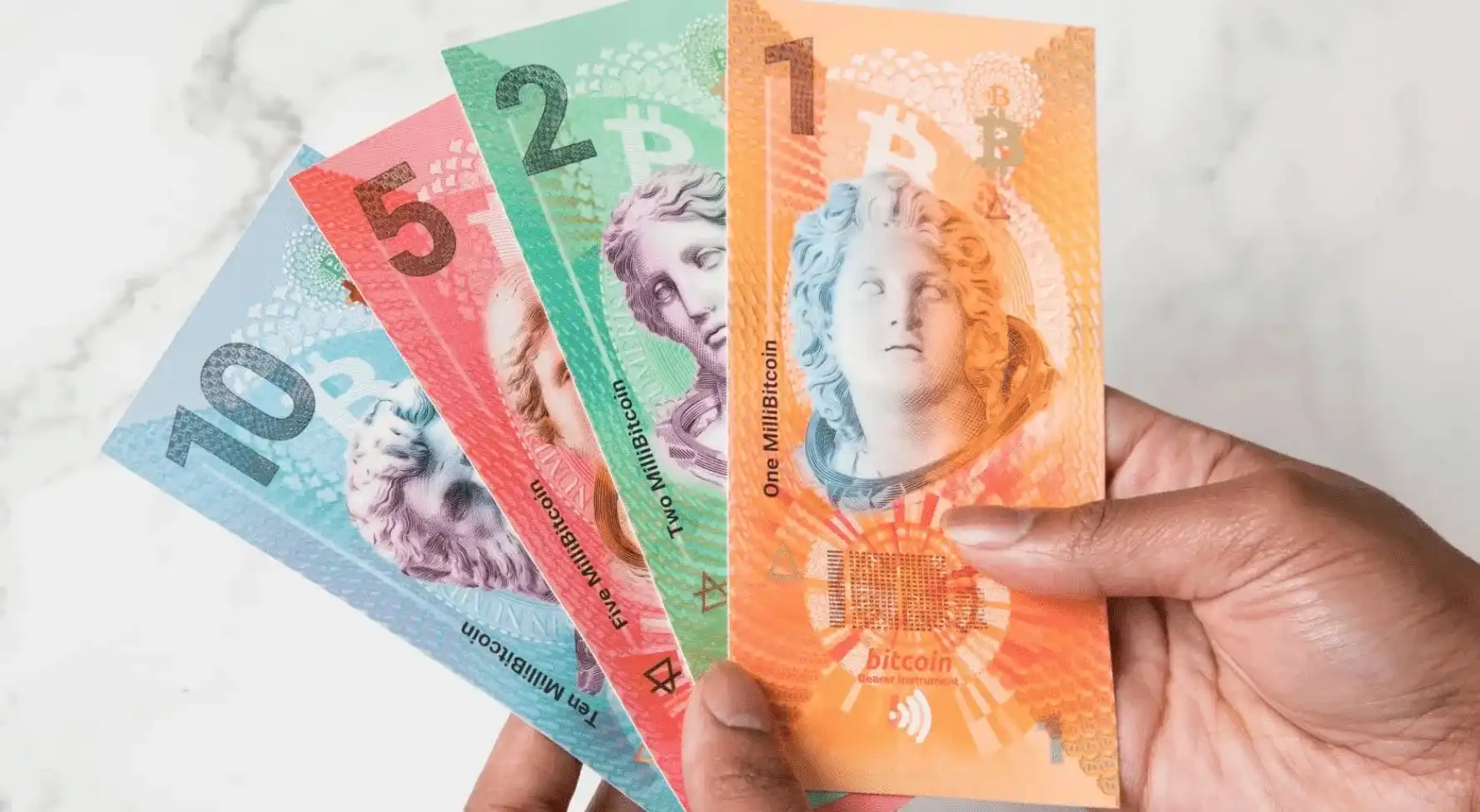
The product created by OfflineCash is currently the solution that looks most like traditional banknotes. This Bitcoin-denominated note is equipped with an NTAG series NFC chip. The chip stores a key generated by the user, while the company retains a second key on its server, forming a 2-of-2 multisignature wallet. The server-side key has a time lock, and after it expires, the multisignature wallet converts into a single-signature wallet, allowing the user to extract the assets. This scheme attempts to avoid the trust risk of traditional minting but ultimately creates a new problem of decentralized minting. However, it cannot be denied that its banknote appearance is highly aesthetic and has collectible value.
Developing an NTAG chip that natively supports Bitcoin algorithms requires an initial investment of millions of dollars. If the R&D team lacks expertise in the cryptography field, vulnerabilities are highly likely to occur when adapting to Bitcoin encryption programs. Simultaneously, such chips must be completely open-source to ensure there are no backdoor programs.
As a bearer asset, physical Bitcoin faces another fundamental problem: even if a low-cost, banknote-like hardware carrier is created, since Bitcoin is inherently a digital asset, users must connect to the internet to verify whether the device contains real assets.
If one chooses to trust the issuing institution and recognize the exchange value of the banknote's face, the verification problem might be solved, but this would deviate from Bitcoin's design初衷 of self-custody and trustless cash. Of course, this model might be able to operate in regions with favorable regulatory environments.
In summary, products like OfflineCash, which combine security chips and banknote forms, though conceptually appealing, still have a long way to go before large-scale adoption. Moreover, at present, such products are somewhat "over-engineered"—there is currently no Bitcoin change system in the market; after spending, one would still receive fiat change. Perhaps in a future fully Bitcoinized era, it could truly realize its value.
Within the foreseeable scope, Coinkite believes the card form is a superior solution to banknotes, which is also why the company launched Tapsigner.
Tapsigner
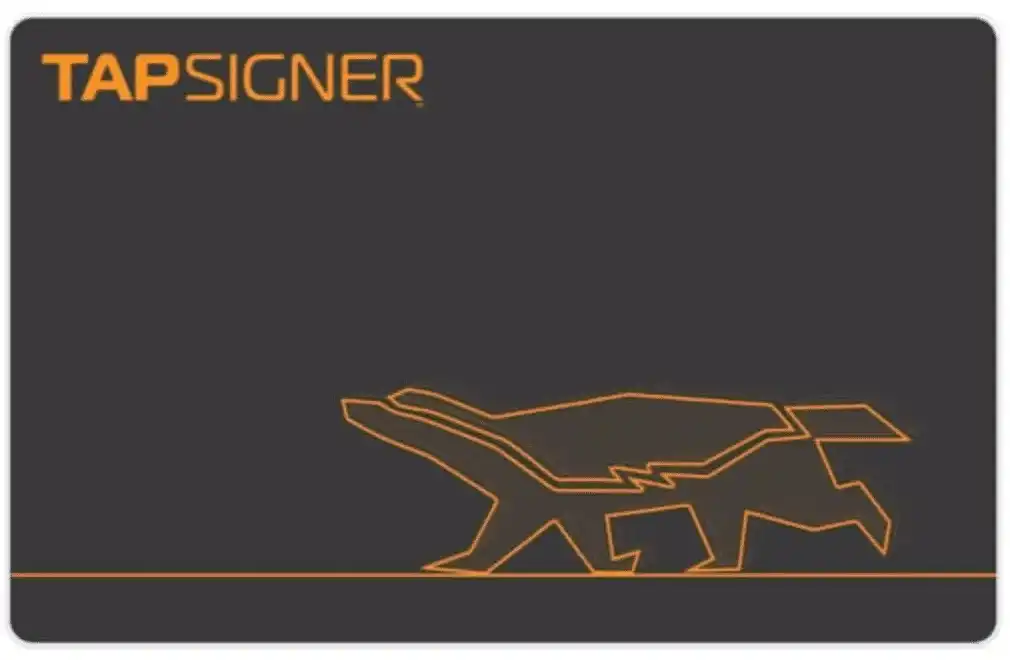
Tapsigner is equipped with Coinkite's self-developed Bitcoin NFC chip, which performs comparably to the NXP NTAG X DNA, has stronger functionality, and is relatively more expensive. The product adopts the familiar shape of a debit card, has a built-in security chip, supports NFC tap-to-pay, and offers multiple design options.
The chip has a complete Bitcoin wallet function built-in, runs the secp256k1 encryption program, can generate and securely store private keys, can complete transaction signing internally, and then the paired mobile device broadcasts the transaction information. The mobile end can also provide transaction information verification for the user, serving as a security aid.
Tapsigner can be used as a bearer asset carrier but is more suitable as a rechargeable hardware wallet. Like a regular bank card, it can make directed payments of fixed amounts of Bitcoin, perfectly solving the change problem while being compatible with mainstream tap-to-pay functionality.
This product costs around $20. Its emergence shifts the focus of Bitcoin payment development back to offline retail adoption and ecological integration with mainstream corporate finance and payment software, a process actively promoted by platforms like Cashapp and Square.