Author: ChandlerZ, Foresight News
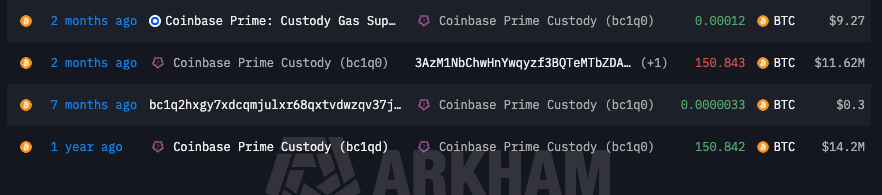
On July 3rd, according to on-chain monitoring data, a wallet address suspected to be linked to billionaire venture capitalist Tim Draper deposited 1,000 BTC into Coinbase Prime approximately 7 hours ago, worth about $61.82 million.
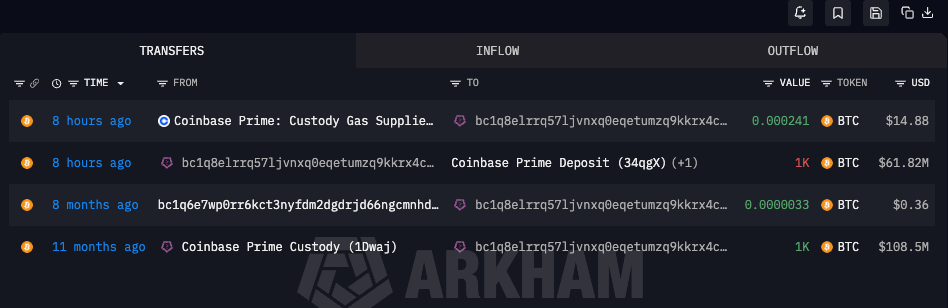
In April, another wallet linked to Tim Draper deposited 150.84 BTC (worth about $11.62 million) into Coinbase after holding for one year, suspected to be a sale, resulting in a loss of approximately $2.57 million.
Tim Draper was born in East Chicago, Indiana, and grew up in Silicon Valley. He holds a bachelor's degree in Electrical Engineering from Stanford University and an MBA from Harvard Business School. His grandfather, William Henry Draper Jr., was a founder of one of the earliest venture capital funds in Silicon Valley. His father, Bill Draper, continued the family business. Tim himself founded Draper Associates in 1985 and later co-founded DFJ (Draper Fisher Jurvetson).
His sister, Polly Draper, is an American actress and screenwriter. Both of his sons, Adam and Billy, entered the venture capital industry, with Adam founding Boost VC, focused on the crypto sector. Four generations have spanned the complete Silicon Valley cycle, from transistors to blockchain. Beyond cryptocurrency, Draper is best known as an early investor in Hotmail, Skype, Tesla, and SpaceX.
Tim Draper is one of Silicon Valley's most well-known Bitcoin whales. In 2014, he bought nearly 29,656 BTC at an average price of about $632 during a U.S. Marshals Service auction, for a total of approximately $18.7 million. At its historical peak, this batch of Bitcoin was worth about $3.74 billion, and is currently worth about $1.82 billion.
40,000 Lost to Zero, and the 30,000 Auctioned Bitcoin
Tim Draper encountered the concept that "digital assets have real value" even before Bitcoin was born.
In a Cointelegraph crypto story video, Tim Draper said that many years ago he met an entrepreneur in South Korea who needed to spend $40 to buy a virtual sword in the online game "Lineage" as a birthday gift for his son. A successful industrialist was using real currency to purchase a digital item that existed only on a server. He later said in an interview that this moment made him realize the boundary between the virtual world and the real economy would eventually blur. Seven years later, when the Bitcoin whitepaper appeared, he almost approached it with a pre-existing cognitive framework.
Tim Draper's first large-scale Bitcoin investment occurred around 2011, buying approximately 41,000 bitcoins at an average price of about $6, for a total investment of about $250,000. At today's price, this holding would be worth over $2.5 billion. But he never had the chance to profit from it. In February 2014, Mt. Gox, then the world's largest Bitcoin exchange, announced that approximately 850,000 bitcoins were stolen and filed for bankruptcy. Tim Draper's roughly 40,000 bitcoins were among those lost.
From $6 to zero, the entire first massive investment was wiped out. Most people would leave the market here. But Tim Draper did the opposite the same year.
On June 27, 2014, the U.S. Marshals Service held a public auction for bitcoins seized from Silk Road. When the FBI arrested Silk Road founder Ross Ulbricht in October 2013, they seized about 144,000 bitcoins. The first batch of about 30,000 was divided into 10 blocks for auction. 45 bidders submitted 63 bids. Participants included Barry Silbert's SecondMarket (which organized a bidding consortium of 42 investors), Pantera Capital, and Binary Financial. The Marshals Service originally planned to sell these bitcoins to different buyers. However, Tim Draper placed the highest bid on every single block, taking all 29,657 bitcoins for himself, paying about $19 million.
This event sparked extensive coverage in tech and financial media at the time: a person who had just lost 40,000 bitcoins on Mt. Gox turned around and bought back 30,000 in a single federal auction. His plan at the time was to partner with an exchange called Vaurum (later renamed Mirror) to provide cryptocurrency liquidity in emerging markets (especially in places like India) using this batch of bitcoins. This project ultimately did not scale up, but those 30,000 bitcoins remained in his possession.
In the second round of the Marshals Service auction in December of the same year, Tim Draper secured another 2,000 BTC, when the price had fallen to about $375. The two rounds combined totaled approximately 31,657 bitcoins, with a total cost of about $19.7 million.
A more ironic follow-up is that the bitcoins Tim Draper purchased were assets confiscated from Ross Ulbricht. Ulbricht was sentenced to life imprisonment without parole for operating Silk Road. Tim Draper later publicly criticized this sentence as "excessively harsh." In January 2025, on his first day in office, President Trump granted Ulbricht a full pardon.
The $250,000 Prediction, the Theranos Stain, and a Bitcoin Tie
Tim Draper gained widespread recognition outside the crypto community through his aggressive Bitcoin price predictions. The most successful one occurred in September 2014. With Bitcoin trading around $413, Tim Draper told Fox Business in an interview that Bitcoin would reach $10,000 within three years. On November 29, 2017, Bitcoin first broke $10,000, almost exactly three years later. This precise prediction established a credibility base for all his bolder judgments thereafter.
In April 2018, at an event at the Draper University he founded, Tim Draper declared that Bitcoin would reach $250,000 by the end of 2022, when Bitcoin was trading around $8,100. Since then, this number became a moving target through bull and bear cycles, with the target date pushed from 2022 to mid-2023, then to June 2025, and then to the end of 2025.
In April 2026, during a keynote speech on the Nakamoto Stage at the Bitcoin 2026 conference in Las Vegas, Tim Draper again stated he had "reason to believe" Bitcoin would reach $250,000 within 18 months. He emphasized that the path of monetary evolution might transition from fiat to stablecoins, and ultimately to Bitcoin. It would be irresponsible for companies not to allocate Bitcoin while holding large cash reserves, suggesting companies allocate at least 5% to 15% of assets to Bitcoin, families reserve at least 6 months' worth of living expenses in Bitcoin, and governments should hold sufficient Bitcoin to cope with currency crises.
Tim Draper has a trait that runs through all his decisions: once he believes in something, he goes all-in, regardless of the outcome.
This trait has made him a lot of money. In the 1990s, he invested in Hotmail, personally designed the signature line "Get your free email at Hotmail," and co-created the concept of "viral marketing" with his partners, later selling it to Microsoft for about $400 million. He invested for about 10% equity in Skype, which was acquired by eBay for $4.1 billion. He also participated in early rounds of Tesla and SpaceX. The Forbes 2026 rich list estimated his net worth at approximately $3.27 billion.
But the same trait also made him a laughingstock. As a former neighbor and close friend of Elizabeth Holmes, Tim Draper provided her with her first $1 million angel investment when Theranos was founded in 2003. After the Theranos scandal broke, Tim Draper publicly defended her multiple times, believing her ideas were great, even describing the investigation against her as a "political persecution" and a "witch hunt."
He appeared as an interviewee in the HBO documentary "The Inventor," but audiences mostly remembered the purple and gold Bitcoin tie on his chest. TIME magazine called him the documentary's "hidden protagonist."
"Why Would I Sell the Future for the Past?"
Tim Draper's most famous quote about Bitcoin comes from a Bloomberg interview. When asked if he would consider selling Bitcoin for dollars, his response later became one of the most cited quotes in the crypto community: "Why would I sell the future for the past?"
He has publicly stated multiple times that only 5% of his net worth is in fiat currency, with the rest entirely in Bitcoin and crypto assets, and that he is a "net buyer," never selling.
In 2018, when Bitcoin fell from $20,000 to $3,000, he said in an interview that "fiat currency is the past," and continued buying. In 2022, when Bitcoin crashed from $69,000 to $16,000, he told Fortune another widely circulated phrase: "Bull markets make me nervous; bear markets are my home turf." Throughout 2022, as the crypto industry faced consecutive implosions with the collapse of FTX, the implosion of Luna, and the bankruptcy of Three Arrows Capital, there is no public record showing Draper sold a single bitcoin.
The bitcoins purchased for $19 million in 2014 are still worth over $1.82 billion today, a return of nearly 100x. Even selling them all would hardly constitute a liquidation. But over 12 years, Draper has built a public persona as someone who "doesn't sell a single coin." Every transfer to an exchange makes this persona harder to maintain.