Tether, Binance, Circle Collectively Pivot to Abu Dhabi, Making It the Global "Crypto Heart"

marsbitPublished on 2025-12-11Last updated on 2025-12-11

Abstract

Major crypto giants Tether, Binance, and Circle have recently secured key regulatory approvals in Abu Dhabi, signaling a strategic shift of institutional crypto capital toward the emirate. Tether’s USDT gained recognition as an “Accepted Fiat Reference Token” across nine major blockchains, granting it a regulated status for institutional use. Circle obtained a Financial Services Permission (FSP) and appointed a Visa veteran to lead its regional expansion. Binance received three separate licenses for exchange, custody, and OTC services, and will adopt a new compliant three-entity operational structure by 2026. Abu Dhabi Global Market (ADGM), operating under a robust common-law framework, offers a clear and efficient regulatory environment tailored for institutional players—contrasting with Dubai’s retail-focused approach and slower Western regulatory processes. Backed by sovereign wealth funds like Mubadala, which has invested in Binance, ADGM is positioning itself as a global hub for compliant digital asset infrastructure, bridging traditional finance and crypto. With a $16 billion expansion plan for its financial district, Abu Dhabi is emerging as a new epicenter for regulated crypto finance.

If Dubai is the "Las Vegas" of the crypto world—bustling, marketing-oriented, retail-focused—then Abu Dhabi is quietly becoming the "New Wall Street"—capital, compliance, institutional.

Recently, a synchronized phenomenon occurred in the global crypto market: leading stablecoin issuers and the largest exchange have simultaneously obtained the same "pass."

December 9

  • Compliant stablecoin giant Circle secured an ADGM Financial Services Permission (FSP).

December 8

  • Dominant stablecoin Tether's USDT gained recognition from ADGM.
  • Leading exchange Binance announced it received full licensing from ADGM and will launch a new "three-entity" compliance structure by 2026.

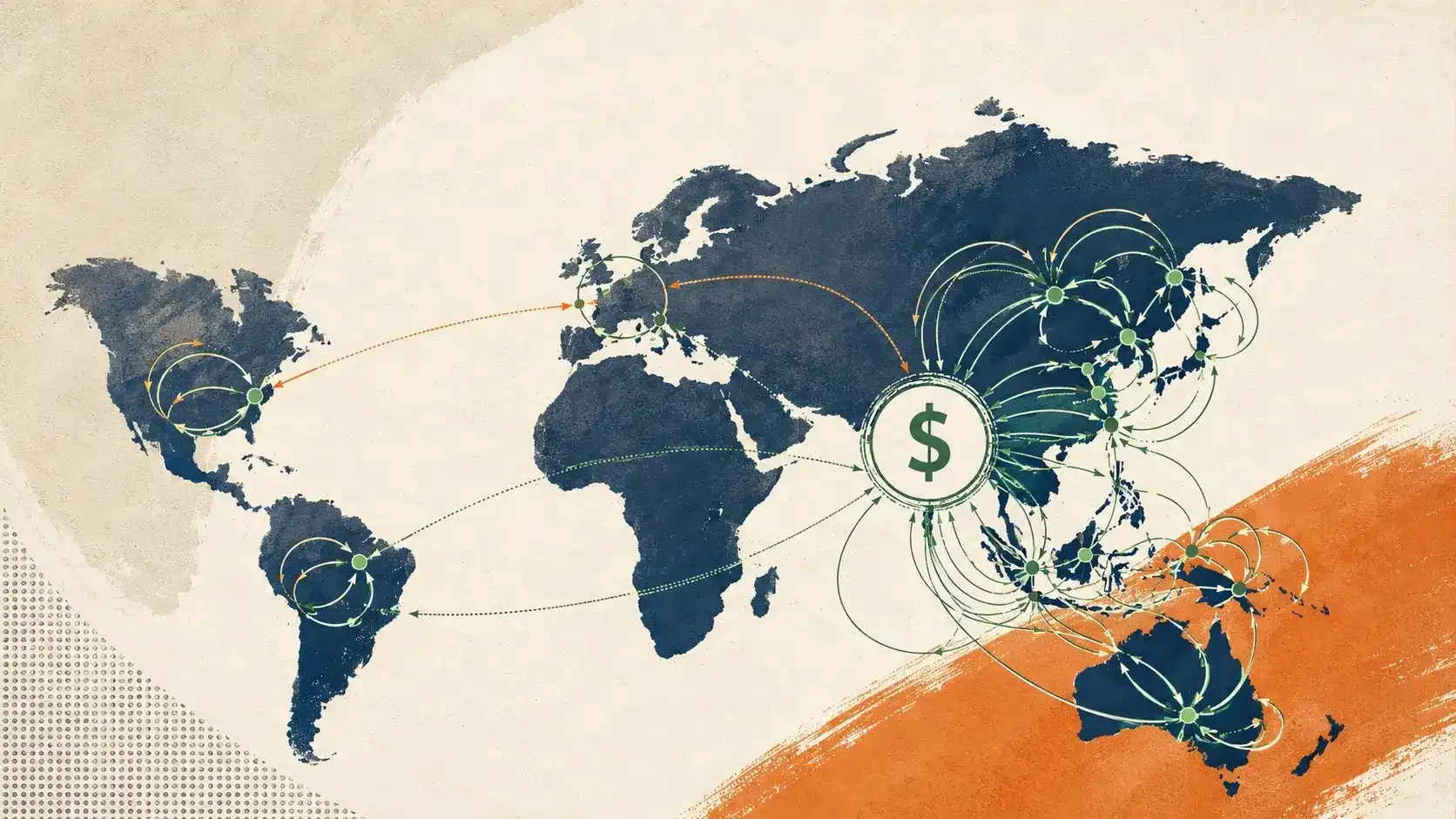
This is no coincidence. When the helmsmen of trillion-dollar markets collectively choose to "settle" here, it signals that crypto regulation in the Middle East has upgraded from a "tax haven" to a global "compliant settlement layer" for institutional capital.

USDT Finally Gains "Legitimacy"

For a long time, while USDT held the top market cap, it was often criticized by Western regulators for being "opaque." But in Abu Dhabi, it has received a highly significant status—"Accepted Fiat Referenced Token (AFRT)".

This is not just a simple license; it's a "multi-chain pass."

ADGM explicitly recognized the regulated status of USDT on 9 mainstream public chains including Aptos, TON, Solana, and Near. This means that banks, funds, and institutions within ADGM's jurisdiction can legally and compliantly use on-chain USDT for settlements without worrying about legal risks. For the Web3 industry, which is eager to attract traditional capital, this is a crucial step in opening up the main artery between "fiat and cryptocurrency."

Close behind, Circle not only secured its license but also directly appointed a former Visa executive to lead its Middle East business, aiming to leverage Abu Dhabi's status as a financial hub to capture a share of the digital settlement of petrodollars.

Binance "Joins with Capital"

It is reported that Binance secured three independent licenses at once, covering trading, clearing/custody, and OTC services. Starting in 2026, its local operations will be run by three separate entities:

  • Nest Exchange Services Limited: Responsible for platform operations including spot and derivatives trading;
  • Nest Clearing and Custody Limited: Responsible for clearing and custody, acting as the central counterparty for derivatives trading;
  • Nest Trading Limited: Providing over-the-counter trading, instant swap, and some wealth management services.

Some call this a "regulatory breakup," but given the context, it looks more like an empowerment with a "top-tier configuration."

Abu Dhabi, learning from the FTX collapse, mandates "functional segregation." This not only gives Binance a compliance architecture on par with Nasdaq but also provides the endorsement of a "national team"—as early as this year, MGX, an investment company established with participation from Abu Dhabi's sovereign fund Mubadala, had already invested in Binance.

With these three licenses, Binance has effectively built a full-function, fully compliant financial infrastructure in Abu Dhabi.

Why Abu Dhabi?

Why have the giants collectively chosen Abu Dhabi?

The answer lies in the top-level design of its "dual-track" system.

The UAE has a unique "federal - free zone" dual regulatory structure. The Abu Dhabi Global Market (ADGM) is a distinct "independent common law jurisdiction." It is on UAE soil but directly applies the British common law system, which is most familiar to the international financial community, and has its own independent courts and legislative power.

Here, giants can enjoy a perfect balance—

  • More efficient certainty than the US: While US regulation is becoming more friendly, the legislative process still takes time. ADGM, however, has long established a mature, clear, and "ready-to-use" regulatory standard. Companies don't have to wait amidst the博弈 (game/struggle) between multiple regulators (like the SEC and CFTC).
  • A more rigorous positioning than Dubai: Dubai's Virtual Asset Regulatory Authority (VARA) focuses on retail and marketing, while ADGM benchmarks against London and New York, specializing in institutional custody, RWA, and cross-border settlement.
  • Also a top-tier capital player: Don't forget, the UAE government itself is a strategic holder of crypto assets (through entities like Citadel Mining), and its sovereign fund MGX directly invested in Binance.

Not just a regulator, but a partner. This is the ultimate attraction Abu Dhabi holds for the giants.

Even more astonishing is its determination to expand. According to a recent Bloomberg report, due to the influx of financial institutions, space is running out. Abu Dhabi is planning to invest $16 billion to frantically expand the financial district. This霸气 (audacity/confidence) of "building when land is scarce" is a testament to its will to create a global financial center.

The Global Compliance "Capital"

While the US is still debating "who regulates what," and while Europe's MiCA is still in its磨合期 (break-in period), Abu Dhabi has quietly completed the infrastructure puzzle: by introducing the world's largest stablecoin issuers and exchange, it is gradually building a complete, institutional-grade digital financial operating system.

This is not just a victory for one region; it is a microcosm of the eastward shift of the global crypto financial center of gravity. For practitioners, if the opportunities of the past five years were in the code of Silicon Valley, then the opportunities of the next five years might just be in the office buildings of Abu Dhabi.

*This content is for reference only and does not constitute investment advice. The market carries risks, and investment requires caution.


Related Questions

QWhat major cryptocurrency companies recently obtained licenses from ADGM (Abu Dhabi Global Market)?

ATether, Binance, and Circle all recently secured licenses from ADGM. Tether's USDT was recognized, Circle obtained a Financial Services Permission (FSP), and Binance received a full license with a new compliance structure.

QWhat significant status did USDT achieve in ADGM, and why is it important?

AUSDT was granted the status of 'Accepted Fiat Reference Token' (AFRT) in ADGM. This is crucial because it provides a regulated, multi-chain legal framework across 9 major blockchains, allowing banks and institutions to use it for compliant on-chain settlements without legal risk.

QHow is Binance's operational structure in Abu Dhabi changing starting in 2026?

AStarting in 2026, Binance will operate under a new 'three-entity' compliance structure in Abu Dhabi. The three independent entities are: Nest Exchange Services Limited (trading), Nest Clearing and Custody Limited (clearing and custody), and Nest Trading Limited (OTC and other services).

QWhat are the regulatory advantages of ADGM that attracted these crypto giants?

AADGM offers a unique balance of efficiency and rigor. It operates under a familiar British common law system, providing clear and mature regulatory standards faster than the US. It focuses on institutional market (unlike Dubai's retail focus) and has the backing of sovereign wealth funds, acting as both regulator and strategic partner.

QWhat broader trend does this collective move by Tether, Binance, and Circle to Abu Dhabi signify?

AThis move signifies a strategic shift of the global crypto financial center eastward, with Abu Dhabi emerging as a key hub for institutional, compliant digital finance. It highlights the region's ambition to become the global 'compliance capital' for crypto, offering a complete, regulated operating system for major players.

Related Reads

Summary of Kevin Warsh's Past Remarks: How Will This Prospective 'New Head' Upend the Fed?

Kevin Warsh, nominated by President Trump to replace Fed Chair Powell, is poised to introduce sweeping reforms at the Federal Reserve. His agenda includes structural changes, advocating for lower policy rates, a fundamentally new approach to inflation, a significantly smaller balance sheet, safeguarding Fed independence, narrowing the Fed’s mandate, improving coordination with the Treasury, and reducing communication “noise” from policymakers. Warsh has criticized current monetary policy as “broken” and called for “fundamental regime change,” arguing that continuity is meaningless when the Fed has lost credibility. He believes interest rates should be lower and that a smaller balance sheet would help achieve that, describing the current one as “multiple trillions of dollars larger than necessary.” On inflation, he attributes its rise to cognitive errors at the Fed—including overreliance on flawed models, neglect of money supply, and blaming external factors rather than excessive government spending. He also suggests AI could lead to a structural decline in prices. He strongly defends Fed independence as its “most important asset” and warns against mission creep, which he says risks its core objectives and increases political vulnerability. He proposes closer coordination with the Treasury to align balance sheet and debt issuance plans, clarifying expectations for markets. Regarding communication, Warsh supports transparency but criticizes the current “cacophony of voices” and “forward guidance” that creates ambiguity. He has urged Fed officials to speak less frequently to avoid market confusion.

marsbit3m ago

Summary of Kevin Warsh's Past Remarks: How Will This Prospective 'New Head' Upend the Fed?

marsbit3m ago

Arbitrum Pretends to Be the Hacker, 'Steals' Back the Money Lost by KelpDAO

Title: Arbitrum Poses as Hacker to Recover Stolen Funds from KelpDAO Last week, KelpDAO suffered a hack resulting in nearly $300 million in losses, marking the largest DeFi security incident this year. Approximately 30,765 ETH (worth over $70 million) remained on an Arbitrum address controlled by the attacker. In an unprecedented move, Arbitrum’s Security Council utilized its emergency authority to upgrade the Inbox bridge contract, adding a function that allowed them to impersonate the hacker’s address and initiate a transfer without access to its private key. The council’s action, approved by 9 of its 12 members, moved the stolen ETH to a frozen address in a single transaction before reverting the contract to its original state. The operation was coordinated with law enforcement, which attributed the attack to North Korea’s Lazarus Group. Community reactions are divided: some praise the recovery of funds, while others question the centralization of power, as the council can upgrade core contracts without governance votes. However, such emergency mechanisms are common among major L2s. Despite the partial recovery, over $292 million was stolen in total, with more than $100 million in bad debt on Aave and remaining funds scattered across other chains. The incident highlights escalating security challenges in DeFi, with state-sponsored hackers employing advanced tactics and L2s responding with elevated countermeasures.

marsbit12m ago

Arbitrum Pretends to Be the Hacker, 'Steals' Back the Money Lost by KelpDAO

marsbit12m ago

iQiyi Is Too Impatient

The article "iQiyi Is Too Impatient" discusses the controversy surrounding the Chinese streaming platform IQiyi's recent announcement of an "AI Actor Library" during its 2026 World Conference. IQiyi claimed over 100 actors, including well-known names like Zhang Ruoyun and Yu Hewei, had joined the initiative. CEO Gong Yu suggested AI could enable actors to "star in 14 dramas a year instead of 4" and that "live-action filming might become a world cultural heritage." The announcement quickly sparked backlash. Multiple actors named in the list issued urgent statements denying they had signed any AI-related authorization agreements. This forced IQiyi to clarify that inclusion in the library only indicated a willingness to *consider* AI projects, with separate negotiations required for any specific role. The incident, which trended on social media with hashtags like "IQiyi is crazy," is presented as a sign of the company's growing desperation. Facing intense competition from short-video platforms like Douyin and Kuaishou, as well as Bilibili and Xiaohongshu, IQiyi's financial performance has weakened, with revenues declining for two consecutive years. The author argues that IQiyi is "too impatient" to tell a compelling AI story to reassure the market, especially as it pursues a listing on the Hong Kong stock exchange. The piece concludes by outlining three key "AI questions" IQiyi must answer: defining its role as a tool provider versus a content creator, balancing the "coldness" of AI with the human element audiences desire, and properly managing the interests of platforms, actors, and viewers. The core dilemma is that while AI can reduce costs and increase efficiency, it risks creating homogenized, formulaic content and devaluing human performers.

marsbit1h ago

iQiyi Is Too Impatient

marsbit1h ago

Trading

Spot
Futures

Hot Articles

What is BNB WHALES

Understanding BNB Whales: A Deep Dive into the Cryptocurrency Landscape Introduction to BNB Whales In the vibrant world of cryptocurrencies, new projects regularly emerge, often promising innovative solutions and unique experiences. One such project is BNB Whales, launched in 2023 and built on the BNB Smart Chain (BEP20). BNB Whales sets out to establish a distinctive presence within the cryptocurrency ecosystem, focusing on creating an engaging platform that combines the benefits of blockchain technology with social and gaming interactions. This article aims to delve deeper into BNB Whales, exploring its core components, mechanics, and developmental trajectory. What are BNB Whales? BNB Whales is a cryptocurrency initiative that seeks to provide a diverse range of features and opportunities for its users in the burgeoning Web3 environment. Utilizing the BEP20 standard, the project operates with a total token supply of 100 trillion (100,000,000,000,000,000). Despite this significant figure, it is noteworthy that no tokens are currently in circulation, indicating that the project may still be in its early developmental stages. The primary goal of BNB Whales is to create a platform where users can participate in various interactive activities while benefiting from the security and transparency afforded by blockchain technology. By fostering a unique and engaging environment, BNB Whales aims to build a strong community of users who are invested in the project and its development. Who is the Creator of BNB Whales? The identity of the creator of BNB Whales remains undisclosed at this time, presenting a challenge for those looking to understand the project's founding principles and visionary insights. This absence of publicly available information regarding the project's leadership may raise questions among potential investors and users about its governance and accountability structure. Who are the Investors of BNB Whales? As BNB Whales continues to evolve, information concerning specific investors or support from investment foundations is currently unavailable. The project’s official documentation, including its whitepaper, does not disclose either individual or institutional financial backers. The lack of transparency in this regard can sometimes raise questions about the legitimacy and sustainability of new projects within the cryptocurrency ecosystem. How Does BNB Whales Work? BNB Whales operates on the BNB Smart Chain utilizing the BEP20 standard, which is known for its efficiency and low transaction fees, attracting a variety of developers and projects. The unique aspect of BNB Whales lies in its focus on creating a community-driven platform. While precise operational details are scarce, the project emphasizes interaction and engagement, potentially incorporating gamified elements into its offerings. The emphasis on community is pivotal, as it aligns with prevailing trends in the cryptocurrency space, where user input and participation often dictate a project's success. Further innovation may be anticipated, but at present, the specific mechanisms and features that differentiate BNB Whales from other crypto initiatives remain to be fully elucidated. Without detailed information regarding its functionality, it is challenging to evaluate the project's differentiators comprehensively. Timeline of BNB Whales The development of BNB Whales has unfolded across key milestones, marking its journey in the cryptocurrency landscape. Below is a timeline of significant events pertaining to the project: 2023: Launch of BNB Whales, marking the project's entry into the market. 2023: Publication of the project's whitepaper, which lays out the overarching goals and operational framework. Ongoing: BNB Whales continues to develop its features, aiming to build a robust user base and expand its offerings. Key Points About BNB Whales Platform: BNB Smart Chain (BEP20) Total Supply: 100 trillion tokens (100,000,000,000,000,000) Circulating Supply: 0 tokens (indicating a nascent stage) Project Goal: To foster an engaging cryptocurrency platform for interaction and community building. Creator: Unknown Investors: Not disclosed Operational Status: Active with ongoing development and expansion Conclusion As BNB Whales navigates the competitive cryptocurrency landscape, it offers a glimpse into the potential of community-driven projects built on the foundations of blockchain technology. By focusing on engagement and interaction, the initiative stands at the forefront of innovation in the Web3 space. However, the project's success ultimately hinges on the clarity of its operational mechanics, the disclosure of its governance, and the establishment of a solid user community. For potential users and investors alike, BNB Whales represents a case study in the evolving nature of cryptocurrency projects—one that illustrates both the exciting possibilities and the complexities associated with new initiatives. As the landscape continues to evolve, it will be essential to monitor BNB Whales' progress and its impact on the broader cryptocurrency ecosystem.

3.1k Total ViewsPublished 2024.04.01Updated 2024.12.03

What is BNB WHALES

What is PONKE BNB

Ponke BNB: A New Approach in the Cryptocurrency Space Introduction Ponke BNB, a newcomer in the cryptocurrency arena, was launched in 2024 and operates on the BNB Smart Chain (BEP20) platform. This innovative project seeks to build a distinctive and engaged community, focusing on sustainable reward generation. As the cryptocurrency landscape evolves, Ponke BNB aims to address critical issues surrounding reward sustainability, making it a project worth observing for enthusiasts and investors alike. What is Ponke BNB? At its core, Ponke BNB is a cryptocurrency designed specifically for the BNB Smart Chain ecosystem. Boasting an immense total supply of 370,000,000,000,000,000 tokens, it is worth noting that currently, there are no tokens in circulation. The guiding mission of Ponke BNB is to foster a sustainable reward system that mitigates the challenges associated with rewards depletion, a common pitfall in many cryptocurrencies today. The mechanics of Ponke BNB's functionality centre around encouraging user participation, while simultaneously providing rewards that can stand the test of time. The unique structure of its reward system is aimed at ensuring longevity and stability, addressing essential market concerns. Who is the Creator of Ponke BNB? Despite extensive exploration, the identity of Ponke BNB's creator remains unknown. There is a notable absence of publicly available information regarding the project’s founder or its development team. This anonymity, while not uncommon in the cryptocurrency space, raises some questions about transparency and accountability in project management. Who are the Investors of Ponke BNB? Similar to the lack of clarity surrounding its creator, there is no public information available regarding any investment foundations or organizations that support Ponke BNB. This absence of investor data can often breed uncertainty among prospective investors, who typically prefer a clear understanding of the backing behind cryptocurrencies they consider engaging with. How Does Ponke BNB Work? Ponke BNB stands out through its inventive two-layered sustainable reward generating system. This system is built to tackle the issue of rewards depletion effectively. By engaging users and creating a vibrant community, Ponke BNB seeks to provide a stable and enjoyable environment, which emphasizes user interaction and rewards. The operation framework of Ponke BNB encourages participation through various activities and challenges that are designed to incentivise users while ensuring that the reward system remains sustainable. It aims to stimulate the community and promote an engaging atmosphere where members can feel valued and appreciated. Timeline of Ponke BNB The evolution of Ponke BNB can be summarized through a few key milestones: 2024: The inception of Ponke BNB on the BNB Smart Chain (BEP20) platform marked a significant entry into the cryptocurrency market. 2024: The release of the project’s whitepaper and official website provided comprehensive insights into Ponke BNB’s goals and objectives, forming the foundation for its community-driven approach. Key Features of Ponke BNB Ponke BNB is built on several key features that set it apart from other cryptocurrency projects: Sustainable Reward System The two-layered reward system is designed to foster engagement, prevent depletion of rewards, and ensure the longevity of returns for participants in the Ponke BNB ecosystem. Community Engagement The project places a strong emphasis on active community engagement, driving participation through activities designed to create a social and collaborative environment. This community-centric approach empowers users to have a hand in shaping the project's future directions. BNB Smart Chain Integration Operating on the BEP20 platform, Ponke BNB is reinforced by the security and efficiency offered by the BNB Smart Chain. Users benefit from fast and cost-effective transactions, positioning Ponke BNB well within the broader cryptocurrency ecosystem. Conclusion In summary, Ponke BNB is an emergent cryptocurrency project aiming to carve a niche for itself in the growing digital currency landscape. With its focus on a sustainable reward system and community engagement, it presents a fresh outlook in an otherwise volatile sector. While uncertainties linger concerning the project's creators and investors, Ponke BNB continues to strive for transparency and innovation. As the cryptocurrency market continues to develop, Ponke BNB’s principles of sustainability and community-driven dynamics place it in a promising light for future observers and participants alike.

2.9k Total ViewsPublished 2024.04.01Updated 2024.12.03

What is PONKE BNB

What is BNB CARD

Understanding BNB Card: Revolutionizing Digital Identity in Web3 In the rapidly evolving landscape of blockchain technology and cryptocurrency, the BNB Card or $BNBCARD stands out as a noteworthy project. This community-driven utility meme token leverages the BNB Smart Chain (BSC), aiming to integrate meme culture with innovative digital identity solutions. As more users dive into the realms of decentralization, it is crucial to dissect what BNB Card offers, its operational nuances, and its potential market impact. What is BNB Card ($BNBCARD)? At its core, BNB Card represents a meme token with substantial utility. It is designed to empower users by enabling the creation of personalized digital identity cards that are both expressive and functional. The project encapsulates several key features: Customizable ID Cards: Users have the ability to design Binance-themed digital ID cards, providing them with a platform for self-expression and enhanced community interaction. Decentralized Framework: Developed on the BSC, BNB Card emphasizes key attributes such as security, transparency, and user sovereignty. The decentralized nature of the framework allows for transactions that are both efficient and secure. Community-Centric Model: The emphasis on grassroots participation rather than laboratory-driven financial models creates an engaging environment for its users. By leveraging the inherent virality of meme culture, BNB Card fosters a robust community movement. The primary goal of BNB Card is to democratize digital identity tools in Web3, offering accessible solutions that benefit the users without the encumbrances typically associated with traditional identity management systems. Creator and Investors When exploring the identity behind BNB Card, it is important to note that no singular creator is explicitly credited. Instead, the project appears to be community-driven, suggesting a collective effort inspired by the notion of Binance's “Early Builder Card.” This organic development approach is common among projects within the meme token spectrum, where development is often influenced by the community's passion rather than a central authority. In terms of investment, the absence of publicly disclosed institutional backers further highlights the project's grassroots foundation. It thrives on organic community support, reflecting a usual characteristic of meme-driven projects that often engage their audience through social channels rather than formal investment routes. How It Works BNB Card employs several mechanisms that delineate its functioning and innovative spirit: Token Utility: The BNBCARD token allows users access to a suite of ID creation tools while also providing a platform for community governance. The token serves as the linchpin that enables these functionalities. Blockchain Integration: By utilizing the BSC, BNB Card ensures compatibility with Ethereum Virtual Machine (EVM)-based applications. This integration provides users with the benefits of low transaction fees while enhancing accessibility. DIY Ecosystem: Central to BNB Card’s appeal is its do-it-yourself (DIY) approach to digital identity card generation. This participatory element encourages users to engage in creative expression, fostering an inclusive culture that thrives on contribution and collaboration. Timeline Chronology is vital to understanding BNB Card's trajectory. Important milestones in the project’s history include: March 18, 2025: BNB Card was listed on LBank, marking a significant step in its exchange journey and opening doors for liquidity and user accessibility. March 19, 2025: A pivotal moment occurred as the token experienced an astronomical surge of 26,000% within 24 hours, garnering attention for its potential and the community’s enthusiasm. Ongoing Developments: The project is continuously expanding its partnerships with decentralized exchanges (DEXs) like PancakeSwap, further enhancing liquidity and user engagement. Innovation and Differentiation Understanding what sets BNB Card apart involves deeper exploration into its innovative framework: Meme-Utility Hybrid: BNB Card successfully merges the playful allure of meme culture with practical applications in digital identity management. This niche approach effectively caters to a broad demographic, appealing to both tech-savvy users and those new to crypto. Decentralized Governance: Operating devoid of centralized control allows the project to harness community input directly. The collective decision-making process buoyed by community involvement empowers users, ensuring their voices contribute to the development and direction of the project. Scalability: BNB Card stands to benefit immensely from the 2025 roadmap upgrades to the BNB Chain, which include enhancements such as increased transaction speeds and the integration of artificial intelligence tools. These improvements position the project advantageously within a highly competitive environment. Conclusion BNB Card is emblematic of a new wave of digital identity solutions within the Web3 ecosystem. By blending fun, community engagement, and practical utility, it invites users to participate actively in shaping their digital personas. As the project navigates the dynamic cryptocurrency landscape, its success will likely hinge on maintaining strong community support while adapting to technological advancements and user needs. The integration of decentralization with meme culture serves not only as a means for user-driven engagement but also as a foundation for the evolving narrative surrounding digital identity in the age of blockchain. In summation, BNB Card not only exemplifies the convergence of creativity and utility within the crypto space but also underscores the importance of community in steering the future of decentralized technologies.

3.4k Total ViewsPublished 2025.03.26Updated 2025.03.26

What is BNB CARD

Discussions

Welcome to the HTX Community. Here, you can stay informed about the latest platform developments and gain access to professional market insights. Users' opinions on the price of BNB (BNB) are presented below.

活动图片