# Validators Related Articles

HTX News Center provides the latest articles and in-depth analysis on "Validators", covering market trends, project updates, tech developments, and regulatory policies in the crypto industry.

A Year Later, 'Lean Ethereum' Moves Forward: What Is Ethereum Aiming to Achieve?

A year after its initial proposal, "Lean Ethereum" is resurfacing as a core focus, signaling a potential fundamental shift in Ethereum's development narrative. While recent years prioritized scalability (e.g., Rollups, blobs), current discussions center on long-term sustainability and decentralization. This shift is evident on multiple fronts. Organizationally, the Ethereum Foundation (EF) is becoming "leaner and more focused," while key responsibilities like R&D (Ethlabs) and institutional outreach (Ethereum Institution) are being distributed to independent organizations. This aims to reduce systemic reliance on a single entity. Technologically, "Lean Ethereum," described by Vitalik Buterin as Ethereum's "third major iteration," outlines a 3-4 year roadmap. Its goals extend beyond raw throughput to emphasize protocol properties for a "long-term trust infrastructure." Key directions include: protocol simplification via "light verification" (using recursive STARKs instead of heavy re-execution); prioritizing quantum resistance; integrating privacy as a first-class protocol goal; and consensus-layer improvements for faster finality and reduced validator burden. Complementing this, the proposed 0x02 compounding validators feature seeks to make staking rewards more sustainable and equitable for smaller participants by allowing native reinvestment, improving capital efficiency and reducing network overhead. Together, these changes represent a move towards "subtraction": reducing dependency on centralized organizations, the cost for individuals to verify the chain, and capital inefficiencies in network participation. The aim is a more decentralized, verifiable, and resilient Ethereum capable of supporting the next decade of growth, even if the tangible benefits of these foundational shifts may take years to fully materialize.

marsbit10h ago

A Year Later, 'Lean Ethereum' Moves Forward: What Is Ethereum Aiming to Achieve?

marsbit10h ago

Is Ethereum Truly a "World Computer"?

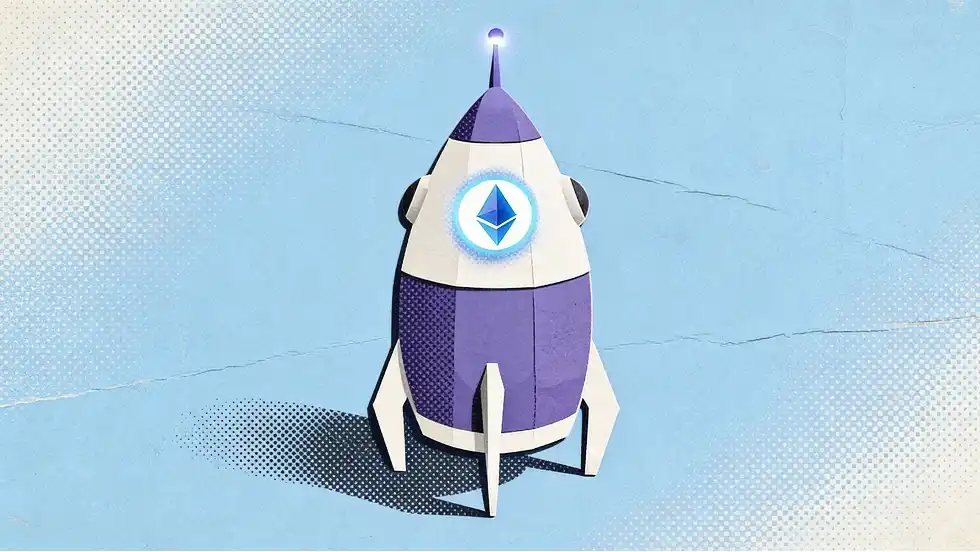
Ethereum has long been branded as a "world computer," yet its current infrastructure reveals significant geographic concentration, challenging this claim. An analysis of validator node distribution shows the network heavily leans toward Western nations. The U.S. alone hosts 38.19% of all validators, while Germany accounts for 13.04%, meaning these two countries comprise over half the network. Notably, a substantial portion of U.S. validators are residential nodes run from home connections, reflecting grassroots participation. In contrast, representation from Asia, South America, the Middle East, and Africa is minimal. Examining only professionally-operated institutional validators shows a more balanced picture, with countries like Singapore, Hong Kong, Japan, and South Korea collectively reaching nearly 25%. This shift indicates strategic institutional deployment to meet local regulatory requirements and reduce latency for regional users. A core problem is Ethereum's peer-to-peer gossip protocol, which systematically disadvantages regions with low node density. Late message arrival reduces a node's "peer score," pushing it to the network's periphery, further delaying future messages. This can impact validator rewards and network performance in these areas, posing a challenge to decentralization. However, this geographic imbalance also presents a significant opportunity. For Ethereum to truly become a global settlement layer, localized infrastructure is essential. Pioneering reliable validator operations in underserved regions like the Middle East, South America, or Africa could establish a crucial first-mover advantage, meeting growing demand for compliant, low-latency staking services in these markets.

marsbit2 days ago 11:28

Is Ethereum Truly a "World Computer"?

marsbit2 days ago 11:28

Is Ethereum Truly a "World Computer"?

Title: Is Ethereum Really a "World Computer"? Ethereum, envisioned as a "world computer" by its founder Vitalik Buterin, aims to be a decentralized platform for global applications. However, a recent analysis by Four Pillars raises questions about whether it is more accurately a "Western computer," based on the geographical distribution of its validators. Currently, the United States dominates with 38.19% of all validators, followed by Germany at 13.04%. Combined, these two countries account for over half of the network. In contrast, Asian representation is minimal, with Singapore holding only 3.15%. The concentration is partly due to affordable cloud hosting services like Hetzner and OVH in Europe and North America, as well as the prevalence of residential validators in the U.S., where individuals run nodes via home internet connections. When examining professionally operated validators, the distribution becomes more balanced. The U.S. share drops to 25.81%, while Asian countries like Singapore (7.28%), Hong Kong (6.44%), Japan (6.38%), and South Korea (4.59%) collectively approach the U.S. level. This shift reflects strategic deployments by institutions to meet regulatory requirements and reduce latency for local users. However, regions like South America, the Middle East, and Africa remain underrepresented. Ethereum's peer-to-peer network mechanisms, such as gossipsub, disadvantage areas with low node density, creating a feedback loop where delayed message propagation reduces validator performance and rewards. This imbalance challenges Ethereum's promises of censorship resistance and global accessibility. Despite these issues, opportunities exist for growth in underrepresented regions. As demand for localized staking infrastructure rises, early entrants in areas like the Middle East could establish dominant positions by offering compliant, low-latency solutions. The evolving validator landscape highlights both the structural challenges and the potential for Ethereum to move closer to its "world computer" ideal.

Foresight News07/10 12:06
Is Ethereum Truly a "World Computer"?

Foresight News07/10 12:06

Solana Expands Validator Power With Launch of On-Chain Governance

Solana has formally launched its on-chain governance system, empowering token holders and validators with a more open and decentralized way to influence major protocol decisions. Governance debates and voting are now conducted entirely on-chain using the new Solana Governance Proposals (SGP) framework, supported by stake-weighted voting and cryptographic verification. Validators with at least 100,000 SOL in delegated stake can submit an SGP. To proceed to a formal vote, a proposal must first gain support from at least 15% of the network's total staked SOL, ensuring only ideas with significant backing move forward. SGPs serve a distinct purpose from the technical Solana Improvement Documents (SIMDs). While SIMDs focus on *how* to implement protocol upgrades, SGPs determine *whether* the broader ecosystem believes a proposal should proceed, via an on-chain, stake-weighted vote. This separation allows core developers to continue building effectively while reserving community-wide votes for impactful decisions. A key feature grants delegators greater control: they can now override their validator's governance vote. If a validator votes against a delegator's preference or abstains, the delegator can cast a vote directly using their own stake weight through Solana's governance portal. The voting process is secured using Merkle proofs to verify participant stakes against an on-chain consensus snapshot. With this implementation, Solana aims to broaden community participation in governance without hindering development, combining decentralized decision-making with efficient protocol evolution.

TheNewsCrypto07/02 07:36

Solana Expands Validator Power With Launch of On-Chain Governance

TheNewsCrypto07/02 07:36

Node Count Drops 70%, This Time Solana Is in a Hurry

Solana's validator count has dropped by 70% from its peak of 2,560 in March 2023 to around 756, accompanied by a 35% decrease in its Nakamoto coefficient, indicating increased centralization. This decline is largely due to the phasing out of the Solana Foundation Delegation Program (SFDP), which previously subsidized smaller validators. Many of these validators were economically unviable without support, controlling only 19% of the total stake, while larger nodes held over 80%. In response, Solana is implementing a new validator policy effective May 1, focusing on infrastructure decentralization. The policy imposes limits: no single Autonomous System Number (ASN) can host more than 25% of staked SOL, and no single data center can exceed 15%. It also enforces stricter performance rules, including faster transaction processing and anti-censorship measures, to improve network reliability and security. Critics, like node operator Chainflow, argue that the rules may unfairly penalize competent smaller validators based on their hosting location rather than performance, potentially forcing them into less reliable infrastructure and accelerating their decline. Amid ambitions to become a "Nasdaq on-chain" for global capital markets, Solana trails Ethereum and BNB Chain in real-world asset (RWA) value but leads in user activity. The network's upgrades aim to enhance stability and reduce finality times, competing with Ethereum's efforts to scale and decentralize further. The success of Solana's new policies is crucial for gaining institutional trust and competing effectively in the evolving blockchain landscape.

marsbit04/10 04:08

Node Count Drops 70%, This Time Solana Is in a Hurry

marsbit04/10 04:08

活动图片