# Tokenization Related Articles

HTX News Center provides the latest articles and in-depth analysis on "Tokenization", covering market trends, project updates, tech developments, and regulatory policies in the crypto industry.

ECB's Schnabel says central bank money 'should move to blockchain'

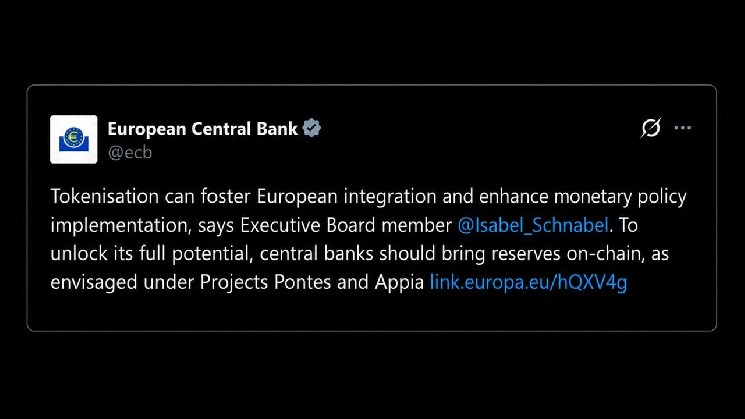
ECB Executive Board member Isabel Schnabel stated that central bank money "must move onto the blockchain." She argued that stablecoins lack the independent ability to scale liquidity during financial stress—a gap only a central bank can fill. Her proposed solution involves tokenization, which she says can make transactions faster, safer, and more programmable, but only if the safest asset (central bank money) is on the same "rails" as other tokenized assets. This marks a notable shift for the Eurosystem, which had previously viewed Distributed Ledger Technology (DLT) mainly as a tool for regulating stablecoins and crypto, not as infrastructure to adopt directly. The first step is Project Pontes, launching in September. It will initially synchronize the ECB’s existing TARGET services with private DLT platforms. Eventually, it aims to enable settlement finality on a Eurosystem-managed DLT platform with smart contract functionality and 24/7 operation. The long-term strategy is Project Appia, tasked with developing the architecture, standards, and legal framework for a genuine European tokenized asset market by 2028. Trials have already processed around €1.6 billion, and since March 2026, the ECB accepts DLT-based assets as collateral. While not directly impacting Bitcoin's price, these developments signal that a major G7 central bank is preparing to settle transactions on-chain, lending legitimacy to the underlying infrastructure of crypto markets. The ECB's move to avoid "disintermediation" by private tokenization shows that debates in central bank boardrooms are now aligning with discussions long followed in the crypto space.

cryptonews.ru4h ago

ECB's Schnabel says central bank money 'should move to blockchain'

cryptonews.ru4h ago

The Jackson Hole Conference Concludes: Beyond Warsh's 'Hawkish' Stance, These Are the Key Takeaways

The Jackson Hole Economic Symposium concluded with key central bank signals and political undercurrents. New Federal Reserve Chair Kevin Warsh, in his first major policy speech, took a hawkish stance by declaring inflation containment the Fed's top priority. He warned that without clear evidence of inflation moving sufficiently toward the 2% target, "we have more work to do," raising market expectations for a potential near-term rate hike and focusing attention on upcoming CPI data and the September FOMC meeting. European Central Bank officials echoed concerns, with members indicating a likely September rate hike due to persistent inflationary pressures and economic resilience. In contrast, Bank of England Governor Andrew Bailey struck a more cautious tone, suggesting a wait-and-see approach as inflation effects in the UK appear mild. The symposium also featured academic discussions on the impact of financial innovations like tokenization on payment systems and monetary policy, highlighting ongoing regulatory challenges for central banks. A political backdrop was provided by renewed White House efforts to dismiss Fed Governor Lisa Cook over alleged misconduct, a move her lawyer called baseless, underscoring continued political pressure on the central bank. Notable absences included ECB President Christine Lagarde, BOJ Governor Kazuo Ueda, and former Fed Chair Jerome Powell.

marsbit16h ago

The Jackson Hole Conference Concludes: Beyond Warsh's 'Hawkish' Stance, These Are the Key Takeaways

marsbit16h ago

Hash Global: After BTC, Who Will Take the Baton for the Next Bull Market?

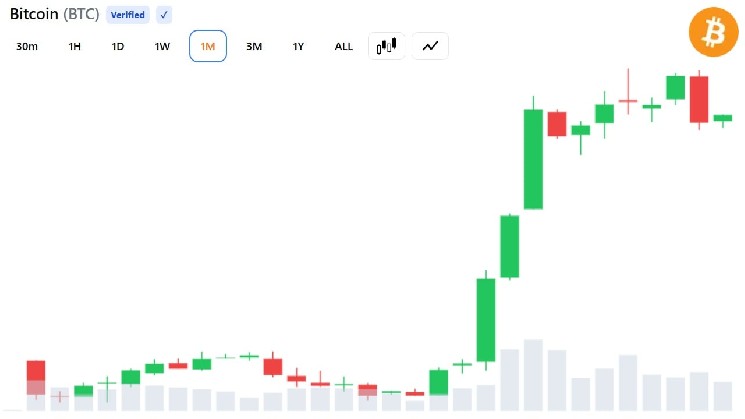
"Hash Global: After Bitcoin, Who Will Take the Baton in the Next Bull Run?" The market, following a period of consolidation, has re-entered a bull trend, initiated by Bitcoin's surge past key resistance levels. However, this cycle may differ from the last. While BTC remains a crucial entry point, the primary growth narrative is shifting from traditional capital flowing into crypto (TradFi → Crypto) to traditional assets migrating on-chain (TradFi → Onchain). This "Everything-on-chain" trend, fueled by evolving regulatory frameworks like Regulation Crypto, signifies a potential explosion in high-quality tokenized real-world assets (RWA) like stocks and bonds. The critical question becomes: which infrastructure will host this influx? The answer likely lies not in new entrants, but in mature, concentrated ecosystems with proven networks. Ethereum (ETH) offers **deterministic value** as the most established decentralized finance (DeFi) infrastructure, poised to capture the largest share of new demand. Binance Coin (BNB) represents **growth elasticity**, building a comprehensive financial network that connects users, assets, and liquidity, evidenced by its rapid RWA expansion. Robinhood mirrors this trend from the TradFi side, bridging traditional finance to the blockchain. In summary, while BTC opens the door, the next bull market's major beneficiaries could be the foundational platforms—like ETH and BNB—that enable and profit from the mass migration of real-world assets onto crypto networks.

marsbit2 days ago 02:04
Hash Global: After BTC, Who Will Take the Baton for the Next Bull Market?

marsbit2 days ago 02:04

活动图片