# Regulation Related Articles

HTX News Center provides the latest articles and in-depth analysis on "Regulation", covering market trends, project updates, tech developments, and regulatory policies in the crypto industry.

Divergence in Regulated Token Protocol Standards: Issuance, Compliance, and Integration Each Assume Their Roles

Regulated token standards on EVM chains are diverging not towards a single unified standard, but into a modular, complementary architecture by function. Key examples include ERC-1450 (centered on a Registered Transfer Agent), ERC-3643 (a modular stack for policy), and ERC-7943 (a minimal integration layer). This reflects a broader industry trend: instead of bundling all regulatory functions into one standard, the ecosystem is separating **recurring, universal execution functions** (pre-transfer checks, freezing, forced transfers) from **product/jurisdiction-specific policies** (KYC providers, holding limits). Beyond EVM, other chains integrate comparable features at different architectural levels. Solana's Token Extensions provide hooks and controls at the program library level. Stellar and XRPL embed authorization and freezing natively in the ledger. Sui and Aptos place common controls in their Move frameworks. Networks like Canton and Avalanche L1 extend functionality to market operations and validator-level compliance. The competitive edge for regulated token standards will likely depend on **flexibility to adapt to regulatory changes** and the clarity of embedded controls for external integrators, rather than the sheer number of features. The future points towards a **compliance stack**: a base layer of standardized execution functions supporting interchangeable modules for identity, jurisdictional rules, and product-specific policies. This approach balances operational consistency with the necessary flexibility for diverse regulatory requirements across assets and regions.

marsbit5h ago

Divergence in Regulated Token Protocol Standards: Issuance, Compliance, and Integration Each Assume Their Roles

marsbit5h ago

Ehsani of VALR Warns That Cryptocurrency Restrictions Could Lead to Weakened Regulatory Oversight

Farzam Ehsani, co-founder and CEO of VALR, warns that South Africa's proposed regulatory framework for cross-border cryptocurrency transactions could severely harm the domestic digital asset industry and push financial activity into the shadows unless key provisions are substantially revised. Commenting on draft guidance from the National Treasury and the South African Reserve Bank (SARB), Ehsani argues that applying decades-old capital controls to modern technology threatens jobs, local investment, and business innovation. While acknowledging a positive change—that reporting is triggered when funds exit a licensed Crypto Asset Service Provider (CASP), not at purchase—Ehsani states the proposals still disadvantage licensed local operators. He suggests South Africa would benefit more from fully abolishing exchange controls while maintaining proper reporting and oversight, rather than forcing a half-century-old regulatory regime onto the digital economy. The draft rules allow resident individuals to send crypto abroad within existing exchange allowances but restrict legal entities from cross-border crypto transactions. It also deems certain inbound transfers from private, non-custodial wallets as impermissible for local CASPs. Ehsani contends these restrictions create perverse incentives. By blocking legitimate corporate transactions, especially cross-border stablecoin payments that offer faster, cheaper settlement, the rules would undermine the very regulatory oversight authorities seek, likely pushing transactions offshore or underground and reducing transparency. Ehsani also criticizes the treatment of self-custody wallets, warning that labeling transactions from non-custodial sources as inadmissible is impractical and will drive users to foreign, unregulated exchanges instead of local licensed platforms. If South Africa maintains capital controls, he argues they should be applied on a principled, fair, and technology-neutral basis, regulating value movement and risk rather than dictating technology choices. His comments follow a similar challenge from another local exchange, Luno, last month. The draft guidance is open for public comment until September 30. Ehsani remains optimistic the consultation will lead to a more balanced regime but stresses South Africa faces a fundamental choice: either unlock growth and global competitiveness or let its regulatory framework undermine those ambitions.

cryptonews.ru10h ago

Ehsani of VALR Warns That Cryptocurrency Restrictions Could Lead to Weakened Regulatory Oversight

cryptonews.ru10h ago

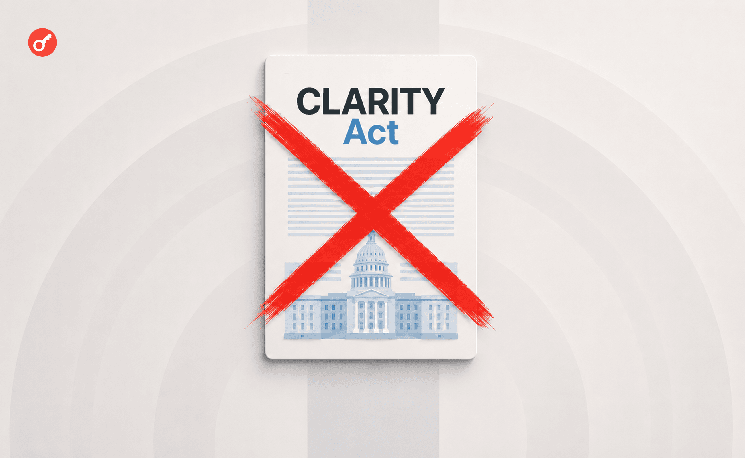
Grayscale Clarifies Whether the Cryptocurrency Market Growth-Promoting Clarity Act Will Be Passed This Year

Zach Pandl, the Research Director at Grayscale, stated that the passage of the CLARITY Act—legislation aimed at establishing a comprehensive regulatory framework for the crypto market in the U.S.—is unlikely to occur in Congress this year. According to Pandl, the Senate's tight schedule and the political climate in an election year make bipartisan agreement on the bill difficult. Pandl noted that the failure of the Clarity Act will not directly impact Bitcoin's role as a store of value, the operation of core blockchains, or the growth of stablecoin payments in the short term. The U.S. crypto sector has operated for nearly 17 years without such comprehensive market structure legislation. However, he warned that the absence of a clear regulatory framework could slow the influx of new investment and capital formation in the U.S. The proposed law aims to open new avenues for capital formation via blockchain, support the development of tokenized securities markets, and create a comprehensive oversight system for digital asset intermediaries, along with various consumer, investor, and software developer protections. Pandl believes federal regulators, particularly the SEC, will continue to fill regulatory gaps even without new legislation, issuing rules in areas like tokenized securities in the coming months. While significant progress has been made under the current administration regarding institutional custody, banking access, staking, and crypto ETPs, Pandl cautioned that without comprehensive market structure laws, much new investment and developer activity may shift outside the United States.

cryptonews.ru19h ago

Grayscale Clarifies Whether the Cryptocurrency Market Growth-Promoting Clarity Act Will Be Passed This Year

cryptonews.ru19h ago

CLARITY Act May Not Pass This Year: Grayscale Assesses the Chances

The chances of the CLARITY Act passing in the U.S. in 2026 have decreased after the Senate postponed a vote to September, according to Grayscale's Zach Pandl. While the crypto industry will continue to develop without new comprehensive legislation, aided by SEC and other regulators, the lack of clear rules may push some investors and developers to move activity outside the U.S. The CLARITY Act aimed to establish a comprehensive regulatory framework for digital assets, covering capital raising, tokenized securities, crypto intermediaries, and consumer protections. Pandl notes its failure won't immediately impact major blockchains, Bitcoin's store-of-value demand, or stablecoin payments, as the industry has operated for nearly 17 years without such a law. However, regulatory uncertainty could hinder new U.S. investments and business development. The bill has procedurally advanced, but observers like entrepreneur Mark Chadwick and Digital Assets' Patrick Witt deem passage unlikely this year due to a tight congressional calendar and the need for Democratic support. They warn that if consensus isn't reached by mid-September, the opportunity may be lost. Even without the CLARITY Act, the U.S. market has seen regulatory updates on custody, banking access, and crypto products. Grayscale and analysts like those at Bernstein expect the SEC and CFTC to continue addressing regulatory gaps, particularly for tokenization, DeFi, and real-world assets (RWA), ensuring the industry's continued evolution.

cryptonews.ru19h ago

CLARITY Act May Not Pass This Year: Grayscale Assesses the Chances

cryptonews.ru19h ago

活动图片