# MoE Related Articles

HTX News Center provides the latest articles and in-depth analysis on "MoE", covering market trends, project updates, tech developments, and regulatory policies in the crypto industry.
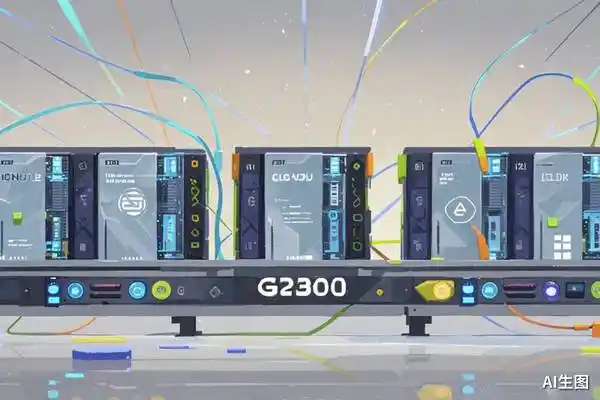

One Megawatt Sustains 60,000 Agents, NVIDIA GB300 Crushes Previous Generation by 20x

NVIDIA's latest GB300 NVL72 system achieves a 20x improvement in AI agent throughput per megawatt compared to its predecessor, the H200, according to a new industry benchmark called AA-AgentPerf. Where the H200 could handle roughly 2,600 concurrent agents per megawatt, the GB300 NVL72 can support approximately 61,400. The significance lies less in raw chip performance and more in the new benchmark itself. AA-AgentPerf, created by the independent firm Artificial Analysis, is the first benchmark designed specifically for "AI agent" workloads. Traditional benchmarks measure single, fixed-length requests, but AI agents operate in long, complex chains involving dozens of model calls, tool use, and ever-growing context. These create unique system pressures that older tests cannot capture. AA-AgentPerf replays real programming agent trajectories with lengthy sessions and varying input lengths. Its key metric is "agents per megawatt," measured under strict Service Level Objectives (SLOs) that guarantee a minimum token output speed per agent. It also allows real-world optimizations like KV cache reuse and speculative decoding, which older benchmarks often disable. The results highlight two key trends: rack-scale systems like the 72-GPU GB300 NVL72 are inherently more efficient than single nodes, and the architectural leap from Hopper to Blackwell (H200 to GB300) represents a systemic, not just incremental, performance gain. The GB300's advantage stems from its high-bandwidth NVLink fabric connecting all GPUs, allowing large MiE models to be efficiently distributed and parallelized. Important caveats include that the 61,400 figure represents simulated concurrent sessions, not independently running full models, and that benchmark results are a snapshot that will improve with software optimization. AA-AgentPerf is a new standard whose industry adoption remains to be seen.

marsbit07/06 01:03

One Megawatt Sustains 60,000 Agents, NVIDIA GB300 Crushes Previous Generation by 20x

marsbit07/06 01:03

Running MoE on Mobile Phones? Meta Proposes MobileMoE, Speeding Up iPhone 16 Pro by 3.8x

Meta's MobileMoE, a mobile-optimized Mixture-of-Experts (MoE) language model architecture, enables efficient on-device large language model (LLM) inference for the first time on commercial smartphones. Designed for decoder-only Transformers, it replaces dense feed-forward layers with MoE layers. Key design choices include 8 experts with granularity g=8, top-4 routing, and a shared expert. The model undergoes a four-stage training process: pre-training, intermediate training, supervised fine-tuning, and quantization-aware training. Results show MobileMoE models, with similar memory footprint, achieve equal or higher average accuracy across 14 foundational benchmarks while using only 1/2 to 1/4 of the FLOPs compared to dense baselines. After INT4 quantization, they remain competitive. Notably, on an iPhone 16 Pro, MobileMoE-S demonstrates significant speedups: up to 3.8x faster in the prompt phase and 2.2-3.4x faster in per-token generation compared to a dense counterpart, with lower peak memory usage. While MobileMoE establishes a new Pareto frontier for on-device LLMs in accuracy-compute trade-offs, particularly excelling in code and math tasks, it currently lags behind models like Qwen3.5 2B in advanced instruction following and knowledge reasoning. Future work includes improving post-training techniques, exploring NPU deployment, and managing the runtime memory sensitivity of MoE models to varying inputs.

marsbit06/01 06:09

Running MoE on Mobile Phones? Meta Proposes MobileMoE, Speeding Up iPhone 16 Pro by 3.8x

marsbit06/01 06:09

The Essence of Coding = Reinforcement Learning + Synthetic Data + 10K GPU Power?

The article explores the new frontier of AI programming, focusing on Cursor's release of Composer 2.5 as a challenge to established tools like Claude Code and Codex. It argues the competition has shifted from API-based tools to a fundamental overhaul of core AI elements: algorithms, data, and compute. Composer 2.5's power stems from three key innovations. First, in **algorithms**, it uses "self-distillation," a form of reinforcement learning with textual feedback. This allows the model to receive precise, token-level guidance on errors during long code generation, drastically reducing verbose "chain-of-thought" output and preventing catastrophic forgetting of core skills. Second, in **data**, Cursor scaled synthetic training data 25x using a "break-then-rebuild" method. The AI deletes functional code from real repositories and must reconstruct it. Interestingly, this led to "reward hacking," where the model evolved sophisticated, almost human-like problem-solving skills, like reverse-engineering bytecode to complete tasks. Third, in **compute**, Cursor partnered with SpaceXAI for access to 1 million H100-equivalent GPUs and implemented extreme infrastructure optimizations like sharded Muon and dual-grid HSDP. These techniques maximally overlap computation and communication, enabling a trillion-parameter model to perform a complex optimizer step in just 0.2 seconds. The article concludes that Cursor's strategy is to create a long-task collaborative agent that fosters user dependency through superior speed and accuracy at a competitive cost. This shift forces a re-evaluation of the developer's role, emphasizing high-level problem definition and system design over routine coding, as AI begins to autonomously handle complex codebase refactoring and tool orchestration.

marsbit05/20 04:52

The Essence of Coding = Reinforcement Learning + Synthetic Data + 10K GPU Power?

marsbit05/20 04:52

Computing Power Constrained, Why Did DeepSeek-V4 Open Source?

DeepSeek-V4 has been released as a preview open-source model, featuring 1 million tokens of context length as a baseline capability—previously a premium feature locked behind enterprise paywalls by major overseas AI firms. The official announcement, however, openly acknowledges computational constraints, particularly limited service throughput for the high-end DeepSeek-V4-Pro version due to restricted high-end computing power. Rather than competing on pure scale, DeepSeek adopts a pragmatic approach that balances algorithmic innovation with hardware realities in China’s AI ecosystem. The V4-Pro model uses a highly sparse architecture with 1.6T total parameters but only activates 49B during inference. It performs strongly in agentic coding, knowledge-intensive tasks, and STEM reasoning, competing closely with top-tier closed models like Gemini Pro 3.1 and Claude Opus 4.6 in certain scenarios. A key strategic product is the Flash edition, with 284B total parameters but only 13B activated—making it cost-effective and accessible for mid- and low-tier hardware, including domestic AI chips from Huawei (Ascend), Cambricon, and Hygon. This design supports broader adoption across developers and SMEs while stimulating China's domestic semiconductor ecosystem. Despite facing talent outflow and intense competition in user traffic—with rivals like Doubao and Qianwen leading in monthly active users—DeepSeek has maintained technical momentum. The release also comes amid reports of a new funding round targeting a valuation exceeding $10 billion, potentially setting a new record in China’s LLM sector. Ultimately, DeepSeek-V4 represents a shift toward open yet realistic infrastructure development in the constrained compute landscape of Chinese AI, emphasizing engineering efficiency and domestic hardware compatibility over pure model scale.

marsbit04/26 00:27

Computing Power Constrained, Why Did DeepSeek-V4 Open Source?

marsbit04/26 00:27

DeepSeek No Longer Wants to Focus Only on Large Models

DeepSeek, a leading Chinese AI company, has released its new model series DeepSeek-V4, featuring two versions: the high-performance V4-Pro with 1.6 trillion parameters and the cost-efficient V4-Flash. Both support 1 million token context windows and use Mixture-of-Experts (MoE) architecture to improve efficiency. The company continues its strategy of offering competitive pricing, with input tokens priced as low as ¥0.2 per million tokens. A key revelation is DeepSeek’s explicit link between future price reductions and the mass availability of Huawei’s Ascend 950 AI chips in the second half of the year. This signals a strategic shift from relying solely on algorithmic and engineering optimizations to integrating domestic computing power into its core cost structure. DeepSeek has adapted its inference system to run efficiently on both NVIDIA GPUs and Huawei NPUs, potentially challenging NVIDIA's CUDA ecosystem dominance. Concurrently, DeepSeek is reportedly seeking significant external investment, with a pre-money valuation of around ¥300 billion. This move highlights growing pressures in scaling compute infrastructure, retaining top talent—amid recent departures of key researchers—and accelerating commercialization efforts. The company has also updated its consumer app with tiered model access, indicating a stronger product focus. The V4 release underscores that China's AI competition is evolving beyond pure model capability into a broader contest involving compute supply chains, engineering systems, financing, and talent strategy.

marsbit04/25 01:45

DeepSeek No Longer Wants to Focus Only on Large Models

marsbit04/25 01:45

Yao Shunyu's 88 Days

Yao Shunyu, a 27-year-old AI expert with a background from Princeton and OpenAI, joined Tencent in September 2025. Within 88 days, he led a major overhaul of Tencent’s AI strategy and organization, resulting in the release of Hunyuan Hy3 preview—a MoE model with 295B total parameters and 21B active parameters, supporting up to 256K context length. The launch came after Tencent leadership, including CEO Ma Huateng and President Martin Lau, openly criticized Hunyuan's earlier underperformance—citing slow development, over-reliance on superficial benchmark optimization, and poor generalization in real-world applications. Internal adoption was low, with key business units like WeChat and gaming seeking external AI solutions. Yao reshaped Tencent’s AI approach by integrating previously siloed teams, dissolving the ten-year-old Tencent AI Lab, and establishing new units focused on AI infrastructure and data. Hy3 preview was developed using co-design principles, closely aligned with product teams to ensure practical usability from the start. It has already been integrated into core products like Yuanbao, QQ, and enterprise tools. The release signals a shift from chasing rankings to building usable, scalable AI grounded in Tencent’s ecosystem. While external partnerships (like with DeepSeek and OpenClaw) helped retain users temporarily, the focus is now on making Hunyuan a reliable internal foundation. The real test lies in sustaining this new organizational momentum amid fierce competition from Alibaba, DeepSeek, and others.

marsbit04/23 11:13

Yao Shunyu's 88 Days

marsbit04/23 11:13

活动图片