# Institutional Adoption Related Articles

HTX News Center provides the latest articles and in-depth analysis on "Institutional Adoption", covering market trends, project updates, tech developments, and regulatory policies in the crypto industry.

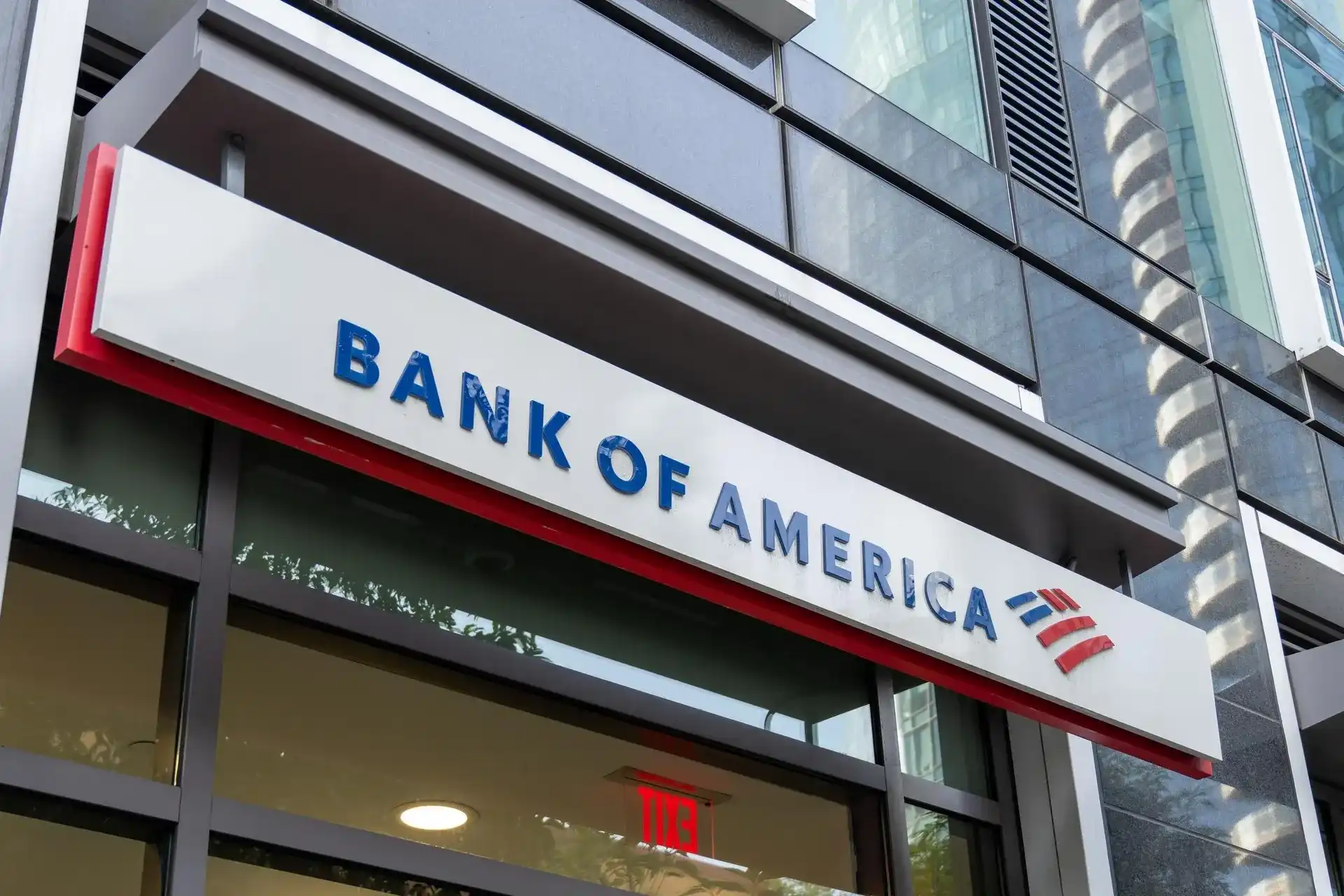
Bank of America Quietly Positions: Could $6 Trillion in Bank Deposits Flow into Stablecoins?

Bank of America (BofA) is making strategic moves in digital assets, appointing senior leaders to advance a platform covering stablecoins, tokenized deposits, custody, and crypto settlement. This comes amid a broader discussion about the potential migration of trillions in bank deposits to stablecoins. A cited TBAC report estimated up to $6.6 trillion in transactional deposits could be at risk of moving to stablecoins long-term, a point BofA's CEO previously conditioned on stablecoins being allowed to pay interest. The regulatory landscape is evolving, with the GENIUS Act setting a final implementation deadline for January 2027. Major banks, however, are not waiting; JPMorgan, Citi, BofA, and others are already developing tokenized deposit networks and services. Industry observers note that while retail crypto trading is sluggish, institutional adoption of stablecoins for real-world use cases is driving growth. Despite the activity, some analysts remain cautious, noting banks have a long history of blockchain announcements and that true structural change is slow. The stablecoin market itself has seen a recent dip from its peak. Optimistic projections, however, foresee significant growth, with stablecoin settlement volume already reaching $33 trillion in 2025. The race is on for the post-January 2027 landscape, where regulatory clarity is expected to accelerate the fusion of traditional finance and crypto.

marsbit13h ago

Bank of America Quietly Positions: Could $6 Trillion in Bank Deposits Flow into Stablecoins?

marsbit13h ago

a16z: The 'Convergence of DeFi and TradFi' is a False Proposition

Title: a16z: "The Fusion of DeFi and TradFi" is a False Proposition In the crypto industry, a common vision is that DeFi and TradFi will merge, creating a hybrid system. This article argues this is largely incorrect. The more honest trajectory is that TradFi will adopt specific blockchain components that improve its existing operations—reducing costs, improving settlement, expanding distribution, and tightening client control—without embracing the core tenets of decentralization like open access or permissionless execution. This is not a fusion but the emergence of a new category: programmable financial infrastructure optimized for institutional constraints, running on blockchain rails. Institutions adopt components like atomic settlement, shared ledgers, and programmable money only when they improve efficiency without compromising control or compliance (e.g., KYC, AML). Projects from J.P. Morgan or BlackRock use blockchain's technical attributes while deliberately discarding DeFi's permissionless nature. For entrepreneurs, this presents two distinct, parallel opportunities. The first is building infrastructure that institutions are ready to adopt today, validating the technology and bringing real volume on-chain. The second is continuing to build the open, crypto-native DeFi system that institutions aren't yet ready for. These paths are complementary, not competitive. The open network remains the primary lab for innovation, whose validated components institutions later adapt. Successful companies must choose their target market clearly. Building for institutions requires understanding procurement, compliance, and risk models, which differs fundamentally from building for open networks focused on developers and composability. The future may see both layers relying on the same public blockchain settlement layer, but convergence won't happen through one assimilating the other. TradFi isn't adopting DeFi; it's selectively using parts that fit its model.

marsbit07/16 13:54

a16z: The 'Convergence of DeFi and TradFi' is a False Proposition

marsbit07/16 13:54

The 'Great Divergence' of the Crypto Market in 2026: BTC Bear Market, but BlackRock, Franklin Templeton, and JPMorgan Are Simultaneously Doing One Thing

"2026 Crypto Market 'Great Divergence': BTC Bearish, But BlackRock, Franklin, JPMorgan Are Simultaneously Building Infrastructure." In July 2026, amidst BTC struggling at $62K, seven key events signal a profound shift: the 'Great Divergence' between price action and underlying infrastructure development. Franklin Templeton's CIO notes a "big disconnect" between price and fundamentals. Meanwhile, major institutions are advancing real-world blockchain adoption: BlackRock, Goldman Sachs, and JPMorgan join a UK government-backed tokenization taskforce targeting repo and gilts; Hyundai pilotes USDT for cross-border trade settlement; Bolivia considers integrating USDT into its national payment system; and Robinhood's new blockchain sees rapid adoption. This activity represents a quiet infrastructure bull market, driven by institutional strategy and long-term regulatory roadmaps, not short-term crypto price cycles. The core narrative is shifting from speculative price action to foundational utility. Infrastructure development—focused on upgrading traditional finance, enabling real-world payments, and tokenizing assets—is now decoupled from BTC's volatility. Historical parallels (e.g., dot-com bust/AWS birth, 2018 crypto winter/DeFi Summer) show that infrastructure built during downturns often becomes the next cycle's "toll booth." The critical question is no longer "Will BTC drop further?" but "Who will own the tolls when this new infrastructure is complete?" While BTC remains a key liquidity anchor, the valuation logic for crypto's real-world utility is increasingly separate from its most traded asset's price.

marsbit07/15 04:09

The 'Great Divergence' of the Crypto Market in 2026: BTC Bear Market, but BlackRock, Franklin Templeton, and JPMorgan Are Simultaneously Doing One Thing

marsbit07/15 04:09

Will the Ethereum Foundation Evolve into a 'Mascot'? Diversified Organizations Are Fragmenting Its Functions

The Ethereum Foundation (EF) is undergoing significant internal turmoil and functional erosion. Following its largest-ever layoff of 54 staff (20% of its workforce) and a major organizational restructuring announced in June, its Protocol Support Team has been officially dissolved. This comes alongside the high-profile resignation of key figures like co-executive director Xiaowei Wang, bringing senior departures this year to at least eight. Criticism of EF's rigid structure, opaque decision-making, and perceived lack of a clear value narrative for ETH has intensified within the community. The layoffs have catalyzed the emergence of independent, non-profit organizations like Ethlabs and Ethereum Institutional, founded by former EF researchers and members. These entities are now taking on core functions such as protocol research/development and institutional adoption, effectively fragmenting the EF's traditional leadership role. Concurrently, EF's security team is adapting to technological change, deploying specialized AI agents to audit Ethereum's codebase, which successfully discovered a critical vulnerability (CVE-2026-34219). While EF states AI complements rather than replaces researchers, it signals a potential future shift in its operational model. Faced with these challenges—internal restructuring, talent drain, the rise of competing organizations, and AI integration—the Ethereum Foundation appears to be stepping back from a central commanding role. Analysts and community observers speculate it may increasingly transition towards a symbolic "ecosystem mascot" function, while decentralized initiatives drive Ethereum's future growth and institutional adoption.

marsbit07/12 05:30

Will the Ethereum Foundation Evolve into a 'Mascot'? Diversified Organizations Are Fragmenting Its Functions

marsbit07/12 05:30

Countdown to the CLARITY Act: 25 Days Left—What Will Happen to the Crypto Market if It Fails to Pass Before the August Recess?

"The CLARITY Act, a key US crypto market structure bill, faces a tight deadline with only 25 working days left before the Senate's August 10 recess. The bill aims to clarify SEC/CFTC jurisdiction and establish a non-security path for decentralized tokens. Despite passing the House in 2025 and a Senate committee in May 2026, final negotiations have stalled over ethics and law enforcement provisions, jeopardizing the 60 Senate votes needed. If the bill fails to pass before the recess, its chances in 2026 drop significantly, with prediction markets giving only a 40% probability. Analyst Galaxy Digital has lowered its 2026 passage odds to 50%. Failure would likely lead to continued 'slow bleeding' in crypto markets, as seen in June's record $4.5 billion net outflow from US Bitcoin ETFs. XRP, which stands to gain permanent commodity status from the bill, could lose its 'regulatory premium.' Bitcoin and Ethereum, already classified as commodities via a joint agency interpretation, would face less direct impact but broader regulatory uncertainty would persist, delaying institutional capital and DeFi innovation. The path forward includes: 1) Passage before August (a major catalyst), 2) Delay to 2027 (extending market uncertainty), or 3) Failure, requiring the bill to be reintroduced in the next Congress. While delay is a setback, the bill's progress indicates the US is closer than ever to resolving crypto regulatory ambiguity."

marsbit07/03 09:06

Countdown to the CLARITY Act: 25 Days Left—What Will Happen to the Crypto Market if It Fails to Pass Before the August Recess?

marsbit07/03 09:06

活动图片