# Humanoid Related Articles

HTX News Center provides the latest articles and in-depth analysis on "Humanoid", covering market trends, project updates, tech developments, and regulatory policies in the crypto industry.

Unitree Investors Jointly Heavy Bet on an Embodied Team

Unibot's early investors, including Meituan, Sequoia Capital, and Matrix Partners, have jointly invested in MiaoDong Technology, another humanoid robotics startup. Founded by former DJI employees—CEO Gao Jianrong, a 9-year DJI veteran who led multiple core business units, and CTO Yang Shuo, who previously worked in Tesla's Optimus team—MiaoDong is known for its combined expertise in hardware productization and advanced robotics cognition. Their core strategy centers on in-house motor R&D and full-stack software-hardware capabilities. The company recently made headlines with its first product, Beni, a wheel-legged "camera robot" designed for low-angle, ground-level filming and personal companionship. Successfully launched on Kickstarter, Beni set a record for the highest fundraising amount in the platform's robotics category. It received a perfect 10/10 rating from influential tech reviewer Marques Brownlee (MKBHD). Beni features capabilities like autonomous obstacle avoidance, the ability to jump 25cm, and self-righting after a fall. MiaoDong plans to leverage the technological and user data feedback from Beni's consumer launch to inform the development of future home-use humanoid robots. The company emphasizes a product-first, user-centric approach, prioritizing real-world applications and reliability over rapid, demo-focused scaling. With Beni set for global release in October and an internal target to sell millions of units, MiaoDong aims to establish itself as a significant player in the embodied AI space through steady, product-driven growth.

marsbit22h ago

Unitree Investors Jointly Heavy Bet on an Embodied Team

marsbit22h ago

Not Being a Follower of Silicon Valley: A Few Young PhD Students Bet on the Integrated Brain of Bipedal Humanoid Robots

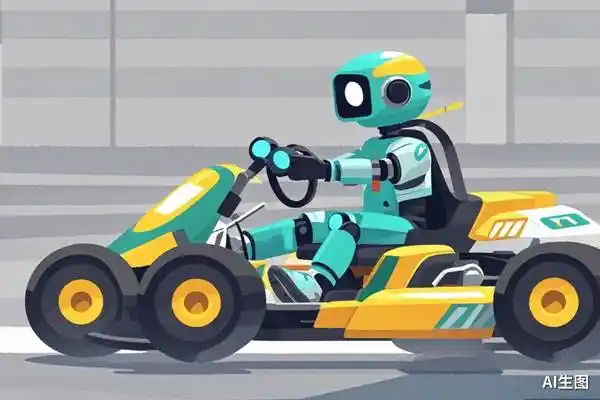
This article profiles GongShengZhiXing, a startup founded by 1996-born Ding Pengxiang with a core team of Ph.D. students, all in their twenties. They are developing an end-to-end, integrated "brain" (base model) for bipedal humanoid robots, focusing on full-body dynamic coordination rather than the industry's more common modular, layered approach. The team's stance is that for humanoids to integrate into human environments, an end-to-end model—where a single system handles perception, decision-making, and control directly—is ultimately more efficient and scalable than layered architectures that separate high-level "brain" and low-level "cerebellum" functions. They argue layered systems create information bottlenecks. A key demo shows their robot driving a go-kart at high speed, demonstrating synchronized hand-eye-foot coordination and multi-contact balance—a complex task highlighting their focus on whole-body dynamics over simple kinematics. Technically, their model outputs commands at the joint level and incorporates a "Motion Expert" module and techniques like DriftDistill to simultaneously learn task completion and physical stability from data. Acknowledging challenges like severe data scarcity for full-body mobile manipulation, they employ methods like TrajBooster to synthesize training data. Ding Pengxiang believes true "emergence" of new skills at the joint-movement level is the goal, but commercial viability likely requires scaling to millions of training hours. The team aims not to follow Silicon Valley trends but to pioneer and potentially set global standards in this nascent, unconverged field of embodied AI.

marsbitYesterday 00:51

Not Being a Follower of Silicon Valley: A Few Young PhD Students Bet on the Integrated Brain of Bipedal Humanoid Robots

marsbitYesterday 00:51

Jensen Huang's Daughter: From Chef to an $8 Million Annual Salary

Madison Huang, daughter of NVIDIA founder Jensen Huang, recently made a rare public appearance in Beijing during the 2026 World Robot Conference. As the Senior Director of Product and Technology Marketing for NVIDIA's Physical AI Platform, with an annual salary of approximately $1.2 million, her visit focused on evaluating leading Chinese robotics companies like UBTech, Unitree, and others. This highlights NVIDIA's strategic interest in the burgeoning Chinese robotics ecosystem, a key battleground for the development of Physical AI—technology that enables machines to understand and interact with the physical world. Huang's career path is unconventional. Initially pursuing her passion, she studied culinary arts, worked as a chef, and later held a marketing role at LVMH. She joined NVIDIA as an intern in 2020 after completing an MBA, quickly rising through the ranks. Her brother, Spencer Huang, followed a similar path, closing a cocktail bar he co-founded to also join NVIDIA, where he now works on robotics software. Jensen Huang has publicly addressed nepotism concerns, humorously noting that some "second-generation" employees outperform their parents. The conference itself underscored China's vibrant robotics sector, marked by Unitree's recent blockbuster IPO and a pipeline of companies preparing to go public. While hardware development and manufacturing are advancing rapidly, industry leaders like Wang Xingxing of Unitree point to the next critical challenge: developing the "brain" or AI that allows robots to perform diverse, unseen tasks based on simple instructions. With massive manufacturing scale and diverse real-world testing scenarios, China is positioned as a central player in the global race to define the future of robotics.

marsbit2 days ago 07:36

Jensen Huang's Daughter: From Chef to an $8 Million Annual Salary

marsbit2 days ago 07:36

Cao Xi and Zhiyuan Invested in a Post-95s Founder

Current Robotics, a humanoid intelligence company, recently disclosed it has completed seed, angel, and pre-A funding rounds, raising a total of several hundred million RMB. Investors include prominent institutions like BV Baidu Ventures, Hillhouse Capital, Oasis Capital, Monolith, and Qianhai Ark, as well as strategic partners like Zhijin (Agibot), Xinghai Map, and Jike Technology. The founder behind the company is Zhu Yichen, a talented individual born in the 1990s and a former head of embodied AI at Midea Group. He and his team are pioneers in China for early research on VLA and world models. Their work, cited by Physical Intelligence, laid the technical foundation for Current Robotics. Current Robotics focuses on a key gap in embodied AI: **Whole-Body Dexterous Manipulation**. Traditional approaches often separate mobility and manipulation, but real-world tasks require seamless, coordinated movement. Their solution, the base model **Curr-0**, integrates navigation, balance, and dexterous hand control into a single, end-to-end trained policy, enabling robots to perform tasks like moving objects through doorways or clearing a table while in motion. To address data scarcity, the company developed a self-researched wearable data collection system (**HumanEx**) that captures human motions, forces, and visual perspectives in real-world settings like homes and offices, providing rich, scalable, and cost-effective physical data. For rapid evaluation and iteration, Current Robotics has pioneered the use of world models for strategy assessment and post-training. Their recently released **CurrentWorld-0** is an interactive world simulator that supports multi-robot platforms, multi-camera perspectives, and force/tactile prediction. It allows for policy testing in simulated environments, identification of failure modes, human-in-the-loop correction, and subsequent training with the generated corrective data, forming a complete feedback loop. Current Robotics aims to build an infrastructure for embodied intelligence, creating a closed-loop system that connects real human behavior data, whole-body robotic skill learning, and efficient world model-based evaluation and improvement. This approach is designed to accelerate the path for robots to move from demonstrations to performing stable, useful work in the complex, real world.

marsbit08/20 02:56
Cao Xi and Zhiyuan Invested in a Post-95s Founder

marsbit08/20 02:56

Wang Xing Is Happy, Wang Xingxing Is Not Necessarily

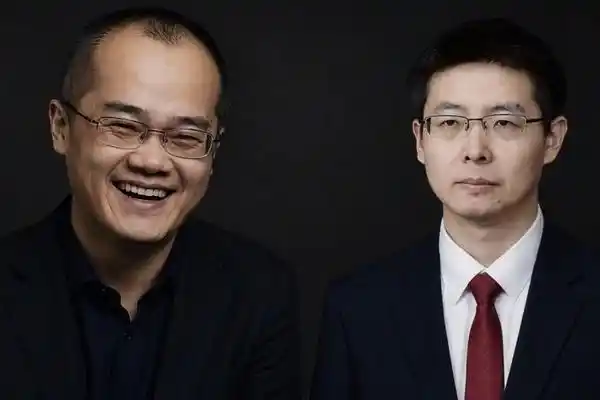
Yu Shu Technology's (Unitree) IPO on the STAR Market sparked discussions centered on wealth creation: the surge in founder Wang Xingxing's net worth, the substantial gains for early investors like Meituan's Wang Xing, and employee stock wealth. Yet, a key observation from the listing ceremony was the founder's calm demeanor, contrasting with the celebratory atmosphere. The article explores this divergence. For investor Wang Xing, the IPO represents a successful bet on embodied AI and robotics as the next foundational tech wave, with Meituan's stake now highly valuable. For founder Wang Xingxing, the milestone brings a new set of pressures. His company, now valued at ~341.8 billion yuan, must transition from proving technological feasibility (which it has done with its quadruped and humanoid robots) to delivering scalable commercial success. The market's high valuation is an advance payment for a future that Yu Shu must now build. Post-IPO, Yu Shu faces the critical challenge of moving beyond impressive demos to creating sustainable businesses. This means making robots reliable, affordable, and indispensable for both consumers and industrial clients, proving their real-world economic value. As the "first stock" in embodied AI on the STAR Market, Yu Shu also becomes a public benchmark for the entire industry, its performance influencing sector-wide expectations. Ultimately, while investors can celebrate realized gains, Wang Xingxing's work is just beginning. He must now manage a public company, meet heightened market expectations, and navigate the complex journey from innovative engineering to large-scale commercial execution. The IPO is a starting line, not a finish line.

marsbit08/20 01:46

Wang Xing Is Happy, Wang Xingxing Is Not Necessarily

marsbit08/20 01:46

Ten Years, Wang Xingxing's Comeback: Unitree Valued at 400 Billion

Over a decade ago, Wang Xingxing, a 29-year-old with a passion for robotics but little funding, demonstrated his struggling robot dog to investors in Hangzhou. In 2019, with his company Unitree nearly out of cash, he captured the attention of Sequoia Capital China's managing director Li Yannan. Despite initial skepticism about the niche market for robot dogs, Wang's vision and deep technical conviction led Sequoia to make an initial seed investment. This marked a turning point. Following Sequoia's lead, a wave of prominent investors including Meituan, Tencent, Alibaba, and various venture capital and state-backed funds joined subsequent funding rounds. Wang's relentless focus and Unitree's technological advancements propelled the company to become a global leader in humanoid robotics. On August 19th, 2027, Unitree Robotics debuted on Shanghai's STAR Market as the first listed humanoid robotics company in China. Its shares skyrocketed over 500% at opening, reaching a market valuation of approximately 400 billion yuan. Wang Xingxing became one of the wealthiest individuals of his generation on the exchange, while Sequoia China, having invested across multiple rounds, remained a major shareholder. The story is celebrated as a classic outlier's triumph—a founder without elite credentials achieving success through pure belief and perseverance. Unitree's IPO is seen as a major milestone for China's embodied AI industry, providing a valuation benchmark and accelerating the sector's maturation. As Wang once stated, he aims to be "a small boat riding the mighty torrent of technology." His journey symbolizes the beginning of a new narrative for Chinese robotics on the global stage.

marsbit08/19 02:21

Ten Years, Wang Xingxing's Comeback: Unitree Valued at 400 Billion

marsbit08/19 02:21

CATL Invests in a 00s Graduate from Harbin Institute of Technology

Contemporary Amperex Technology Co., Limited (CATL) has exclusively invested in the Pre-A round of RoboParty, a company founded by 22-year-old Huang Yi. A former student at Harbin Institute of Technology, Huang built a bipedal humanoid robot in his dorm room and later dropped out to launch RoboParty in Shanghai. The company focuses on developing a fully open-source platform for humanoid robots, combining self-developed hardware, operating systems (Party OS), and foundational models. RoboParty's strategy emphasizes open-source collaboration to accelerate development and build a developer ecosystem, positioning itself as foundational infrastructure for embodied AI. Since its 2025 founding, the team—composed largely of top-tier university graduates—has secured six funding rounds in eight months, with investors including Matrix Partners, Xiaomi, and now CATL. This investment by CATL's corporate venture arm signals strong industry confidence in RoboParty's potential for real-world manufacturing and complex scenarios. Huang Yi prioritizes technological excellence and developer community growth over rapid commercialization. The company has already garnered significant interest from developers and research institutions globally. With a focus on continuous, rapid iteration and open innovation, RoboParty aims to prove the versatility of humanoid robots and drive the field toward an open-source future.

marsbit08/03 10:07

CATL Invests in a 00s Graduate from Harbin Institute of Technology

marsbit08/03 10:07

活动图片