# Humanoid Robot Related Articles

HTX News Center provides the latest articles and in-depth analysis on "Humanoid Robot", covering market trends, project updates, tech developments, and regulatory policies in the crypto industry.

Just 3.5 Months After Its Founding, It Started Making External Investments: The Embodied AI Sector Is Collectively 'Investing While Fundraising'

A counterintuitive trend is emerging in China's embodied AI sector: numerous startups that are still actively raising capital themselves are now making strategic investments in other companies. An analysis of 29 such enterprises reveals a pattern of "fundraising while investing," where companies, often still in early funding rounds, rapidly deploy capital into the ecosystem. These 29 investment entities, primarily based in the Pearl River Delta and Yangtze River Delta regions, have executed over 125 investment deals. Notably, 17 of them (59%) are humanoid robot manufacturers, making them the most active investors. The trend shows that newer companies are investing faster; firms founded after 2023 made their first external investment in an average of just 22.8 months, with one company, Poke Robotics, doing so within 3.8 months of its founding. Zhiyuan Robot (智元机器人) stands out as the most active corporate venture capital (CVC) player, completing 37 investments in 23 months. A more complex, networked investment structure is also forming, where companies like Lingchu Intelligent (灵初智能) and Lingxin Qiaoshou (灵心巧手), which received investments from larger players, have themselves become active investors, extending the strategic reach of capital down the supply chain. This collective shift from a few large players to widespread participation signals a strategic move to use capital as a lever to accelerate industry consolidation. Companies are seeking to quickly integrate critical supply chain elements—such as dexterous hands, joint motors, and AI data platforms—into their ecosystems to gain a competitive edge in a rapidly evolving, highly contested market window. The strategy aims to compress the decade-long process of traditional supply chain integration into just a few years, though it carries risks related to technology bets and ongoing capital burn. As the sector's IPO pipeline grows, this "fundraise and invest" model may soon become a standard industry practice.

marsbit13h ago

Just 3.5 Months After Its Founding, It Started Making External Investments: The Embodied AI Sector Is Collectively 'Investing While Fundraising'

marsbit13h ago

10000 Hours of Human Data, Trains the World's First Whole-Body Mobile Manipulation Implicit World-Action Model

"Being-M0.7" is the world's first latent world-action model for whole-body mobile manipulation in humanoid robots, developed by Zhi Zai Wu Jie (Beyond Being). Trained on over 10,000 hours of human-centric multimodal data, it aims to overcome key industry challenges: the high cost and scarcity of real robot demonstration data, the computational inefficiency of pixel-level video prediction models, and the lack of full-body coordination in existing approaches. The model is based on a Vision-Motion Mixture-of-Transformers (MoT) architecture, which allows training on a mixture of paired video-motion data, pure video data, and pure motion sequences. A key design is a unified motion representation that bridges human and robot morphology, enabling knowledge transfer from vast human behavioral data to specific robot control. After pre-training on human data, the model is adapted to a real robot (Unitree G1) using a small amount of teleoperated demonstration data via a lightweight "Action Expert" module. This process decouples low-frequency world planning from high-frequency motion control. The model was tested in four challenging real-world demos: fishing a toy fish from water (liquid interaction), retrieving an object using a mirror (visual reasoning), a multi-step pick-and-place task, and obstacle avoidance while carrying a box. In comparative tests against other models, Being-M0.7 showed stronger performance in tasks requiring indirect reasoning and full-body coordination. This work represents a shift in humanoid robotics competition from hardware spectacle to model capabilities rooted in scalable data and training paradigms, using human experience as a foundation for physical world understanding and action.

marsbit07/15 01:48

10000 Hours of Human Data, Trains the World's First Whole-Body Mobile Manipulation Implicit World-Action Model

marsbit07/15 01:48

Is the iPhone Moment for Embodied AI Coming Soon?

Is the "iPhone moment" for embodied AI approaching? This article, based on a roundtable discussion, presents expert insights on the current state and future of embodied AI. The consensus is that the pivotal "iPhone moment" is still distant. The field is likened to the "brick phone" era, with technology paths—such as VLA and world models—not yet converging. While robotic "motor skills" (e.g., walking) have matured, the "brain" (decision-making, generalization) remains far from commercial readiness. A major bottleneck is data: an estimated tens of millions of data points are needed for a breakthrough, but only around 500,000 currently exist globally. Currently, cost remains prohibitive for widespread labor replacement, making the economic case challenging. However, experts see a three-tiered market potential: a billion-level market for emotional companionship (e.g., entertainment, basic care), a trillion-level market for commercial services (e.g., guides, receptionists), and a massive, long-term opportunity for physical labor in factories and homes. The discussion suggests that while humanoid robots face hurdles, non-humanoid embodied AI applications (like existing service robots) can be deployed sooner. The ultimate vision is for AI to operate seamlessly in the physical world, not just behind screens. Regarding AI tools, participants noted their widespread use for boosting efficiency in coding, research, and teaching. However, they warned against over-reliance due to risks of AI "deception" and the erosion of critical thinking, emphasizing that core judgment must remain with humans. In summary, embodied AI holds immense promise but requires significant progress in brain models, data collection, and cost reduction before achieving its transformative potential. Its development is expected to be gradual, advancing through specific use cases rather than a single explosive moment.

marsbit07/14 05:07
Is the iPhone Moment for Embodied AI Coming Soon?

marsbit07/14 05:07

Unitree's IPO Frenzy: The Real Mystery is How It Will Spend the 42 Billion Raised

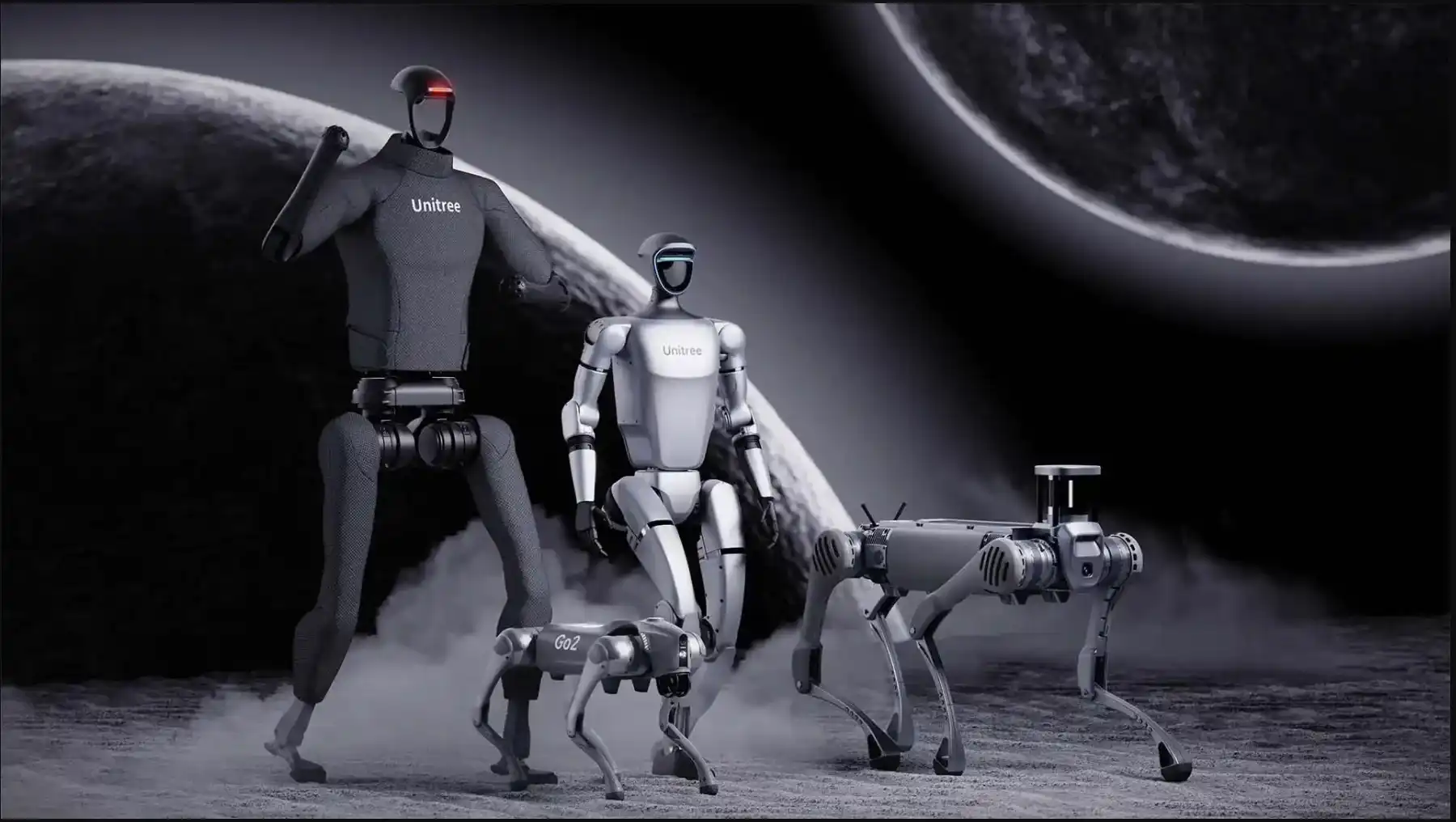
Unitree, a Chinese robotics company, is set for a public listing after its IPO registration was approved by regulators. The company, which started with quadruped robots and has expanded into humanoids, plans to raise approximately 4.2 billion yuan through its offering. The article traces Unitree's rapid growth from its founding in 2016 to its current status. It highlights key milestones like the 2021 CCTV Spring Festival Gala performance, the 2023 launch of its affordable Go2 robot dog and the H1 humanoid robot, and a series of subsequent product launches. By 2025, the company reported revenue of 1.71 billion yuan, profitability, and sales exceeding 5,500 humanoid robots. As the first publicly-listed humanoid robot company on China's STAR Market, Unitree's main challenges are sustaining growth and deploying its newly raised capital effectively. The humanoid robot sector in China is crowded, with over 140 companies. Competitors include UBTech (focusing on industrial and consumer markets), Fourier, and international players like Tesla Optimus and 1X NEO. The article outlines three critical challenges for Unitree: establishing a strong second product line beyond its quadruped robots, maintaining its price advantage while ensuring quality, and successfully advancing its embodied AI capabilities through partnerships like the one with NVIDIA for the H2 Plus platform. Unitree's likely strategy involves a "developer tools + industry benchmarks" approach: using low-cost models like the R1 and G1 to build developer adoption and volume, leveraging high-end platforms for AI training, and securing pilot projects in sectors like logistics and manufacturing to build case studies. The company's future success hinges on converting its current momentum in shipments and pilot programs into sustainable, large-scale commercial contracts as the broader market evolves.

marsbit07/07 09:32

Unitree's IPO Frenzy: The Real Mystery is How It Will Spend the 42 Billion Raised

marsbit07/07 09:32

Jensen Huang: Vera Rubin Full Mass Production, AI Agent a Key Focus, Challenging Intel to Target the Next-Generation AI PC Gateway

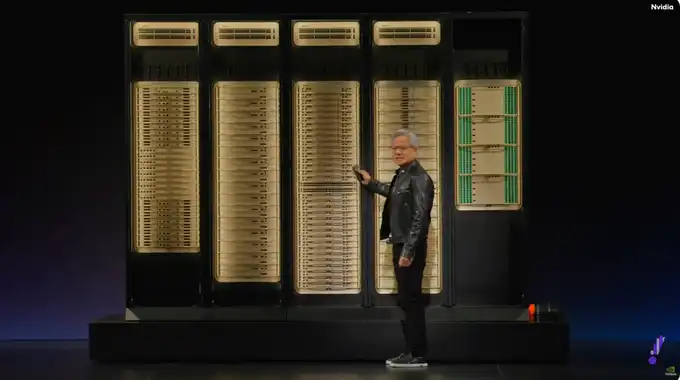
NVIDIA CEO Jensen Huang delivered the keynote speech at GTC Taipei 2026, announcing several major product launches and strategic directions. The company's Vera Rubin architecture is now in full-scale production, with OpenAI, Anthropic, and SpaceX among the first customers. NVIDIA highlighted AI Agent as a key future focus, introducing the Vera CPU designed for AI agents and the Vera BlueField-4 STX for secure, chip-level AI storage processing. A significant move involves challenging Intel in the PC market. NVIDIA, in collaboration with MediaTek, is developing the RTX SPARK PC chip (manufactured by TSMC) for Windows systems, set to launch this fall for laptops and desktops. This signals NVIDIA's push into the next-generation AI PC arena, aiming to provide a vertically integrated core computing platform for the entire Windows ecosystem, similar to Apple's approach. Other announcements include the new Nemotron 3 Ultra AI model and the NVIDIA DSX platform, described as a complete "playbook" for building AI factories, allowing performance simulation and validation before physical deployment. In automotive, the DRIVE Hyperion platform was positioned as a global robotaxi platform, with major Chinese automakers like BYD, Geely, Zeekr, Xiaomi, and Pony.ai already adopting or developing autonomous driving solutions based on it. The Alpamayo 2 super open inference model for robotaxis was also introduced. For robotics, NVIDIA unveiled the Isaac GR00T humanoid robot reference platform for academic research and a large open-source agent tools and skills suite for Physical AI. The company plans to collaborate with global humanoid robot manufacturers, including China's Unitree, whose H2 Plus robot served as the reference hardware for the GR00T platform demonstration.

marsbit06/01 06:14

Jensen Huang: Vera Rubin Full Mass Production, AI Agent a Key Focus, Challenging Intel to Target the Next-Generation AI PC Gateway

marsbit06/01 06:14

Unitree Robotics' IPO Hearing Countdown! Dissecting the 'Ice and Fire' in the Prospectus of the 'First Humanoid Robot Stock'

Unitree Robotics, poised to become China's first publicly listed humanoid robot company, is set for its IPO review on the Shanghai Stock Exchange. Its prospectus reveals a company undergoing a rapid transformation. Once primarily a quadruped robot (robodog) maker, humanoids now account for over half of its revenue as of 2025, with the company selling approximately 5,500 units in that year—reportedly the highest global volume. Current demand, however, is heavily concentrated in research and education (74% of humanoid sales), while commercial and consumer use is largely for promotional "display" purposes. Industrial applications remain limited (~9% of sales), though quadruped robots see more mature use in industrial inspections. A key strength is Unitree's vertically integrated model, self-designing and manufacturing critical components like motors and actuators. This has driven manufacturing costs down and pushed gross margins up to nearly 60%—exceptionally high for a hardware company. Financially, revenue surged 335% to about $252 million in 2025, with the company achieving profitability. Its IPO targets a valuation of $6-7 billion, planning to invest nearly half the raised capital into AI model development. This includes funding for Vision-Language-Action (VLA) and World Model + Action (WMA) models, highlighting its strategic focus on building a software "brain" to complement its hardware leadership and secure a long-term competitive edge. The prospectus showcases Unitree's manufacturing prowess and growth but also underscores the early, niche stage of widespread humanoid robot commercialization beyond academia and demonstration.

marsbit05/26 03:22

Unitree Robotics' IPO Hearing Countdown! Dissecting the 'Ice and Fire' in the Prospectus of the 'First Humanoid Robot Stock'

marsbit05/26 03:22

活动图片