# Financing Related Articles

HTX News Center provides the latest articles and in-depth analysis on "Financing", covering market trends, project updates, tech developments, and regulatory policies in the crypto industry.

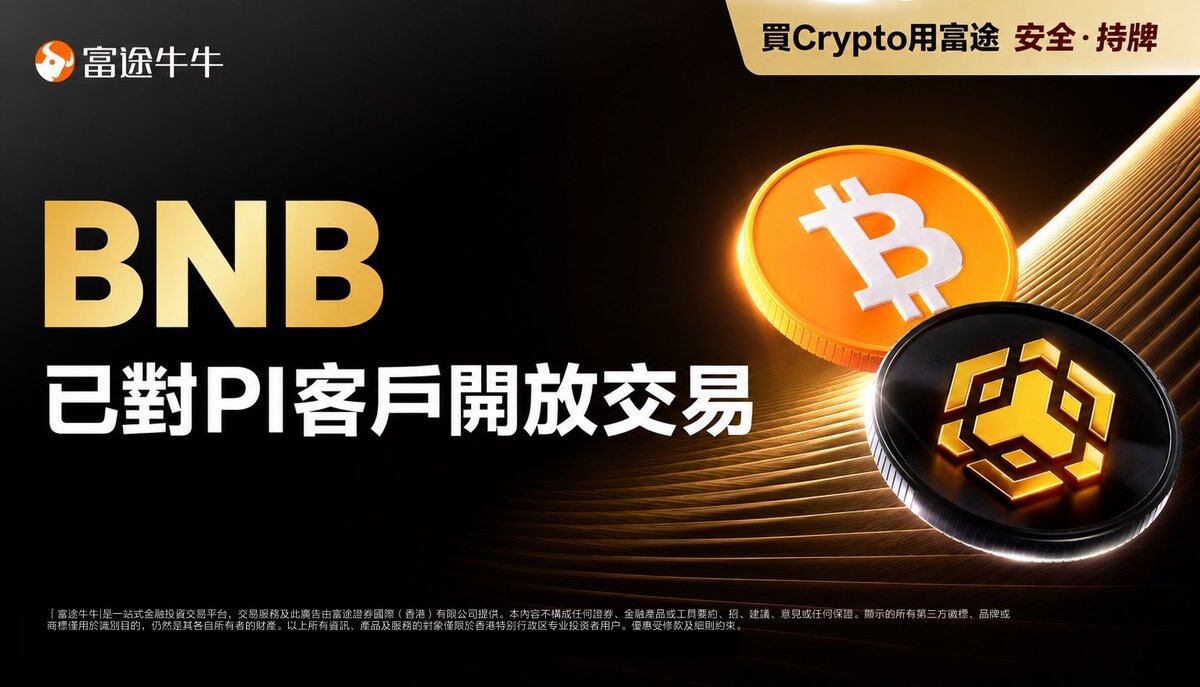
Futu Hong Kong Lists BNB: A Counterattack in the Crypto Exchange Arena Amid Regulatory Pressures

Futu Securities, a long-established brokerage, has launched real-time BNB trading for Hong Kong's compliant professional investors, becoming the first licensed broker in the city to offer an order book trading pair for BNB. This expands its available cryptocurrencies to 21 mainstream coins, including BTC, ETH, and SOL. The move leverages its self-built PantherTrade platform, which complies with Hong Kong Securities and Futures Commission standards. This strategic push into cryptocurrency trading comes as Futu faces significant regulatory pressures globally. In mainland China, authorities imposed a substantial fine and mandated a two-year wind-down period for its cross-border business with mainland investors. Concurrently, it faces lawsuits in the U.S. over alleged insider trading and was ordered by Japanese regulators to suspend new account openings for three months due to compliance failures. Amid these challenges in its traditional brokerage operations, Futu is seeking growth through its virtual asset services. It first received Hong Kong SFC approval for crypto trading in July 2024 and has since expanded these services to markets like Singapore and the U.S. In a further development this June, it gained approval to offer virtual asset margin financing in Hong Kong, allowing clients to use traditional securities as collateral for crypto trades. Futu's Q1 2026 results showed strong performance in its Hong Kong brokerage, with a dominant local market share. With mainland client assets declining, its Hong Kong crypto business is gaining strategic importance. This move marks a significant step in traditional brokerages competing directly with crypto exchanges for global capital flows.

Odaily星球日报Yesterday 11:59

Futu Hong Kong Lists BNB: A Counterattack in the Crypto Exchange Arena Amid Regulatory Pressures

Odaily星球日报Yesterday 11:59

From StepFun to Galaxy Robots: The Capital Migration Path Behind WAIC Exhibiting Companies

From Stellar Steps to Galactic Generals: The Capital Migration Route Behind WAIC 2026 Exhibiting Enterprises The 2026 World Artificial Intelligence Conference (WAIC) in Shanghai showcased over 1100 exhibitors. Analyzing their financing activities over the past 18 months reveals key capital trends in China's AI industry, with the total raised exceeding 100 billion RMB. **Large Language Models: IPO Window Opens, Capital Concentrates on Leaders** This sector attracted the most capital. Companies like Zhipu and MiniMax have completed Hong Kong IPOs, setting exit benchmarks. StepFun (Stellar Steps), a star example, saw its valuation soar to an estimated $12B through rapid, escalating funding rounds—from millions in 2023 to a $2.5B Pre-IPO round in mid-2026 led by industrial players like ZTE. The trend shows a shift: IPO paths are clear, industrial capital is entering for strategic deployment, and large, concentrated funding rounds favor commercially viable leaders. **Embodied AI: Hyper-Compressed Financing Cycles** This field entered a capital explosion phase. Companies like Galbot (Galactic General) epitomize the trend, raising over 7B RMB across 5 rounds in under 2 years. Early VC backing quickly gave way to investments from industrial giants (Meituan, CATL, SAIC) and finally "national team" funds, signaling its status as a strategic industry. The compressed fundraising pace, as seen with other leaders, indicates high consensus on the sector's potential and intense competition. **AI Chips: Domestic Substitution Enters Deep Waters** Represented by companies like Moore Threads (which completed an 8B RMB IPO as the "first domestic GPU stock"), this sector differs. It faces longer R&D cycles, higher capital thresholds, and stronger policy reliance. Funding often involves state-backed capital and telecom operators, with lower VC participation compared to other AI sectors, reflecting the industry's inherent challenges. **Capital Flow Panorama: Five Key Trends** 1. **Winner-Takes-Most:** Funding is highly concentrated in top players within each sector. 2. **Embodied AI as a New Growth Pole:** It attracts rapid, large-scale funding from industrial chains, akin to the automotive sector. 3. **Industrial Capital Ascendancy:** Strategic investors like ZTE and SAIC are replacing pure financial VCs for technology synergy. 4. **"National Team" Prominence:** State-guided investment funds are actively co-investing, aligning AI with national strategy. 5. **Diversified Exit Paths:** Beyond IPOs, options like M&A and strategic investment are increasing. **Conclusion: Capital is Not Omnipotent** While massive capital influx signals strong market confidence in China's AI outlook, it brings risks: reduced ecosystem diversity due to concentration, potential compromise of corporate independence, and valuation bubble concerns amidst compressed financing. The investor's motive behind a company often reveals more than its technical specs.

marsbit07/17 12:11
From StepFun to Galaxy Robots: The Capital Migration Path Behind WAIC Exhibiting Companies

marsbit07/17 12:11

Bitcoin Treasury Collateral Liquidation Countdown: Some Loans Only Give 12 Hours to Save the Day

"Bitcoin Treasury Collateral Liquidation Countdown: Some Loans Allow Only 12 Hours to Act" The rules for public companies borrowing against their Bitcoin (BTC) treasury reserves are becoming perilously strict. Loan agreements now stipulate that if the collateral value falls below a certain threshold—the "maintenance" or "margin call" level—borrowers may have as little as 12 to 24 hours to add more BTC or repay part of the debt. Failure to do so can grant lenders the right to sell the pledged Bitcoin. This is not a theoretical risk. In February 2024, at least three companies faced collateral pressure: Fold received a formal maintenance notice and added 50 BTC; Empery Digital breached its loan covenant, adding 576 BTC; and Nakamoto added 688 BTC to meet requirements. While no lender-initiated liquidations were reported, these events forced companies to act—selling BTC, refinancing, or repaying debt—to avoid default. Contract terms vary, but response windows are short. For example, USBC's amended loan allows a 12-hour period to post collateral after breaching the liquidation level, while Hut 8's new FalconX loan provides a 24-hour window for a margin call, with a possible 12-hour extension under specific conditions. Current disclosures from companies are inconsistent, making precise calculations of risk thresholds difficult. Factors like repayments, additional collateral, and contract-specific valuation rules all influence the collateral coverage ratio independently of Bitcoin's spot price. The key distinction is between a mandatory borrower response and an actual lender liquidation. So far, actions have been borrower-led. However, the mere existence of these loans transforms passive Bitcoin holdings into potential immediate liabilities. For investors, a company's reported "XX BTC held" can quickly become a forced sale trigger if prices drop and collateral calls are issued. As Bitcoin-backed financing grows, especially among miners, these contractual clocks are ticking.

marsbit07/15 03:13

Bitcoin Treasury Collateral Liquidation Countdown: Some Loans Only Give 12 Hours to Save the Day

marsbit07/15 03:13

Is the MicroStrategy Model Failing? Imitator Holding 30,000 Bitcoins Sees Pre-IPO Investors Backing Out

"The 'Bitcoin Treasury' model is facing a critical test. BSTR Holdings, a company founded by Adam Back and holding 30,021 Bitcoin, has called off its planned merger with SPAC Cantor Equity Partners I. The deal, which would have taken it public, fell apart as the attached private investment (PIPE) financing collapsed. This failure highlights a core vulnerability of the 'Bitcoin accumulation company' strategy popularized by MicroStrategy. The model relies on a key metric: mNAV, or the premium of a company's stock market value over the value of its Bitcoin holdings. This premium fuels a cycle where companies issue shares at a premium, use the cash to buy more Bitcoin, and theoretically increase the Bitcoin per share for investors. However, with Bitcoin's price down roughly 49% from its late-2024 peak, this premium has evaporated across the sector. Companies like American Bitcoin and Metaplanet are also under severe pressure. For BSTR, the lack of premium meant investors were unwilling to fund the original deal structure at the proposed terms. The companies are now renegotiating. The next SEC filing detailing any new agreement will be a crucial indicator. It will show if the model can be repriced for a low-premium environment by preserving Bitcoin holdings and investor commitments, or if it requires significantly diluting shareholders and scaling back ambitions. The outcome is a public stress test for the entire 'Bitcoin treasury' investment thesis."

marsbit07/13 06:09

Is the MicroStrategy Model Failing? Imitator Holding 30,000 Bitcoins Sees Pre-IPO Investors Backing Out

marsbit07/13 06:09

Financing Weekly Report | SBI Makes Consecutive Moves, Bets $125 Million on Gauntlet; Crypto Capital Continues to Flow to Trading and Infrastructure

Weekly crypto financing highlights show capital continues to flow into trading, compliance, and digital asset infrastructure, with traditional financial institutions like Japan's SBI Holdings playing a larger role. SBI made two major investments: a $125M exclusive investment in DeFi risk management and asset allocation platform Gauntlet, and leading a $76M Series C round for crypto exchange EDX Markets. Other notable crypto deals included: QIZ Security ($17M seed) for post-quantum cryptography management; TrueDAO ($10M strategic) for AI-powered DeFi infrastructure; KOR Protocol ($7.5M Series A) for an on-chain creative asset clearing platform; Tether's $20M strategic investment in Brazil's Mercado Bitcoin; and M1X Global ($5.5M seed) for sovereign financial infrastructure. The AI sector saw larger individual rounds. Prime Intellect raised $130M Series A for its decentralized AI protocol stack. AI legal services firm Norm raised $120M, reaching a $1.2B valuation. Voice AI company Gradium's total funding surpassed $100M. The report also notes a shift towards business models focused on specific enterprise-level AI infrastructure and application scenarios. Overall, the crypto primary market remains subdued, with nine deals totaling over $261M last week, centered on centralized finance, DeFi, and infrastructure.

marsbit07/13 03:41

Financing Weekly Report | SBI Makes Consecutive Moves, Bets $125 Million on Gauntlet; Crypto Capital Continues to Flow to Trading and Infrastructure

marsbit07/13 03:41

Tencent Heavily Invests in an IPO

"Tencent-Backed DPU Unicorn Leopard Cloud Intelligence Files for IPO on Shenzhen's ChiNext Board" Leopard Cloud Intelligence, a Shenzhen-based developer of Data Processing Unit (DPU) chips, has officially applied for an IPO on the ChiNext Board, aiming to become China's first publicly listed DPU company. Founded in August 2020 by Dr. Xiaoyang Xiao, a Stanford PhD graduate and serial entrepreneur who previously co-founded chip company RMI (acquired by Broadcom), the company focuses on the high-growth DPU sector. Its development accelerated following NVIDIA's formal introduction of the DPU concept in late 2020. The company has developed China's first high-performance, general-purpose programmable DPU SoC chip, boasting 400Gbps network bandwidth and claiming significant performance improvements and power savings over traditional solutions. Financially, Leopard Cloud's revenue grew exponentially from RMB 170,000 in 2023 to RMB 370 million in 2025, yet it remains unprofitable with substantial net losses. Its IPO application utilizes ChiNext's recently introduced fourth set of listing standards, which emphasize R&D and market valuation over short-term profitability. Tencent is the company's most significant backer and largest shareholder, holding a 19.78% stake after participating in multiple funding rounds. Other prominent investors include Sequoia Capital China, Shenzhen Capital Group, Five Dimensions Capital, and various government-guided funds from Shenzhen and Hangzhou. Pre-IPO, the company was valued at over RMB 14 billion. This listing is seen as a milestone for Shenzhen's semiconductor industry, complementing the recent successful IPO review of Yuexin Semiconductor (a Guangzhou-based wafer manufacturer) and signaling a wave of high-end hardware technology companies from the Greater Bay Area going public on the ChiNext Board.

marsbit07/12 08:06

Tencent Heavily Invests in an IPO

marsbit07/12 08:06

RWA Weekly: EU Proposes Revision of MiCA to Cover Tokenization and Non-EU Stablecoins; Swift and 17 Banks to Pilot Tokenized Cross-Border Payments

RWA Weekly: EU Proposes MiCA Revision for Tokenization and Non-EU Stablecoins; Swift to Pilot Tokenized Cross-Border Payments with 17 Banks During the statistical period of July 3-10, 2026, the RWA sector showed signs of recovery. The total on-chain market capitalization of RWAs rebounded to $33.12 billion, ending a prolonged decline. The stablecoin market cap also returned above $300 billion, with active addresses and holders increasing, indicating restored market vitality. Key regulatory developments include China promoting the use of digital yuan in consumption vouchers, the EU considering revisions to its MiCA framework to cover tokenization and non-EU stablecoins, and Kazakhstan authorizing stablecoin use for cross-border corporate and government payments. In Hong Kong, HSBC issued its first "digitally native" structured product. Major project updates feature Swift announcing readiness of its blockchain ledger for a 24/7 tokenized cross-border payment pilot involving 17 global banks. Ondo launched a perpetuals platform allowing tokenized stocks as collateral. Sony received conditional U.S. OCC approval to launch a stablecoin-focused trust bank in 2027. Tether plans to natively issue USDT on Bitcoin via the RGB protocol. Significant funding rounds saw Securitize planning to deploy over $400 million for acquisitions to expand its institutional tokenization business, while Tether invested $20 million in Brazil's Mercado Bitcoin to support its growth in on-chain financial services. Analysis highlights that stablecoins are evolving into global financial infrastructure with regional specializations and that institutions should consider international expansion to gain practical experience in the RWA tokenization space amidst evolving regulations.

marsbit07/10 09:08

RWA Weekly: EU Proposes Revision of MiCA to Cover Tokenization and Non-EU Stablecoins; Swift and 17 Banks to Pilot Tokenized Cross-Border Payments

marsbit07/10 09:08

DeepSeek Secretly Builds AI Chip, Specializing in Inference, Project Started a Year Ago with No Public Recruitments

DeepSeek, the Chinese AI company known for its algorithmic models, is secretly developing its own AI chip to reduce dependence on Nvidia, according to a Reuters report. The chip is designed specifically for AI inference, not training, and the project began approximately a year ago. Currently in early stages, DeepSeek is reportedly in discussions with chip design firms, foundries, and memory suppliers. The company, historically focused on algorithmic efficiency, has been discreetly hiring chip design engineers without public job postings. This move aligns with a global trend where major AI model companies like OpenAI and Anthropic are also pursuing custom chip development. DeepSeek founder Liang Wenfeng previously highlighted chip shortages as a challenge. While the company initially trained models on Nvidia H800s and later adapted to Huawei's Ascend chips, it now seeks greater control over its hardware foundation. Designing a competitive AI chip is a significant challenge, requiring years and substantial investment with no guarantee of success. However, DeepSeek's efforts are backed by a recent major funding round of approximately 51 billion RMB (about $7.4 billion) raised in June 2026. The funds are designated for expanding data centers based on domestic chips, developing proprietary AI chips, and recruiting top global talent. Infrastructure plans are also advancing, with job postings for data center design engineers, including projects in locations like Ulanqab, Inner Mongolia. The company remains characteristically low-key, with sources speaking anonymously and no official comment from DeepSeek itself. Nevertheless, this initiative marks a strategic expansion from software algorithms into the hardware layer that powers its AI systems.

marsbit07/08 02:04

DeepSeek Secretly Builds AI Chip, Specializing in Inference, Project Started a Year Ago with No Public Recruitments

marsbit07/08 02:04

活动图片