# Compute Related Articles

HTX News Center provides the latest articles and in-depth analysis on "Compute", covering market trends, project updates, tech developments, and regulatory policies in the crypto industry.

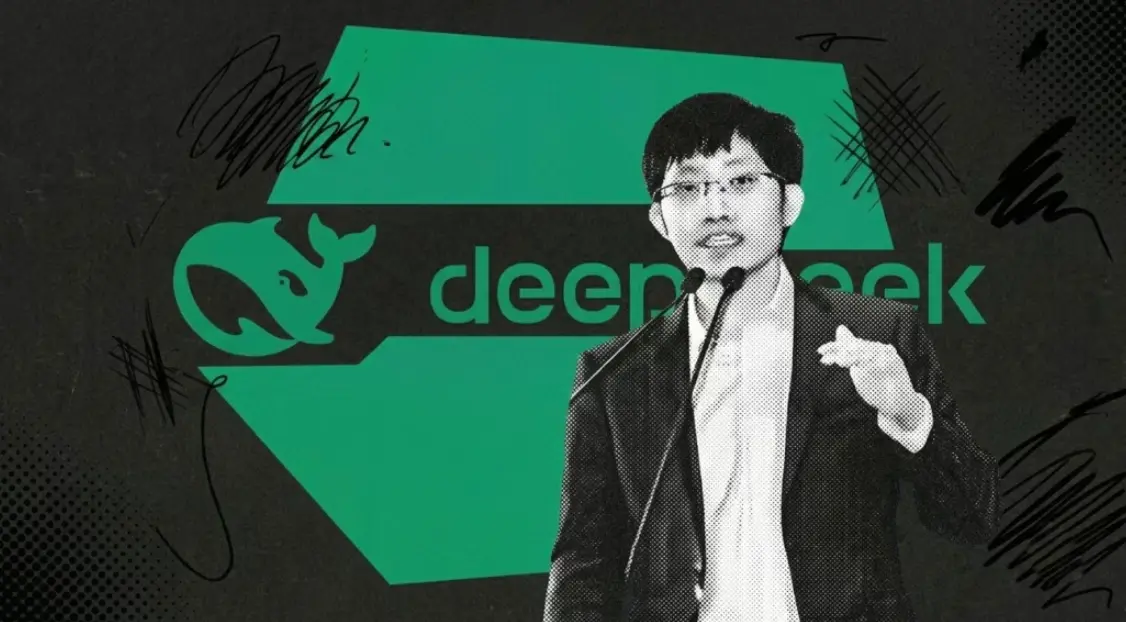
4 Hours, 118 Responses: Liang Wenfeng’s Internal Q&A Addresses Everything

**DeepSeek Founder Liang Wenfeng's Candid Reflections on the Company's Path to AGI** DeepSeek has recently completed its first external funding round, raising over 500 billion RMB (approx. $74B) at a pre-money valuation of 3.675 trillion RMB ($543B). Founder Liang Wenfeng personally invested 200 billion RMB. This marks a strategic shift from its initial "no financing, no IPO, no commercialization" principle. In a recent investor Q&A, Liang articulated DeepSeek's core philosophy and roadmap. The company is driven by a powerful, unwritten vision for beneficial AGI rather than pure commercial maximization. He emphasizes "strategic restraint"—avoiding unnecessary conflicts, prioritizing long-term AGI success over short-term gains, and maintaining an open, cooperative stance even with competitors. Liang outlined the AGI technical roadmap: current focus on Agent capabilities, followed by solving "continual learning," which he sees as the key to unlocking models that can learn and adapt like humans. This could lead to a gradual "singularity" where AI accelerates its own research, and eventually to embodied intelligence. DeepSeek will strictly focus on this "AGI mainline," avoiding distractions like video generation which, while commercially viable, don't directly advance core intelligence. He identifies team stability as the single most critical factor for success, now bolstered by the recent funding. While talent is not a bottleneck, the primary constraint compared to the US is compute resources. Liang is optimistic about domestic AI chips, stating that Nvidia's CUDA moat is eroding and that within a year, the viability of the Chinese chip ecosystem will be proven, with Huawei's offerings being key. The main issue is production capacity. On competition, Liang believes the final differentiators will be cost, time-to-market, and user experience. He foresees Chinese companies playing a major role by offering systematically lower-cost AI services globally. DeepSeek's commercialization strategy involves offering API services at a "reasonable profit" and focusing on coding Agents. He remains committed to open-sourcing even their strongest models, seeing no downside as the barriers to effective deployment remain high. The company operates with a unique dual management structure combining top-down direction with significant bottom-up, unstructured research time for employees. Data quality and post-training are identified as major current challenges, with half of core researchers involved in data labeling efforts. Liang concludes that DeepSeek aims to be one of several trillion-dollar companies in the AI era, achieved through extreme focus on its chosen path.

链捕手07/24 06:24

4 Hours, 118 Responses: Liang Wenfeng’s Internal Q&A Addresses Everything

链捕手07/24 06:24

Bitcoin Mining Farms Are Becoming AI Factories

Bitcoin mines are transforming into AI factories. This shift is driven by the convergence of three key assets from the previous crypto cycle: infrastructure, talent, and capital. Crypto mining companies like Crusoe, CoreWeave, and Bitdeer are repurposing their core competency—securing power, land, and grid connections in remote locations—to build data centers for AI clients. These firms are signing multi-billion dollar, long-term contracts with companies like Anthropic, AWS, and Microsoft, as AI's demand for reliable, high-capacity compute surpasses the profitability of Bitcoin mining. Simultaneously, crypto entrepreneurs and engineers are applying their skills to new AI ventures. Examples include OpenSea's co-founder launching OpenRouter (an AI model aggregator), and former Coinbase engineers building Fal.ai (a generative media infrastructure platform). Their experience in building scalable, global software networks translates effectively to the AI space. Furthermore, capital accumulated during the crypto boom is now fueling AI. Figures like Jed McCaleb (co-founder of Ripple) funded Voltage Park, a large-scale GPU cloud provider. Notably, some crypto investments, like FTX's early bets on Anthropic and Cursor, have generated astronomical paper returns, demonstrating how high-risk crypto capital flowed into AI before it became mainstream. The transition is not just about repurposing hardware, but about redirecting critical resources—power infrastructure, distributed systems expertise, and venture funding—to the next technological frontier: artificial intelligence.

链捕手07/22 06:33

Bitcoin Mining Farms Are Becoming AI Factories

链捕手07/22 06:33

Replicating the "DeepSeek Moment"? Wall Street Unanimously Says: Kimi K3 Instead Strengthens Computing Power Demand

Title: Wall Street Sees Kimi K3 as a Catalyst for Compute Demand, Not a "DeepSeek Moment 2.0" Summary: Following the release of Moonshot AI's powerful open-source model Kimi K3, initial market reaction mirrored the "DeepSeek moment" that sparked a sell-off in compute stocks earlier in 2025, fearing reduced demand for AI infrastructure. However, major Wall Street banks including UBS, Nomura, BofA, and Citi argue the opposite: K3 will accelerate, not weaken, demand for compute, memory, storage, and networking. Their analysis centers on K3's specifications—2.8 trillion parameters, 1M token context, and MoE architecture—which represent a "scale" story rather than a pure "efficiency" one like DeepSeek R1. These features increase pressure on inference, memory (especially KV cache), and storage. Analysts invoke Jevons Paradox: as high-quality models become more affordable (K3 is cheaper than top closed models but not the cheapest), usage and token volumes expand, ultimately increasing total compute consumption. The reports highlight that competition will force leading US AI labs (OpenAI, Anthropic, Google) to invest more in training and iteration to maintain their edge. Furthermore, the rise of capable open-source models like K3 is expanding the global AI developer ecosystem, with Chinese models now accounting for over 45% of developer traffic. Key beneficiaries identified across the AI infrastructure chain include memory/storage players (e.g., Micron, Samsung), compute leaders (Nvidia, TSMC), networking suppliers (due to "super-node" cluster needs for deploying K3), and cloud platforms (e.g., Alibaba) that host diverse model ecosystems. The consensus is that stronger open-source models are an entry point for the next wave of infrastructure demand diffusion, provided workload growth outpaces efficiency gains.

链捕手07/21 06:12
Replicating the "DeepSeek Moment"? Wall Street Unanimously Says: Kimi K3 Instead Strengthens Computing Power Demand

链捕手07/21 06:12

GPT-5.6 Sol Suddenly Gets Dumber Overnight? Thinking Budget Slashed from 960 to 128, No More Fixed-Intelligence Models?

The article discusses widespread user reports that OpenAI's GPT-5.6 Sol model, specifically its "Max" reasoning tier, has become less capable at complex, deep reasoning tasks. Users noted faster but shallower responses. Community investigation revealed an unpublicized internal parameter called "juice value," representing computational budget for reasoning. Observations indicated this value for the Max tier dropped dramatically from 960 to 128. In response, OpenAI's Thibault Sottiaux stated there was no intentional reduction in model capability ("nerf"). He explained the changes were part of an experiment to investigate unexpected high token usage following GPT-5.6's launch, which introduced features like longer reasoning and larger context windows. The experiment temporarily adjusted the "juice" parameter and rolled back the context window from 372k to 272k tokens to diagnose the usage spike. Sottiaux asserted these settings have been reverted and highlighted ongoing optimizations. The controversy highlights a tension between AI as a reliable, fixed-capability tool and its reality as a cloud service where providers can adjust performance parameters. The article argues that for AI to be trusted enterprise infrastructure, providers need clearer, transparent guarantees about the specific performance boundaries associated with service tiers.

marsbit07/15 03:28

GPT-5.6 Sol Suddenly Gets Dumber Overnight? Thinking Budget Slashed from 960 to 128, No More Fixed-Intelligence Models?

marsbit07/15 03:28

Valuation $1 Billion, Nvidia Doubles Down! Is Prime Intellect Washing Off Its Web3 Label?

Prime Intellect, a decentralized AI infrastructure company founded in 2024, recently announced a $130 million Series A funding round at a $1 billion valuation, with investments from NVIDIA, Intel, and Dell's venture arms. The company claims its annualized recurring revenue (ARR) has exceeded $100 million within a year, serving over 6,000 enterprise clients. Initially rooted in Web3 and decentralized science (DeSci), Prime Intellect has evolved into a full-stack AI training and deployment platform. Its core technology enables distributed training of large language models across globally dispersed, heterogeneous GPU clusters. Key milestones include releasing open-source models like INTELLECT-1 and INTELLECT-3, and launching Prime Intellect Lab, a platform allowing users to train and optimize agentic models without managing their own GPU infrastructure. The company's deep collaboration with hardware giants, particularly NVIDIA, extends beyond investment to joint optimization of software (e.g., integrating NVIDIA Dynamo) and hardware systems. A notable commercial case involves fintech company Ramp using Prime Lab to train a specialized agent, demonstrating the platform's applied value. While achieving rapid commercial growth, Prime Intellect has systematically downplayed its earlier Web3 and token-based incentives from its official documentation, repositioning itself as a mainstream AI infrastructure provider focused on enterprise adoption and potential IPO.

Foresight News07/13 02:33

Valuation $1 Billion, Nvidia Doubles Down! Is Prime Intellect Washing Off Its Web3 Label?

Foresight News07/13 02:33

SemiAnalysis: Anthropic's Q3 Profit to Exceed $1 Billion

Research firm SemiAnalysis reveals that Anthropic is reshaping the AI commercialization landscape with profitability and growth rates far exceeding competitors. Leveraging a high-margin, API-centric business model, Anthropic has become a leader in the B2B AI market. The report projects that Anthropic will achieve a GAAP EBIT of $1 billion in Q3 2026, with a 6% margin. Its Annual Recurring Revenue (ARR) has surged from $9 billion at the end of 2025 to over $60 billion currently. If it maintains a Net New ARR (NNARR) of approximately $15 billion per month, its ARR could reach $300 billion by the end of 2027, implying a $6 trillion enterprise value and making it the world's most valuable company. Anthropic secretly filed for an IPO on June 1st. SemiAnalysis argues the timing is strategically urgent due to narrowing capital market windows as rivals like Alphabet and Meta secure major funding. The superior financials and business model suggest Anthropic should go public before OpenAI to seize the competitive initiative. The performance inflection stems from the explosive adoption of Claude Code, which now accounts for over 7% of all GitHub commits, driving monthly NNARR from $3 billion in January to $11 billion in March. Anthropic's revenue structure differs significantly from OpenAI's. Approximately 75-85% of Anthropic's ARR comes from usage-based API fees, with consumer subscriptions constituting only about 5%. In contrast, over 65% of OpenAI's Q1 2026 revenue was from subscriptions, with ~40% from consumers. The API model's key advantage is no per-user revenue cap, enabling growth within existing accounts. Anthropic's Net Revenue Retention (NRR) is an extraordinary 500%. This drives superior gross margins, now in the mid-60% range versus -94% in 2024, with API margins exceeding 80%. Core drivers are improved inference efficiency and a largely enterprise-focused model without the cost of serving hundreds of millions of free users. The report introduces "EBTIT" (Earnings Before Training & Interest & Taxes) to measure re-investment capacity, projecting Anthropic's cumulative EBTIT through 2028 will be $250 billion higher than OpenAI's. Over 65% of lab ARR currently comes from programming use cases. Cybersecurity is seen as the next major vertical, with upcoming model releases like Fable expected to further increase token pricing and expand NNARR. Indirect sales via hyperscaler platforms (AWS Bedrock, Azure Foundry) now account for 15-20% of ARR. A core constraint is compute supply. By 2030, combined unconstrained compute demand from Anthropic and OpenAI could exceed 100 GW, far outstripping projected new capacity. IPO proceeds are seen as crucial to lock in future compute resources. Key risks include potential price cuts by OpenAI, competitive pressure from Google DeepMind and Meta in coding models, potential government restrictions on frontier model releases, and margin dilution from growing indirect "Token-as-a-Service" sales. Regulatory actions that narrow the capability gap between open-source and proprietary models are highlighted as a fundamental threat to Anthropic's moat.

marsbit07/08 09:27

SemiAnalysis: Anthropic's Q3 Profit to Exceed $1 Billion

marsbit07/08 09:27

While Semiconductor Stocks Plunge, Anthropic Plans to Develop a 2nm Chip

Anthropic, the AI company behind Claude, is exploring the development of its own custom AI chip, according to a report from The Information. The company is in early discussions with Samsung Electronics to manufacture the chip using Samsung's most advanced 2-nanometer process and packaging technology. While the project is still in preliminary stages, including defining chip specifications, and could be abandoned, it marks a strategic step for Anthropic. The move comes as the company seeks greater control over its computing costs and hardware optimization, particularly for inference tasks to run its models more efficiently and cheaply. Samsung's potential involvement follows its participation as a strategic investor in Anthropic's recent $65 billion funding round. For Samsung, partnering with a major AI lab represents a significant opportunity for its foundry business to compete with market leader TSMC in advanced semiconductor manufacturing. Anthropic's CEO, Dario Amodei, has previously highlighted the immense financial challenge of securing enough computing power for anticipated growth, making cost-effective inference a critical focus. The company would join other tech giants like Google, Amazon, Microsoft, Meta, and OpenAI in pursuing custom AI silicon. However, analysts note this trend creates deeper interdependencies rather than independence, as US AI labs become more tightly woven into Asian semiconductor supply chains. Despite this move, Anthropic remains heavily reliant on a multi-cloud, multi-vendor strategy for its immediate computing needs. It has secured massive, long-term commitments for capacity from Amazon Web Services (Trainium chips), Google (TPUs), and even leased a large GPU cluster from xAI. For now, Nvidia continues to dominate the AI chip market, with its share reportedly growing to 74%.

链捕手07/03 09:54

While Semiconductor Stocks Plunge, Anthropic Plans to Develop a 2nm Chip

链捕手07/03 09:54

活动图片