# Balance Sheet Related Articles

HTX News Center provides the latest articles and in-depth analysis on "Balance Sheet", covering market trends, project updates, tech developments, and regulatory policies in the crypto industry.

Research Report Analysis: The Fed's New Chair's Debut – New Leader, But Same Script?

Report Analysis: Federal Reserve's New Chair Debut – A New Captain, But the Same Script? Morgan Stanley's chief global economist Seth B. Carpenter analyzes the first FOMC meeting under new Fed Chair Kevin Warsh in a June 21 report. Warsh deliberately avoided providing forward guidance on interest rates, aligning with his philosophy. However, market expectations for a rate hike this year were reinforced. Key signals lie elsewhere: inflation may fall more than expected, and quantitative tightening (QT) could be more aggressive than anticipated. The FOMC's "dot plot" suggests only one rate hike in 2026. Carpenter argues that if inflation undershoots forecasts, the logic for even a single hike weakens, especially as projections indicate potential rate cuts in 2027. On QT, Warsh's stance is clear. Carpenter notes that measures like halving the Treasury's account balance could shrink the Fed's balance sheet by around $500 billion with minimal market impact. Combined with adjustments to reserve interest and liquidity rules, the ultimate QT scale may exceed expectations, though its market effect might be less disruptive unless the Fed actively sells Mortgage-Backed Securities (MBS). While Warsh initiated a review of the Fed's policy framework, the 2% inflation target remains intact for now. The report concludes that the market may be overestimating the significance of reduced forward guidance and the near-term rate hike risk, while potentially underestimating the scope and manageable nature of the coming balance sheet reduction. The key debates will hinge on upcoming core PCE data, the specifics of the QT path, and the framework review's findings.

marsbit06/22 14:32

Research Report Analysis: The Fed's New Chair's Debut – New Leader, But Same Script?

marsbit06/22 14:32

Full Debut Q&A! Fed Chair Wash: Firmly Adhering to 2% Inflation Target, Establishing Five Special Task Forces, Personally Did Not Submit Dot Plot

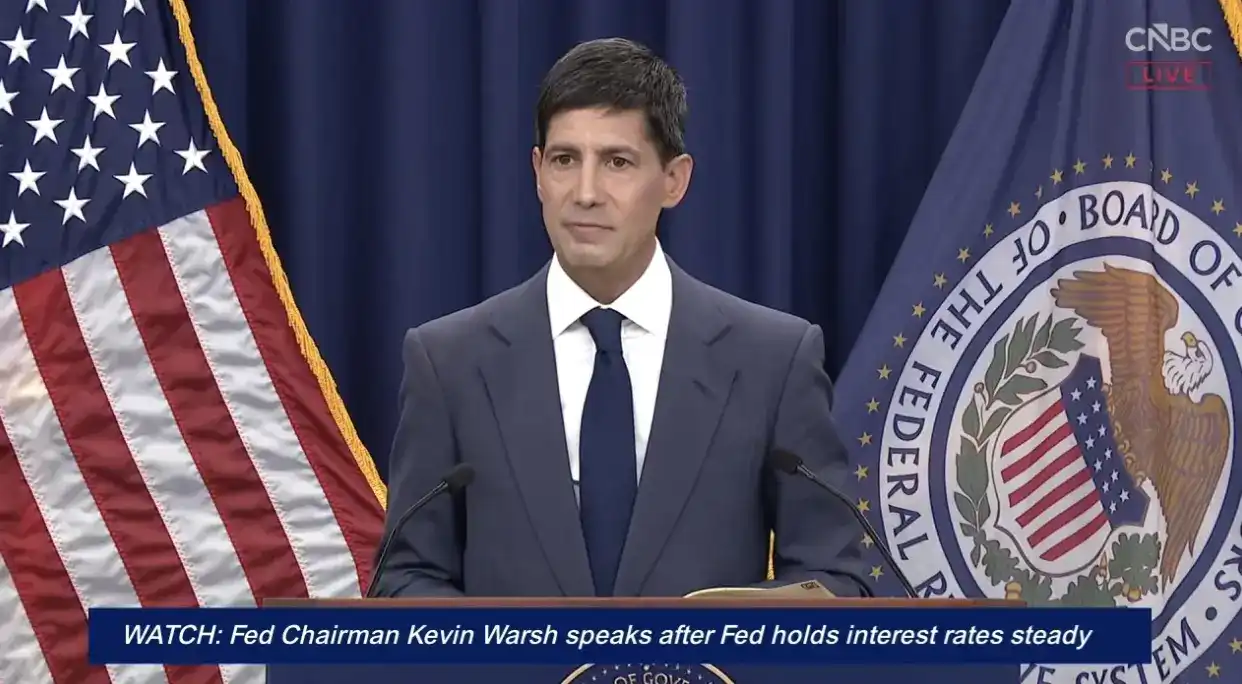
Federal Reserve Chair Kevin Warsh delivered his first FOMC press conference, maintaining the federal funds rate at 3.5%-3.75% and emphasizing the Committee's unanimous and explicit commitment to achieving its 2% inflation target. Key announcements included significant changes to Fed communication and operations. The policy statement was significantly shortened and, notably, forward guidance was removed. Chair Warsh broke from precedent by declining to submit his own economic forecasts and "dot plot." He announced the immediate formation of five special working groups focusing on: Fed communication, the balance sheet, data sources, productivity and employment (including AI's impact), and the inflation framework. These groups, which will include external experts, are tasked with recommending improvements by year-end. One key group will review the Fed's $6.7 trillion balance sheet to assess the roles of interest rates versus balance sheet tools in monetary policy. Warsh characterized the current restrictive stance of policy as "uneven," noting its effect on housing but questioning its impact on financial markets where conditions appear less restrictive. He expressed a desire to move away from a "Fed-speak" driven market, arguing that markets should react to economic data rather than Fed commentary to provide better informational signals. On inflation, he stated there is no need to reconsider the 2% target until the Fed re-establishes its commitment and capability to achieve it. Economic projections (SEP) from other officials showed a split on the rate outlook for 2024, with half expecting at least one hike and half forecasting unchanged or lower rates. The median projection saw the federal funds rate at 3.8% by year-end 2024. Following the announcements, risk assets sold off sharply, Treasury yields rose, and the dollar strengthened.

marsbit06/18 02:18

Full Debut Q&A! Fed Chair Wash: Firmly Adhering to 2% Inflation Target, Establishing Five Special Task Forces, Personally Did Not Submit Dot Plot

marsbit06/18 02:18

Full First Q&A! Fed Chair Warsh: Sticks to 2% Inflation Target, Establishes Five Special Working Groups, Personally Did Not Submit Dot Plot

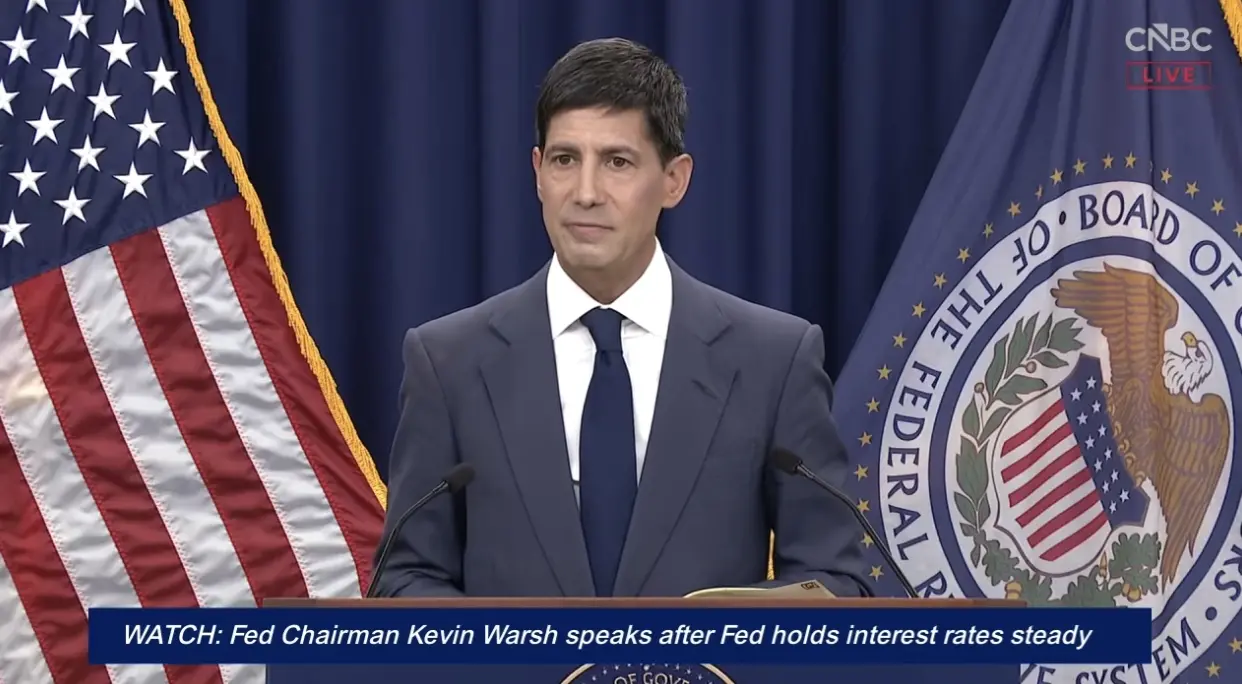
The Federal Reserve, under new Chair Kevin Warsh, held its first FOMC meeting, maintaining the federal funds rate target range at 3.5% to 3.75%. The central bank issued a significantly shortened policy statement, explicitly removing forward guidance. Chair Warsh delivered a strong, unified commitment to achieving the 2% inflation target, stating the FOMC has the "capability and the commitment" to restore price stability and sees no need to review the target itself at this time. Warsh announced the immediate formation of five special working groups to examine and propose improvements in key areas by year-end: Fed communication, the balance sheet (including a review of the $6.7 trillion portfolio and its role in policy), data sources and methodology, productivity and employment (including AI's impact), and the inflation framework. In a break from tradition, Chair Warsh did not submit his own economic projections or "dot plot." The submitted Summary of Economic Projections (SEP) showed a split among other officials: half anticipate at least one rate hike this year, while half expect rates to remain steady or fall. The median projection sees the federal funds rate at 3.8% by year-end 2026. Warsh characterized the current policy stance as "uneven," noting restrictive effects in sectors like housing but less so in financial markets. He emphasized a desire to move away from a market dynamic overly focused on Fed signaling, advocating for markets to react more to economic data. On AI, he called it potentially the most significant economic change in his adult life, driving clear demand but with uncertain timing and scale on the supply side, creating a "race" between the two.

链捕手06/18 02:16

Full First Q&A! Fed Chair Warsh: Sticks to 2% Inflation Target, Establishes Five Special Working Groups, Personally Did Not Submit Dot Plot

链捕手06/18 02:16

The Richest Fed Chair in 112 Years Is Here: Kevin Warsh Is Rewriting the Rules

Kevin Warsh, with a personal fortune exceeding $130 million, became the 112nd and wealthiest Chair of the U.S. Federal Reserve on May 22nd. A former Wall Street investment banker and key figure during the 2008 financial crisis, Warsh lacks a traditional academic background for a central banker but brings deep market experience. He proposes an unconventional policy approach of simultaneously reducing the Fed's balance sheet ("quantitative tightening") while cutting interest rates, arguing that a smaller balance sheet would allow for more effective rate policy. His ascent marks a potential regime change at the Fed. Warsh aims to reform the institution's decision-making processes, tighten communication discipline among officials, and reduce reliance on forward guidance like the "dot plot." This shift responds to the Fed's current dilemma: fiscal policy is expanding the government's balance sheet through deficits, while monetary policy's ability to shrink its own $6.7 trillion balance sheet is severely constrained, creating pressure on long-term interest rates. Analysts expect Warsh's tenure to sustain high volatility in the U.S. Treasury market due to persistent supply pressures. Furthermore, his leadership coincides with a gradual, structural erosion of dollar dominance, evidenced by its declining share in global reserves and cracks in the petrodollar system, with increased use of alternatives like the Chinese yuan in oil trade. For investors, this environment underscores the importance of portfolio diversification, including assets like gold and Chinese sovereign bonds, amid a fluctuating dollar credit anchor.

链捕手05/25 06:13

The Richest Fed Chair in 112 Years Is Here: Kevin Warsh Is Rewriting the Rules

链捕手05/25 06:13

活动图片