# AI Server Related Articles

HTX News Center provides the latest articles and in-depth analysis on "AI Server", covering market trends, project updates, tech developments, and regulatory policies in the crypto industry.

CPU Makes a Comeback to the Table, A $170 Billion "Power Seizure" Drama Begins

A new era is dawning for the server CPU (Central Processing Unit), driven by the shift from AI model training to large-scale reasoning and the rise of Agentic AI. This article explores how the CPU is reclaiming a central role in the AI data center. For years, the focus has been on the GPU (Graphics Processing Unit) for AI training. However, as AI moves to the inference and Agent phase—where tasks involve complex, multi-step reasoning, tool calls, and data management—the workload balance is flipping. Studies show CPUs now handle over 70% of the workload in Agentic AI, up from 10-30% in training. This is because Agent tasks generate massive intermediate data (KV Cache) that exceeds GPU memory, forcing it to be offloaded to the CPU's larger, more scalable memory pools. This increased importance is translating into market changes. Major players are taking note: NVIDIA launched its first standalone CPU line, Vera, based on ARM architecture and optimized for Agent performance. AMD doubled its server CPU market forecast to over $1200 billion by 2030. Analyst reports project the total server CPU market could reach $1700 billion by 2030, with AI-driven demand being a primary driver. Furthermore, the classic ratio of CPUs to GPUs in AI servers is rapidly changing, converging from 1:8 toward 1:1 for Agent deployments. This surge in demand has led to a rare industry-wide price increase of 10-15% for server CPUs from Intel and AMD, breaking a decade-long trend of "more performance for the same price." Demand is bifurcating into high-core-count CPUs for in-rack GPU support and moderate-core CPUs for standalone Agent task orchestration. In China, this global trend presents an opportunity for domestic CPU manufacturers like Hygon (海光信息) and Huawei Kunpeng, who are bolstered by both growing AI infrastructure needs and national policies promoting technological self-reliance ("xin chuang"). The maturity of their software ecosystems is also accelerating, evidenced by faster adaptation to new AI models. In conclusion, the narrative is shifting from a GPU-centric view to one where CPU-GPU synergy is critical. The CPU is no longer a peripheral component but a performance-defining bottleneck and a key growth driver in the AI hardware stack, opening a massive new market estimated in the hundreds of billions of dollars.

marsbit06/19 13:41
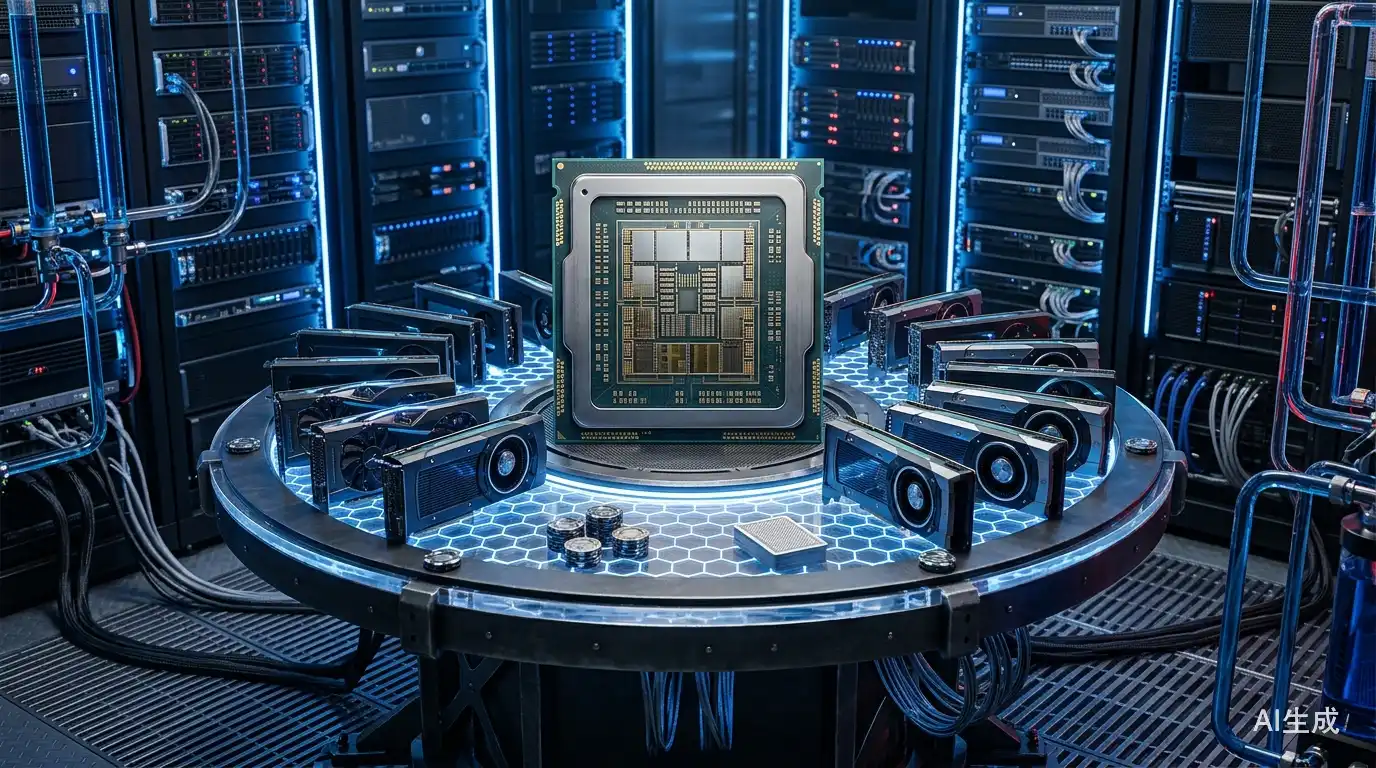
CPU Makes a Comeback to the Table, A $170 Billion "Power Seizure" Drama Begins

marsbit06/19 13:41

MLCC Capacitor Price Increase: A Comprehensive Overview of Beneficiary Companies

Recent teardown reports of Nvidia's next-generation AI chips have reignited investor interest in the MLCC (Multi-Layer Ceramic Capacitor) sector. Analysis of the Rubin architecture VR200 server reveals a 30% increase in MLCC count and a 182% surge in component value per rack compared to the previous generation, with GPU board usage nearly doubling. High-power, high-voltage hardware designs are driving massive adoption of high-end, high-withstand-voltage, and large-capacity MLCCs, exacerbating supply shortages. The global MLCC supply-demand balance remains tight. Leading Japanese and Korean manufacturers have successively raised prices across series, compounded by overseas capacity constraints and long-term customer order locks at major factories. Delivery lead times for high-end products now exceed 20 weeks, with capacity struggling to keep pace with surging orders. Demand drivers include AI servers, automotive electronics, and recovering consumer electronics, leading to both volume and price increases for MLCCs. The industry chain beneficiaries are outlined as follows: **1. MLCC Product Manufacturers:** Direct beneficiaries of price hikes. Key Chinese companies include Fenghua Advanced Technology (leading domestic player), Sanhuan Group (vertical integration from materials to products), and others like Hongyuan Electronics (military focus) and Torch Electron (specialty ceramics). **2. MLCC Raw Materials & Components:** The foundation of the supply chain. * **Release Film:** A critical consumable in production. Companies include Jiemei Technology (domestic leader), Shuangxing New Materials, and Sidike. * **Metal Powders (Ni/Cu):** Core materials for internal electrodes. Key suppliers are Boqian New Materials, Yuean New Materials, and Gripm Advanced Materials. * **Dielectric Ceramic Powder:** The core material determining MLCC performance. Sinocera Advanced Materials is a global leader, while Sanhuan Group and Fenghua Advanced Technology also have significant in-house capabilities. The report highlights that rising AI server power is significantly increasing requirements for chip capacitors and inductors, forecasting explosive industry growth aligned with projected GPU/TPU shipments through 2027-2028.

marsbit05/25 02:57

MLCC Capacitor Price Increase: A Comprehensive Overview of Beneficiary Companies

marsbit05/25 02:57

活动图片