Swan Bitcoin Moves To Subpoena US Secretary Of Commerce And Cantor Fitzgerald –Details

bitcoinistPublished on 2026-03-26Last updated on 2026-03-26

Abstract

Swan Bitcoin has requested a US court for permission to subpoena Cantor Fitzgerald and US Commerce Secretary Howard Lutnick (its former CEO) in a dispute involving Tether. The company alleges a conspiracy in mid-2024 where employees, including ex-CIO Raphael Zagury, collaborated with Tether personnel to undermine their joint venture, 2040 Energy. Following a mass resignation and alleged theft of documents, the defectors formed a new entity called Proton. Tether-appointed directors later approved the sale of the venture's mining assets to a Tether subsidiary at a significantly undervalued price. Swan claims Lutnick, introduced by Tether's Giancarlo Devasini, had access to confidential data and mining details before abruptly cutting contact. The firm seeks evidence for foreign legal proceedings against Tether executives.

Swan Bitcoin has asked a US court for permission to subpoena Cantor Fitzgerald and its former CEO— now US Commerce Secretary Howard Lutnick — in a widening dispute that implicates crypto heavyweight Tether and alleges coordinated misconduct surrounding a joint mining venture.

Swan Bitcoin Alleges Conspiracy

The Bitcoin firm says it filed an ex parte application this week in the Southern District of New York to seek discovery that it intends to use in foreign proceedings against Tether-appointed directors of its joint venture, 2040 Energy.

Swan CEO Cory Klippsten identified the targets of those foreign actions as Tether CEO Paolo Ardoino, controlling shareholder Giancarlo Devasini, and Bitfinex CEO Jean-Louis van der Velde.

In its filing, Swan describes a series of events in mid-2024, when it says a group of the firm’s employees led by then‐CIO Raphael Zagury conspired with Tether personnel — including Tether’s now‐CIO Zachary Lyons — to undermine the joint venture from within.

According to the complaint, Swan’s internal planning notes, recovered from corporate servers, outlined a coordinated mass resignation that would be cloaked with “legal cover from Tether.”

Swan alleges that on Aug. 8, 2024, thirteen employees resigned within hours, and that “thousands” of confidential documents were downloaded from the company’s systems.

The filing contends that those defectors quickly formed Proton — an entity Swan says was effectively a Tether replacement for the joint venture and was run by the same departing employees and contractors.

In December 2024, the complaint alleges, the Tether-appointed directors approved a related‐party sale of 2040 Energy’s mining assets to a Tether subsidiary at a significantly undervalued price.

Allegations Against US Secretary Of Commerce

Cantor Fitzgerald and Lutnick figure in Swan Bitcoin’s application because, the filing says, they were closely linked to developments before and after the resignations.

Swan Bitcoin recounts that Devasini introduced Klippsten to Lutnick in the weeks before the mass departures to discuss a prospective Swan Bitcoin initial public offering (IPO).

Swan shared confidential mining data and IPO materials with Cantor at that time, the filing says, and then, after the rapid resignations and alleged asset diversion, Cantor “unexpectedly” ceased contact without explanation.

Klippsten’s contemporaneous notes, which Swan Bitcoin has included in its filing, also record conversations with Devasini in which Devasini allegedly told Klippsten that Lutnick — while still a private citizen — claimed to have “managed to kill every bill about stablecoins” in Congress and was “working full time for Tether.”

Swan Bitcoin’s application asks a federal judge to permit subpoenas to gather documents and testimony from Cantor and Lutnick to support the firm’s foreign litigation targeting the Tether‐appointed directors.

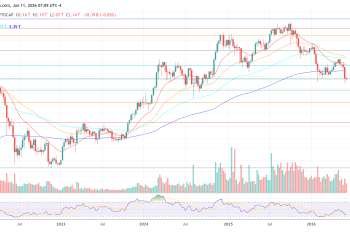
The daily chart shows the total crypto market cap at $2.4 trillion. Source: TOTAL on TradingView.com

Featured image from ABC News, chart from TradingView.com

Trending Cryptos

Related Questions

QWhat is the main reason Swan Bitcoin is seeking to subpoena Cantor Fitzgerald and US Commerce Secretary Howard Lutnick?

ASwan Bitcoin is seeking to subpoena them to gather documents and testimony to support its foreign litigation against Tether-appointed directors of the joint venture 2040 Energy, alleging they were closely linked to the events surrounding a mass employee resignation and alleged asset diversion.

QWho are the foreign legal actions, mentioned in the filing, targeted against?

AThe foreign legal actions are targeted against Tether CEO Paolo Ardoino, controlling shareholder Giancarlo Devasini, and Bitfinex CEO Jean-Louis van der Velde.

QWhat specific event on August 8, 2024, does Swan Bitcoin allege was part of the conspiracy?

ASwan Bitcoin alleges that on August 8, 2024, thirteen employees resigned within hours and 'thousands' of confidential documents were downloaded from the company's systems as part of a coordinated plan.

QWhat allegation does Swan Bitcoin make regarding the Tether-appointed directors in December 2024?

ASwan Bitcoin alleges that in December 2024, the Tether-appointed directors approved a related-party sale of 2040 Energy's mining assets to a Tether subsidiary at a significantly undervalued price.

QAccording to Swan's filing, what did Giancarlo Devasini allegedly claim about Howard Lutnick's activities?

AAccording to the filing, Giancarlo Devasini allegedly told Swan's CEO that Howard Lutnick claimed to have 'managed to kill every bill about stablecoins' in Congress and was 'working full time for Tether.'

Related Reads

Will the Fed Definitely Raise Interest Rates in September? How Will Crypto and U.S. Stocks Withstand the Pressure?

The market's expectation for a September Fed rate hike surged dramatically in early August, jumping from under 50% to over 80% within a week. This shift followed a contentious July FOMC meeting, where a 9-3 vote to hold rates revealed growing dissent from hawkish members advocating for an immediate hike to combat persistent inflation. The primary catalyst for this repricing is rising oil prices, driven by renewed geopolitical tensions around the Strait of Hormuz, which threaten global supply. Energy costs directly influence inflation metrics, making the upcoming July CPI report (due August 12th) a critical data point. If it shows inflation reaccelerating, the probability of a September hike will solidify. For Bitcoin and crypto assets, this is typically bearish news. Bitcoin continues to behave as a high-beta, liquidity-sensitive risk asset. A rate hike raises the opportunity cost of holding non-yielding assets and could drive capital toward money markets, pressuring crypto prices in the short term. However, historical patterns suggest that if a hike is perceived as the end of a tightening cycle rather than the start, any negative price impact may be brief. U.S. stocks, particularly crypto-linked equities like Coinbase and growth-oriented tech stocks, are also vulnerable. Higher rates increase discount rates in valuation models, putting pressure on high-multiple companies. This coincides with a pivotal tech earnings season where investor focus has shifted from massive AI capital expenditure to tangible revenue and cash flow generation. Companies with negative cash flow and weak growth narratives could face heightened volatility if borrowing costs rise in September. In summary, a September Fed hike has evolved into a mainstream market scenario. Key factors to watch are oil prices, the July CPI report, and Fed communications, which will determine the final decision and its impact on volatile crypto and equity markets.

marsbit9m ago

Will the Fed Definitely Raise Interest Rates in September? How Will Crypto and U.S. Stocks Withstand the Pressure?

marsbit9m ago

A 'Overlooked' Market Event: Joint US-Japan-South Korea Intervention, Rare US Treasury Involvement, and Bessent's Quiet 'Market Rescue'?

Summary: The United States, Japan, and South Korea executed their largest coordinated foreign exchange intervention in nearly 30 years. The action targeted depreciation pressure on the Japanese yen and South Korean won. This move is seen as a significant effort by the US to stabilize the financial markets of its key allies and prevent the spillover of risks. Key details: * Japan reportedly intervened on July 30 using approximately 8.45 trillion yen (about $52.8 billion). South Korean authorities also intervened that day, selling dollars to support the won. * Notably, the US Treasury Department intervened directly in yen markets for the first time in roughly 30 years. The New York Fed, reportedly acting on behalf of the Treasury, sold euros to buy yen via Goldman Sachs and Morgan Stanley on July 31. Analysts view the use of the euro-yen pair as a way to alleviate yen pressure without adding selling pressure to the US dollar. * Prior to the action, the New York Fed conducted "rate checks" on both USD/JPY and EUR/JPY, a newer signaling tool that falls between verbal and physical intervention. The intervention is interpreted as going beyond traditional currency stabilization. Analysts, such as Michael Hartnett of Bank of America, suggest it resembles a "Price Keeping Operation" for the AI era. The core US objectives are perceived to be: 1. Preventing rapid yen depreciation from triggering a sharp rise in Japanese government bond yields. 2. Containing financial stress from spreading across Asian markets like South Korea and Japan. 3. Reducing the risk of disorderly capital flows impacting the US bond market. This coordinated action underscores the importance of Japan and South Korea as critical partners in the US semiconductor and AI supply chain. Stabilizing their financial markets is seen as vital to mitigating risks to the broader tech industry and the US market itself. The intervention coincides with market pressures, including the KOSDAQ index hitting a low since October 2022. While seen as a move to control volatility, some analysts caution it may not fundamentally reverse existing market trends.

marsbit13m ago

A 'Overlooked' Market Event: Joint US-Japan-South Korea Intervention, Rare US Treasury Involvement, and Bessent's Quiet 'Market Rescue'?

marsbit13m ago

Will the Federal Reserve Definitely Raise Interest Rates in September? How Will Cryptocurrencies and US Stocks Bear the Pressure?

In early August 2024, market expectations for a September Federal Reserve rate hike surged dramatically, from below 50% to over 80%, driven by renewed inflation concerns. This shift followed a contentious July FOMC meeting where a 9-3 vote to hold rates revealed a growing hawkish faction advocating for an immediate hike, citing prolonged above-target inflation. The key catalyst is escalating conflict near the Strait of Hormuz, which has pushed oil prices up approximately 20% in July, threatening to reignite inflation. The next critical data point is the July CPI report on August 12th; a hot reading could solidify hike expectations. For crypto assets, particularly Bitcoin, this represents near-term pressure. Bitcoin continues to exhibit high-beta, risk-on characteristics, making it sensitive to tightening liquidity and higher opportunity costs. However, historical precedent suggests that if a hike is perceived as the cycle's end rather than its start, the negative impact may be brief, with markets quickly pivoting to anticipate future rate cuts. U.S. stocks, especially crypto-linked equities like Coinbase and high-valuation tech stocks, face amplified volatility. Higher rates increase discount rates in valuation models, pressuring growth stocks. This coincides with a pivotal tech earnings season where investor focus has shifted from massive AI capital expenditures to demonstrable revenue and cash flow generation. Companies with negative cash flows and weak growth narratives could see severe pressure if a September hike materializes, as financing costs would rise. Key indicators to watch include oil prices, upcoming inflation data, and Fed commentary at events like the Jackson Hole symposium.

Odaily星球日报13m ago

Will the Federal Reserve Definitely Raise Interest Rates in September? How Will Cryptocurrencies and US Stocks Bear the Pressure?

Odaily星球日报13m ago

Trading

Spot

Hot Articles

What is $BITCOIN

DIGITAL GOLD ($BITCOIN): A Comprehensive Analysis Introduction to DIGITAL GOLD ($BITCOIN) DIGITAL GOLD ($BITCOIN) is a blockchain-based project operating on the Solana network, which aims to combine the characteristics of traditional precious metals with the innovation of decentralized technologies. While it shares a name with Bitcoin, often referred to as “digital gold” due to its perception as a store of value, DIGITAL GOLD is a separate token designed to create a unique ecosystem within the Web3 landscape. Its goal is to position itself as a viable alternative digital asset, although specifics regarding its applications and functionalities are still developing. What is DIGITAL GOLD ($BITCOIN)? DIGITAL GOLD ($BITCOIN) is a cryptocurrency token explicitly designed for use on the Solana blockchain. In contrast to Bitcoin, which provides a widely recognized value storage role, this token appears to focus on broader applications and characteristics. Notable aspects include: Blockchain Infrastructure: The token is built on the Solana blockchain, known for its capacity to handle high-speed and low-cost transactions. Supply Dynamics: DIGITAL GOLD has a maximum supply capped at 100 quadrillion tokens (100P $BITCOIN), although details regarding its circulating supply are currently undisclosed. Utility: While precise functionalities are not explicitly outlined, there are indications that the token could be utilized for various applications, potentially involving decentralized applications (dApps) or asset tokenization strategies. Who is the Creator of DIGITAL GOLD ($BITCOIN)? At present, the identity of the creators and development team behind DIGITAL GOLD ($BITCOIN) remains unknown. This situation is typical among many innovative projects within the blockchain space, particularly those aligning with decentralized finance and meme coin phenomena. While such anonymity may foster a community-driven culture, it intensifies concerns about governance and accountability. Who are the Investors of DIGITAL GOLD ($BITCOIN)? The available information indicates that DIGITAL GOLD ($BITCOIN) does not have any known institutional backers or prominent venture capital investments. The project seems to operate on a peer-to-peer model focused on community support and adoption rather than traditional funding routes. Its activity and liquidity are primarily situated on decentralized exchanges (DEXs), such as PumpSwap, rather than established centralized trading platforms, further highlighting its grassroots approach. How DIGITAL GOLD ($BITCOIN) Works The operational mechanics of DIGITAL GOLD ($BITCOIN) can be elaborated on based on its blockchain design and network attributes: Consensus Mechanism: By leveraging Solana’s unique proof-of-history (PoH) combined with a proof-of-stake (PoS) model, the project ensures efficient transaction validation contributing to the network's high performance. Tokenomics: While specific deflationary mechanisms have not been extensively detailed, the vast maximum token supply implies that it may cater to microtransactions or niche use cases that are still to be defined. Interoperability: There exists the potential for integration with Solana’s broader ecosystem, including various decentralized finance (DeFi) platforms. However, the details regarding specific integrations remain unspecified. Timeline of Key Events Here is a timeline that highlights significant milestones concerning DIGITAL GOLD ($BITCOIN): 2023: The initial deployment of the token occurs on the Solana blockchain, marked by its contract address. 2024: DIGITAL GOLD gains visibility as it becomes available for trading on decentralized exchanges like PumpSwap, allowing users to trade it against SOL. 2025: The project witnesses sporadic trading activity and potential interest in community-led engagements, although no noteworthy partnerships or technical advancements have been documented as of yet. Critical Analysis Strengths Scalability: The underlying Solana infrastructure supports high transaction volumes, which could enhance the utility of $BITCOIN in various transaction scenarios. Accessibility: The potential low trading price per token could attract retail investors, facilitating wider participation due to fractional ownership opportunities. Risks Lack of Transparency: The absence of publicly known backers, developers, or an audit process may yield skepticism regarding the project's sustainability and trustworthiness. Market Volatility: The trading activity is heavily reliant on speculative behavior, which can result in significant price volatility and uncertainty for investors. Conclusion DIGITAL GOLD ($BITCOIN) emerges as an intriguing yet ambiguous project within the rapidly evolving Solana ecosystem. While it attempts to leverage the “digital gold” narrative, its departure from Bitcoin's established role as a store of value underscores the need for a clearer differentiation of its intended utility and governance structure. Future acceptance and adoption will likely depend on addressing the current opacity and defining its operational and economic strategies more explicitly. Note: This report encompasses synthesised information available as of October 2023, and developments may have transpired beyond the research period.

1.4k Total ViewsPublished 2025.05.13Updated 2025.05.13

What is $BITCOIN

Discussions

Welcome to the HTX Community. Here, you can stay informed about the latest platform developments and gain access to professional market insights. Users' opinions on the price of BTC (BTC) are presented below.

活动图片