Sui publishes post-mortem after mainnet stall halted transactions for six hours

ambcryptoPublished on 2026-01-16Last updated on 2026-01-16

Abstract

Sui Foundation published a post-mortem detailing a six-hour mainnet stall on January 15, caused by an edge-case bug in consensus commit logic. This led to validators processing conflicting transactions differently under specific garbage-collection conditions, resulting in divergent checkpoint digests. The network automatically halted to prevent inconsistent state finalization, prioritizing safety over availability. No forks, rollbacks, or fund losses occurred, and read operations remained functional. Sui is implementing improvements for faster recovery and enhanced testing to prevent similar issues, confirming the safety mechanisms worked as intended.

Sui Foundation has published a detailed post-mortem explaining the cause of the mainnet stall that disrupted transaction processing on 15 January. It confirmed that the network halted as a safety measure to prevent inconsistent state finalization.

According to the Foundation, the disruption lasted for approximately six hours. An internal divergence in validator consensus processing caused it.

During the incident, validators were unable to certify new checkpoints, leading to transaction submissions timing out while the network prioritized safety.

Sui consensus divergence triggered safety halt

The Foundation said the incident stemmed from an edge-case bug in the consensus commit logic that affected how conflicting transactions were handled under certain garbage-collection conditions.

As a result, different validators derived different consensus outputs and attempted to execute incompatible candidate checkpoints.

When validators detected that more than one-third of stake was signing a different checkpoint digest, checkpoint certification became impossible. Validators then halted progress to avoid finalizing an inconsistent state.

“This is the intended failure mode for this class of issue,” the Foundation said, noting that the network is designed to stop safely rather than risk forks or irreversible inconsistencies.

No forks, rollbacks, or fund losses

Sui stressed that the stall was not caused by network congestion, transaction volume, or external threats. Throughout the incident:

  • No certified state forks occurred
  • No certified transactions were rolled back
  • User funds were never at risk
  • Network safety and consistency guarantees were preserved

While transaction execution halted during the incident window, read operations continued to serve the last certified state. This ensured data consistency for users and applications.

Improvements planned after incident

The Sui Foundation said it is implementing several changes to reduce recovery time in the event of similar issues in the future.

Planned improvements include faster detection of checkpoint inconsistencies and more automated operator tooling to clean up divergent internal state. Also, expanded consensus-specific testing to reproduce and validate fixes before deployment.

The Foundation added that while the interruption was disruptive, it confirmed that Sui’s safety-focused architecture behaved as designed.


Final Thoughts

  • Sui’s explanation confirms the mainnet stall was the result of a consensus edge case, with safety mechanisms halting the network to avoid inconsistent finalized state.
  • While disruptive, the incident highlights the trade-off between availability and safety as high-throughput networks push performance limits.


Trending Cryptos

Related Questions

QWhat was the primary cause of the mainnet stall on the Sui network on January 15th?

AThe stall was caused by an edge-case bug in the consensus commit logic that affected how conflicting transactions were handled under certain garbage-collection conditions, leading to an internal divergence in validator consensus processing.

QHow long did the network disruption last, and what was the core function that was halted?

AThe disruption lasted for approximately six hours, during which validators were unable to certify new checkpoints, halting transaction processing.

QAccording to the post-mortem, what key negative outcomes were avoided during the incident?

ANo certified state forks occurred, no certified transactions were rolled back, user funds were never at risk, and the network's safety and consistency guarantees were preserved.

QWhat safety mechanism was triggered that caused the network to halt progress?

AWhen validators detected that more than one-third of the stake was signing a different checkpoint digest, checkpoint certification became impossible, and they halted progress to avoid finalizing an inconsistent state.

QWhat improvements is the Sui Foundation implementing to prevent similar issues in the future?

APlanned improvements include faster detection of checkpoint inconsistencies, more automated operator tooling to clean up divergent internal state, and expanded consensus-specific testing to reproduce and validate fixes before deployment.

Related Reads

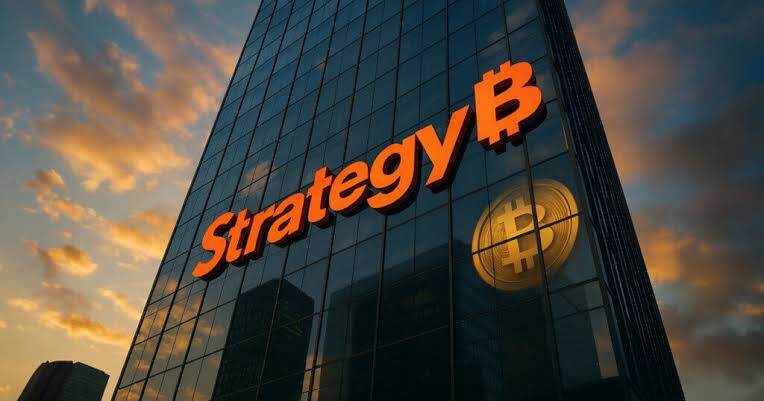
STRC's First Financial Report Post-Depegging, How is Strategy Restoring the Capital Flywheel?

On July 31, 2026, Bitcoin treasury company Strategy released its Q2 financial report. Despite a 6.9% year-over-year increase in revenue to $122 million, the company recorded a substantial net loss of $8.22 billion, primarily due to $8.32 billion in unrealized losses from Bitcoin holdings. While Strategy's core Bitcoin strategy remains intact—its holdings grew 11% to 843,775 BTC—the company is undergoing a fundamental shift in its capital model. Following the de-pegging of its key financing tool, the STRCoin (STRC), from its $100 target in May, Strategy has pivoted from a one-directional "raise funds, buy Bitcoin" cycle to a more dynamic, multi-asset capital management approach. A key part of this new framework is the "Monetization Program," through which Strategy has sold approximately $218.4 million worth of BTC to bolster liquidity. The company's top priority is repairing STRC's peg, committing not to issue discounted shares until it returns to its target range. It has initiated a $1 billion buyback program for discounted digital credit securities, having repurchased $28.9 million face value of STRC so far. Management aims to restore the peg around September 8, 2026. Strategy now actively manages a matrix of assets: Bitcoin (for accumulation or strategic sales), USD cash reserves (now at $3.75 billion), common stock (MSTR), and digital credit securities like STRC. This allows for tactical moves like repurchasing discounted debt or equity to capture value. The future success of Strategy's "capital flywheel" hinges on two factors: the short-term ability to successfully re-peg STRC to restore market confidence in its digital credit system, and the long-term price trajectory of Bitcoin, upon which its entire investment thesis ultimately depends.

Odaily星球日报7m ago

STRC's First Financial Report Post-Depegging, How is Strategy Restoring the Capital Flywheel?

Odaily星球日报7m ago

With Two Consecutive Quarters of Losses, Coinbase Must Rely on Paths Beyond Trading

Coinbase posted its second consecutive quarterly net loss of $359 million on $1.22 billion in revenue for Q2, highlighting its vulnerability to crypto market cycles where weaker prices and lower volatility reduce user trading. However, the report also reveals a strategic shift in its business model. Despite a 25% quarter-over-quarter decline in global spot trading volume, Coinbase increased its market share to a company-record 10.3%. This suggests its position as a compliant U.S. on-ramp is strengthening even in a cooler market. A key development is the diversification of revenue streams. Transaction revenue fell to $599 million, nearly equaling subscription and services revenue of $555 million. Stablecoin services, generating $292 million, are becoming a crucial revenue "floor." This income, derived from interest on the $20 billion average USDC balance held on its platform, is less tied to daily trading activity. Furthermore, while spot trading volume dropped significantly, derivatives volume held steady at $1.03 trillion. Coinbase is pushing to integrate spot, stablecoin, and derivatives liquidity to create a more interconnected and sticky ecosystem for users. The GAAP net loss includes non-cash expenses like stock-based compensation and crypto asset valuation changes. Its adjusted EBITDA remained positive at $208 million for the 14th straight quarter, indicating core operations can cover ongoing costs. The company is also reducing expenses to manage the downturn. The central question moving forward is whether Coinbase's growing market share, stablecoin revenues, and expanding product integration can sufficiently offset the inherent cyclicality of its core trading business during future market contractions.

marsbit22m ago

With Two Consecutive Quarters of Losses, Coinbase Must Rely on Paths Beyond Trading

marsbit22m ago

In the Age of Artificial Intelligence, We Need 'Magicians,' Not 'Managers'

In the AI era, leadership must shift from management to magic. As knowledge rapidly expires, value shifts from what leaders know to what they can facilitate. Traditional "inside-out" management, driven by internal experience, is giving way to "outside-in" thinking focused on external opportunities, customer needs, and disruptive change. The core challenge is fostering new ideas that may invalidate existing knowledge. While technologies like steam, electricity, and AI provide the "skeleton" for innovation, it is human vision—connecting technology to customer dreams—that creates magic. Historical figures like Richard Arkwright and Eldridge R. Johnson succeeded not by inventing core technologies, but by reimagining work and business models from the outside in. Leaders must transition from controllers to "architects of flourishing." Their role is to design environments where empowerment, creativity, and adaptive learning thrive. This involves granting autonomy, fostering partnerships, and building resilient systems that scale innovation. Critical leadership qualities now include judgment, creativity, and the ability to learn continuously rather than relying on static expertise. Therefore, cultivating future leaders requires a focus on timeless fundamentals, humanities for broader perspective, and social acuity, rather than over-specialization in quickly outdated technical skills. The future rewards those who respond to the unseen and create conditions for better answers to emerge. Leadership in the AI age is less about having all the answers and more about enabling others to discover them—creating organizations where people explore, imagine, and thrive.

marsbit57m ago

In the Age of Artificial Intelligence, We Need 'Magicians,' Not 'Managers'

marsbit57m ago

Trading

Spot

Hot Articles

How to Buy SUI

Welcome to HTX.com! We've made purchasing SUI Network (SUI) simple and convenient. Follow our step-by-step guide to embark on your crypto journey.Step 1: Create Your HTX AccountUse your email or phone number to sign up for a free account on HTX. Experience a hassle-free registration journey and unlock all features.Get My AccountStep 2: Go to Buy Crypto and Choose Your Payment MethodCredit/Debit Card: Use your Visa or Mastercard to buy SUI Network (SUI) instantly.Balance: Use funds from your HTX account balance to trade seamlessly.Third Parties: We've added popular payment methods such as Google Pay and Apple Pay to enhance convenience.P2P: Trade directly with other users on HTX.Over-the-Counter (OTC): We offer tailor-made services and competitive exchange rates for traders.Step 3: Store Your SUI Network (SUI)After purchasing your SUI Network (SUI), store it in your HTX account. Alternatively, you can send it elsewhere via blockchain transfer or use it to trade other cryptocurrencies.Step 4: Trade SUI Network (SUI)Easily trade SUI Network (SUI) on HTX's spot market. Simply access your account, select your trading pair, execute your trades, and monitor in real-time. We offer a user-friendly experience for both beginners and seasoned traders.

9.4k Total ViewsPublished 2024.03.29Updated 2026.06.02

How to Buy SUI

Discussions

Welcome to the HTX Community. Here, you can stay informed about the latest platform developments and gain access to professional market insights. Users' opinions on the price of SUI (SUI) are presented below.

活动图片