Steak ’N Shake Doubles Down On Bitcoin With $10M Balance Sheet Boost

bitcoinistPublished on 2026-01-18Last updated on 2026-01-18

Abstract

Steak 'n Shake has allocated $10 million to Bitcoin, adding approximately 105 BTC to its corporate balance sheet. The company channels all customer Bitcoin payments into a "Strategic Bitcoin Reserve," directly linking its crypto holdings to same-store sales growth. This approach is operational rather than speculative, differing from firms that borrow to buy crypto. Since adopting Bitcoin via the Lightning Network in May 2025, the chain has seen payment processing fees drop by about 50% and double-digit sales increases. The reserve will fund store and ingredient upgrades without raising prices, reflecting a strategy to integrate cryptocurrency into daily operations and customer experience.

Steak ’n Shake has moved $10 million of Bitcoin onto its corporate balance sheet, a fresh step in the fast-food chain’s crypto push. According to reports, the purchase equals about 105 BTC at current prices, and the company says all customer Bitcoin receipts feed into a so-called Strategic Bitcoin Reserve.

Strategic Bitcoin Reserve Tied To Sales

Based on reports, Steak ’n Shake calls its new approach a Strategic Bitcoin Reserve and says it links reserve growth directly to rising same-store sales.

The company has framed the move as part of daily operations rather than a standalone financial bet. Customers who pay with Bitcoin are effectively contributing to the reserve, the chain said. This is a different route from companies that raise capital or borrow specifically to buy crypto.

Payments On The Lightning Network

Steak ’n Shake started accepting Bitcoin at US locations in mid-May 2025, using the Lightning Network to handle payments, according to earlier coverage.

The company reports payment processing fees have fallen by roughly 50% compared with traditional card payments, and sales have risen since the rollout.

Reports note same-store sales gains in the low-to-mid double digits — figures such as 15% have been cited by several outlets.

BTCUSD now trading at $95,211. Chart: TradingView

The $10 million allocation follows eight months of active Bitcoin payments at the tills. Management says the reserve will fund store upgrades and ingredient improvements without raising menu prices.

The firm also ran a branded promotion last year that linked small Bitcoin rewards to specific menu purchases, part of its wider effort to make crypto part of the customer experience.
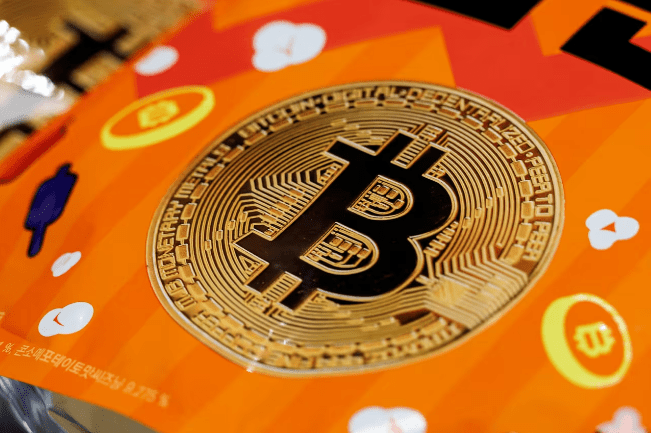
Image: SeongJoon Cho/Bloomberg

How The Company Plans To Use Funds

Reports indicate Steak ’n Shake wants the reserve to be a steady, internally funded asset rather than a speculative holding driven by market timing.

Some of the Bitcoin will support operational improvements, while other parts may be kept as a corporate asset. That mix could change if management alters its view of how Bitcoin fits with broader company goals.

Industry watchers point out that $10 million is modest against the biggest corporate crypto treasuries, but it is one of the more public moves by a legacy consumer brand.

The trend of businesses accepting Bitcoin and then holding some of it has drawn attention because it ties everyday commerce to cryptocurrency accumulation.

Featured image from Unsplash, chart from TradingView

Related Questions

QHow much Bitcoin did Steak 'N Shake add to its corporate balance sheet, and what is the approximate value in BTC at current prices?

ASteak 'N Shake added $10 million worth of Bitcoin to its balance sheet, which is approximately 105 BTC at current prices.

QWhat is the name of the new initiative where all customer Bitcoin payments are directed?

AAll customer Bitcoin payments are directed into a 'Strategic Bitcoin Reserve'.

QThrough which network does Steak 'N Shake process its Bitcoin payments, and what benefit has the company reported from using it?

ASteak 'N Shake processes Bitcoin payments through the Lightning Network, which has resulted in payment processing fees falling by roughly 50% compared to traditional card payments.

QWhat positive impact on sales has the company experienced since it began accepting Bitcoin?

AThe company has reported same-store sales gains in the low-to-mid double digits, with figures such as 15% being cited.

QHow does the company plan to use the funds from its Strategic Bitcoin Reserve instead of raising menu prices?

AThe company plans to use the funds from its Strategic Bitcoin Reserve to pay for store upgrades and ingredient improvements without raising menu prices.

Related Reads

Super-Rich Hoarded Record Cash in February, Stock Market Hit New Highs Four Months Later: Who's Getting Fooled?

In February, the total assets in US money market funds reached a record high of approximately $8.25 trillion, a trend highlighted by high-net-worth individuals increasing their cash holdings. Notably, Warren Buffett's Berkshire Hathaway amassed a $381.7 billion cash pile ahead of his 2025 retirement, while other prominent figures like Peter Thiel sold tech stocks, fueling narratives of wealthy investors seeking safety. However, by June, the trend reversed. Money market fund assets fell to around $7.87 trillion, indicating a flow of capital back into equities. Concurrently, the S&P 500 and Nasdaq reached all-time highs, with the S&P 500 surpassing 7600 points. This market surge occurred despite the earlier defensive moves, highlighting a potential opportunity cost for those who retreated to cash. Analysis shows that since early 2022, the S&P 500's total return significantly outpaced that of prime money market funds. The capital shifted from equities appears to have been partly reallocated into alternative investments like real estate, art, and private credit, especially among ultra-high-net-worth individuals. Meanwhile, major investment banks like Goldman Sachs and Morgan Stanley have raised their year-end targets for the S&P 500, citing AI-driven earnings growth, while also cautioning about risks including market concentration and economic fragility beneath the surface rally.

marsbit10m ago

Super-Rich Hoarded Record Cash in February, Stock Market Hit New Highs Four Months Later: Who's Getting Fooled?

marsbit10m ago

Robot Vacuums Have Been Competing for 20 Years, So Why Are 90% of Chinese Households Still Hesitant?

The article explores why over 90% of Chinese households are still hesitant to adopt robotic vacuum cleaners despite two decades of industry development, identifying a core "trust gap" as the primary barrier. The central issue is not a lack of need, but user concerns about reliability in dynamic, real-world home environments. Common anxieties include the robot dragging pet waste, colliding with transparent objects, tangling in cords, scattering cat litter, getting stuck on thresholds, missing corners under furniture, and requiring high-maintenance bases that develop odors. The industry's past focus on competing on technical specs (suction power, mopping functions) has not adequately addressed these practical usability and trust problems. The piece then examines DJI's entry into the market with its ROMO 2 model as a potential new approach. Leveraging its expertise in spatial perception and obstacle avoidance from drones, DJI's solution emphasizes "less intervention" through three key principles: less manual re-cleaning, less user rescue missions, and less maintenance. Specific ROMO 2 features highlighted include advanced obstacle recognition (handling transparent objects and small items), adaptive leg mechanisms for climbing thresholds (up to 8.5cm), an extendable arm for reaching under furniture, AI for identifying and appropriately handling different mess types (e.g., avoiding scattering dry debris), and a self-cleaning base designed to minimize user upkeep. The article argues the next phase of competition should shift from a "parameter race" to a "trust race." It draws a parallel to the iPhone's simplification of the smartphone, suggesting that focusing on a reliable, low-hassle user experience—where people feel confident leaving their floors to the machine—is what's needed to finally convince the vast majority of观望ing families. The ultimate test for products like the ROMO 2 will be long-term user adoption, retention, and口碑, not just technical specifications.

marsbit10m ago

Robot Vacuums Have Been Competing for 20 Years, So Why Are 90% of Chinese Households Still Hesitant?

marsbit10m ago

The Unclear American Economy: Resilient or Cooling Down?

**U.S. Economic Outlook: Resilient or Cooling Down?** This analysis examines whether the U.S. economy is heading towards a recession. While still growing, the economy shows significant signs of strain. Key data points include Q1 2026 GDP growth of 1.6% and Q1 PCE inflation at 4.5% (annualized), more than double the Fed's target. The labor market remains resilient but is softening, with unemployment at 4.3%. Critical recession indicators present a mixed picture: the yield curve has normalized after a prolonged inversion (historically a late-cycle signal), and the Conference Board's Leading Economic Index has been declining. Current recession probability for 2026 is estimated at 19%, but rises to 41% for 2027, indicating heightened delayed risks. Major pressures are building: a wall of corporate debt refinancing at higher rates, depleted consumer savings, a contracting housing sector, and an energy price shock. The economy exhibits stagflationary characteristics—high inflation alongside slowing growth—which constrains the Federal Reserve's policy options. Historical patterns show recessions are often preceded by Fed tightening and yield curve inversions. If a recession occurs, it is expected to be mild, similar to 2001 rather than 2008. For investors, a defensive portfolio shift toward staples, healthcare, and short-term high-quality bonds may be prudent, while maintaining a long-term, diversified perspective. Key developments to monitor include upcoming GDP, employment, and inflation data, as well as policy signals from the new Fed Chair.

marsbit17m ago

The Unclear American Economy: Resilient or Cooling Down?

marsbit17m ago

The Most Advanced Large Models Are Now Subject to Export Controls Like Enriched Uranium

In an unprecedented move mirroring the control of enriched uranium, the US Commerce Department has imposed an export control ban on Anthropic's advanced AI models, Fable 5 and Mythos 5, forcing their global shutdown. This marks the first time a purely digital entity—a set of neural network weights—has been subjected to such hardware-like strategic export restrictions, based not on physical scarcity but on its concentrated "capability density." The article draws a direct parallel to the historical control of nuclear technology, arguing that just as uranium ore becomes a controlled substance only when enriched to a critical threshold, AI capabilities become subject to regulation when compressed into a single, potent, and easily accessible interface. This "enriched AI" is seen as crossing a threshold where its aggregated power poses a potential threat. The author predicts three major consequences over the next decade. First, capability auditing will become institutionalized, with governments setting compliance checklists and thresholds for model power, triggering automatic export controls. Second, jurisdictional boundaries will blur as US export controls extend their reach globally, governing any user of American AI services regardless of location, forcing non-US entities to reconsider their AI supply chain dependencies. Third, a technological bifurcation will occur, splitting the AI landscape into a restricted, high-risk track of advanced US proprietary models and a more reliable track of open-source or locally developed alternatives, where guaranteed access may outweigh raw performance. The core crisis exposed is the lack of a legal property rights framework for AI "intelligence." While companies invest heavily in integrating these models into their production systems, legally they only purchase a service that can be revoked at any time, leaving them with no recourse for their sunk investments. The conclusion warns of a permanently fractured digital world where the most capable models may not be the most usable, and clear, unassailable ownership of technology will become paramount.

marsbit30m ago

The Most Advanced Large Models Are Now Subject to Export Controls Like Enriched Uranium

marsbit30m ago

Trading

Spot
Futures

Hot Articles

What is $BITCOIN

DIGITAL GOLD ($BITCOIN): A Comprehensive Analysis Introduction to DIGITAL GOLD ($BITCOIN) DIGITAL GOLD ($BITCOIN) is a blockchain-based project operating on the Solana network, which aims to combine the characteristics of traditional precious metals with the innovation of decentralized technologies. While it shares a name with Bitcoin, often referred to as “digital gold” due to its perception as a store of value, DIGITAL GOLD is a separate token designed to create a unique ecosystem within the Web3 landscape. Its goal is to position itself as a viable alternative digital asset, although specifics regarding its applications and functionalities are still developing. What is DIGITAL GOLD ($BITCOIN)? DIGITAL GOLD ($BITCOIN) is a cryptocurrency token explicitly designed for use on the Solana blockchain. In contrast to Bitcoin, which provides a widely recognized value storage role, this token appears to focus on broader applications and characteristics. Notable aspects include: Blockchain Infrastructure: The token is built on the Solana blockchain, known for its capacity to handle high-speed and low-cost transactions. Supply Dynamics: DIGITAL GOLD has a maximum supply capped at 100 quadrillion tokens (100P $BITCOIN), although details regarding its circulating supply are currently undisclosed. Utility: While precise functionalities are not explicitly outlined, there are indications that the token could be utilized for various applications, potentially involving decentralized applications (dApps) or asset tokenization strategies. Who is the Creator of DIGITAL GOLD ($BITCOIN)? At present, the identity of the creators and development team behind DIGITAL GOLD ($BITCOIN) remains unknown. This situation is typical among many innovative projects within the blockchain space, particularly those aligning with decentralized finance and meme coin phenomena. While such anonymity may foster a community-driven culture, it intensifies concerns about governance and accountability. Who are the Investors of DIGITAL GOLD ($BITCOIN)? The available information indicates that DIGITAL GOLD ($BITCOIN) does not have any known institutional backers or prominent venture capital investments. The project seems to operate on a peer-to-peer model focused on community support and adoption rather than traditional funding routes. Its activity and liquidity are primarily situated on decentralized exchanges (DEXs), such as PumpSwap, rather than established centralized trading platforms, further highlighting its grassroots approach. How DIGITAL GOLD ($BITCOIN) Works The operational mechanics of DIGITAL GOLD ($BITCOIN) can be elaborated on based on its blockchain design and network attributes: Consensus Mechanism: By leveraging Solana’s unique proof-of-history (PoH) combined with a proof-of-stake (PoS) model, the project ensures efficient transaction validation contributing to the network's high performance. Tokenomics: While specific deflationary mechanisms have not been extensively detailed, the vast maximum token supply implies that it may cater to microtransactions or niche use cases that are still to be defined. Interoperability: There exists the potential for integration with Solana’s broader ecosystem, including various decentralized finance (DeFi) platforms. However, the details regarding specific integrations remain unspecified. Timeline of Key Events Here is a timeline that highlights significant milestones concerning DIGITAL GOLD ($BITCOIN): 2023: The initial deployment of the token occurs on the Solana blockchain, marked by its contract address. 2024: DIGITAL GOLD gains visibility as it becomes available for trading on decentralized exchanges like PumpSwap, allowing users to trade it against SOL. 2025: The project witnesses sporadic trading activity and potential interest in community-led engagements, although no noteworthy partnerships or technical advancements have been documented as of yet. Critical Analysis Strengths Scalability: The underlying Solana infrastructure supports high transaction volumes, which could enhance the utility of $BITCOIN in various transaction scenarios. Accessibility: The potential low trading price per token could attract retail investors, facilitating wider participation due to fractional ownership opportunities. Risks Lack of Transparency: The absence of publicly known backers, developers, or an audit process may yield skepticism regarding the project's sustainability and trustworthiness. Market Volatility: The trading activity is heavily reliant on speculative behavior, which can result in significant price volatility and uncertainty for investors. Conclusion DIGITAL GOLD ($BITCOIN) emerges as an intriguing yet ambiguous project within the rapidly evolving Solana ecosystem. While it attempts to leverage the “digital gold” narrative, its departure from Bitcoin's established role as a store of value underscores the need for a clearer differentiation of its intended utility and governance structure. Future acceptance and adoption will likely depend on addressing the current opacity and defining its operational and economic strategies more explicitly. Note: This report encompasses synthesised information available as of October 2023, and developments may have transpired beyond the research period.

363 Total ViewsPublished 2025.05.13Updated 2025.05.13

What is $BITCOIN

Discussions

Welcome to the HTX Community. Here, you can stay informed about the latest platform developments and gain access to professional market insights. Users' opinions on the price of BTC (BTC) are presented below.

活动图片