South Korea Advances Tokenized Securities Framework Amid Crypto Regulation Push

bitcoinistPublished on 2026-01-17Last updated on 2026-01-17

Abstract

South Korea's National Assembly has passed key amendments to the Capital Markets Act and Electronic Securities Act, establishing a legal framework for issuing and trading tokenized securities using distributed ledger technology. The new rules define tokenized securities as legitimate financial instruments, including debt and equity products, and permit their distribution through licensed intermediaries. The legislation, expected to take effect in January 2027, aims to enhance investment accessibility and information. This move is part of broader crypto regulatory efforts, including plans to allow Bitcoin ETFs this year, develop stablecoin rules, and lift the ban on institutional crypto trading with proposed investment limits.

As South Korea intensifies its push for crypto regulation, lawmakers have advanced a bill to establish a legal framework for issuing and trading security token offerings (STOs) using distributed ledger technology (DLT).

Lawmakers Amend Framework For Tokenized Securities

On Thursday, South Korea’s National Assembly passed key amendments to the Capital Markets Act and the Electronic Securities Act, creating a legal framework for the issuance and distribution of tokenized securities.

According to an official government release, the revised rules define tokenized securities as a broad category that extends to both debt and equity products, and recognize them as legitimate financial instruments.

The amendments to the Electronic Securities Act will allow qualified issuers to launch tokenized securities using distributed ledger technology. Meanwhile, the Capital Markets Act changes will enable the products to be traded as investment contract securities on brokerages and other licensed intermediaries.

Notably, the existing Capital Markets Act prohibited the distribution through securities firms, deeming investment contract securities “unsuitable for distribution due to their non-standard characteristics.”

The changes are “expected to enhance accessibility to investments and improve the provision of investment information for these securities,” the official government release stated.

After legislative approval, the bill will be submitted to the State Council, followed by official presidential promulgation. Therefore, the legislation is expected to be enacted one year after being signed into law, tentatively in January 2027.

Moreover, the Financial Services Commission (FSC) is set to lead the implementation, forming a joint “Token Securities Council” with relevant agencies to ensure seamless preparatory work, including the development of supporting infrastructure and enhanced safeguards.

The consultation body will comprise the FSC, the Financial Supervisory Service, the Korea Securities Depository, the Financial Investment Association, industry participants, and experts.

South Korea’s Crypto Regulatory Push Continues

This major step follows South Korea’s efforts to develop and establish clear, comprehensive rules to regulate the local crypto industry. Last week, the government shared its 2026 Economic Growth Strategy, which included a plan to open its market to Bitcoin (BTC) Exchange-Traded Funds (ETFs) this year.

Crypto-based ETFs have been banned in South Korea since 2017. In 2024, the country’s regulator reaffirmed its stance after the US Securities and Exchange Commission (SEC) approved the investment products. However, it has now cited the success of the US and Hong Kong’s crypto funds as a key factor for their shift.

The FSC will also accelerate the next phase of its digital asset legislation this quarter to establish a clear regulatory framework for stablecoins. As reported by Bitcoinist, South Korea’s Second Phase of the Virtual Asset User Protection Act was delayed until the start of 2026 due to an ongoing disagreement between the FSC and the Bank of Korea (BOK).

The financial authorities have been clashing for months over rules related to the issuance and distribution of stablecoins, disagreeing on the extent of banks’ role in the issuance of won-pegged tokens.

Nonetheless, the main policies of the crypto framework have been decided, set to include investor protection measures, such as no-fault liability for crypto asset operators and isolation of bankruptcy risks for stablecoin issuers.

Moreover, the country is lifting its long-standing ban on institutional crypto trading, which is anticipated to begin later this year. According to local reports, the FSC is considering a rule to limit corporate cryptocurrency investments at 5% of a company’s equity capital.

Under the latest proposal, eligible firms would be able to allocate up to 5% of equity capital per year to digital assets, limited to the top 20 cryptocurrencies by market capitalization. The final draft version could be released as early as January or February.
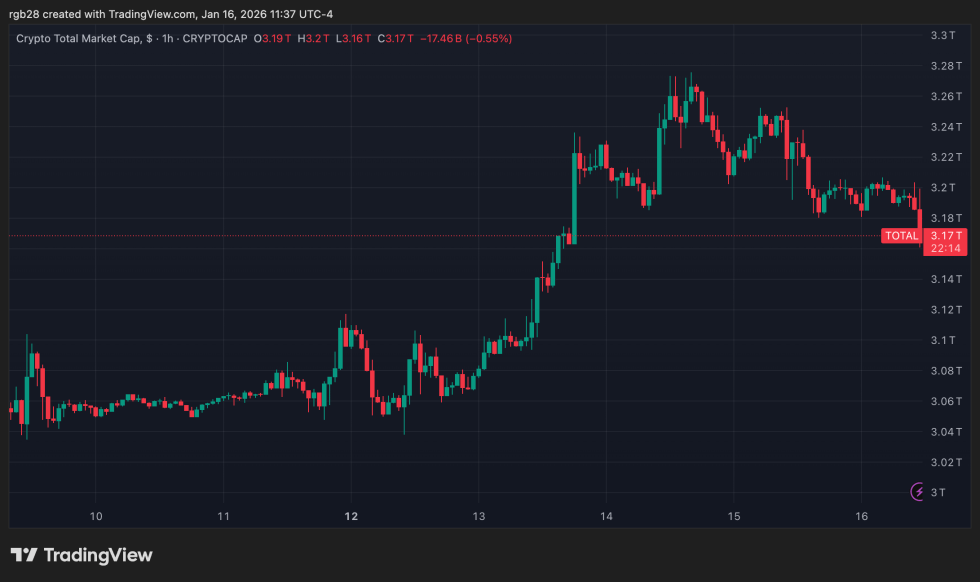
The total crypto market capitalization is at $3.17 trillion on the one-week chart. Source: TOTAL on TradingView


Trending Cryptos

Related Questions

QWhat is the purpose of the bill advanced by South Korean lawmakers regarding tokenized securities?

AThe bill aims to establish a legal framework for the issuance and trading of security token offerings (STOs) using distributed ledger technology (DLT), defining them as legitimate financial instruments and allowing their trade on licensed intermediaries.

QWhich two acts were amended by South Korea's National Assembly to create the legal framework for tokenized securities?

AThe National Assembly passed key amendments to the Capital Markets Act and the Electronic Securities Act.

QWhen is the tokenized securities legislation expected to be enacted after being signed into law?

AThe legislation is expected to be enacted one year after being signed into law, tentatively in January 2027.

QWhat is the Financial Services Commission (FSC) planning to form to ensure seamless preparatory work for tokenized securities?

AThe FSC is forming a joint 'Token Securities Council' with relevant agencies, including the Financial Supervisory Service, the Korea Securities Depository, the Financial Investment Association, industry participants, and experts.

QWhat recent change did South Korea announce regarding Bitcoin ETFs and institutional crypto trading?

ASouth Korea plans to open its market to Bitcoin ETFs this year and is lifting its long-standing ban on institutional crypto trading, with a proposed rule to cap corporate cryptocurrency investments at 5% of a company's equity capital.

Related Reads

In Jinjiang, Fujian, a Storage Super Unicorn Lies Quiet

In Fujian's Jinjiang, a city known for sportswear, lies a quiet semiconductor giant: Fujian Jinhua Integrated Circuit Co. (JHICC). Once a promising domestic DRAM manufacturer alongside Yangtze Memory and ChangXin Memory Technologies (CXMT), its journey was derailed in 2018 when the U.S. placed it on an Entity List and filed criminal charges for alleged trade secret theft. This halted production for years. A turning point came in February 2024 when a U.S. federal court found JHICC not guilty. However, it had lost crucial time. While CXMT soared to become a top-valued A-share company in 2024, JHICC, with an estimated valuation of 80 billion RMB, was just restarting. Its current output is primarily customized DDR4 chips, not the advanced DDR5/HBM demanded for AI, but it still benefits from the broader memory chip upcycle. JHICC's story is tied to Chen Zhengkun, a veteran engineer who left Micron to lead the venture. Founded in 2016 with state-backed funding, JHICC partnered with Taiwan's UMC to develop DRAM technology. Rapid progress was cut short by the U.S. actions, which Micron initiated, partly due to its heavy reliance on the Chinese market. Post-sanctions, Chen's team worked to rebuild the production line with reduced reliance on U.S. technology. According to its records, JHICC achieved small-scale production and revenue growth under immense pressure. It now focuses on the stable "niche" DRAM market (e.g., TVs, routers) with a monthly capacity of ~40,000 wafers, aiming for 60,000 by 2026. It holds over 1,000 patents but remains on the Entity List. For Jinjiang, investing in JHICC was a bold industrial leap. The local government provided unwavering financial and logistical support during the crisis, helping the company survive. JHICC has become the anchor for a growing local semiconductor cluster. Though its scale lags behind domestic peers, JHICC's persistence symbolizes a hard-won foothold in a global market long dominated by Samsung, SK Hynix, and Micron. Having missed one boom, it seeks a place in the new AI-driven memory supercycle.

marsbit39m ago

In Jinjiang, Fujian, a Storage Super Unicorn Lies Quiet

marsbit39m ago

Must-Watch Events Next Week|CLARITY Act Could Face Senate Vote; SpaceX, Circle to Report Earnings (8.3-8.9)

**Summary: Key Events and Developments to Watch (August 3-9)** The upcoming week is marked by significant financial disclosures, key legislative deadlines, and notable product updates. **Major Financial Events:** Several companies are scheduled to release their Q2 2026 earnings. American Bitcoin (ABTC) will report on August 3, followed by SpaceX and Hut 8 Mining Corp. on August 4, and Circle on August 5. Notably, a significant portion of SpaceX shares (up to 12% of total shares) will be unlocked on August 6 following their earnings release. **Key Legislative Deadline:** The U.S. Senate faces an August 7 deadline to secure 60 votes for the CLARITY Act, a bipartisan bill aiming to establish a federal regulatory framework for cryptocurrencies. The Senate may hold a full vote on the bill during the week. **Economic Data:** The U.S. July Non-Farm Payrolls report will be released on August 7, providing crucial labor market data. **Technology & Product Updates:** * **Shutdowns:** DeFi portfolio tracker Zapper and wallet app Ctrl Wallet will cease operations on August 3. * **Upgrades:** LayerZero will deprecate its v1 relayers on August 3. XRP Ledger's new version 3.3.0, featuring five new functions, is expected next week. * **AI:** Elon Musk announced that the advanced Grok 4.6 AI model is set for release around August 7. * **Bitcoin:** The BIP-110 forced signaling for a potential Bitcoin network change is scheduled to begin around August 8. **Other Notable Events:** Chinese robotics firm Unitree Tech has set its preliminary price inquiry for its IPO for August 5. South Korean exchange Upbit will delist AQT and AERGO tokens on August 3.

marsbit2h ago

Must-Watch Events Next Week|CLARITY Act Could Face Senate Vote; SpaceX, Circle to Report Earnings (8.3-8.9)

marsbit2h ago

Trading

Spot

Hot Articles

How to Buy PUSH

Welcome to HTX.com! We've made purchasing Push Protocol (PUSH) simple and convenient. Follow our step-by-step guide to embark on your crypto journey.Step 1: Create Your HTX AccountUse your email or phone number to sign up for a free account on HTX. Experience a hassle-free registration journey and unlock all features.Get My AccountStep 2: Go to Buy Crypto and Choose Your Payment MethodCredit/Debit Card: Use your Visa or Mastercard to buy Push Protocol (PUSH) instantly.Balance: Use funds from your HTX account balance to trade seamlessly.Third Parties: We've added popular payment methods such as Google Pay and Apple Pay to enhance convenience.P2P: Trade directly with other users on HTX.Over-the-Counter (OTC): We offer tailor-made services and competitive exchange rates for traders.Step 3: Store Your Push Protocol (PUSH)After purchasing your Push Protocol (PUSH), store it in your HTX account. Alternatively, you can send it elsewhere via blockchain transfer or use it to trade other cryptocurrencies.Step 4: Trade Push Protocol (PUSH)Easily trade Push Protocol (PUSH) on HTX's spot market. Simply access your account, select your trading pair, execute your trades, and monitor in real-time. We offer a user-friendly experience for both beginners and seasoned traders.

4.1k Total ViewsPublished 2024.03.29Updated 2026.06.02

How to Buy PUSH

Discussions

Welcome to the HTX Community. Here, you can stay informed about the latest platform developments and gain access to professional market insights. Users' opinions on the price of PUSH (PUSH) are presented below.

活动图片












