Silicon Valley AI Landscape Shifts: Karpathy Jumps Ship, Musk Steps In, Son Left Holding the Fort

marsbitPublished on 2026-05-21Last updated on 2026-05-21

Abstract

Silicon Valley's AI landscape is shifting as key talent moves and financial pressures mount. Andrej Karpathy, a prominent AI researcher and former OpenAI co-founder, has announced he is joining competitor Anthropic full-time. His departure highlights a talent drain at OpenAI, where most of the original founders have now left. Karpathy, known for his engineering work at Tesla, is expected to help Anthropic develop more efficient model training methods using its Claude AI, challenging OpenAI's current compute-intensive approach. The move coincides with diverging financial paths for the two AI giants. Anthropic is reportedly on track to post its first quarterly profit with $10.9B in sales, while OpenAI, despite a massive $852B valuation and a recent $122B funding round led by SoftBank's Masayoshi Son, faces significant compute costs and potential heavy losses as it pushes for a rapid IPO. Son has invested over $60B in OpenAI, a concentrated bet that has drawn internal criticism over its risk, reminiscent of SoftBank's past losses on WeWork. Elon Musk, an OpenAI co-founder turned rival, is also influencing the dynamic. After losing a lawsuit against OpenAI, Musk's SpaceX leased its massive "Colossus 1" computing center, equipped with over 220,000 Nvidia GPUs, to Anthropic in a deal worth $40-45B. This provides Anthropic with crucial computational resources while pressuring OpenAI. The developments signal a consolidation where only well-capitalized players can compete in founda...

Two pieces of news spread through Silicon Valley almost simultaneously.

One: Anthropic is expected to achieve $10.9 billion in sales this quarter, reaching quarterly profitability for the first time.

Another: OpenAI is accelerating its IPO process, planning to confidentially file its prospectus in the coming weeks at the earliest, with a potential listing in the fall, and a valuation that could reach a trillion dollars.

Upon the news, SoftBank Group's stock price soared nearly 20% intraday, with its market value rising approximately 240 billion RMB in a single day.

One has just touched the profitability line, while the other, still in the red, is rushing to go public. Looking back at the personnel change two days ago, the logic becomes clear—

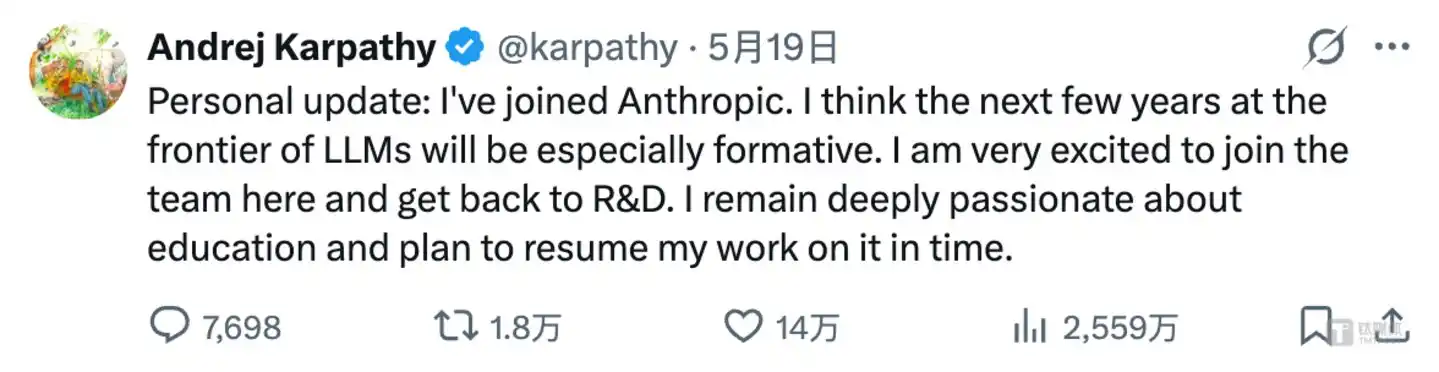
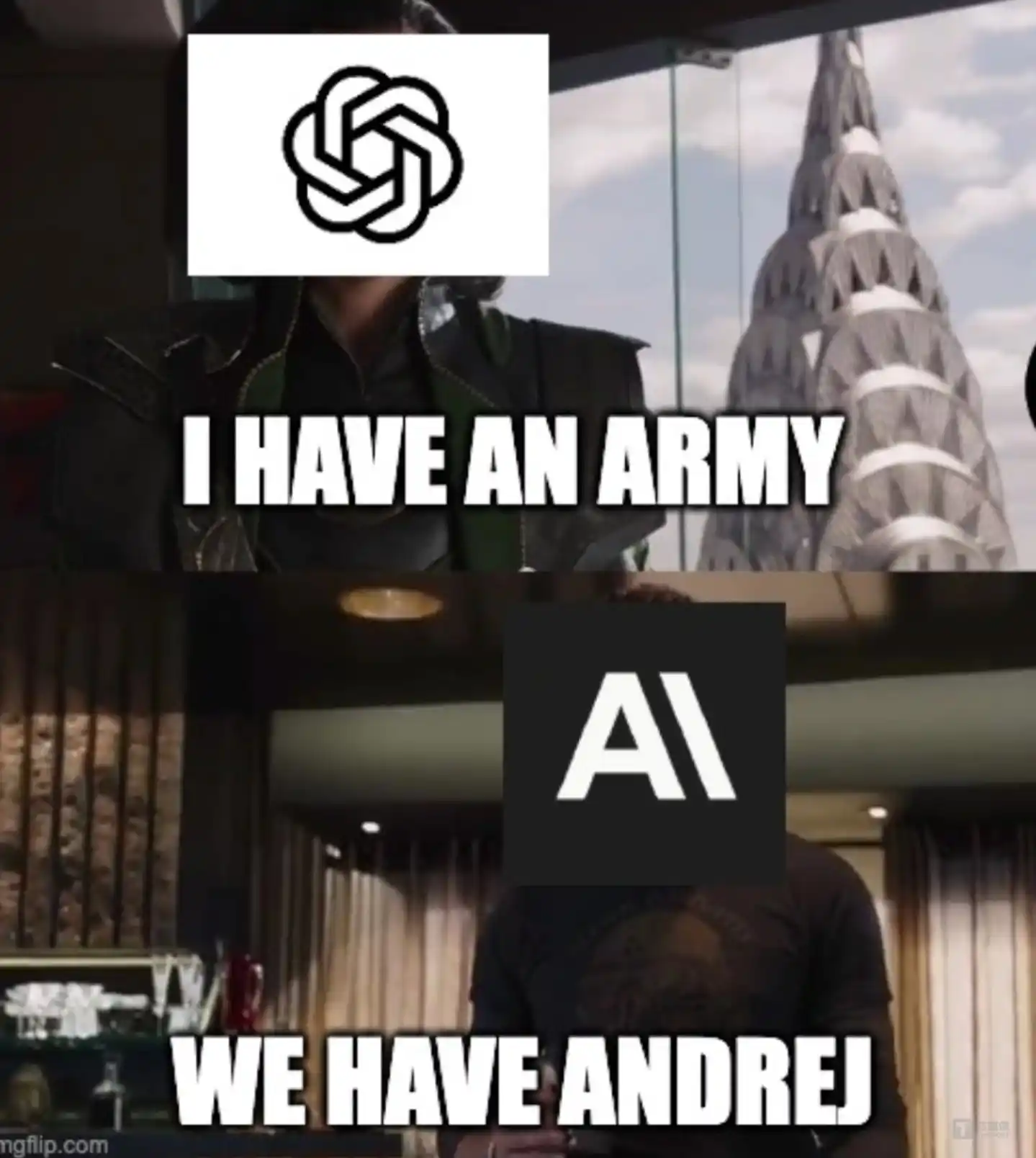
On May 19th, former OpenAI co-founder Andrej Karpathy announced on X: he is joining Anthropic full-time.
This is no ordinary job change.

Today's OpenAI is already the largest AI company by volume in the capital markets.

It just completed a $122 billion financing round at an $852 billion valuation.

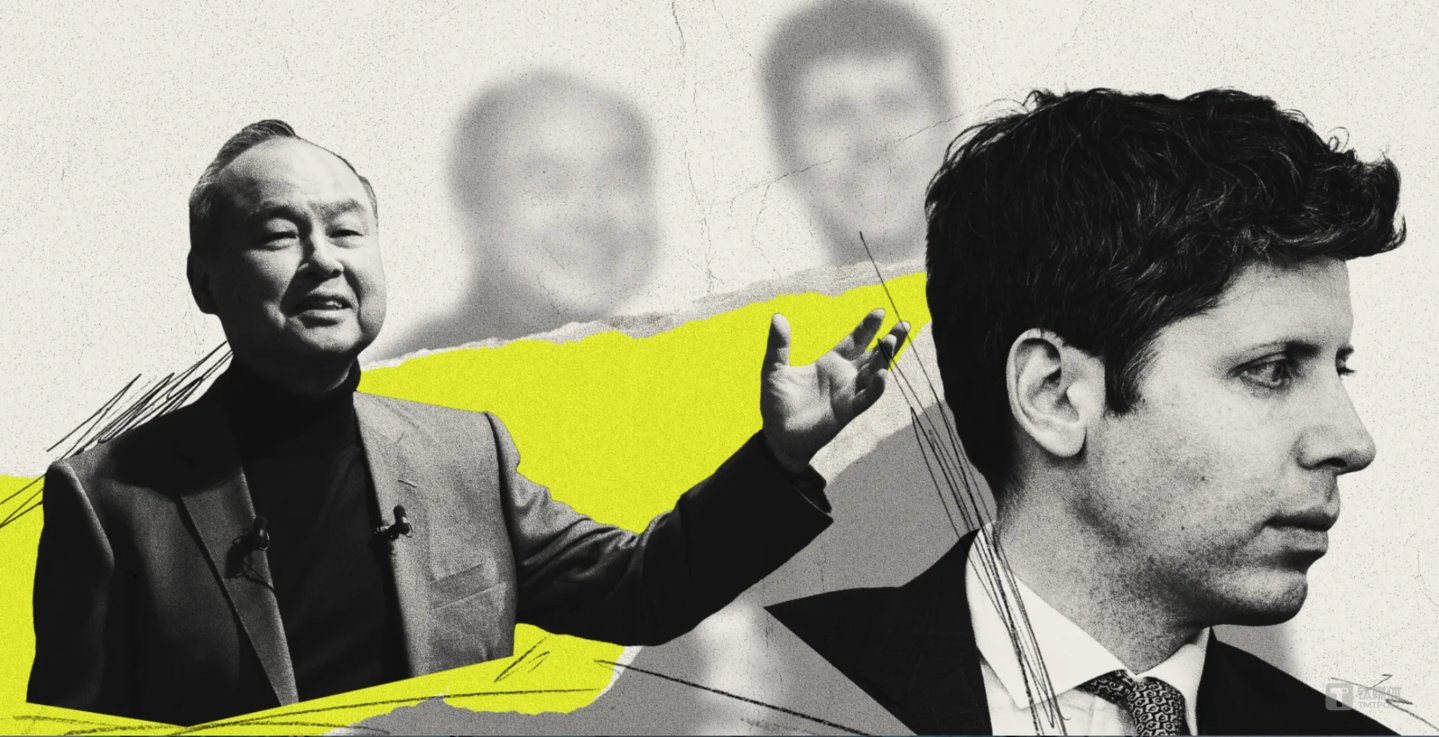
Japan's SoftBank's Masayoshi Son, ignoring internal executive opposition, concentrated over $60 billion to bet on OpenAI.

But inside the company, something else is happening:

Of the 11 co-founders who signed the startup agreement in that humble office back in the day, only two remain—CEO Sam Altman and President Greg Brockman.

Capital is piling up, but core founders are dwindling.

The reasons behind this go beyond a simple explanation of "philosophical differences"; it's more like the result of a clash over strategy, competition for computing power, and a game of giants.

Who is Karpathy? Why Did He Choose Anthropic?

To understand this, one must first grasp Karpathy's position in the AI industry.

In the eyes of top investors, he is not just a technical manager but more like a key figure who can directly influence R&D pace—whichever company he joins, that company's model iteration speed changes.

The 39-year-old Karpathy does have a standout resume.

While pursuing his PhD at Stanford under Fei-Fei Li, he helped create Stanford's first deep learning course.

But what truly made him famous was his five years at Tesla.

He left OpenAI to join Tesla in 2017, and briefly returned to OpenAI in 2023.

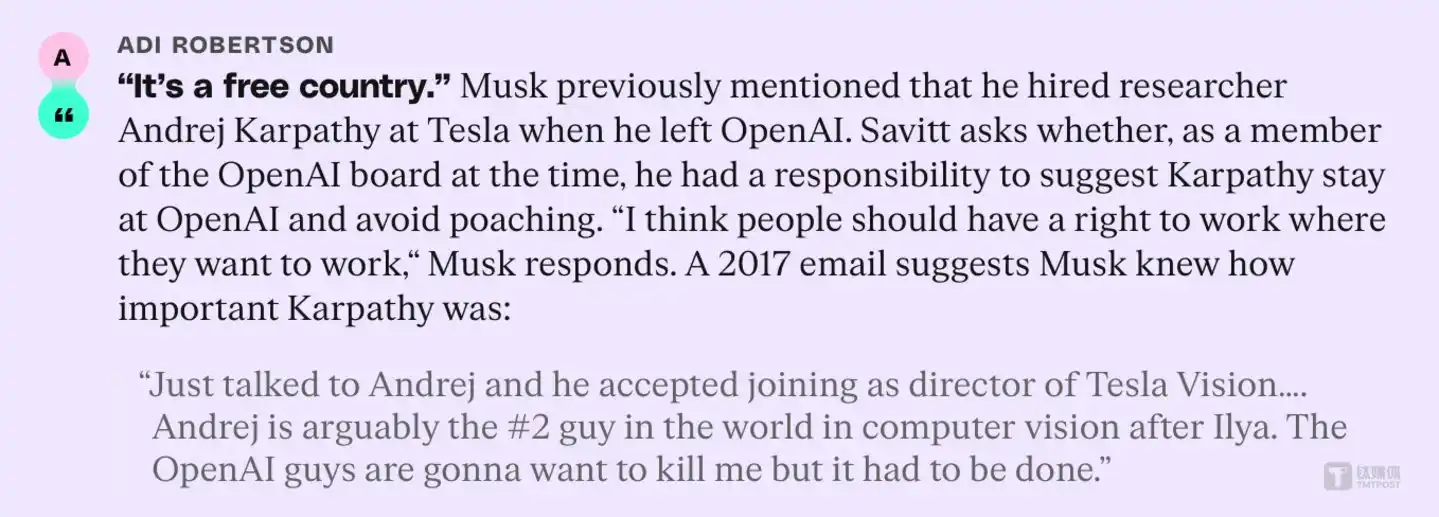
In 2017, Musk, then an OpenAI board member, bypassed OpenAI management and directly recruited Karpathy to Tesla, responsible for AI and autonomous driving vision. Court evidence shows this move displeased OpenAI at the time.
At Tesla, Karpathy did far more than write papers.

He built the autonomous driving engineering system from scratch, including assembling a data labeling team and deploying neural networks onto Tesla's self-designed chips.

The tech circle's trendy concept of "Vibe Coding" in recent years was also popularized by him.

So, what will he do at Anthropic now?

The answer: Join the pre-training team to use Claude to accelerate the pre-training of the next-generation model.
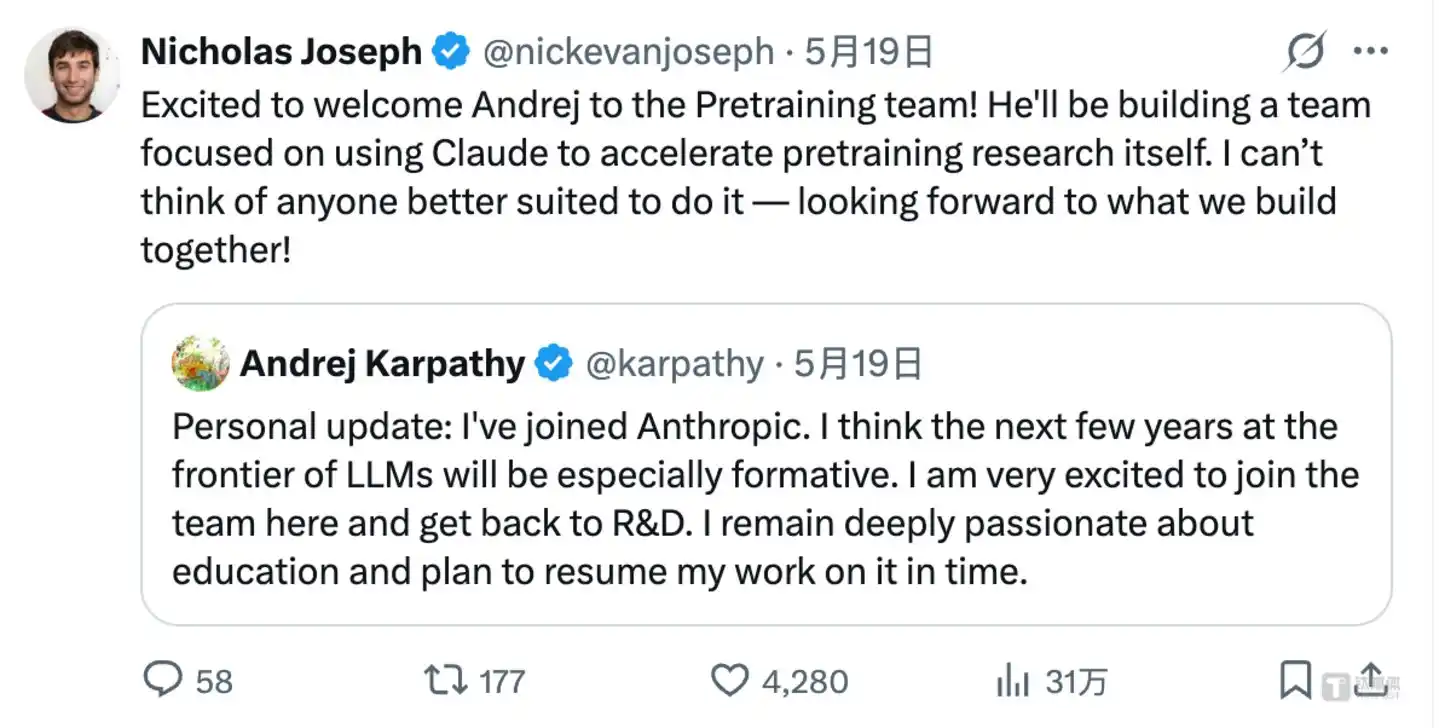
Simply put, OpenAI currently trains large models mainly by brute-forcing computing power—massive amounts of NVIDIA GPUs running simultaneously, competing on who can afford more electricity and hardware costs.

What Karpathy aims to do at Anthropic is to have Claude help accelerate the training process itself.

If this path succeeds, the training cost of large models will drop significantly.

Karpathy's choice actually signals something: from the perspective of those actually doing engineering work, the path of simply burning money on computing power is nearing its end; using models to assist training is a more realistic direction.

Compute Consumption and the "WeWork Shadow"

The successive departure of core talent is often related to the company's operational direction.

Today's OpenAI has transformed from an early non-profit research institution into a company bearing revenue pressure.

As of February 2026, OpenAI's annualized revenue exceeded $25 billion.

But compute costs are growing even faster.

According to a 2024 Reuters report citing insider predictions, OpenAI might face up to $14 billion in losses in 2026, with positive cash flow not expected until 2029. This prediction has not been updated or confirmed.

Compute power is a heavy asset with rapid depreciation. To control losses, OpenAI began cutting unprofitable projects.

The Sora video project was shut down in March this year because it reportedly burned about $1 million per day in server costs, with user growth falling short of expectations.

The OpenAI for Science division, established in 2025, also saw its team split and merged into other product lines.

These adjustments, on one hand, are to comply with the requirements for transitioning to a "Public Benefit Corporation (PBC)" in 2025, and on the other hand, are preparations for the IPO. But for the scientists who joined driven by technological ideals, the company's priorities have changed.

And it is at this moment that Son chose to double down.

Over the past year, SoftBank has channeled over $60 billion into OpenAI through various means.

There is significant internal controversy at SoftBank about this.

Several executives privately believe concentrating this much capital on a single private company is excessively risky.

To raise funds, SoftBank sold off some assets, including NVIDIA shares. Simultaneously, the Vision Fund cut about 20% of its staff, tilting resources towards the AI track.

What SoftBank executives fear is a repeat of the WeWork debacle.

Back then, Son was enamored with WeWork's business story, ultimately losing tens of billions. According to Bloomberg, some insiders used the term "starstruck" to describe Son's attitude towards Altman this time—eerily similar to his attitude towards WeWork's founder back in the day.

After investing $60 billion, SoftBank did not secure a substantive board seat at OpenAI. But Son had already missed the last internet wave; he is unwilling to miss AI again. In his view, these losses are the price to pay for a ticket to "base intelligence."

And when the news of OpenAI's IPO came out, SoftBank's market value rose by 240 billion RMB in a single day—at least for now, this bet hasn't lost.
Musk's Compute Play

The one best at causing trouble in this game is still Musk.

He is one of OpenAI's earliest co-founders and now its most direct competitor.

In May this year, Musk lost his lawsuit against OpenAI for deviating from its original purpose, on grounds of the statute of limitations.

But the trial disclosed much information: the one who originally wanted to turn OpenAI into a for-profit company was none other than Musk himself.

He had calculated the math—Mars colonization needs about $80 billion, and controlling an AGI company was his way to raise funds.

Failing to gain control, he chose to exit, stop funding, and simultaneously poached Karpathy.

Although he lost the lawsuit, Musk soon took action on the compute front.

In early May, Musk announced the merger of xAI into SpaceX. Subsequently, SpaceX leased its Colossus 1 computing center in Memphis, Tennessee—equipped with over 220,000 NVIDIA GPUs—to Anthropic as a whole. SpaceX's IPO prospectus shows the total value of this lease is between $40 and $45 billion.
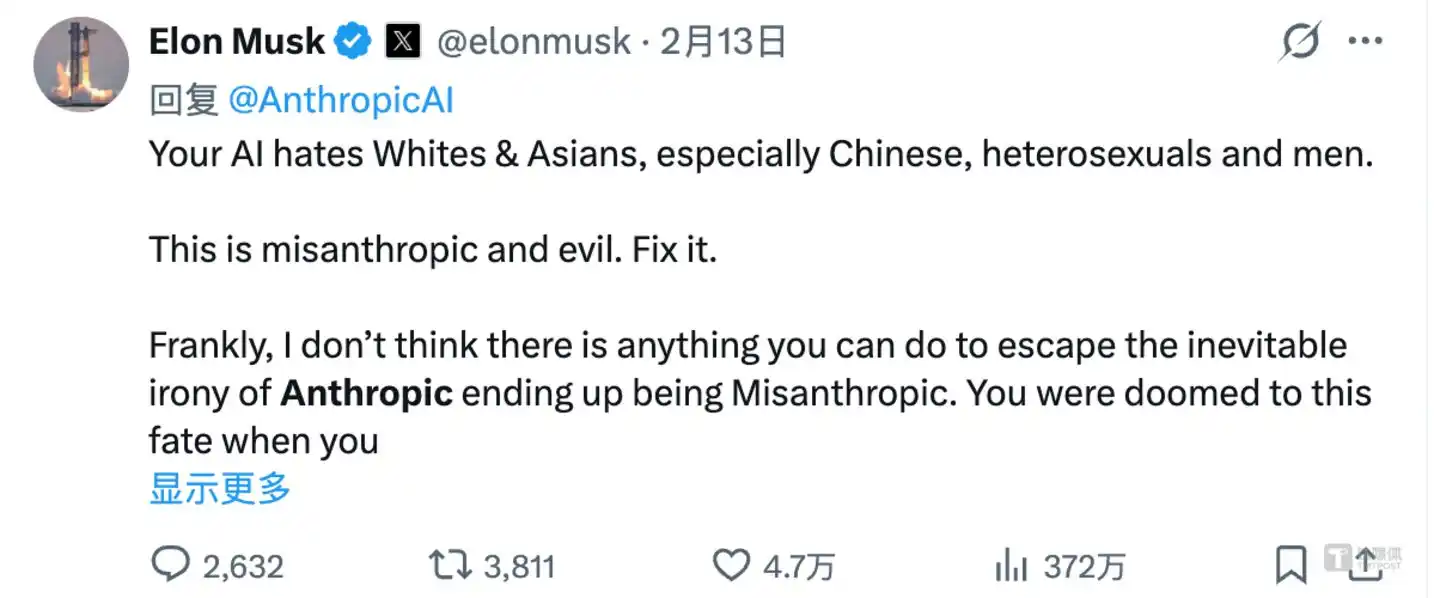

Just months ago, Musk publicly called Anthropic "misanthropic and evil" on X.

But before business interests, positions can be adjusted at any time.

Musk pinpointed OpenAI's weak spot—compute power.

Leasing the computing center to Anthropic, on one hand, generates hefty rent, and on the other hand, indirectly strengthens the power of OpenAI's competitor, putting pressure on OpenAI.

Anthropic's Fearsome Comeback

With ample compute power, Anthropic's performance is indeed accelerating.

In April 2026, Anthropic announced its annualized revenue exceeded $30 billion, surpassing OpenAI (approximately $25 billion) in scale for the first time.

By May 21st, the Wall Street Journal further disclosed: Anthropic is expected to achieve $10.9 billion in sales in the second quarter, reaching quarterly profitability for the first time.

For reference, it took Salesforce over twenty years to reach a comparable revenue scale. Anthropic, from its founding in 2021 to now, took less than five years.
More crucial is cost control.

Anthropic's product line is relatively focused, mainly on enterprise-level code generation and AI agents, without venturing into C-end video generation and other fields. Its model training costs are estimated to be only about one-fourth of OpenAI's.

Higher revenue, lower expenditure—that's Anthropic's current advantage.

For someone like Karpathy, who has long focused on engineering implementation, this difference is persuasive.

From Karpathy's choice to the compute-power game among giants, this round of competition sends a signal: the threshold for large-scale model foundational training is already very high, making it difficult for ordinary entrepreneurs to find opportunities in the general model domain. More pragmatic paths are either to focus on specific B-end scenarios like Anthropic does—such as using AI to solve workflow problems with clear willingness to pay, like code generation; or to find niche opportunities in directions like AI-assisted training, synthetic data, etc. Compute costs determine who can survive this round; that's the most fundamental calculation.

(This article was first published on TMTPost APP, author | Silicon Valley Tech_news, editor | Linshen)


Related Reads

AI Trading Cools, South Korean Stocks Plunge 1.8%, Spot Gold Rises 1%, Bitcoin Dives

A sell-off in AI-related stocks, triggered by Broadcom's disappointing earnings forecast, sent shockwaves through global markets. South Korea's KOSPI led Asia's decline, plunging 1.8% as the risks from concentrated chip stock gains and surging leveraged investments came to the fore. The tech-heavy Nasdaq 100 futures fell 0.5% following Broadcom's 14% after-hours plunge, which signaled a slower-than-expected transition to AI clients. This pullback extended Wall Street's weakness, halting the S&P 500's nine-day rally amid hawkish Fed signals and renewed Middle East tensions. South Korean authorities convened an emergency meeting, pledging "immediate measures" against market volatility and warning of record-high stock margin debt. The adjustment rippled across assets: Bitcoin fell to around $64,000, its lowest since February, while safe-haven gold rose 1% on bargain hunting. Oil prices dipped on Middle East ceasefire news. Market analysts noted the sell-off was driven by profit-taking after massive gains, particularly in chip stocks like Samsung and SK Hynix, which now dominate the KOSPI. Wall Street banks are divided on Korea's outlook, with Goldman Sachs raising its target while Citigroup and others warn of overvaluation and a potential bubble. Bridgewater's Ray Dalio noted that great technological shifts often create bubbles. Meanwhile, Fed officials' hints at potential future rate hikes added to the cautious mood ahead of key U.S. jobs data.

华尔街日报15m ago

AI Trading Cools, South Korean Stocks Plunge 1.8%, Spot Gold Rises 1%, Bitcoin Dives

华尔街日报15m ago

Seeking Alpha's Hot Article: Why Might the U.S. Stock Market Crash in June?

In a recent Seeking Alpha article, financial professor and analyst Damir Tokic argues that the US stock market may be poised for a significant crash in June 2026. The core thesis centers on a "mega-bubble" in equities, particularly within the technology sector, which has driven the S&P 500 to near-record valuations, with a Shiller P/E ratio exceeding 40—a level comparable to the 2000 dot-com bubble. Tokic identifies two primary catalysts for a potential collapse. First, he points to unsustainable market exuberance fueled by what he terms the "Trump Stimulus"—massive AI capital expenditure by tech giants, which he believes is politically driven and cannot last. Second, and more urgently, he highlights the escalating Iran war as a critical threat. The ongoing closure of the Strait of Hormuz has created a severe global energy supply crunch. Strategic petroleum reserves are projected to hit critically low operational levels by June, potentially causing oil prices to spike above $200 per barrel and triggering a severe, supply-driven inflationary shock. This scenario, Tokic warns, would force the Federal Reserve's hand. Despite currently maintaining a dovish bias, the Fed would likely be compelled to officially pivot to a hawkish stance at its June FOMC meeting to combat soaring inflation and bond yields. He contends that such a shift—or even a failure to act, which would destroy Fed credibility—could be the trigger that punctures the market bubble. The resulting downturn, he concludes, could rival the bear markets of 2000 and 2008, advising investors to prepare for a major correction.

marsbit37m ago

Seeking Alpha's Hot Article: Why Might the U.S. Stock Market Crash in June?

marsbit37m ago

AI PC Battle: Bet on the Toll Booth, Not the Camp

**Title:** The AI PC Battle: Don't Bet on Sides, Bet on the Tollbooth **Summary:** The AI PC competition is moving beyond simple "x86 vs. Arm" narratives. The core investment thesis should focus on identifying which players can sustain margins, cash flow, and pricing power throughout the upgrade cycle, rather than backing a particular architecture. The opportunity is analyzed in three layers: 1. **The Advanced Foundry Tollbooth:** TSMC is positioned to collect "tolls" regardless of which chip designer wins, due to its dominant ~70% share in advanced semiconductor manufacturing, which is essential for high-end AI PC chips. 2. **Compute & Platform Spillover:** AMD represents an offensive in the x86 CPU+GPU space, while NVIDIA leverages its GPU and CUDA software stack dominance. Both benefit from the demand for increased local AI compute. 3. **Architecture Diffusion & Turnaround Plays:** ARM and Intel offer potential for significant upside (elasticity), but investments here require stricter discipline due to higher execution risks and competitive challenges. The industry is transitioning from concept to shipment validation. While short-term forecasts for AI PC adoption have been revised down slightly due to tariffs and procurement delays, the long-term trend towards AI becoming a standard PC feature remains intact. The key driver for upgrade cycles will be whether compelling enterprise applications (e.g., privacy-sensitive computing, low-latency inference) emerge beyond consumer-focused features like meeting summarization. Investment strategy should prioritize companies with platform-level advantages and recurring revenue streams. TSMC offers high certainty as the foundational tollbooth. AMD presents a strong offensive play within the established ecosystem. ARM and Intel are higher-risk, higher-potential-reward turnaround bets. The report cautions against chasing short-term hype and emphasizes a disciplined, long-term approach focused on buying ecosystem strength and cash-flow certainty after market enthusiasm subsides. **Key Risks:** Underwhelming AI PC applications slowing upgrade cycles; slow improvement in Windows on Arm compatibility; macro/tariff impacts on PC demand; potential advanced node supply-demand mismatches affecting TSMC; high overall AI sector valuations making stocks vulnerable to a risk-off shift in markets.

marsbit51m ago

AI PC Battle: Bet on the Toll Booth, Not the Camp

marsbit51m ago

Ten-Thousand-Word Analysis: From $10 to $290, MRVL Wins the Entire AI Era by 'Not Making GPUs'

Marvell Technology's stock price surged from under $10 in 2016 to a record $290 in June 2026, fueled not by making GPUs, but by dominating AI infrastructure connectivity. This analysis argues the market misvalues MRVL as merely a smaller Broadcom in custom AI chips, overlooking its true, unique position. Marvell's core strength lies in enabling high-speed data flow for AI clusters through three interconnected businesses. First, it holds a commanding ~70% market share in high-speed optical DSPs (essential for data center light modules), a deep-moat business with accelerating growth. Second, its custom AI chip design business serves hyperscalers like AWS, Microsoft, and Google, with a significant revenue pipeline despite lower margins. Third, stable cash flows come from Ethernet switch chips and enterprise storage controllers. Together, they form a full-stack "AI data movement" platform. CEO Matt Murphy's transformative leadership since 2016, involving strategic divestments, key acquisitions (like Inphi for optical DSPs), and securing long-term agreements with major cloud providers, repositioned the company. A pivotal $2 billion strategic investment from NVIDIA in 2026 underscored Marvell's critical role in the AI ecosystem, particularly through collaborations like NVLink Fusion. While Marvell faces risks—including client concentration (losing the Amazon Trainium3 design), lower-margin business mix, competitive threats, insider selling, and complex supply chains—its fundamentals remain strong. The optical interconnect moat is widening with the acquisition of Celestial AI (photonics fabric), and financial metrics show accelerating revenue growth and operating leverage. With a PEG ratio suggesting undervaluation relative to its growth, the thesis is that the market undervalues Marvell's monopolistic position in AI "plumbing" while overemphasizing its competitive custom chip segment. The story transcends investing, symbolizing how in any complex system—from the internet to AI—the value of "connection" ultimately surpasses that of individual "nodes."

marsbit1h ago

Ten-Thousand-Word Analysis: From $10 to $290, MRVL Wins the Entire AI Era by 'Not Making GPUs'

marsbit1h ago

Trading

Spot
Futures

Hot Articles

How to Buy ONE

Welcome to HTX.com! We've made purchasing Harmony (ONE) simple and convenient. Follow our step-by-step guide to embark on your crypto journey.Step 1: Create Your HTX AccountUse your email or phone number to sign up for a free account on HTX. Experience a hassle-free registration journey and unlock all features.Get My AccountStep 2: Go to Buy Crypto and Choose Your Payment MethodCredit/Debit Card: Use your Visa or Mastercard to buy Harmony (ONE) instantly.Balance: Use funds from your HTX account balance to trade seamlessly.Third Parties: We've added popular payment methods such as Google Pay and Apple Pay to enhance convenience.P2P: Trade directly with other users on HTX.Over-the-Counter (OTC): We offer tailor-made services and competitive exchange rates for traders.Step 3: Store Your Harmony (ONE)After purchasing your Harmony (ONE), store it in your HTX account. Alternatively, you can send it elsewhere via blockchain transfer or use it to trade other cryptocurrencies.Step 4: Trade Harmony (ONE)Easily trade Harmony (ONE) on HTX's spot market. Simply access your account, select your trading pair, execute your trades, and monitor in real-time. We offer a user-friendly experience for both beginners and seasoned traders.

3.7k Total ViewsPublished 2024.03.29Updated 2026.06.02

How to Buy ONE

Discussions

Welcome to the HTX Community. Here, you can stay informed about the latest platform developments and gain access to professional market insights. Users' opinions on the price of ONE (ONE) are presented below.

活动图片