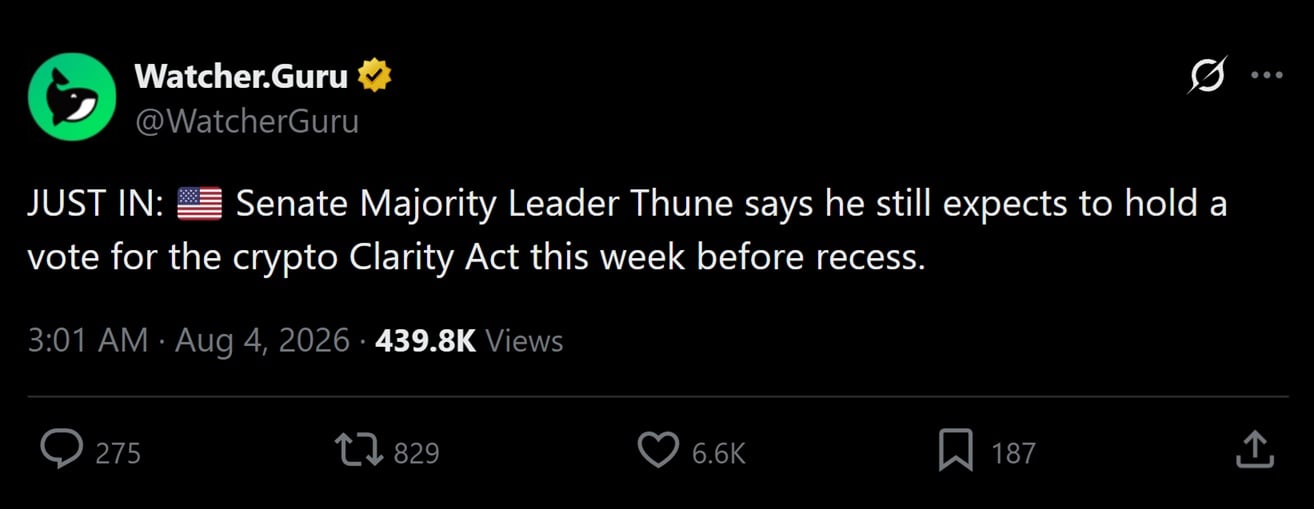
In his latest comments, Toomey repeated a promise he had made before and later walked back. Just last July 23rd, the majority leader told reporters he did not expect the Digital Asset Market Clarity Act to come up for consideration before the summer recess, citing a lack of sufficient votes.
A few days later, he changed his stance, stating that the Senate would continue working, despite a packed pre-recess schedule, specifically to pass the crypto market structure bill. "We have a ton of work we need to finish, and we are just going to stay here until we finish it," Toomey said, lumping the 'Clarity Act' into the Senate's broader list of unfinished business rather than treating it as a standalone priority.
Why Time is So Short
Passing the CLARITY Act through the Senate via regular order requires 60 votes, and Republicans control only 53 seats, meaning at least seven Democrats would need to cross over. Additionally, in late July, the White House and Senate Republicans reached a tentative agreement on ethics-related wording, and Trump personally approved the compromise, but Democrats say they have not yet seen the actual bill text, with some arguing the described wording still leaves Trump avenues to continue profiting from his family's crypto ventures.
Treasury Secretary Scott Bessent characterized the bill as being on the 'one-yard line,' but even so, Galaxy Research's own odds give it just 30 percent (as of this week). Prediction markets are also divided: JPMorgan puts the odds of passage around 37 percent, while Polymarket participants are closer to 26 percent.
What Happens if the Senate Misses the Window
More than 1,200 technology companies are pushing the Senate for swift action: traditional finance giants like Grayscale are publicly urging a vote before the recess begins, and asset manager Charles Schwab has repeatedly called the bill a 'fundamental catalyst' for institutional crypto adoption.
As if that wasn't enough, a coalition of 134 banking executives separately expressed concerns over specific provisions they want changed before final passage, indicating that the CLARITY Act is not merely a crypto industry versus skeptics standoff, but a multi-sided negotiation about exactly which rules apply to which market participants.
If Toomey's promise holds and the Senate does find a way to secure 60 votes this week, the CLARITY Act would become the first comprehensive federal digital asset market structure law, dividing oversight between the Securities and Exchange Commission and the Commodity Futures Trading Commission depending on how a given token is classified.