Ripple Gains UK Regulatory Approval Ahead Of FCA’s New Crypto Licensing Regime

bitcoinistPublished on 2026-01-10Last updated on 2026-01-10

Abstract

Ripple has secured a regulatory approval from the UK’s Financial Conduct Authority (FCA) through its subsidiary Ripple Markets UK Ltd. The company obtained an Electronic Money Institution (EMI) license under the Money Laundering Regulations (MLR), allowing it to provide payment services and issue electronic money. However, the approval comes with restrictions: Ripple cannot operate crypto-fiat automated exchange machines, offer services to retail clients, or issue e-money to consumers without prior written consent from the FCA. This approval aligns with the UK’s broader effort to integrate crypto into its financial framework. The FCA will introduce a new crypto licensing regime under the Financial Services and Markets Act starting September 2026. Ripple and other crypto firms must reapply for authorization under the new rules by October 2027 to continue regulated activities.

In a significant development, Ripple has expanded its footprint in regulated markets after gaining regulatory approval from the UK’s financial authorities to provide payment services.

Ripple Obtains FCA Approval

On Friday, Ripple secured a major regulatory victory in the UK by officially obtaining its registration approval with the Financial Conduct Authority (FCA) through its subsidiary Ripple Markets UK Ltd.

According to the FCA’s official records, the company obtained an Electronic Money Institution (EMI) license under the country’s Money Laundering Regulations (MLR). Therefore, it will be able to conduct certain crypto-related activities in the UK.

The EMI registration will allow Ripple to provide payment services and issue electronic money, according to the FCA website. However, it will remain subject to key restrictions without the financial authority’s approval.

First, “Ripple Markets UK Ltd will not, without the prior written consent of the Authority, provide the following services: 1. The firm will not operate a machine which utilises any automated processes to exchange cryptoassets for money or money for cryptoassets 2. Offer or commence any services to retail clients,” the records read.

In addition, the company cannot appoint any agents or distributors, and “will not issue electronic money, or provide payment services, to a consumer, micro-enterprise or charity.”

Ripple’s regulatory approval comes amid the authorities’ efforts to develop a comprehensive financial services regulation that integrates crypto assets into the existing framework, positioning the UK as a global crypto hub.

As reported by Bitcoinist, the UK Treasury is set to extend existing laws to cover crypto firms, moving exchanges, wallet providers, and other crypto service companies from the current anti-money-laundering registration to the regulatory regime of banks and brokers.

FCA To Start New Registration Regime In September

Ahead of the new rules’ implementation, set to take effect in October 2027, the FCA recently unveiled a timeline for crypto firms to comply with the new registration regime, which could affect Ripple’s recent victory.

On January 8, the financial regulator published a notice informing that it expects to open the application period for crypto firms requesting authorization in September 2026.

Notably, firms seeking to undertake any of the new crypto asset regulated activities will need new approvals to undertake those activities authorized by the FCA under the Financial Services and Markets Act 2000 (FSMA).

Therefore, crypto companies operating in the UK must secure approval or a variation of the existing permission. The FCA emphasized that “firms that are registered with us under the MLRs should note that there will be no automatic conversion and that they will need to secure authorisation by us under FSMA prior to the commencement of the new regime.”

Based on this, Ripple’s UK subsidiary will need to reapply in September to continue conducting regulated crypto activities under the new regime. Firms that apply during the established window are expected to receive a decision before the rules take effect. Nonetheless, companies that have not received approval by October 2027 will be allowed to continue operating until a decision is made.

Meanwhile, companies that miss the application period or are not authorized before the new rules are enacted will enter a “transitional provision.” This will allow them to continue fulfilling existing contracts, but they won’t be able to conduct new regulated crypto activities in the UK until they are authorized.
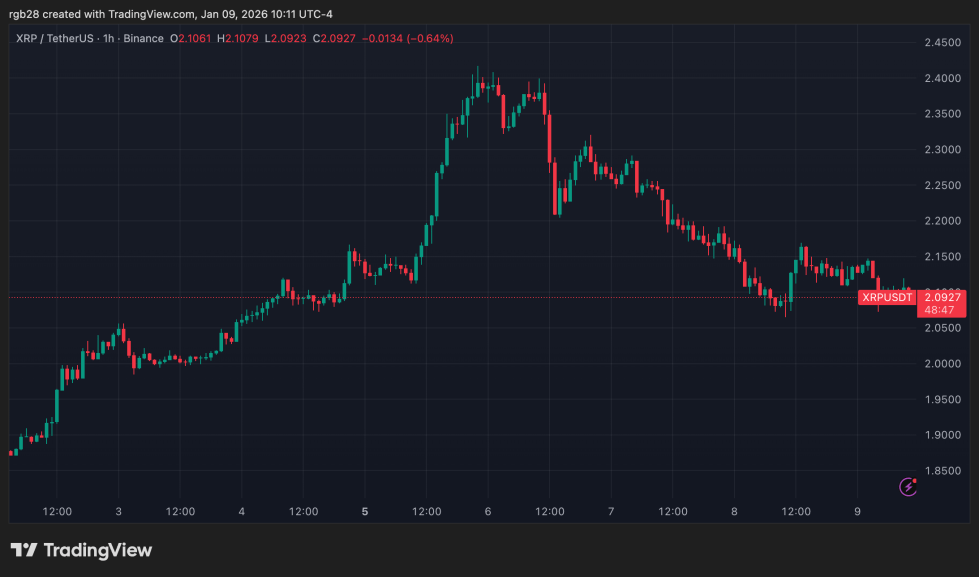
XRP trades at $2.09 in the one-week chart. Source: XRPUSDT on TradingView


Related Questions

QWhat type of regulatory approval did Ripple obtain from the UK's Financial Conduct Authority (FCA)?

ARipple obtained an Electronic Money Institution (EMI) license under the UK's Money Laundering Regulations (MLR) through its subsidiary Ripple Markets UK Ltd.

QWhat are the key restrictions placed on Ripple Markets UK Ltd despite the FCA approval?

AThe company cannot operate automated crypto-to-fiat exchange machines, offer services to retail clients, appoint agents or distributors, or issue electronic money or provide payment services to consumers, micro-enterprises, or charities without prior written consent from the FCA.

QWhen will the FCA open the application period for crypto firms seeking authorization under the new regime?

AThe FCA expects to open the application period for crypto firms requesting authorization in September 2026.

QWhat must Ripple's UK subsidiary do to continue conducting regulated crypto activities under the new regime starting October 2027?

ARipple's UK subsidiary will need to reapply for authorization under the Financial Services and Markets Act 2000 (FSMA) in September 2026, as there is no automatic conversion from the current MLR registration.

QWhat happens to crypto companies that are not authorized by the FCA before the new rules take effect in October 2027?

ACompanies not authorized by October 2027 will enter a 'transitional provision' allowing them to fulfill existing contracts but not conduct new regulated crypto activities until they receive authorization.

Related Reads

IREN's Insanity: Selling Miners, Buying GPUs, Stock Price Up 16%

IREN, a Bitcoin mining company, saw its stock price surge 16% after releasing its quarterly earnings on May 8th. The surge was not driven by Bitcoin's price, but by the company's radical strategic shift away from cryptocurrency mining and towards AI infrastructure. The company reported a $140 million impairment charge after decommissioning and listing for sale 5,800 of its Bitmain S21 Pro mining rigs. It also maintains a policy of selling all mined Bitcoin daily, holding zero crypto assets. Despite this dismantling of its core business, investor sentiment was positive due to IREN's aggressive pivot into AI. This shift is backed by massive, long-term contracts. IREN announced a new 5-year, $3.4 billion collaboration with NVIDIA, which includes an equity investment commitment. This follows a previously secured 5-year, $9.7 billion GPU cloud services agreement with Microsoft. To support these deals, IREN acquired European data center capacity and cloud software capabilities. Management targets 480 megawatts of AI capacity, 150,000 GPUs, and $3.7 billion in annual recurring revenue by late 2026. While other North American miners are exploring hybrid "mining + AI" models, IREN is making a clean break, betting entirely on the booming demand for AI compute power. The move highlights a broader industry trend where the value of mining hardware is declining while GPU-based AI infrastructure is in critically short supply.

marsbit3h ago

IREN's Insanity: Selling Miners, Buying GPUs, Stock Price Up 16%

marsbit3h ago

Trading

Spot
Futures
活动图片




