Recalling 10 Little-Known Key Contributions of the Early TON Core Team

marsbitPublished on 2026-03-15Last updated on 2026-03-15

Abstract

Despite TON Foundation being widely recognized, the early contributions of the NEWTON team—TON's core developers—are less known. As an early member, Dr. Awesome Doge recounts their pivotal role in maintaining TON testnet2 and enhancing developer tools before Telegram’s official endorsement in 2021, marking a historic community-led takeover. Key contributions include: 1. **mytonctrl**: An automated node management tool for validator setup, wallet creation, and DNS registration. 2. **tonmon**: A monitoring tool for blockchain health, tracking metrics like block time and validator status. 3. **tonmine**: A system to monitor Giver contracts, which distributed ~200,000 $TON daily. 4. **Cross-chain bridge**: Enabled transfers between TON, Ethereum, and BSC before jetton standards existed. 5. **cryptobot**: An early Telegram wallet supporting multiple cryptocurrencies. 6. **toncenter**: A public API simplifying blockchain data access for developers. 7. **explorer.toncoin.org**: TON’s first technical blockchain explorer. 8. **ton.sh**: A user-friendly blockchain explorer focusing on wallet balances and transaction memos. 9. **TonWeb**: A JavaScript SDK to simplify interactions with TON’s complex smart contract languages. 10. **ton wallet**: An early functional wallet that remains operational. In June 2021, NEWTON’s public letter to Telegram led to official recognition and GitHub access, catalyzing TON’s growth. These foundational efforts underscore the team’...

Author: Dr. Awesome Doge

Compiled by: WuBlockchain

Although the TON Foundation is a more well-known name, few people know the story of its early contributors—the NEWTON team (TON Core Team).

Through voluntary technical contributions, the NEWTON team gained recognition from the @Telegram official team in 2021, ultimately achieving a technical handover, marking the most significant "community takeover" in blockchain history.

As one of the early members of NEWTON, let me share this story. — @drawesomedoge

Introduction: Joining the NEWTON Team and Its Mission

When I joined the NEWTON team, our main mission was clear: to maintain the stability of the TON testnet2 code while enhancing developer tools.

Since we couldn't directly control the ton-blockchain GitHub repository but needed to continuously optimize the code, we established a new organization called NEWTON. To ensure smooth network updates, we encouraged the community to use the validator developed by NEWTON as the standard version.

From our establishment to June 2021, the NEWTON team completed several groundbreaking development and infrastructure projects. Let's delve into the 10 key contributions that shaped the early days of TON.

1. mytonctrl: Automated Node Management Tool

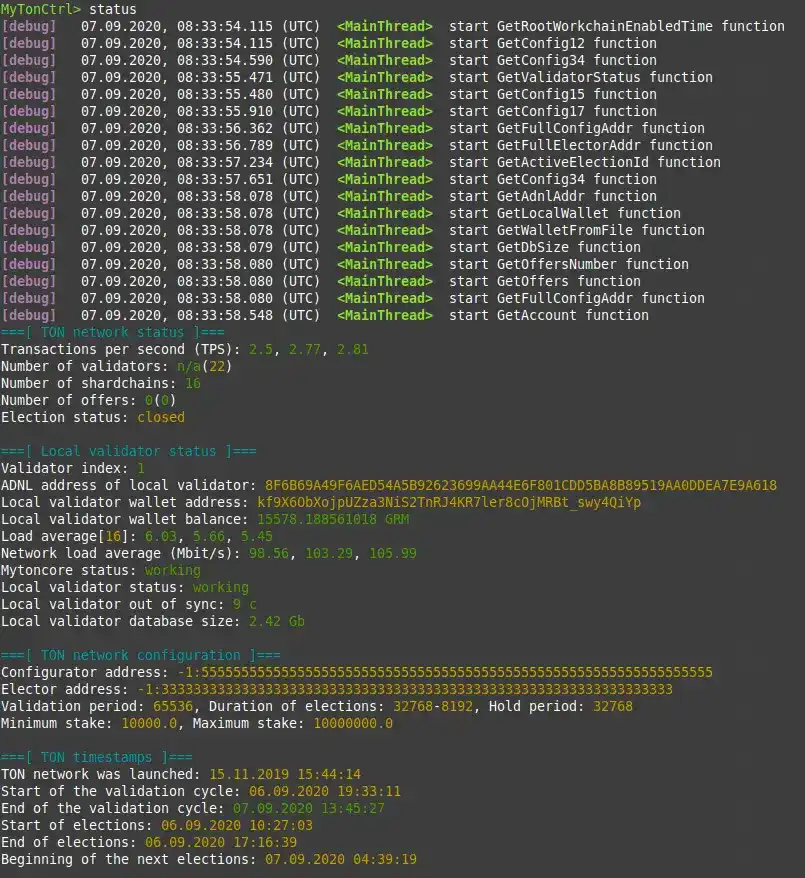
Our first major contribution was mytonctrl, a powerful automation tool for node installation and validator setup.

It provided essential functions including wallet creation, contract deployment, transaction history retrieval, and even a DNS registration system—interestingly, the DNS at that time was not the same as the modern NFT-wrapped DNS we see today.

mytonctrl could also configure validators, lite servers, and lite clients, making it easy to access and parse node data. In 2021, we added CPU-based mining scripts and automated performance tests to simplify the $TON mining process.
2. tonmon: Blockchain Health Visualization Tool

Having nodes and accessing data wasn't enough; we needed more visualization tools to monitor the blockchain's health.

To better monitor the blockchain's health status, we developed tonmon. This tool could track key metrics: block generation time, shard status, dPoS election schedule, number and weight of validators, and mining contract status. Through it, we could quickly respond to any network anomalies.

In those early days, the network scale was quite small, with only about 80 validators globally.

3. tonmine: Monitoring Giver Contracts

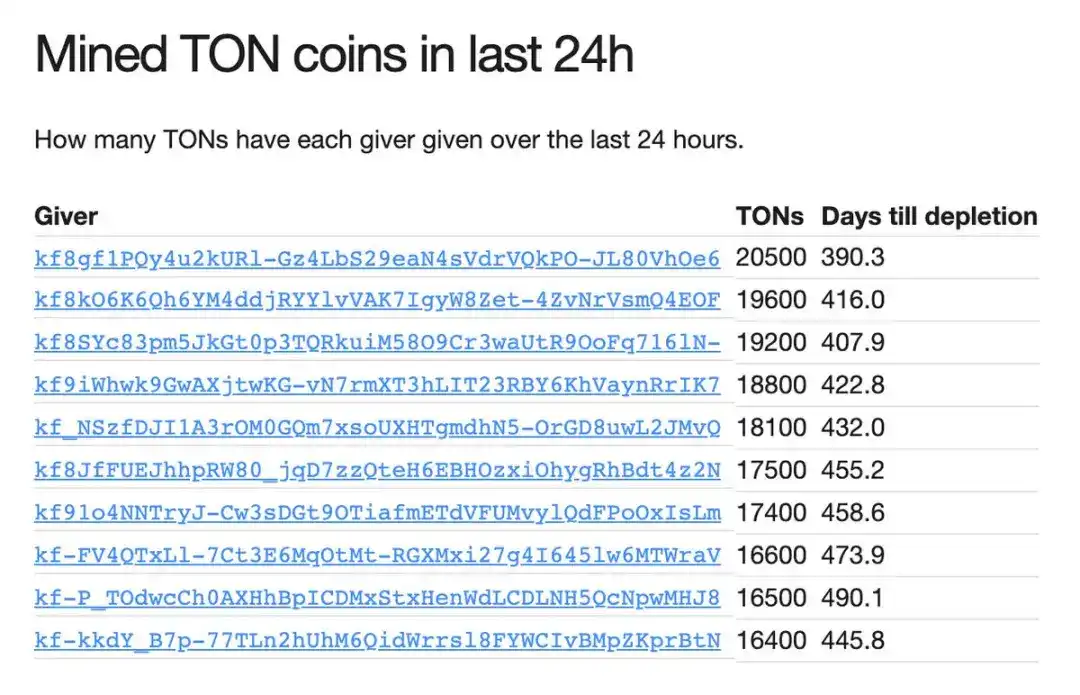
We developed tonmine to track TON's mining activities. Although the TON blockchain initially had many large and small Givers, by 2021 only ten small Givers remained.

tonmine showed the daily mining statistics for each contract, with a single contract producing an average of 20,000 $TON per day, totaling about 200,000 $TON per day across all contracts.

The mining difficulty varied significantly between different Givers, depending on the number of miners—some Givers had lower difficulty due to fewer miners, while others had extremely high difficulty due to a large number of miners.
4. Cross-Chain Bridge

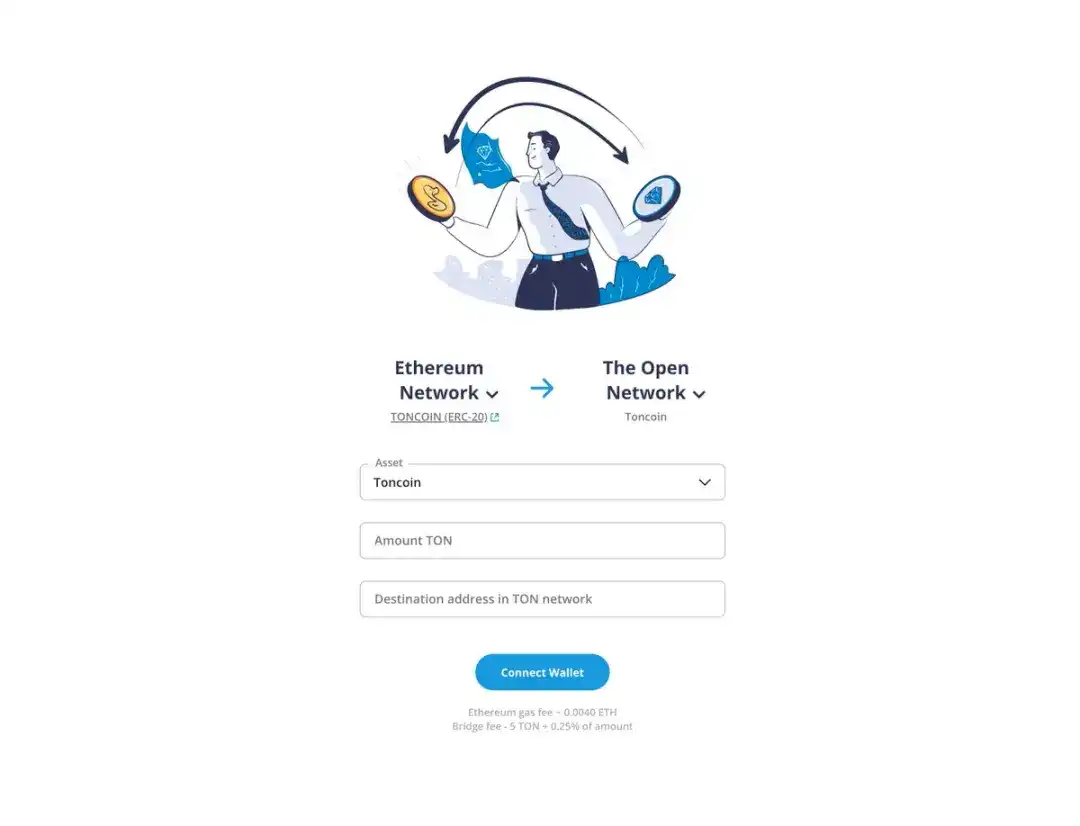
Before TON had jetton or NFT standards, we recognized the importance of cross-chain compatibility. The NEWTON team developed a native $TON cross-chain bridge for ERC-20 tokens on EVM-compatible chains, which was successfully tested on bridge.ton.org. This enabled seamless transfers between TON, Ethereum, and BSC.
极

5. cryptobot: Telegram Bot Wallet

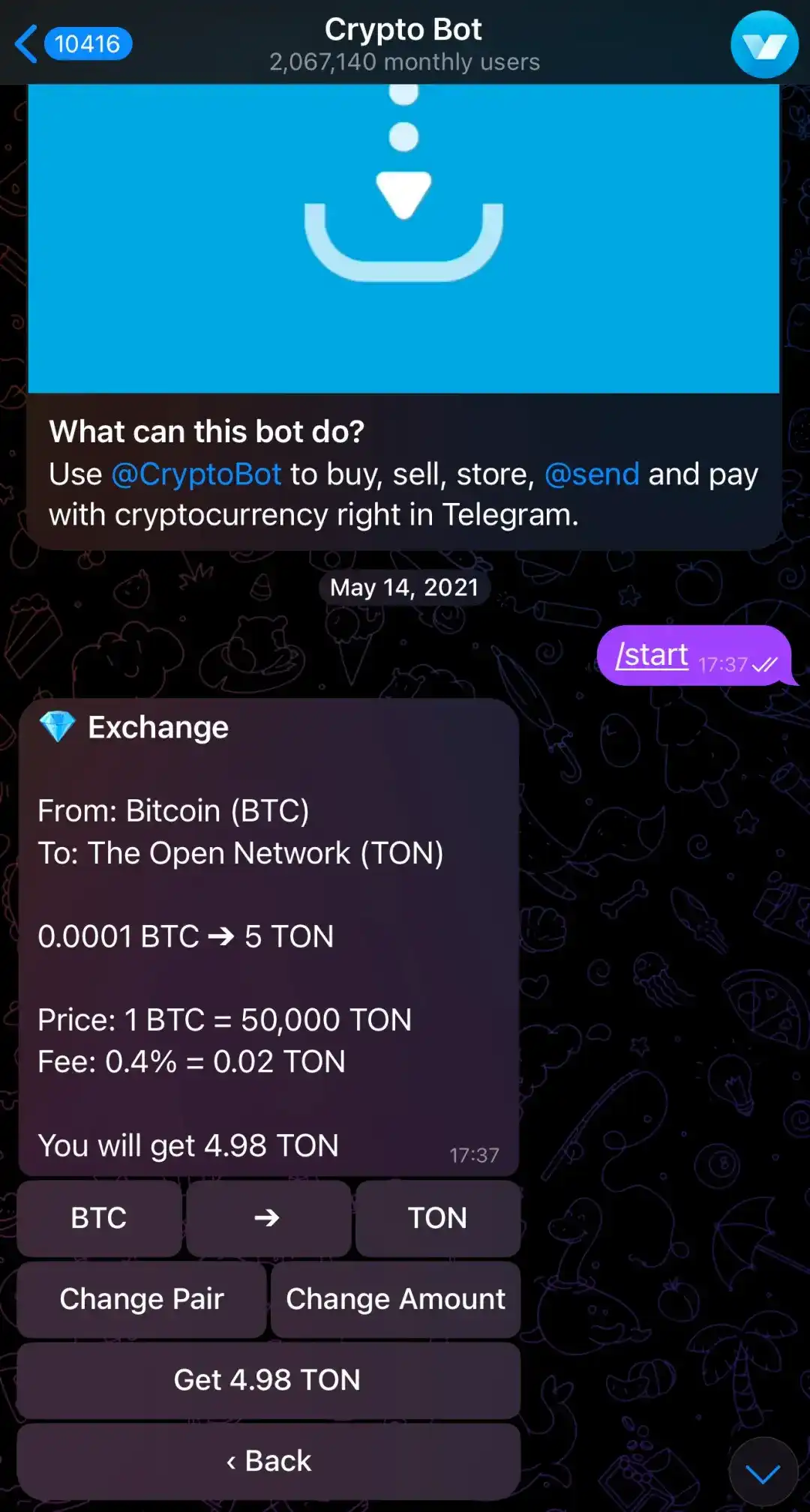
Before Telegram mini apps existed in 2021, team members developed cryptobot, a Telegram wallet. It initially supported $BTC, $TON, $BNB, and $USDT. Later, with the launch of Telegram mini apps, the wallet underwent a comprehensive overhaul.
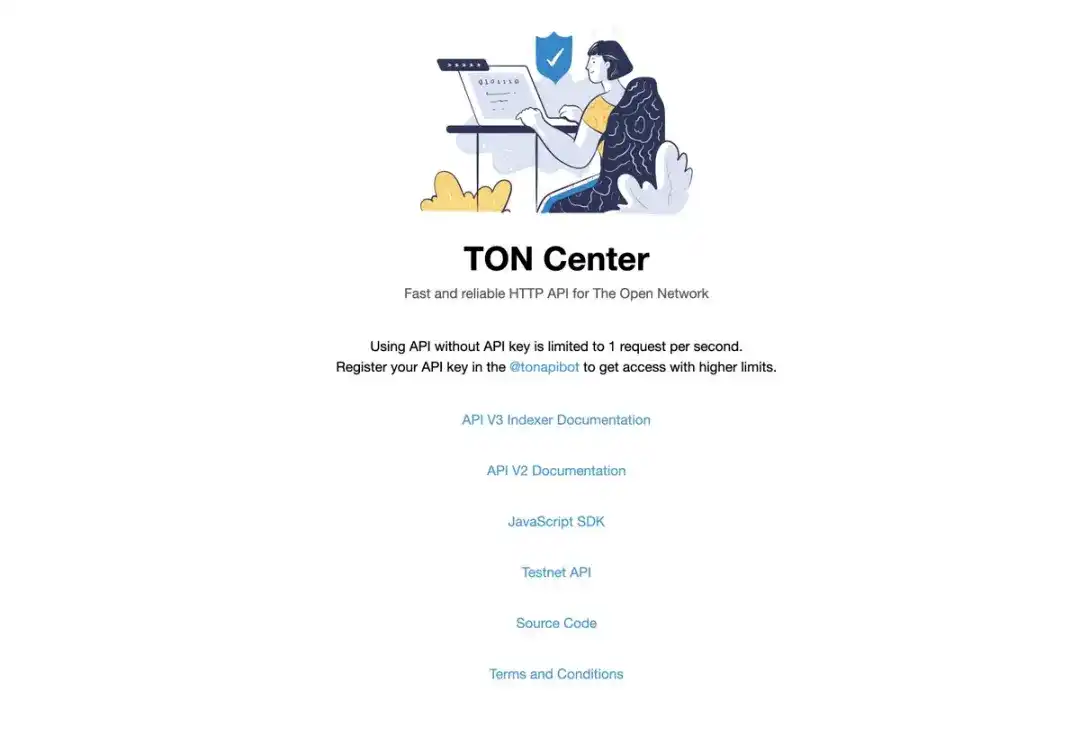
6. toncenter: Simplifying Blockchain Data Access

With toncenter, developers no longer needed to set up full nodes, research liteclient or liteserver, or worry about serialized data formats.

toncenter provided a public API, greatly simplifying the process for various wallets and blockchain explorers to access on-chain data.

Although TON's infrastructure has evolved with the emergence of more API providers like tonxapi.com, toncenter continues to serve developers, its robust design becoming a classic.
7. explorer.toncoin.org: TON's First Blockchain Explorer

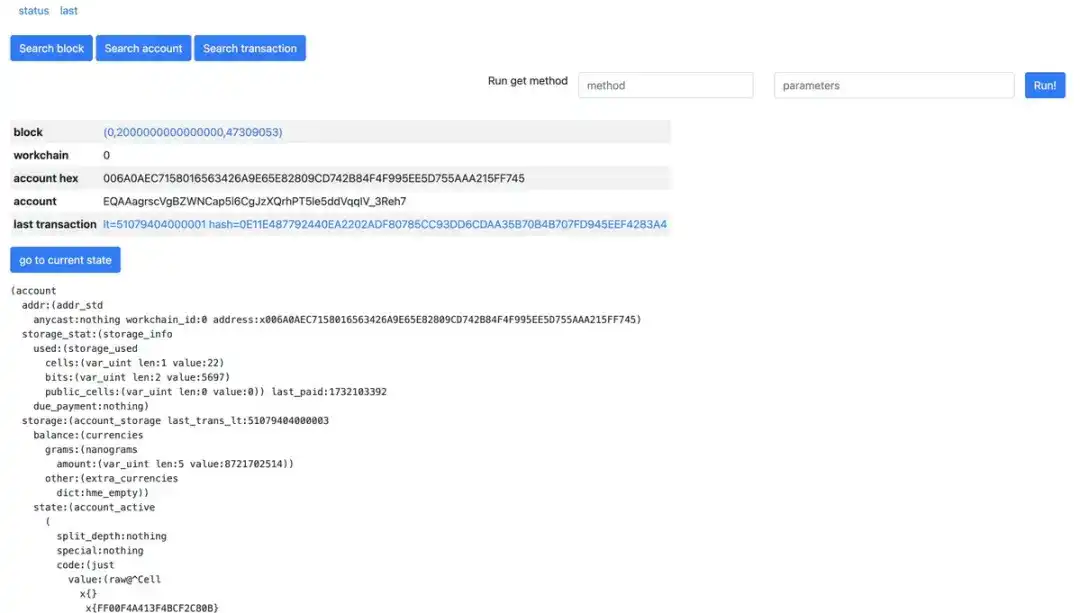
The first TON blockchain explorer was built into the core codebase and located at explorer.toncoin.org. Although it was extremely fast, the data presentation was too technical for most users.
8. ton.sh: The New Generation Blockchain Explorer

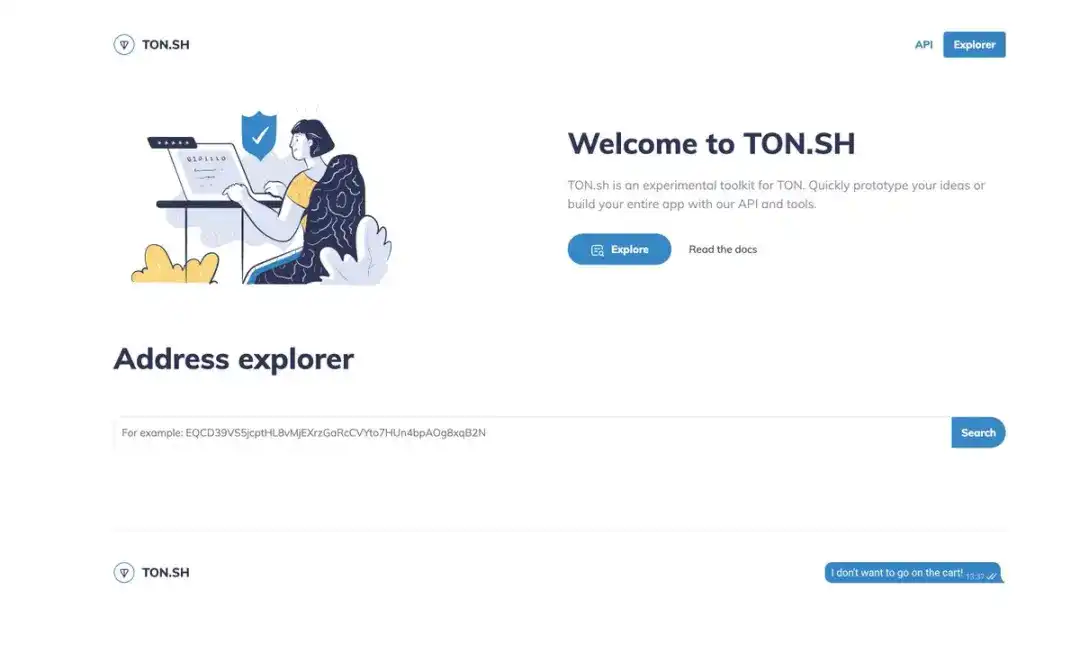
To address the complexity of explorer.toncoin.org, we created ton.sh. After solving the challenge of deserializing blockchain data, we launched a public API for ton.sh.

ton.sh focused on core functions: wallet balances, transaction records, and particularly memos. For early TON users, memos were crucial, serving as carriers for command operations before TON Connect or complex DeFi contracts existed, especially in exchange deposit operations.

Although more advanced explorers like TONScan and TONViewer exist today, ton.sh remains a historical milestone in TON's development.
9. TonWeb: Important JavaScript SDK

Since TON smart contracts use Fift and Func, two relatively complex languages, the NEWTON team developed TonWeb—a JavaScript SDK that simplified wallet creation, deployment, and transaction operations.
10. ton wallet: My First TON Wallet

This TON wallet dates back to the Telegram era—it was my first wallet, and surprisingly, it still works perfectly today.

Historic Recognition: NEWTON Team's Open Letter to the @Telegram Official Team

By June 2021, the NEWTON team had made significant contributions, including running public lite servers, DHT servers, and archive nodes to maintain network stability. At this point, tolya-yanot wrote an open letter (link) documenting our year's work to the TON blockchain team and requesting GitHub organization permissions.
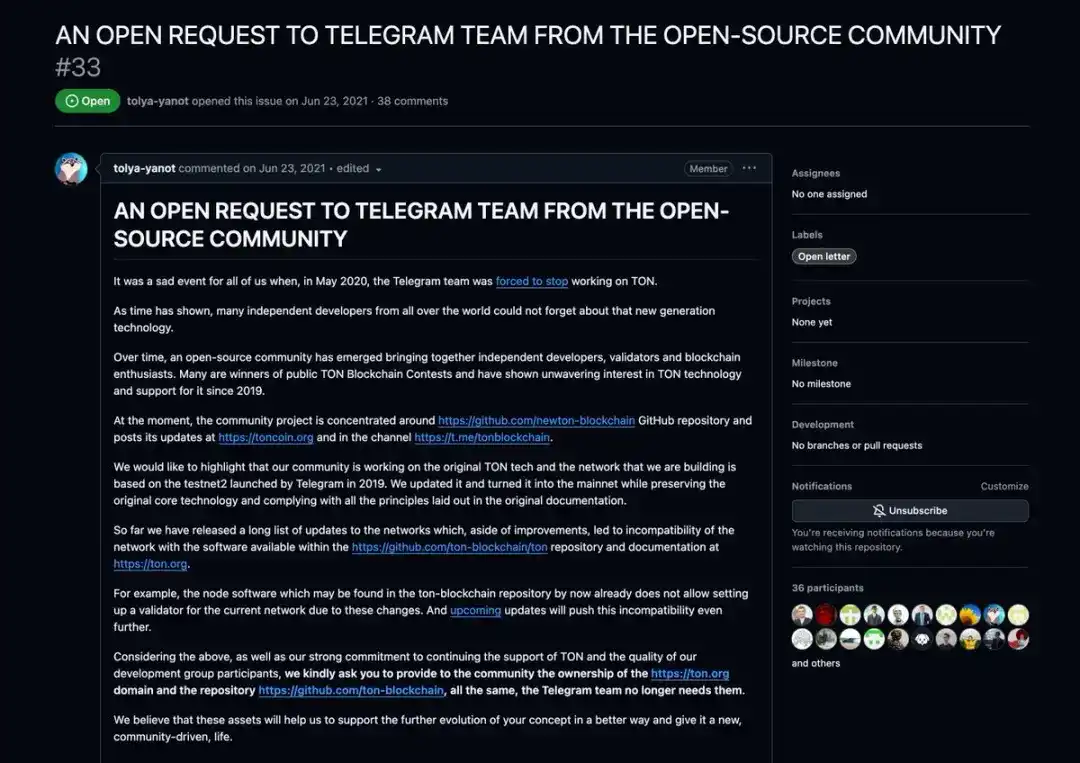
The letter listed the two leaders of NEWTON and key team members.

That's right, me—Dr. Awesome Doge, was also on the list.

At the time, I thought it was just an open letter—a good attempt to showcase our contributions to the network, and I didn't expect any response.

To our surprise, the @Telegram official team responded on June 30, 2021.

This marked the beginning of a new chapter in TON blockchain history.

Retrospect and Outlook: A Builder's Reflection

Looking back on this extraordinary journey, the early contributions of the NEWTON team were far more than just code. Every line of code, every tool we built, every sleepless night spent maintaining the network—these efforts laid the foundation for TON's development today.

Seeing TON's explosive growth in 2024, with thousands of developers joining the ecosystem, validates what we believed in during those challenging early days—TON's potential was worth fighting for.


Trending Cryptos

Related Questions

QWhat was the main mission of the NEWTON team when the author joined?

AThe main mission was to maintain the stability of the TON testnet2 code while enhancing developer tools.

QWhat was the purpose of the tool 'mytonctrl' developed by the NEWTON team?

Amytonctrl was a powerful automation tool for node installation and validator setup, providing functions like wallet creation, contract deployment, transaction history retrieval, and DNS registration.

QWhat significant event occurred in June 2021 that marked a new chapter for TON blockchain?

AThe @Telegram official team responded to the NEWTON team's open letter, which led to the technical handover and marked the beginning of a new chapter in TON's history.

QWhat was the function of 'toncenter' and why was it important for developers?

Atoncenter provided a public API that simplified access to on-chain data, allowing developers to build wallets and blockchain explorers without setting up a full node or dealing with serialized data formats.

QWhich tool did the NEWTON team create to monitor the health of the TON blockchain?

AThe team created 'tonmon' to track key metrics like block generation time, shard status, dPoS election schedules, validator count and weight, and mining contract status.

Related Reads

Must-Watch Events Next Week|CLARITY Act Could Face Senate Vote; SpaceX, Circle to Report Earnings (8.3-8.9)

**Summary: Key Events and Developments to Watch (August 3-9)** The upcoming week is marked by significant financial disclosures, key legislative deadlines, and notable product updates. **Major Financial Events:** Several companies are scheduled to release their Q2 2026 earnings. American Bitcoin (ABTC) will report on August 3, followed by SpaceX and Hut 8 Mining Corp. on August 4, and Circle on August 5. Notably, a significant portion of SpaceX shares (up to 12% of total shares) will be unlocked on August 6 following their earnings release. **Key Legislative Deadline:** The U.S. Senate faces an August 7 deadline to secure 60 votes for the CLARITY Act, a bipartisan bill aiming to establish a federal regulatory framework for cryptocurrencies. The Senate may hold a full vote on the bill during the week. **Economic Data:** The U.S. July Non-Farm Payrolls report will be released on August 7, providing crucial labor market data. **Technology & Product Updates:** * **Shutdowns:** DeFi portfolio tracker Zapper and wallet app Ctrl Wallet will cease operations on August 3. * **Upgrades:** LayerZero will deprecate its v1 relayers on August 3. XRP Ledger's new version 3.3.0, featuring five new functions, is expected next week. * **AI:** Elon Musk announced that the advanced Grok 4.6 AI model is set for release around August 7. * **Bitcoin:** The BIP-110 forced signaling for a potential Bitcoin network change is scheduled to begin around August 8. **Other Notable Events:** Chinese robotics firm Unitree Tech has set its preliminary price inquiry for its IPO for August 5. South Korean exchange Upbit will delist AQT and AERGO tokens on August 3.

marsbit1h ago

Must-Watch Events Next Week|CLARITY Act Could Face Senate Vote; SpaceX, Circle to Report Earnings (8.3-8.9)

marsbit1h ago

Stocks Are Plummeting More Sharply Than Cryptocurrencies. Where Has the Money Gone?

Stock Markets Plunge Deeper Than Cryptocurrencies: Where Did the Money Go? In late July, Seoul's Kospi index triggered circuit breakers for two consecutive days, plummeting over 40% from its June high. The collapse was led by heavyweight stocks like SK Hynix, whose record profits still disappointed investors, and devastating leveraged ETFs, with one major product losing over 83% of its value. This signaled a global, forced deleveraging targeting the most crowded trades. Interestingly, while stocks exhibited extreme volatility akin to crypto markets, Bitcoin rose nearly 15% in July after a prior steep drop. Analysis shows the money fleeing equities did not flow into Bitcoin. Instead, Bitcoin had already absorbed its sell-off in May-June, when U.S. spot Bitcoin ETFs saw historic outflows. The true safe-haven beneficiary was gold, whose price rose over 20% year-on-year, highlighting a decoupling between Bitcoin and gold as "digital gold." The sell-off was a targeted unwinding of leveraged positions in tech and semiconductors, accelerated by broker-dealer risk management and shifts in the AI narrative, including new competition from Chinese memory chipmakers. The retreat path was clear: from high-valuation tech stocks to cash and U.S. Treasuries, then to gold. For Bitcoin to attract sustained institutional inflows, conditions like eased global liquidity pressure, a "soft-landing" Fed rate cut, and U.S. regulatory clarity via legislation like the stalled CLARITY Act are needed. Currently, Bitcoin is not a safe haven but an already-cleared asset. Its low correlation with tech stocks, however, makes it a potential diversification play for institutional portfolios once the storm passes. The money isn't here yet, but the positioning is underway.

marsbit1h ago

Stocks Are Plummeting More Sharply Than Cryptocurrencies. Where Has the Money Gone?

marsbit1h ago

In Conversation with Ray Dalio: We Are Currently in an AI Bubble, with 1% of My Portfolio in Bitcoin

Ray Dalio, founder of Bridgewater Associates, warns in an interview that the current AI boom shows classic bubble characteristics, which could lead to significant economic downturns as seen in past cycles like 1929 or 2000. He explains that speculative enthusiasm, fueled by debt and overvaluation, often precedes a crash when rising rates or taxation force asset sales, causing widespread losses and recession. Dalio also outlines his "Big Cycle" theory, describing an approximate 80-year pattern where widening wealth gaps, massive government deficits, and shifting geopolitical power (like China's rise) create internal conflict and global instability. He emphasizes that we are in a late-cycle, transitional phase where traditional powers like the US and UK face decline. For personal wealth protection, Dalio advises diversification beyond cash into assets like stocks, bonds, real estate, and particularly gold, which he prefers over Bitcoin. While he holds about 1% of his portfolio in Bitcoin as a non-printable hard asset, he views gold as more secure from technological or governmental threats. Regarding AI's impact, Dalio believes it will disproportionately benefit capital owners, worsening inequality by replacing both physical and cognitive labor. He suggests that human intuition and emotional intelligence, combined with AI, will be key for future workers. On taxation, Dalio argues that wealth taxes are impractical and risk triggering asset sell-offs, reducing productive investment. He points to the UK as a cautionary example of debt, low productivity, and political strife. Geopolitically, Dalio foresees a more regionalized world, with the US showing weakness in prolonged conflicts like with Iran, akin to past imperial declines. The ideal outcome, he suggests, is coexisting powerful blocs (e.g., Americas, China-Asia Pacific) without major war.

marsbit5h ago

In Conversation with Ray Dalio: We Are Currently in an AI Bubble, with 1% of My Portfolio in Bitcoin

marsbit5h ago

Trading

Spot

Hot Articles

How to Buy CORE

Welcome to HTX.com! We've made purchasing CORE (CORE) simple and convenient. Follow our step-by-step guide to embark on your crypto journey.Step 1: Create Your HTX AccountUse your email or phone number to sign up for a free account on HTX. Experience a hassle-free registration journey and unlock all features.Get My AccountStep 2: Go to Buy Crypto and Choose Your Payment MethodCredit/Debit Card: Use your Visa or Mastercard to buy CORE (CORE) instantly.Balance: Use funds from your HTX account balance to trade seamlessly.Third Parties: We've added popular payment methods such as Google Pay and Apple Pay to enhance convenience.P2P: Trade directly with other users on HTX.Over-the-Counter (OTC): We offer tailor-made services and competitive exchange rates for traders.Step 3: Store Your CORE (CORE)After purchasing your CORE (CORE), store it in your HTX account. Alternatively, you can send it elsewhere via blockchain transfer or use it to trade other cryptocurrencies.Step 4: Trade CORE (CORE)Easily trade CORE (CORE) on HTX's spot market. Simply access your account, select your trading pair, execute your trades, and monitor in real-time. We offer a user-friendly experience for both beginners and seasoned traders.

6.0k Total ViewsPublished 2024.03.29Updated 2026.06.02

How to Buy CORE

Discussions

Welcome to the HTX Community. Here, you can stay informed about the latest platform developments and gain access to professional market insights. Users' opinions on the price of CORE (CORE) are presented below.

活动图片












