Pundit Says Stop Analyzing XRP On A Chart, Do This Instead

bitcoinistPublished on 2026-04-16Last updated on 2026-04-16

Abstract

Market analyst Luke Suther argues that traditional chart-based analysis fails to capture XRP's true long-term value. Instead, he emphasizes evaluating XRP's underlying utility as a settlement layer within the global financial infrastructure, estimated at $5.53 quadrillion. This includes systems like SWIFT, DTCC, major banks, and payment processors. Suther contends that XRP's price should be assessed based on its capacity to facilitate fast, low-cost, large-scale value transfers. He explains that a higher XRP price is functionally necessary to support efficient institutional liquidity and minimize slippage, rather than being measured by market cap alone.

Market analyst Luke Suther has issued a detailed report challenging the traditional reliance on charts to determine XRP’s valuation. The analysis, posted on X, suggests that th price action on charts does not account for its role in broader liquidity systems and, as a result, fails to capture its true long-term value.

Analyst Rejects Chart-Based XRP Price Assessments

Rather than relying on technical chart patterns, Suther shifts the focus toward XRP’s underlying utility and the massive financial rails established around it. He argued that the cryptocurrency’s real value can be accurately measured only by its role as a settlement layer in the global financial sector and its functionality across institutional networks.

Notably, Suther revealed that the altcoin is currently positioned within a global finance infrastructure worth multiple quadrillions of dollars. This infrastructure includes a diverse array of traditional banking institutions and payment processors worldwide.

In his analysis, he outlined key segments of the global financial system and their estimated valuations, arguing that the altcoin’s price outlook lies in its potential to handle large-scale settlement demand across these markets. He noted that:

  • All Japanese banks manage approximately $25 trillion
  • The DTCC processes roughly $3 quadrillion
  • SWIFT handles about $1.5 quadrillion
  • The top 10 US banks hold over $12.5 trillion
  • Tokenized assets account for $2 trillion
  • Mastercard manages around $9 trillion
  • Visa processes up to $16 trillion
  • The derivatives market represents about $1 trillion
  • American Express handles roughly $1 trillion
  • Hidden Road, now rebranded as Ripple Prime, manages approximately $3 trillion

According to Suther, the combined value of these financial segments is estimated at roughly $5.53 quadrillion. The report highlights this as the total volume of transaction activity moving through settlement networks, a portion of which XRP could potentially support.

Within this context, the analyst argued that market capitalization and technical chart patterns fail to capture the demands of high-volume settlement systems. Instead, he emphasized that the token’s value should be assessed based on its throughput capacity and its ability to facilitate faster, cheaper transfer of value across international financial systems.

XRP Pricing Structure Tied To Institutional Flow

In his post, Suther noted that many people made the same mistakes when assessing XRP’s value. They try to directly match the $5.53 quadrillion flow of global finance to XRP’s market capitalization. He explained that the token is not designed to hold that value, but to move it.

From this standpoint, the analyst stated that the more relevant question is not whether it can handle trillions in flow, but what price is required for billions to move instantly without friction. He added that if XRP’s price is too low, liquidity would remain thin and slippage would rise, making large-scale settlement inefficient. In his view, a higher XRP price is a functional requirement for the system to operate effectively at a global scale.

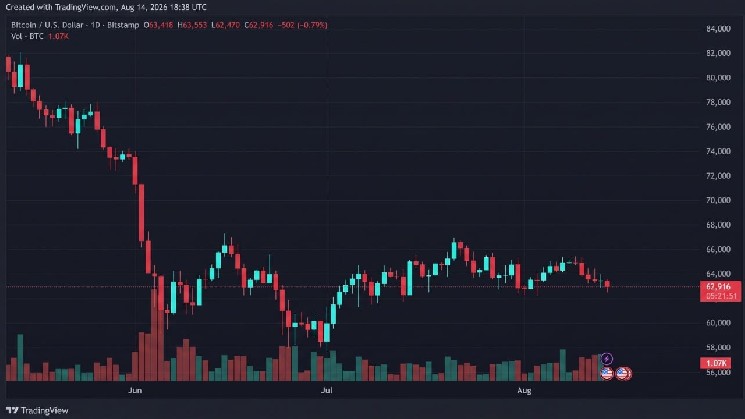
XRP trading at $1.35 on the 1D chart | Source: XRPUSDT on Tradingview.com

Related Questions

QAccording to analyst Luke Suther, why is analyzing XRP on a chart insufficient for determining its true value?

AHe argues that chart-based analysis fails to capture XRP's role in broader liquidity systems and its true long-term value as a settlement layer in the global financial sector.

QWhat is the analyst's primary focus when assessing XRP's value instead of technical charts?

AHis focus is on XRP's underlying utility and the massive financial rails established around it, including its role as a settlement layer and its functionality across institutional networks.

QWhat is the estimated combined value of the global financial infrastructure segments that XRP is positioned within, as outlined in the report?

AThe combined value of the financial segments, including institutions like DTCC, SWIFT, and major banks, is estimated at roughly $5.53 quadrillion.

QWhy does the analyst argue that a higher XRP price is a functional requirement for the system?

AHe states that if XRP's price is too low, liquidity would be thin and slippage would rise, making large-scale settlement inefficient. A higher price is necessary for billions to move instantly without friction.

QWhat common mistake do people make when trying to assess XRP's value in relation to the global financial flow?

AThey mistakenly try to directly match the $5.53 quadrillion flow of global finance to XRP's market capitalization, when the token is designed not to hold that value but to move it.

Related Reads

20 Billion Valuation, Alibaba and Tencent Competing to Invest, Whose Money Will Liang Wenfeng Take?

DeepSeek, an AI startup founded by Liang Wenfeng, is reportedly in talks with Alibaba and Tencent for an external funding round that could value the company at over $20 billion. This marks a significant shift, as DeepSeek had previously relied solely on funding from its parent company,幻方量化 (Huanfang Quantitative), and had resisted external investment. The potential valuation would place DeepSeek among the top-tier AI model companies in China, comparable to competitors like MoonDark (valued at ~$18 billion) and ahead of recently listed firms like MiniMax and Zhipu. The funding—which could range from $600 million (for a 3% stake) to $2 billion (for 10%)—is seen as a move to secure resources for model development, retain talent, and support infrastructure needs, particularly as competition in inference models and AI agents intensifies. Both Alibaba and Tencent are eager to invest, not only for financial returns but also to integrate DeepSeek into their broader AI ecosystems. However, DeepSeek’s leadership is cautious about maintaining independence and may prefer financial investors over strategic ones to avoid being locked into a specific tech ecosystem. Alternative options, such as state-backed funds, offer longer-term capital and policy support but may come with slower decision-making and potential constraints on global expansion. With competing AI firms accelerating their IPO plans, DeepSeek’s window for securing optimal terms may be narrowing. The final decision will reflect a trade-off between capital, resources, and strategic independence.

marsbit38m ago

20 Billion Valuation, Alibaba and Tencent Competing to Invest, Whose Money Will Liang Wenfeng Take?

marsbit38m ago

After Losing 97% of Its Market Value, iQiyi Attempts to Use AI to Forcefully Extend Its Lifespan

After losing 97% of its market value since its 2018 peak, iQiyi is aggressively pivoting to AI in a desperate attempt to survive. At its 2026 World Conference, CEO Gong Yu announced an "AI Artist Library" with over 100 virtual performers and a new AIGC platform, "NaDou Pro," promising faster production and lower costs. This shift comes as the company faces severe financial distress: its market cap sits near delisting thresholds at $1.36 billion, with significant losses, declining membership revenue, and depleted cash flow. The AI strategy has sparked controversy. Top actors have issued legal threats against unauthorized digital replicas, while in Hengdian, over 134,000 background actors are seeing their already scarce job opportunities vanish as AI replaces them for background roles. iQiyi's move represents a fundamental shift from being a high-cost content buyer to a landlord" to becoming a "platform capitalist" that transfers production risk to creators. This contrasts with competitors like Douyin (TikTok's Chinese counterpart), which is investing heavily in *real* actor-led short dramas, betting that authentic human connection retains users better than AI-generated content. The article draws a parallel to the 1920s transition to "talkies," which made cinema musicians obsolete but ultimately enriched the art form. In contrast, iQiyi's AI drive is framed not as an artistic evolution but as a cost-cutting measure that could degrade storytelling, replacing genuine human emotion with algorithmically calculated stimulation and potentially numbing audiences' capacity for empathy. The core question remains: can a company focused solely on financial survival preserve the art of storytelling?

marsbit41m ago

After Losing 97% of Its Market Value, iQiyi Attempts to Use AI to Forcefully Extend Its Lifespan

marsbit41m ago

Only a 50% Chance of Passing This Year, Can the CLARITY Bill Succeed Before the Midterm Elections?

The CLARITY Act, which passed the House in July 2025 with strong bipartisan support (294-134), faces a critical juncture in the Senate. The Senate Banking Committee is expected to hold a markup soon, but key issues remain unresolved, including stablecoin yield provisions, DeFi regulations, and securing full Republican committee support. Other contentious points involve the Blockchain Regulatory Certainty Act (BRCA), ethics amendments for government officials, and SEC-related matters. The legislative calendar is tight, with limited time before the midterm elections. If the committee markup is delayed beyond mid-May, the chances of passage in 2026 drop significantly. Senator Cynthia Lummis has warned that failure this year could delay comprehensive crypto market structure legislation until 2030 or later. Galaxy estimates the probability of the CLARITY Act becoming law in 2026 is only about 50%. The bill provides crucial regulatory clarity by defining jurisdictional boundaries between the SEC and CFTC, establishing a path for decentralization, and bringing digital commodity intermediaries under federal regulation. Its passage is seen as vital before potential power shifts in the next Congress, which could bring less favorable leadership to key committees. The timeline is compressed, and the bill must compete for floor time with other priorities like Iran authorization and DHS appropriations. Key hurdles include finalizing the stablecoin yield compromise text, addressing law enforcement concerns about BRCA, and navigating political dynamics around SEC nominations. The outcome of the Banking Committee markup and the level of bipartisan support will be critical indicators of its future success.

marsbit1h ago

Only a 50% Chance of Passing This Year, Can the CLARITY Bill Succeed Before the Midterm Elections?

marsbit1h ago

Trading

Spot
Futures

Hot Articles

What is XRP 2.0

XRP 2.0: A New Frontier in the Cryptocurrency Landscape Introduction to XRP 2.0 In the ever-evolving realm of cryptocurrency, new projects continuously emerge, vying for attention and adoption. One such promising initiative is XRP 2.0, a novel cryptocurrency project designed to leverage advanced blockchain technology and robust encryption methodologies. While the name draws parallels with Ripple’s XRP, it’s crucial to note that XRP 2.0 operates independently, focusing on enhancing transaction security, privacy, and scalability. As the digital financial landscape increasingly embraces decentralized solutions, XRP 2.0 aims to contribute meaningfully to web3 and the overall expansion of crypto projects. What is XRP 2.0? At its core, XRP 2.0 is a cryptocurrency project that aims to create a secure and decentralized digital currency ecosystem. Its foundational technology integrates sophisticated blockchain principles with cutting-edge encryption techniques. The overarching goal of XRP 2.0 is to establish itself as a reliable and efficient platform enabling swift transaction execution while prioritizing enhanced privacy protections for its users. The project is promoted as a solution to many limitations faced by existing cryptocurrencies, proposing a system that can handle a higher volume of transactions with improved speed and privacy. This versatility positions XRP 2.0 as a significant contender in a marketplace riddled with various digital currencies. Who is the Creator of XRP 2.0? The identity of the creator behind XRP 2.0 has been flagged as ‘Wilbur.’ However, comprehensive details regarding Wilbur or their associated entity remain elusive. The anonymity of many cryptocurrency creators is not an uncommon phenomenon in the industry, often designed to maintain a degree of privacy and security. Who are the Investors of XRP 2.0? As of now, specific information related to the investment foundations or organizations supporting XRP 2.0 is not publicly available. In the cryptocurrency sector, the backing by reputed investors can significantly influence a project's credibility and success, yet the transparency regarding the financial supporters of XRP 2.0 has not been established. How Does XRP 2.0 Work? XRP 2.0 stands out by employing a combination of blockchain technology and advanced encryption algorithms that ensures secure and decentralized transactions. Its innovative structure includes unique features designed to foster user engagement and broaden functionalities beyond conventional cryptocurrency transactions. Among these features, XRP 2.0 incorporates AI-powered capabilities, such as text-to-image and text-to-speech functionalities. These additions are designed to enhance the interactive experience for users, promoting broader applicability across various sectors. By bridging technological advancements with user-centered design, XRP 2.0 aims to capture the attention of a diverse range of individuals and enterprises looking to integrate cryptocurrency solutions into their operational frameworks. Timeline of XRP 2.0 Understanding XRP 2.0 requires examining the milestones that have defined its journey thus far: July 23, 2023: XRP 2.0 is introduced as a novel cryptocurrency project, aiming to revolutionize secure and decentralized transaction capabilities in the blockchain domain. September 8, 2023: The launching of another project, XRP20, occurs, marking the emergence of an ERC-20 token on the Ethereum blockchain that remains unrelated to XRP 2.0. November 13, 2023: The XRP Ledger undergoes a significant update with the release of rippled server software version 2.0.0. It is essential to note that this development is disconnected from the XRP 2.0 cryptocurrency project. Key Points About XRP 2.0 To distill the essence of XRP 2.0, several critical factors emerge: Unique Features: The inclusion of features like AI-powered text-to-image and text-to-speech further diversifies the potential applications of XRP 2.0. Blockchain Technology: The framework utilizes advanced blockchain mechanisms and encryption protocols, ensuring a secure and decentralized environment for transactions. Scalability and Privacy: XRP 2.0 prioritizes enhanced privacy protections in transaction processes and the scalability necessary to accommodate a growing user base. No Affiliation with Ripple: Importantly, despite its name, XRP 2.0 does not have any allegiance or collaboration with Ripple’s XRP, distinguishing its operational framework and objectives within the cryptocurrency ecosystem. Conclusion XRP 2.0 represents an ambitious venture into the cryptocurrency sphere, aiming to offer a combination of security, privacy, and efficiency in digital transactions. By integrating sophisticated technologies and user-friendly features, the project sets out to broaden the horizons of what cryptocurrency can achieve in today's digital economy. While the anonymity of its creator and lack of disclosed investors might raise questions for some, XRP 2.0's focus on advanced functionalities and decentralisation enhances its appeal amidst an increasingly crowded crypto market. As the cryptocurrency landscape continues to evolve, XRP 2.0 may yet emerge as a pivotal player in the expansion of secure and scalable blockchain solutions.

941 Total ViewsPublished 2024.04.01Updated 2024.12.03

What is XRP 2.0

Discussions

Welcome to the HTX Community. Here, you can stay informed about the latest platform developments and gain access to professional market insights. Users' opinions on the price of XRP (XRP) are presented below.

活动图片