Panic Over $1.8 Trillion Deficit Heats Up, Bond Yield Surge Could Trigger 30% Bitcoin Volatility

marsbitPublished on 2026-08-19Last updated on 2026-08-19

Abstract

The article discusses Bitcoin's current stagnation within a narrow trading range despite positive signals like BlackRock's ETF holdings and net inflows into U.S. spot Bitcoin ETFs. Market anxiety is growing due to conflicting macro forces. On one hand, the soaring U.S. budget deficit—projected at $1.8 trillion—fuels expectations of monetary expansion, which long-term proponents believe will benefit assets like Bitcoin. On the other hand, a sharp surge in global bond yields, with U.S. 30-year yields hitting multi-decade highs, poses a significant risk to high-valuation assets by raising real financing costs. Analysts note Bitcoin's 30-day realized volatility is at historic lows. Historical patterns suggest such periods are typically followed by a median absolute price swing of around 30% within 60 days, though the direction is uncertain. This could push Bitcoin to roughly $83,200 or down to about $44,800 from its current ~$64,000 level. The market's focus has shifted from Fed policy to the trajectory of long-term Treasury yields and geopolitical risks. While the fiscal deficit narrative supports long-term bullishness, the immediate threat of rising yields creates a precarious balance. Traders are warned to prepare for significant volatility and potential deep corrections, with some experts suggesting a washout of leveraged positions may be needed before a sustainable bottom forms.

Written by: Billy Bambrough, Forbes

Compiled by: AididiaoJP, Foresight News

Since June of this year, the Bitcoin market has been stuck in a rare sideways consolidation pattern, with prices fluctuating within a narrow range and volatility hitting historically low levels. Although market participants widely anticipate a so-called "ultimate catalyst" to break the deadlock, macro-level uncertainties are intensifying market anxiety.

Currently, the Bitcoin price is down about 50% from its all-time high recorded in October 2025. Even though BlackRock's digital asset head, Robert Mitchnick, recently expressed optimism, pointing to a "subtle but noticeable positive shift" in market sentiment and reiterating that Bitcoin has ended all five full bull-bear cycles at higher prices, the price has still failed to effectively break out of the current range.

Notably, BlackRock's Bitcoin ETF (IBIT) holdings are approaching 750,000 BTC, valued at approximately $50 billion, while US spot Bitcoin ETFs overall saw net inflows of over $850 million last week, the best weekly performance since mid-April. However, these positive signals have yet to translate into substantive upward momentum.

The core factor driving market sentiment from "calm" to "tense" lies in two sets of macro variables that are diverging in direction but heating up simultaneously.

First, the expanding US fiscal deficit, with a $1.8 trillion shortfall, is strengthening market expectations for "money printing."

Latest data from the US Treasury shows that the federal budget deficit in July alone reached $432 billion, the largest monthly shortfall since March 2021, pushing the cumulative deficit for fiscal year 2026 to $1.8 trillion, second only to the extreme highs seen during the 2020 pandemic. The total federal debt is approaching $40 trillion.

Against this backdrop, many crypto asset investors believe that government spending far exceeding revenue can only rely on debt issuance for financing; if the private sector's capacity to absorb it is limited, it may ultimately force the Federal Reserve to restart balance sheet expansion.

Prominent crypto investor Anthony Pompliano, in an interview with Fox Business, bluntly stated that government fiscal mismanagement will force continuous money printing, and assets like Bitcoin, gold, real estate, and stocks will benefit long-term from currency devaluation. He even predicted that Bitcoin's average annual gains could remain around 30% over the next two-plus decades.

BitMEX founder Arthur Hayes also noted in a recent analysis that the stronger the monetary expansion, the more solid the foundation for Bitcoin's valuation to rise, and stated he is increasing allocations to Bitcoin, physical gold, and gold mining stocks.

Second, however, the bond market is sending a completely opposite risk signal.

Global bond yields surged significantly this week, with the US 30-year Treasury yield climbing to its highest level since 2002, the 20-year yield reaching a new high since 2006, and the benchmark 10-year yield touching a peak since 2007.

Traders generally attribute this yield rise to a combination of multiple factors, including the continuously expanding fiscal deficit, financing demand growth from AI infrastructure development, sustained high international oil prices, and monetary policy path uncertainties triggered by the new Fed Chair, Kevin Warsh.

Sean Farrell, Head of Digital Asset Strategy at Fundstrat, pointed out that Bitcoin's 30-day realized volatility has fallen to one of its lowest historical ranges. He examined the past eight similar periods of extreme low volatility and found that the median absolute price movement for Bitcoin over the subsequent 60 days was 30.2%, with price increases and decreases each occurring four times, indicating this metric only predicts volatility intensity, not direction.

Based on the current price of approximately $64,000, a 30% increase could push the price near $83,200, while a decline of the same magnitude could see it fall back to around $44,800.

Farrell specifically emphasized that Bitcoin's recent rebound was partly driven by short covering, not large-scale influx of new capital; Bitcoin-denominated futures open interest has decreased by about 8% since Friday evening. He clearly identifies "a sustained rise in real bond yields" as a key variable that could break the current low-volatility pattern.

The strategy team at Yardeni Research also noted in a report that while it has not yet triggered a panic mechanism, they are closely monitoring whether bond market participants will take substantive action. They believe US Treasury yields remain within the normal range of 4% to 5% but are approaching the upper bound, warranting high vigilance.

The so-called "bond vigilantes," market forces that push up yields by selling bonds to force government or central bank policy adjustments, typically hit high-valuation risk assets first once they act.

The continued climb in bond yields has significantly reshaped the focus of the crypto market. Traders' attention to the Treasury market now exceeds their scrutiny of the Fed's short-term interest rate path.

Analysts from the crypto trading platform Bitunix point out that the market's core concern is no longer limited to whether the Fed will raise or lower rates, but increasingly focuses on whether long-term Treasury yields will continue their upward trend, whether geopolitical risks will evolve into sustained energy supply shocks, whether inflationary pressures will re-emerge, and whether the global risk premium will widen further.

If the 30-year Treasury yield remains persistently high while energy prices rise due to geopolitical tensions, stocks, cryptocurrencies, and other high-valuation assets could face systematic pressure.

Amidst this two-way risk landscape, market participants are gradually preparing psychologically for a potential deep correction.

Robin Singh, CEO of crypto tax services firm Koinly, stated that with US mid-term elections approaching, it's not unimaginable for Bitcoin to experience another sharp drop, and a price retreat to the $55,000 range is a plausible scenario. He believes historical experience shows markets often need a thorough washout—a sell-off that makes the final batch of bulls give up completely—before a cycle bottom can be confirmed.

In summary, on one hand, the monetary expansion narrative fueled by the huge fiscal deficit provides medium to long-term upward momentum for Bitcoin; on the other hand, rising actual funding costs reflected by surging bond yields are exerting substantive pressure on risk assets.

The current Bitcoin market exhibits a pattern of "exhausted sellers and观望buyers," while leveraged funds have already bet on a rebound in advance, creating inherent instability in the market's internal structure. Historical data indicates the probability of an absolute price movement of around 30% within the next 60 days has significantly increased. Regardless of the final direction, market participants need to be highly vigilant and make corresponding risk management preparations.


Trending Cryptos

Related Questions

QAccording to the article, what are the two opposing macro factors currently tightening market sentiment around Bitcoin?

AThe two opposing macro factors are: 1) The expectation of monetary expansion due to the persistently large US fiscal deficit (reaching $1.8 trillion), which could be a long-term tailwind for Bitcoin. 2) The sharp rise in global bond yields (e.g., US 30-year yield at a 2002 high), which increases the cost of capital and puts pressure on risk assets like Bitcoin.

QWhat historical pattern does Fundstrat's Sean Farrell highlight regarding Bitcoin's low 30-day realized volatility, and what magnitude of price move does it suggest?

ASean Farrell highlights that historically, when Bitcoin's 30-day realized volatility fell to extreme lows like the current period, the median absolute price movement in the following 60 days was 30.2%. This pattern occurred eight times previously, with price moving up four times and down four times, indicating it signals volatility intensity but not direction.

QWhat specific price levels for Bitcoin does the article mention as potential targets if a 30% move occurs from the current ~$64k price?

AFrom the current price of approximately $64,000, a 30% increase would push Bitcoin to around $83,200. A 30% decrease would bring it down to around $44,800.

QWhy are cryptocurrency investors focusing more on the bond market than on the Federal Reserve's short-term rate path, according to the Bitunix analyst cited?

AAccording to the Bitunix analyst, the market's core concern has shifted. It is no longer just about whether the Fed will hike or cut rates, but more about whether long-term Treasury yields will continue to rise, if geopolitical risks will turn into sustained energy supply shocks, if inflationary pressures will re-emerge, and if the global risk premium will widen further.

QWhat does Anthony Pompliano predict about Bitcoin's long-term performance, and what is his reasoning?

AAnthony Pompliano predicts that Bitcoin could see average annual gains of around 30% over the next couple of decades. His reasoning is that disorderly government fiscal management will force continued money printing, and assets like Bitcoin, gold, real estate, and stocks will benefit in the long term from the devaluation of fiat currency.

Related Reads

BONK Crypto Treasury Company Has Only $2.14 Million Cash Left, 70% of Revenue Comes from Founder's Own Platform

BONK Inc. (BNKK), the NASDAQ-listed company associated with the Solana meme coin BONK, reported stark financials for the first half of the year. While revenue skyrocketed 6,218% year-over-year to $5.5 million, the company posted a net loss of $7.88 million and its cash reserves plummeted to just $214,000. Its auditors issued a "going concern" warning, citing cumulative losses of $191.4 million, negative operating cash flow, and critically low liquidity. A critical detail is that $3.92 million, or 71%, of its revenue came from an "affiliate revenue share" with LetsBonk.fun, a meme coin launchpad. This platform is linked to founder Mitchell Rudy, whose entity, Lucky Dog Holdings, beneficially owns approximately 40.2% of common stock and all C Series preferred shares. These preferred shares grant the holder the right to elect half of the company's board. The company's financial structure is further intertwined with Rudy; it sold $50 million worth of stock to his entities, accepting payment in BONK tokens. Fluctuations in the value of these and other held digital assets led to an $8.17 million unrealized loss, the primary driver of the net loss. With operating cash outflows of $4.17 million for the half-year, the remaining cash covers roughly nine days of operations at the current burn rate, highlighting severe financial strain despite top-line growth.

marsbit6m ago

BONK Crypto Treasury Company Has Only $2.14 Million Cash Left, 70% of Revenue Comes from Founder's Own Platform

marsbit6m ago

CryptoQuant Noted a Signal of a Bitcoin Reversal

CryptoQuant has highlighted a potential reversal signal for Bitcoin, suggesting the bearish phase might be nearing its end as on-chain metrics show initial signs of spot demand recovery. Their analysis indicates that the 30-day spot demand metric has recovered from -206,000 BTC in late July to approximately -5,000, close to turning positive for the first time since February 2026. Historically, such a reversal has been followed by a median 60-day price gain of 18.1%, with a win rate of 78% (increasing to 87% when valuations are depressed). However, they caution that this is a favorable sign, not a guarantee. Analysts from Bitfinex Alpha note that two of three conditions for a sustainable Bitcoin recovery are already met: improved Federal Reserve rate expectations and relatively accommodative financial conditions, thanks to easing inflation and reduced odds of a near-term rate hike. The missing third catalyst is a capital rotation from traditional markets (like stocks and AI infrastructure) into cryptocurrencies. If this occurs, Bitcoin could reclaim $70,000. Conversely, continued negative flows might see support tested around $57,000. Current headwinds include significant weekly outflows from US spot Bitcoin ETFs (roughly $385 million) and reduced stablecoin supply. Wintermute offers a more cautious outlook, pointing to the same large ETF outflows and ongoing miner selling pressure. They note that Bitcoin has failed to rally despite the improved Fed outlook, which is typically bullish for risk assets. As an example, they cite miner Riot Platforms, which sold a substantial portion of its Bitcoin reserves in Q2 as its mining cost (~$91,000 per BTC) remains far above the current market price, forcing sales for liquidity. This combination of ETF outflows and miner selling is suppressing new demand.

cryptonews.ru7m ago

CryptoQuant Noted a Signal of a Bitcoin Reversal

cryptonews.ru7m ago

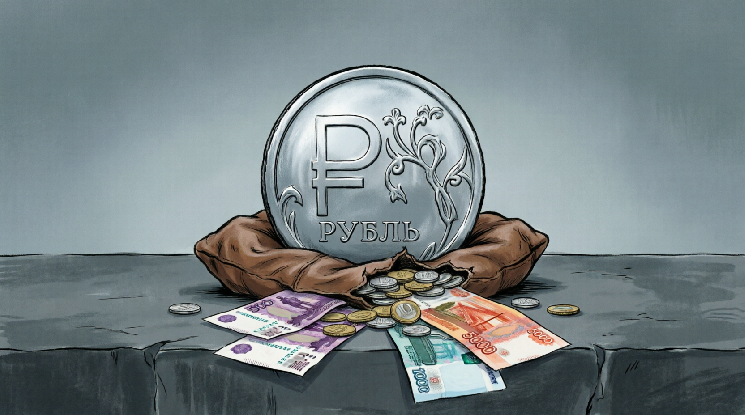
Is a Strong Ruble Good? Not for the Budget: Treasury Already Short 1.5 Trillion

The Russian budget has lost about 1.5 trillion rubles in revenue since the start of 2026 due to the ruble being stronger than the government's planned exchange rate. The budget was based on an average annual rate of 92.2 rubles per US dollar, but the actual average for the first seven and a half months was just 76.9 rubles. This discrepancy creates a significant shortfall, as every ruble of appreciation against the dollar reduces annual budget revenues by 140–160 billion rubles. When accounting for oil and gas revenues, the sensitivity is even higher, with potential annual losses reaching up to 2.5 trillion rubles. So far this year, the budget has already missed out on roughly 1.7 trillion rubles. The ruble's exchange rate has shown considerable volatility in 2026, ranging from a low near 71 rubles per dollar in May to over 85 rubles by mid-August. Despite this recent weakening, the year's average remains well below the budget target, creating a structural deficit in oil and gas revenues. Forecasts suggest the final average rate for 2026 will be around 80–82 rubles, which would result in a budget shortfall of about 1.6 trillion rubles. A strong ruble reduces import costs and inflation but also cuts the ruble earnings of exporters and threatens the funding of social obligations. The gap between the planned and actual rate is attributed not only to oil price dynamics but also to the fiscal rule mechanism, which can influence the currency's direction. The Ministry of Finance recently halted foreign currency sales under this rule, removing dollar supply from the market and contributing to pressure on the exchange rate. The budget policy is now forced to adapt to a stronger ruble than originally planned.

cryptonews.ru8m ago

Is a Strong Ruble Good? Not for the Budget: Treasury Already Short 1.5 Trillion

cryptonews.ru8m ago

Robinhood CEO: The Tokenization Wave of U.S. Stocks is Coming, America Must Not Be Left Behind

We are at the early stage of a global supercycle for asset tokenization, a transformative force reshaping finance. Robinhood has actively expanded this frontier outside the US, recently launching Robinhood Chain, a public EVM chain designed for Real World Assets (RWA) and focused on stock tokens. It enables global users to access over 190 US stocks backed 1:1 by underlying securities. However, a key gap remains: these tokenized stocks are not yet available within the United States itself. In the US, the debate around stock tokenization centers on its practical value, given existing low-cost access to equities. Critics question the need, but this misses the core innovation: tokenizing premium financial assets to make them portable, programmable, self-custodied, and tradable 24/7 within an open financial ecosystem. This is more than moving stocks onto a blockchain; it's rebuilding the foundational infrastructure of asset ownership. For US investors, this new infrastructure offers three core advantages: 1. **Real-time clearing and settlement**, enhancing market resilience by eliminating the systemic risks and capital burdens inherent in the traditional T+2/T+1 settlement cycle, as starkly revealed during events like the GameStop volatility. 2. **Native 24/7 trading capability**, allowing all investors to manage risk and react to global news outside standard market hours, a tool previously largely accessible only to institutions. 3. **Greater user control and portability of assets**, enabling instant transfers between platforms and into DeFi. This self-custody model fosters competition among service providers and unlocks new use cases like lending and using tokens as collateral. Realizing these benefits in the US requires more than technology; it necessitates modernizing a century-old securities regulatory framework built for legacy infrastructure. Policymakers must act swiftly to adapt rules for this new paradigm while preserving investor protections. Other jurisdictions are advancing, and the US risks being left behind in shaping the future of asset ownership—a future largely built around American assets and innovation. Tokenizing publicly traded stocks is just the beginning, paving the way for broadening access to other asset classes like private equity. US investors deserve to participate in this innovation.

marsbit43m ago

Robinhood CEO: The Tokenization Wave of U.S. Stocks is Coming, America Must Not Be Left Behind

marsbit43m ago

Trading

Spot

Hot Articles

What is $BITCOIN

DIGITAL GOLD ($BITCOIN): A Comprehensive Analysis Introduction to DIGITAL GOLD ($BITCOIN) DIGITAL GOLD ($BITCOIN) is a blockchain-based project operating on the Solana network, which aims to combine the characteristics of traditional precious metals with the innovation of decentralized technologies. While it shares a name with Bitcoin, often referred to as “digital gold” due to its perception as a store of value, DIGITAL GOLD is a separate token designed to create a unique ecosystem within the Web3 landscape. Its goal is to position itself as a viable alternative digital asset, although specifics regarding its applications and functionalities are still developing. What is DIGITAL GOLD ($BITCOIN)? DIGITAL GOLD ($BITCOIN) is a cryptocurrency token explicitly designed for use on the Solana blockchain. In contrast to Bitcoin, which provides a widely recognized value storage role, this token appears to focus on broader applications and characteristics. Notable aspects include: Blockchain Infrastructure: The token is built on the Solana blockchain, known for its capacity to handle high-speed and low-cost transactions. Supply Dynamics: DIGITAL GOLD has a maximum supply capped at 100 quadrillion tokens (100P $BITCOIN), although details regarding its circulating supply are currently undisclosed. Utility: While precise functionalities are not explicitly outlined, there are indications that the token could be utilized for various applications, potentially involving decentralized applications (dApps) or asset tokenization strategies. Who is the Creator of DIGITAL GOLD ($BITCOIN)? At present, the identity of the creators and development team behind DIGITAL GOLD ($BITCOIN) remains unknown. This situation is typical among many innovative projects within the blockchain space, particularly those aligning with decentralized finance and meme coin phenomena. While such anonymity may foster a community-driven culture, it intensifies concerns about governance and accountability. Who are the Investors of DIGITAL GOLD ($BITCOIN)? The available information indicates that DIGITAL GOLD ($BITCOIN) does not have any known institutional backers or prominent venture capital investments. The project seems to operate on a peer-to-peer model focused on community support and adoption rather than traditional funding routes. Its activity and liquidity are primarily situated on decentralized exchanges (DEXs), such as PumpSwap, rather than established centralized trading platforms, further highlighting its grassroots approach. How DIGITAL GOLD ($BITCOIN) Works The operational mechanics of DIGITAL GOLD ($BITCOIN) can be elaborated on based on its blockchain design and network attributes: Consensus Mechanism: By leveraging Solana’s unique proof-of-history (PoH) combined with a proof-of-stake (PoS) model, the project ensures efficient transaction validation contributing to the network's high performance. Tokenomics: While specific deflationary mechanisms have not been extensively detailed, the vast maximum token supply implies that it may cater to microtransactions or niche use cases that are still to be defined. Interoperability: There exists the potential for integration with Solana’s broader ecosystem, including various decentralized finance (DeFi) platforms. However, the details regarding specific integrations remain unspecified. Timeline of Key Events Here is a timeline that highlights significant milestones concerning DIGITAL GOLD ($BITCOIN): 2023: The initial deployment of the token occurs on the Solana blockchain, marked by its contract address. 2024: DIGITAL GOLD gains visibility as it becomes available for trading on decentralized exchanges like PumpSwap, allowing users to trade it against SOL. 2025: The project witnesses sporadic trading activity and potential interest in community-led engagements, although no noteworthy partnerships or technical advancements have been documented as of yet. Critical Analysis Strengths Scalability: The underlying Solana infrastructure supports high transaction volumes, which could enhance the utility of $BITCOIN in various transaction scenarios. Accessibility: The potential low trading price per token could attract retail investors, facilitating wider participation due to fractional ownership opportunities. Risks Lack of Transparency: The absence of publicly known backers, developers, or an audit process may yield skepticism regarding the project's sustainability and trustworthiness. Market Volatility: The trading activity is heavily reliant on speculative behavior, which can result in significant price volatility and uncertainty for investors. Conclusion DIGITAL GOLD ($BITCOIN) emerges as an intriguing yet ambiguous project within the rapidly evolving Solana ecosystem. While it attempts to leverage the “digital gold” narrative, its departure from Bitcoin's established role as a store of value underscores the need for a clearer differentiation of its intended utility and governance structure. Future acceptance and adoption will likely depend on addressing the current opacity and defining its operational and economic strategies more explicitly. Note: This report encompasses synthesised information available as of October 2023, and developments may have transpired beyond the research period.

2.0k Total ViewsPublished 2025.05.13Updated 2025.05.13

What is $BITCOIN

Discussions

Welcome to the HTX Community. Here, you can stay informed about the latest platform developments and gain access to professional market insights. Users' opinions on the price of BTC (BTC) are presented below.

活动图片