ORE Surpasses 3 Million SOL Deployed For Mining Since V3 Launch

bitcoinistPublished on 2026-06-30Last updated on 2026-06-30

Abstract

ORE has surpassed 3 million SOL deployed for mining since its V3 launch, marking a significant milestone in Solana DeFi. Unlike simple staking, its model requires users to actively deploy SOL to participate, creating a distinct capital dynamic. This highlights ongoing innovation on Solana, attracting serious participation despite market conditions. However, the sustainability of this capital-intensive model remains a key question, as high deployment figures do not guarantee long-term organic demand. For traders, the core issue is whether this growth represents durable protocol utility or a short-lived capital rush. While the milestone is impressive and signals positive experimentation on Solana, it warrants deeper scrutiny into user retention and incentive structures rather than serving as a standalone trading signal.

For more details, visit the official Cryptobriefing platform.

TL;DR

  • ORE has reportedly surpassed 3 million SOL deployed for mining since its V3 launch.
  • The protocol requires users to actively deploy SOL to participate in mining.
  • The milestone highlights both Solana DeFi innovation and the sustainability questions around capital-intensive mining models.

ORE Crosses A Major SOL Deployment Milestone

ORE has reportedly surpassed 3 million SOL deployed for mining since the launch of its V3 protocol, making it one of the more striking Solana DeFi stories on the board.

The reason this stands out is that ORE is not just another token with a simple staking pitch. Its mining model requires users to actively deploy SOL in order to participate. That creates a very different kind of market dynamic. Users are not only speculating on a token; they are putting capital to work inside a competitive system.

For Solana, the milestone is useful because it shows that developers are still experimenting with new forms of on-chain capital allocation. Even in a weak market, certain protocols can attract serious participation if the mechanics are interesting enough.

Why The 3 Million SOL Figure Matters

A deployment figure above 3 million SOL is not small. It suggests that ORE has managed to pull meaningful capital attention into its V3 mining design.

That does not automatically make the model sustainable. In fact, the more capital a system attracts, the more important the incentive structure becomes. If returns depend heavily on new participants, token emissions, or competitive capital rotation, users need to understand the risks before assuming the activity is organic long-term demand.

But the milestone still matters. DeFi innovation usually happens when protocols test new ways to coordinate capital. Some models fail quickly. Some become niche. A few reshape user behavior. ORE’s V3 activity shows that Solana users are willing to engage with more complex yield and mining mechanics when the opportunity is compelling.

The Reader-Relevant Takeaway

For traders, the key question is whether ORE’s growth represents durable protocol demand or a short-lived capital rush.

If users continue deploying SOL because the mining process offers attractive risk-adjusted opportunities, ORE could become a more important part of Solana’s DeFi landscape. If participation depends mainly on early excitement, the system may cool once returns compress.

That is the normal tension in DeFi. High participation can be bullish because it shows demand. It can also create pressure because rewards get diluted and capital becomes more competitive.

For Solana, the broader signal is positive. The network is still producing experiments that attract real capital. That matters at a time when many altcoin ecosystems are struggling to show activity beyond price speculation.

The right read is balanced: ORE’s 3 million SOL milestone is impressive, but it should be treated as a starting point for deeper scrutiny. The next question is not whether users showed up. They clearly did. The question is whether they stay.

For readers, the useful approach is to treat this as a signal to monitor rather than a standalone trading call, because confirmation still has to come from follow-through in price, flows, and broader market behavior.

This article was written by the News Desk and edited by Samuel Rae.

This report is based on information released by Cryptobriefing. at Cryptobriefing

Trending Cryptos

Related Questions

QWhat major milestone has the ORE protocol achieved since its V3 launch?

AThe ORE protocol has surpassed 3 million SOL deployed for mining since its V3 launch.

QHow does the ORE mining model differ from simple token staking?

AUnlike simple staking, the ORE mining model requires users to actively deploy their SOL capital in order to participate in the mining process, creating a competitive system.

QWhy is the 3 million SOL deployment figure significant for Solana?

AIt demonstrates that Solana's DeFi ecosystem is still innovating and attracting real capital participation, even in a weak market, through new and compelling on-chain capital allocation mechanics.

QAccording to the article, what is the key question for traders regarding ORE's growth?

AThe key question is whether ORE's growth represents durable protocol demand with sustainable, attractive risk-adjusted opportunities, or just a short-lived capital rush dependent on early excitement and token emissions.

QWhat is the article's suggested approach for readers regarding the ORE milestone?

AThe article suggests readers treat the milestone as a signal to monitor rather than a standalone trading call, as its true significance depends on follow-through in price, capital flows, and broader market behavior.

Related Reads

Why 2026 could redefine Ethereum, Solana, Base and Avalanche

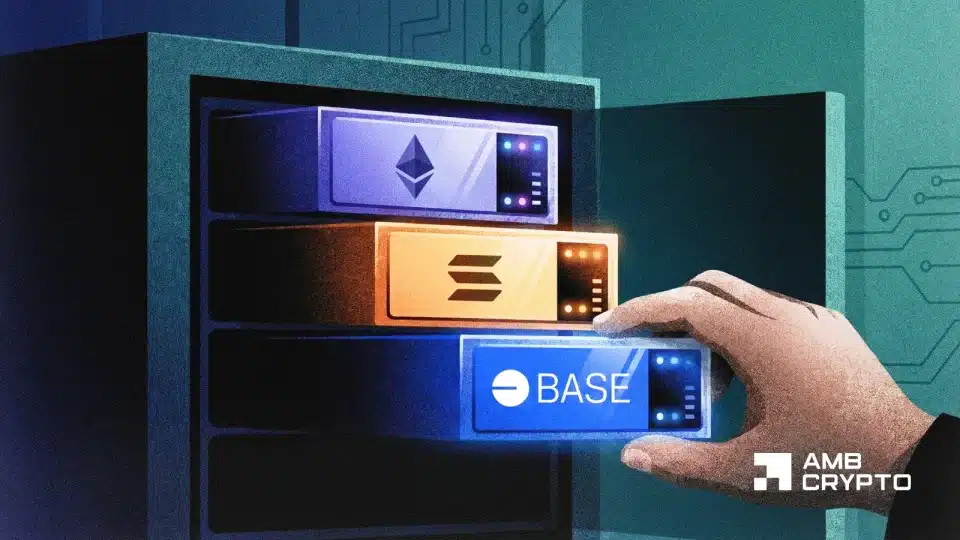
Blockchain infrastructure is undergoing a major coordinated transformation, driven by institutional demand for reliability, compliance, and predictable settlement. Over $30 billion in Real-World Assets (RWA) on-chain has exposed network weaknesses. Major blockchains are responding with foundational upgrades, moving beyond incremental speed improvements. Ethereum's "Glamsterdam" upgrade, planned for H1 2026, will significantly increase gas limits and introduce features like PBS (pre-blocked state) for enhanced settlement and parallel execution. Solana's "Alpenglow," targeting a mainnet launch in H2 2026, focuses on reducing finality time dramatically and freeing network resources to improve reliability. Beyond speed, compliance is critical. Base's "Beryl" upgrade in Q3 2026 will introduce a standardized, regulatory-compliant token framework (B20). Avalanche's "Octane" upgrade aims to boost transaction processing and reduce costs for enterprise applications. Even Bitcoin is evolving with the potential activation of OP_CAT by late 2026/early 2027. The competition is shifting. While technical upgrades are widespread, institutions will ultimately allocate capital based on proven execution, operational resilience, and regulatory compatibility during market stress. Ethereum currently leads in tokenized assets, while networks like Base and Solana are strengthening their institutional offerings. The blockchain that best delivers reliable, compliant, and uninterrupted service is poised to attract the greatest share of future institutional capital.

ambcrypto19m ago

Why 2026 could redefine Ethereum, Solana, Base and Avalanche

ambcrypto19m ago

Tiger Research: Take RWA Tokenization Overseas First

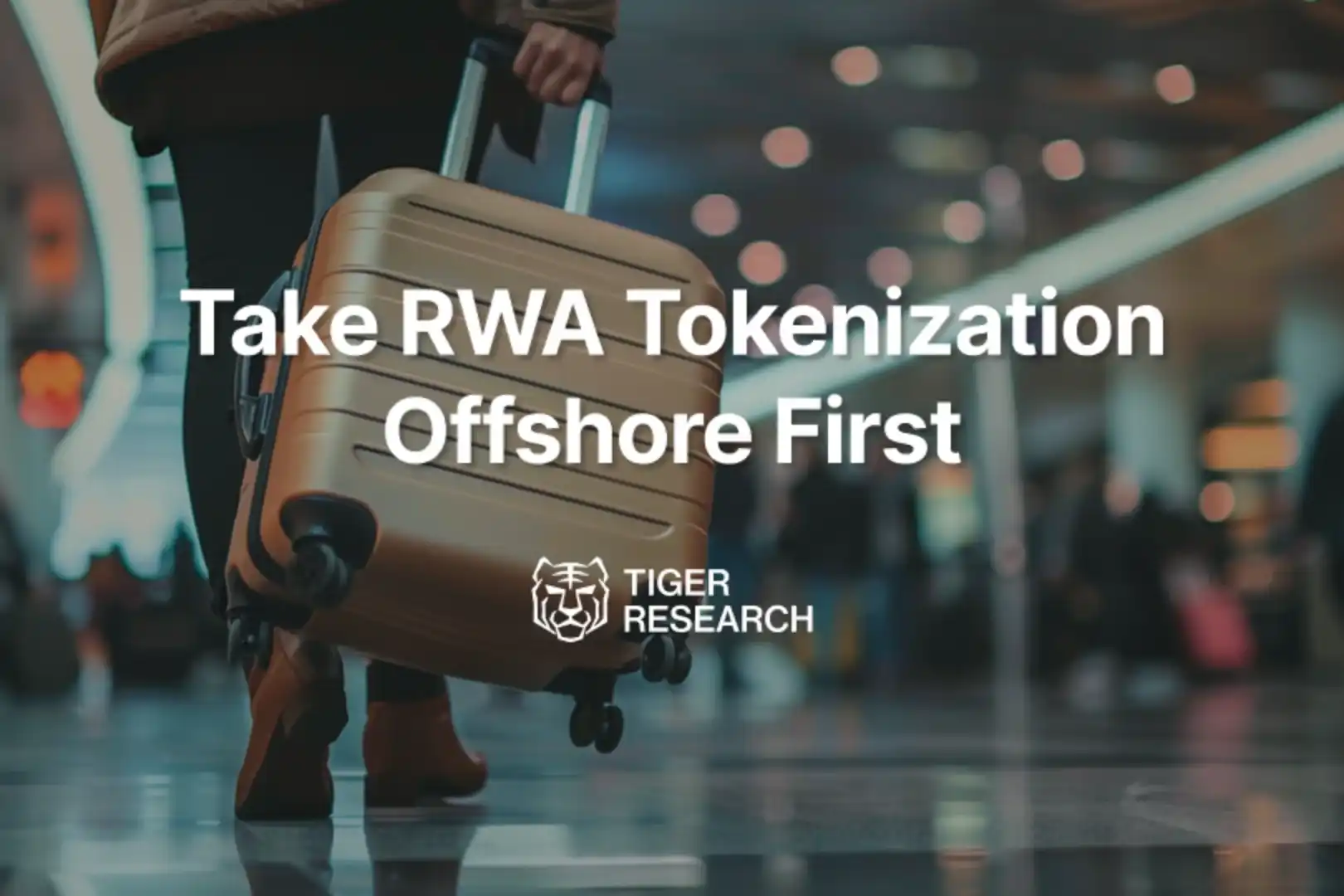
This article discusses the strategic choices facing financial institutions in jurisdictions lacking mature regulatory frameworks for Real-World Asset (RWA) tokenization. With the market growing rapidly, institutions must choose between waiting for local legislation, using regulatory sandboxes, or—the recommended priority—expanding into overseas markets to gain early experience. Successfully launching cross-border RWA tokenization requires meticulous preparation across six key areas: establishing an overseas base (e.g., Hong Kong, Singapore, the U.S.), securing necessary licenses, defining the tokenized asset (with bonds being simpler than non-standard assets), defining the target investor scope, deciding on settlement currencies/payment flows, and designing operational requirements like custody and on-chain governance. The article outlines two primary strategic paths: a direct "onshore" path and a "native on-chain" path. The direct path involves setting up a legal entity and obtaining licenses in a mature jurisdiction like Hong Kong, Singapore, or the U.S., leveraging existing platforms (e.g., DigiFT, Securitize) for efficiency. The alternative native on-chain path involves partnering with compliant, decentralized platforms (e.g., Ondo, Plume Nest) that use structures like offshore SPVs to facilitate tokenization and access DeFi liquidity, offering speed and broader reach but with greater structural complexity. The core argument is that institutions should not wait for perfect domestic regulation. A detailed hypothetical case study illustrates the multi-step, 6-12 month process of launching an overseas tokenized bond. The key takeaway is that the essence of a tokenization business lies not in the technology but in successfully executing the entire sales and operational process. The market is moving forward, and the time to act is now.

marsbit30m ago

Tiger Research: Take RWA Tokenization Overseas First

marsbit30m ago

Trading

Spot

Hot Articles

Discussions

Welcome to the HTX Community. Here, you can stay informed about the latest platform developments and gain access to professional market insights. Users' opinions on the price of SOL (SOL) are presented below.

活动图片