Odaily Editorial Team Tea Party (December 17)

marsbitPublished on 2025-12-17Last updated on 2025-12-17

Abstract

"Odaily Editorial Tea Party (Dec 17): Editors share crypto market insights and personal strategies. Asher is buying SOL, ADA, and ENA, expecting a rebound, while shorting overvalued tokens like PIPPIN and BEAT. Wenser notes asymmetric opportunities in crypto stocks and highlights the growth potential of prediction markets like Kalshi. Several editors express caution, with Dingle holding BTC and ETH, and Bcxiongdi advising reduced trading due to low liquidity. Moni observes the absence of a seasonal "Santa rally" and warns of potential JPY rate hike impacts. Suzz explores shorting overvalued "dump projects," while Azuma shares reports favoring application-layer investments over infrastructure. Ethan mentions rumors of Chinese exchange operators relocating overseas. Golem discusses challenges in user growth, citing smartphone pre-installation attempts. Overall, sentiment is mixed: some see buying opportunities, while others advocate caution amid market uncertainty."

This is an "informal" column from within the Odaily editorial team. The author shares immediate thoughts and different perspectives on industry news, data, hot events, and their nuances; explores investment ideas and opportunity hypotheses still under verification—they may not be direct wealth codes, but could simply be the questions themselves; shares observations gained from interactions with industry practitioners; and materials that have genuinely enhanced our understanding, whether from internal or external sources.

The content of this column is based on the real investment and observation experiences of the Odaily editorial team members. It does not accept any form of commercial advertising, nor does it constitute investment advice (after all, we are equally experienced in losing money). Its purpose is only to broaden perspectives and supplement information sources, not to create consensus. Welcome to join the Odaily community (Telegram discussion group, X official account) to exchange ideas, question, and banter together.

Asher(X:@Asher_ 0210 )

Introduction: Mainly plays interactions + wealth management, occasionally buys Meme (buys but doesn't like to sell), bad at contracts but likes to participate

Content: The crypto fear and greed index dropped to 11 yesterday. Still believe there will be a rebound, have started bottom-fishing SOL, ADA, ENA (also opened small contract positions). PIPPIN, BEAT simply seem too overbought, opened short positions this morning (will show the slip if profitable next issue).

For friends playing contracts, recommend trading on leading on-chain contract platforms to bet on token airdrops. Among them, Lighter is already on Coinbase's listing plan, now is the final stage to earn points; StandX has launched mainnet trading, can start farming too; Aster S4 season is ongoing.

Recent main operations are still interacting with early popular projects. Wrote a summary and reflection on airdrop farming in 2025 last week, recommended reading: 《2025 Airdrop Survival Rules: Past Golden Opportunities, Now Relying on These Two Trump Cards》.

Wenser(X:@wenser2010)

Introduction: Tea-serving junior, crypto soy sauce party member, media observer

Shares:

  • Macro: US stocks hit new highs but crypto concept stocks hit new yearly lows. The contrast between hot and cold reveals more asymmetric opportunities. Crypto-native people should reversely harvest the stock market through stock tokenization trading platforms. Altcoins within the circle will continue to bleed, but Meme stocks like Gamestop might have a new wave of hype.
  • Investment Reference: Woodie's Ark fund is still buying the dip, including Coinbase, Circle, Bitmine. Personally think there's still a rebound opportunity.
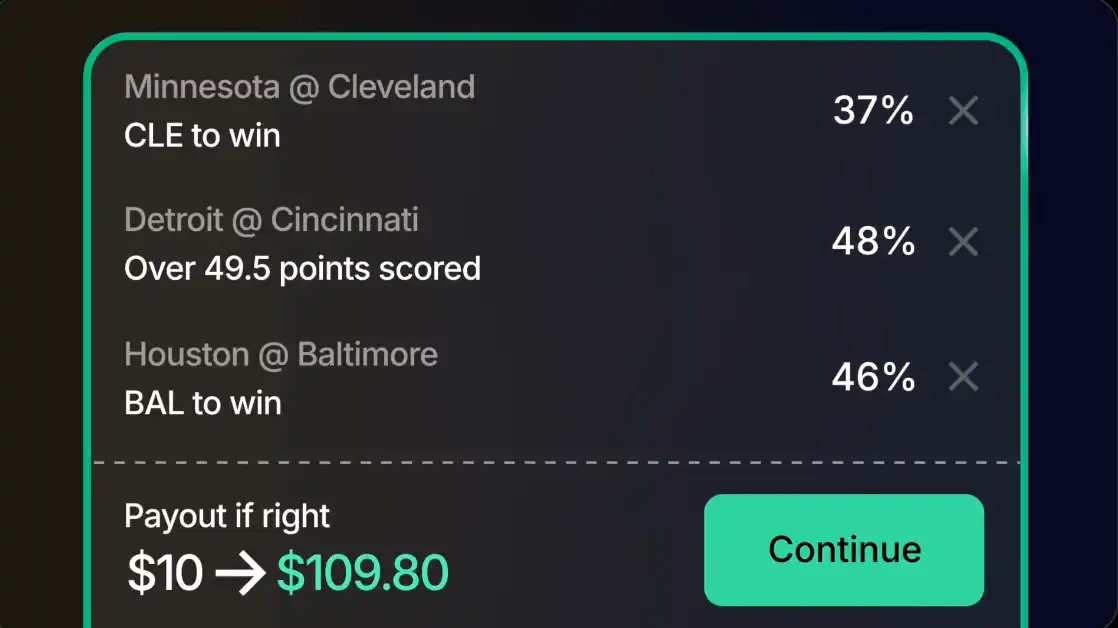
  • Prediction Markets: Kalshi launched the Combo function. I think this is an important node for prediction markets to grow independently from the crypto-native field into a new emerging sector. This also means: (1) Prediction markets support automated combination operations; (2) Prediction markets and traditional financial market derivatives are more closely integrated. In 5 to 8 years (or even shorter), it will quickly grow into a trillion-scale sector. Most importantly, the development of prediction markets and platform updates are also events to bet on, so the two achieve a kind of "self-referential state". "Predicting prediction market platforms" might become a separate category. In a way, everything is predictable and everyone is a product manager converge here. Worth looking forward to. After all, betting implies prizes provided by the counterparty.
  • New Product: "Life K-line", originally a test product by @0xsakura666 within the circle, later反响不错 so became systematized into a project (https://www.lifekline.cn/). Many feedback that the AI fortune-telling results are very close to their reality. I think this is also a major trend, especially after AI combines with stablecoins, x402 protocol, and EIP 8004. Stablecoin payments next year are very much worth looking forward to. Circle is still worth betting on, just like Coinbase back in the day (the two are already利益勾连).

Finally, recommend an article in the人物志 genre, about an asset manager and the Kondratiev wave: 《世间再无周金涛》by 张婕妤·远川

Nanzhi(X:@Assassin_Malvo)

Introduction: Diamond-handed Meme holder who suffered heavy blows, restarting

Content: 1. Fully researching Polymarket copy trading, part-time farming Opinion. 2. Prediction markets are increasing, already beyond tracking capacity. Talked with a certain big厂, aggregation markets and full-data platforms for prediction markets are on the way (Polymarket official ones are too poor). 3. Created a Human VS AI project, featuring Nanzhi's selected copy traders vs the latest set of AI models, launching soon.

Dingdang(X:@XiaMiPP)

Introduction: Pure "dumb money"

Content: I personally always tend to go long BTC, ETH or some quality altcoins. Recently, besides buying ZEC, I don't dare touch other altcoins easily. Bitcoin is also特别颠簸. The harder I try, the more I lose.

I always feel the current trend is a bit like the pullback phase at the top of the 2021 bull market. If it really repeats, then now might be the early bear market. But on the other hand, we are now entering a rate-cutting cycle, macro-wise there seems to be no basis for a deep bear. Also, top DAT companies are recently buying crypto assets aggressively, do they know some major positive news we don't know or haven't seen yet? Anyway, the market is too hard to play now. I'll just hold my chips tight, already behaving.

Ethan(X:@ethanzhang_web3 )

Introduction: Casual chat

Content: The only major event last week might be Fed Chair Powell announcing rate cuts. Wrote about the行情, the core institutional view is short-term market activity decline, possible sustained "阴跌" (sidelong decline) towards year-end, limited momentum for bull market restart. Whether long-term rate cuts continue still depends on weak wage growth or employment data. If data remains ugly, rate cuts might be more aggressive, but it's still better not to blindly bottom-fish now.

Recently talked to people in the industry,也算小道消息, affected by this year's policy tightening again, it's highly likely that many agents in Shenzhen previously providing operational maintenance for exchanges will全部转移到海外 (completely move overseas) before year-end. Take it as gossip, no way to verify.

Those playing meme can check out this episode (guests: Cupsey & Jack Duval), remember Cupsey seems to be on a show for the first time? There are quite a few stories about them making money inside.

golem(X:@web3_golem):

Introduction: golem's whimsical thoughts

Content: Last week's news about sei announcing pre-installed APP on overseas version Xiaomi phones also attracted much attention. But after saying it, sei got心虚, not only clarified but also contacted major Chinese media to delete related news. Immediately within Odaily we discussed that actually exchanges are the crypto applications that should most cooperate with phone manufacturers for pre-installation.

So, I asked a few exchange people. According to informed sources, actually Binance cooperated with overseas Xiaomi before sei, but due to Xiaomi's restrictions it only exists in some markets, itself not something worth marketing. And this pre-installation isn't automatically downloaded to the phone upon startup, but pops up a guide page, users have full choice, similar to a push installation. The effectiveness can be imagined.

But everyone's凑热闹 attitude towards pre-installation also shows that growth is still the biggest problem in Web3. If a project can break the circle, regardless of whether it's directly related to oneself, people get颅内高潮 (intracranial orgasm).

Moni(X:@mich73692)

Introduction: Doesn't trade altcoins, only watches Bitcoin

Content: The market trend of the past week made me more convinced of one thing: The cryptocurrency market is systematically saying goodbye to the "Santa Rally" narrative—a collective rise based on a time node.

Previously thought there would be a drop in November, then a rebound in December, especially a significant rise 1-2 weeks before Christmas, because many US-listed companies have incorporated Bitcoin into their treasuries. Behind listed companies is Wall Street, plus considering human nature, Wall Street would definitely want to搏一搏 (gamble) for year-end bonuses. But was quickly "slapped in the face" by reality. Even though Strategy announced buying over 20,000 BTC in the past two weeks, it still couldn't reverse the price decline. Predictions from multiple Wall Street banks on Bitcoin price were basically unreliable, felt like tricking retail into entering, e.g., JPMorgan predicting $170k, Bernstein predicting $200k, Standard Chartered predicting $100k.

Another thing to watch is the Friday Yen rate hike. The Yen, as a carry trade currency, if it hikes rates, will cause panic among investors who previously borrowed Yen at "zero interest". These investors typically borrow Yen to buy other interest-bearing currencies (like USD) and risk assets (like gold, Bitcoin). If rates rise, meaning repayment costs increase, investors will choose to sell risk assets, causing further Bitcoin price decline.

Among altcoins, SOL had many positive news recently (probably due to Breakpoint conference), e.g., Visa opening USDC settlement services to US banks via Solana, Invesco and Galaxy合作推出的质押型 Solana ETP (co-launched staking Solana ETP), Charles Schwab announcing support for purchasing Solana and Micro Solana futures products. But due to the overall poor performance of the market, SOL's price didn't see much breakthrough.

Suzz(X:@uu01194636)

Introduction: Adheres to long-termism, shorts shitcoins

Content: Too many projects in the crypto market, mixed quality. My core observation: A significant portion of new projects have the real purpose of dumping tokens, not long-term building. This is an inherent risk under irrational market exuberance, and also my opportunity. My idea is to short these overvalued, destined-to-retreat "dump projects", thus turning risk into profit. The difficulty of the shorting strategy lies in the extreme volatility of cryptocurrencies. Cannot get "squeezed" or "liquidated" because of a temporary rebound.

Current execution direction being explored: How to capture downside profit while, through strict risk control, prevent being liquidated by short-term market noise or extreme rebounds. Researching a set of entry and stop-loss mechanisms that don't rely on high leverage, can tolerate certain fluctuations, and have extremely high fault tolerance. Trying to establish an evaluation system to accurately identify those "born to dump" projects from tokenomics, unlock schedules, and fund flows.

Bcxiongdi(X:@bcxiongdi )

Introduction: Mainly plays on-chain PvP

Content: On-chain liquidity is dropping rapidly. PvP now means competing for meat with smarter and more diligent people. For most people, keeping hands still is the best at this time, otherwise很容易成为上一层级的退出流动性 (easily become the exit liquidity for the upper tier). The worse the market, the more不幸 (unfortunate) it is to折腾 (stir). Clearly know you are not diamond hands, then honestly wait for the market to improve before PvPing.

Long-term看好 (bullish on) the Meme sector. When liquidity is good, there can still be good money-making opportunities, unlike other sectors that can really die彻底 (completely). Can observe more the operations of高手地址 (expert addresses) that are still making money now. Copy first, then slowly form your own style. Best to watch more, act less.

Azuma(X:@azuma_eth)

Introduction: Noob, learning more

Content: Share some recent content I'm watching and find good:

1. "Long application layer, short infrastructure"

Major VCs are陆续发布 (successively releasing) year-end reports or next-year expectations. Delphi Digital and Moonrock Capital, etc., gave the logic of "Long application layer, short infrastructure" — "Layer1 valuation premium is disappearing, market demand for homogeneous infrastructure is weakening"; "Value will归于 (return to) applications that aggregate users on a large scale"; "The ultimate winners won't be those building the deepest infrastructure, but those controlling user identity, user traffic, capital flow, and daily interaction interfaces."

Delphi Digital full report: https://members.delphidigital.io/reports/the-year-ahead-for-apps-2026?utm_source=twitter&utm_medium=social&utm_campaign=Apps#robinhood-ee30

2. "Token vs Equity"

After Circle acquired the Axelar team but abandoned the token, the "Token vs Equity" issue heated up again. Regarding the positioning, value, and legal rights of tokens in financing structures, Dragonfly's这篇科普 (this popular science article) is probably the most detailed analysis on the current market. https://writing.dragonfly.xyz/post/read-the-fine-print-token-compensation

3. Pantera Capital launched a new podcast节目 (program) Stateful. The first episode discussed "Robinhood vs Coinbase", "Stablecoin payment chains", etc. Interested can check: https://www.youtube.com/watch?v=wIh8KZOHWBw&t=1s

4. Those interested in量化 (quantitative trading) can check out this podcast by quant trading大佬 (big shot) Annanay Kapila (formerly worked at Tower Research and Flow Traders). Content has some ads, but also quite a lot of干货 (dry goods): https://www.youtube.com/watch?v=aQlR_fxrThM&t=1s

5. Some good泛 AI (pan-AI) content.

Anthropic's two experts Barry Zhang, Mahesh Murag's podcast on abandoning the Agents route, changing to the Skills plan: https://www.youtube.com/watch?v=CEvIs9y1 Uog (Note: URL seems malformed in original, kept as is)

How far has AI's impact on programmers' work gone? Anthropic's internal survey: https://www.anthropic.com/research/how-ai-is-transforming-work-at-anthropic?utm_source=substack&utm_medium=email


Related Questions

QWhat is the main purpose of the Odaily Editorial Board's 'Tea Talk' column?

AThe purpose is to share informal, real-time thoughts and diverse perspectives on industry news, data, and hot topics; explore unverified investment ideas and opportunity hypotheses; share observations from interactions with industry practitioners; and share materials that genuinely enhance their understanding. It aims to expand perspectives and supplement information sources, not to create consensus or provide investment advice.

QAccording to Asher, which specific cryptocurrencies did he start buying as a 'bargain hunt'?

AAsher started buying SOL, ADA, and ENA as a bargain hunt, believing there would be a market rebound.

QWhat significant new feature did the prediction market Kalshi launch, and why does Wenser believe it's important?

AKalshi launched a 'Combo' feature. Wenser believes it's a significant node for prediction markets to grow independently from the crypto-native field into a new trillion-scale sector because it supports automated combination operations and tighter integration with traditional financial derivatives, creating a self-referential state where 'predicting the prediction market' becomes possible.

QWhat is the core investment strategy proposed by Suzz in the current crypto market?

ASuzz's core strategy is to short overvalued 'dump projects'—new projects whose real purpose is to dump their tokens rather than build for the long term—thereby turning risk into profit. The challenge is managing extreme volatility to avoid being liquidated by short-term market noise or sharp rebounds.

QWhat major trend in crypto investment is highlighted by Azuma from recent VC reports like Delphi Digital and Moonrock Capital?

AThe major trend highlighted is 'Long the application layer, short the infrastructure.' This logic suggests that Layer 1 valuation premiums are disappearing, market demand for homogeneous infrastructure is weakening, and value will ultimately accrue to applications that aggregate large numbers of users, control user identity, traffic, capital flow, and daily interaction interfaces.

Related Reads

Kicked Out of PayPal, Musk Aims for a Comeback in the Crypto Market

Elon Musk's X (formerly Twitter) has launched its "Smart Cashtags" feature, generating approximately $1 billion in trading volume within days of its April 2026 pilot launch. The feature allows users to click on stock or crypto tickers (or even full Solana token contract addresses) in posts to view real-time price charts and discussions without leaving the app. Initially available to iPhone users in the US and Canada, with a partnership in Canada enabling direct trading via the Wealthsimple app. This move is part of Musk's broader "Everything App" vision, spearheaded by the upcoming X Money platform. Analysts, such as Mizuho's Dan Dolev, see this as a potential disruptor to the US payments market, even prompting a downgrade of PayPal's stock. X Money's beta offers services like 6% APY on deposits, cashback, and P2P transfers, with speculation it may later incorporate crypto trading and stablecoin settlements for faster transactions. However, the ambitious plan faces significant regulatory scrutiny. Senator Elizabeth Warren has questioned the sustainability of the high 6% yield and raised concerns over X's banking partner, Cross River Bank, which has a history of regulatory violations. Additional risks involve the "GENIUS Act," which may create loopholes for stablecoin issuance without full FDIC insurance coverage, potentially leaving users unprotected. The integration of social trading on a platform with over 500 million users could inject new liquidity and retail interest into the crypto market. Yet, it also amplifies risks like herd mentality and the blurring of lines between entertainment and financial speculation. Musk's return to finance, after his ouster from PayPal, hinges on balancing innovation with regulatory compliance.

marsbit39m ago

Kicked Out of PayPal, Musk Aims for a Comeback in the Crypto Market

marsbit39m ago

Trading

Spot
Futures

Hot Articles

What is SONIC

Sonic: Pioneering the Future of Gaming in Web3 Introduction to Sonic In the ever-evolving landscape of Web3, the gaming industry stands out as one of the most dynamic and promising sectors. At the forefront of this revolution is Sonic, a project designed to amplify the gaming ecosystem on the Solana blockchain. Leveraging cutting-edge technology, Sonic aims to deliver an unparalleled gaming experience by efficiently processing millions of requests per second, ensuring that players enjoy seamless gameplay while maintaining low transaction costs. This article delves into the intricate details of Sonic, exploring its creators, funding sources, operational mechanics, and the timeline of significant events that have shaped its journey. What is Sonic? Sonic is an innovative layer-2 network that operates atop the Solana blockchain, specifically tailored to enhance the existing Solana gaming ecosystem. It accomplishes this through a customised, VM-agnostic game engine paired with a HyperGrid interpreter, facilitating sovereign game economies that roll up back to the Solana platform. The primary goals of Sonic include: Enhanced Gaming Experiences: Sonic is committed to offering lightning-fast on-chain gameplay, allowing players and developers to engage with games at previously unattainable speeds. Atomic Interoperability: This feature enables transactions to be executed within Sonic without the need to redeploy Solana programmes and accounts. This makes the process more efficient and directly benefits from Solana Layer1 services and liquidity. Seamless Deployment: Sonic allows developers to write for Ethereum Virtual Machine (EVM) based systems and execute them on Solana’s SVM infrastructure. This interoperability is crucial for attracting a broader range of dApps and decentralised applications to the platform. Support for Developers: By offering native composable gaming primitives and extensible data types - dining within the Entity-Component-System (ECS) framework - game creators can craft intricate business logic with ease. Overall, Sonic's unique approach not only caters to players but also provides an accessible and low-cost environment for developers to innovate and thrive. Creator of Sonic The information regarding the creator of Sonic is somewhat ambiguous. However, it is known that Sonic's SVM is owned by the company Mirror World. The absence of detailed information about the individuals behind Sonic reflects a common trend in several Web3 projects, where collective efforts and partnerships often overshadow individual contributions. Investors of Sonic Sonic has garnered considerable attention and support from various investors within the crypto and gaming sectors. Notably, the project raised an impressive $12 million during its Series A funding round. The round was led by BITKRAFT Ventures, with other notable investors including Galaxy, Okx Ventures, Interactive, Big Brain Holdings, and Mirana. This financial backing signifies the confidence that investment foundations have in Sonic’s potential to revolutionise the Web3 gaming landscape, further validating its innovative approaches and technologies. How Does Sonic Work? Sonic utilises the HyperGrid framework, a sophisticated parallel processing mechanism that enhances its scalability and customisability. Here are the core features that set Sonic apart: Lightning Speed at Low Costs: Sonic offers one of the fastest on-chain gaming experiences compared to other Layer-1 solutions, powered by the scalability of Solana’s virtual machine (SVM). Atomic Interoperability: Sonic enables transaction execution without redeployment of Solana programmes and accounts, effectively streamlining the interaction between users and the blockchain. EVM Compatibility: Developers can effortlessly migrate decentralised applications from EVM chains to the Solana environment using Sonic’s HyperGrid interpreter, increasing the accessibility and integration of various dApps. Ecosystem Support for Developers: By exposing native composable gaming primitives, Sonic facilitates a sandbox-like environment where developers can experiment and implement business logic, greatly enhancing the overall development experience. Monetisation Infrastructure: Sonic natively supports growth and monetisation efforts, providing frameworks for traffic generation, payments, and settlements, thereby ensuring that gaming projects are not only viable but also sustainable financially. Timeline of Sonic The evolution of Sonic has been marked by several key milestones. Below is a brief timeline highlighting critical events in the project's history: 2022: The Sonic cryptocurrency was officially launched, marking the beginning of its journey in the Web3 gaming arena. 2024: June: Sonic SVM successfully raised $12 million in a Series A funding round. This investment allowed Sonic to further develop its platform and expand its offerings. August: The launch of the Sonic Odyssey testnet provided users with the first opportunity to engage with the platform, offering interactive activities such as collecting rings—a nod to gaming nostalgia. October: SonicX, an innovative crypto game integrated with Solana, made its debut on TikTok, capturing the attention of over 120,000 users within a short span. This integration illustrated Sonic’s commitment to reaching a broader, global audience and showcased the potential of blockchain gaming. Key Points Sonic SVM is a revolutionary layer-2 network on Solana explicitly designed to enhance the GameFi landscape, demonstrating great potential for future development. HyperGrid Framework empowers Sonic by introducing horizontal scaling capabilities, ensuring that the network can handle the demands of Web3 gaming. Integration with Social Platforms: The successful launch of SonicX on TikTok displays Sonic’s strategy to leverage social media platforms to engage users, exponentially increasing the exposure and reach of its projects. Investment Confidence: The substantial funding from BITKRAFT Ventures, among others, emphasizes the robust backing Sonic has, paving the way for its ambitious future. In conclusion, Sonic encapsulates the essence of Web3 gaming innovation, striking a balance between cutting-edge technology, developer-centric tools, and community engagement. As the project continues to evolve, it is poised to redefine the gaming landscape, making it a notable entity for gamers and developers alike. As Sonic moves forward, it will undoubtedly attract greater interest and participation, solidifying its place within the broader narrative of blockchain gaming.

1.1k Total ViewsPublished 2024.04.04Updated 2024.12.03

What is SONIC

What is $S$

Understanding SPERO: A Comprehensive Overview Introduction to SPERO As the landscape of innovation continues to evolve, the emergence of web3 technologies and cryptocurrency projects plays a pivotal role in shaping the digital future. One project that has garnered attention in this dynamic field is SPERO, denoted as SPERO,$$s$. This article aims to gather and present detailed information about SPERO, to help enthusiasts and investors understand its foundations, objectives, and innovations within the web3 and crypto domains. What is SPERO,$$s$? SPERO,$$s$ is a unique project within the crypto space that seeks to leverage the principles of decentralisation and blockchain technology to create an ecosystem that promotes engagement, utility, and financial inclusion. The project is tailored to facilitate peer-to-peer interactions in new ways, providing users with innovative financial solutions and services. At its core, SPERO,$$s$ aims to empower individuals by providing tools and platforms that enhance user experience in the cryptocurrency space. This includes enabling more flexible transaction methods, fostering community-driven initiatives, and creating pathways for financial opportunities through decentralised applications (dApps). The underlying vision of SPERO,$$s$ revolves around inclusiveness, aiming to bridge gaps within traditional finance while harnessing the benefits of blockchain technology. Who is the Creator of SPERO,$$s$? The identity of the creator of SPERO,$$s$ remains somewhat obscure, as there are limited publicly available resources providing detailed background information on its founder(s). This lack of transparency can stem from the project's commitment to decentralisation—an ethos that many web3 projects share, prioritising collective contributions over individual recognition. By centring discussions around the community and its collective goals, SPERO,$$s$ embodies the essence of empowerment without singling out specific individuals. As such, understanding the ethos and mission of SPERO remains more important than identifying a singular creator. Who are the Investors of SPERO,$$s$? SPERO,$$s$ is supported by a diverse array of investors ranging from venture capitalists to angel investors dedicated to fostering innovation in the crypto sector. The focus of these investors generally aligns with SPERO's mission—prioritising projects that promise societal technological advancement, financial inclusivity, and decentralised governance. These investor foundations are typically interested in projects that not only offer innovative products but also contribute positively to the blockchain community and its ecosystems. The backing from these investors reinforces SPERO,$$s$ as a noteworthy contender in the rapidly evolving domain of crypto projects. How Does SPERO,$$s$ Work? SPERO,$$s$ employs a multi-faceted framework that distinguishes it from conventional cryptocurrency projects. Here are some of the key features that underline its uniqueness and innovation: Decentralised Governance: SPERO,$$s$ integrates decentralised governance models, empowering users to participate actively in decision-making processes regarding the project’s future. This approach fosters a sense of ownership and accountability among community members. Token Utility: SPERO,$$s$ utilises its own cryptocurrency token, designed to serve various functions within the ecosystem. These tokens enable transactions, rewards, and the facilitation of services offered on the platform, enhancing overall engagement and utility. Layered Architecture: The technical architecture of SPERO,$$s$ supports modularity and scalability, allowing for seamless integration of additional features and applications as the project evolves. This adaptability is paramount for sustaining relevance in the ever-changing crypto landscape. Community Engagement: The project emphasises community-driven initiatives, employing mechanisms that incentivise collaboration and feedback. By nurturing a strong community, SPERO,$$s$ can better address user needs and adapt to market trends. Focus on Inclusion: By offering low transaction fees and user-friendly interfaces, SPERO,$$s$ aims to attract a diverse user base, including individuals who may not previously have engaged in the crypto space. This commitment to inclusion aligns with its overarching mission of empowerment through accessibility. Timeline of SPERO,$$s$ Understanding a project's history provides crucial insights into its development trajectory and milestones. Below is a suggested timeline mapping significant events in the evolution of SPERO,$$s$: Conceptualisation and Ideation Phase: The initial ideas forming the basis of SPERO,$$s$ were conceived, aligning closely with the principles of decentralisation and community focus within the blockchain industry. Launch of Project Whitepaper: Following the conceptual phase, a comprehensive whitepaper detailing the vision, goals, and technological infrastructure of SPERO,$$s$ was released to garner community interest and feedback. Community Building and Early Engagements: Active outreach efforts were made to build a community of early adopters and potential investors, facilitating discussions around the project’s goals and garnering support. Token Generation Event: SPERO,$$s$ conducted a token generation event (TGE) to distribute its native tokens to early supporters and establish initial liquidity within the ecosystem. Launch of Initial dApp: The first decentralised application (dApp) associated with SPERO,$$s$ went live, allowing users to engage with the platform's core functionalities. Ongoing Development and Partnerships: Continuous updates and enhancements to the project's offerings, including strategic partnerships with other players in the blockchain space, have shaped SPERO,$$s$ into a competitive and evolving player in the crypto market. Conclusion SPERO,$$s$ stands as a testament to the potential of web3 and cryptocurrency to revolutionise financial systems and empower individuals. With a commitment to decentralised governance, community engagement, and innovatively designed functionalities, it paves the way toward a more inclusive financial landscape. As with any investment in the rapidly evolving crypto space, potential investors and users are encouraged to research thoroughly and engage thoughtfully with the ongoing developments within SPERO,$$s$. The project showcases the innovative spirit of the crypto industry, inviting further exploration into its myriad possibilities. While the journey of SPERO,$$s$ is still unfolding, its foundational principles may indeed influence the future of how we interact with technology, finance, and each other in interconnected digital ecosystems.

54 Total ViewsPublished 2024.12.17Updated 2024.12.17

What is $S$

What is AGENT S

Agent S: The Future of Autonomous Interaction in Web3 Introduction In the ever-evolving landscape of Web3 and cryptocurrency, innovations are constantly redefining how individuals interact with digital platforms. One such pioneering project, Agent S, promises to revolutionise human-computer interaction through its open agentic framework. By paving the way for autonomous interactions, Agent S aims to simplify complex tasks, offering transformative applications in artificial intelligence (AI). This detailed exploration will delve into the project's intricacies, its unique features, and the implications for the cryptocurrency domain. What is Agent S? Agent S stands as a groundbreaking open agentic framework, specifically designed to tackle three fundamental challenges in the automation of computer tasks: Acquiring Domain-Specific Knowledge: The framework intelligently learns from various external knowledge sources and internal experiences. This dual approach empowers it to build a rich repository of domain-specific knowledge, enhancing its performance in task execution. Planning Over Long Task Horizons: Agent S employs experience-augmented hierarchical planning, a strategic approach that facilitates efficient breakdown and execution of intricate tasks. This feature significantly enhances its ability to manage multiple subtasks efficiently and effectively. Handling Dynamic, Non-Uniform Interfaces: The project introduces the Agent-Computer Interface (ACI), an innovative solution that enhances the interaction between agents and users. Utilizing Multimodal Large Language Models (MLLMs), Agent S can navigate and manipulate diverse graphical user interfaces seamlessly. Through these pioneering features, Agent S provides a robust framework that addresses the complexities involved in automating human interaction with machines, setting the stage for myriad applications in AI and beyond. Who is the Creator of Agent S? While the concept of Agent S is fundamentally innovative, specific information about its creator remains elusive. The creator is currently unknown, which highlights either the nascent stage of the project or the strategic choice to keep founding members under wraps. Regardless of anonymity, the focus remains on the framework's capabilities and potential. Who are the Investors of Agent S? As Agent S is relatively new in the cryptographic ecosystem, detailed information regarding its investors and financial backers is not explicitly documented. The lack of publicly available insights into the investment foundations or organisations supporting the project raises questions about its funding structure and development roadmap. Understanding the backing is crucial for gauging the project's sustainability and potential market impact. How Does Agent S Work? At the core of Agent S lies cutting-edge technology that enables it to function effectively in diverse settings. Its operational model is built around several key features: Human-like Computer Interaction: The framework offers advanced AI planning, striving to make interactions with computers more intuitive. By mimicking human behaviour in tasks execution, it promises to elevate user experiences. Narrative Memory: Employed to leverage high-level experiences, Agent S utilises narrative memory to keep track of task histories, thereby enhancing its decision-making processes. Episodic Memory: This feature provides users with step-by-step guidance, allowing the framework to offer contextual support as tasks unfold. Support for OpenACI: With the ability to run locally, Agent S allows users to maintain control over their interactions and workflows, aligning with the decentralised ethos of Web3. Easy Integration with External APIs: Its versatility and compatibility with various AI platforms ensure that Agent S can fit seamlessly into existing technological ecosystems, making it an appealing choice for developers and organisations. These functionalities collectively contribute to Agent S's unique position within the crypto space, as it automates complex, multi-step tasks with minimal human intervention. As the project evolves, its potential applications in Web3 could redefine how digital interactions unfold. Timeline of Agent S The development and milestones of Agent S can be encapsulated in a timeline that highlights its significant events: September 27, 2024: The concept of Agent S was launched in a comprehensive research paper titled “An Open Agentic Framework that Uses Computers Like a Human,” showcasing the groundwork for the project. October 10, 2024: The research paper was made publicly available on arXiv, offering an in-depth exploration of the framework and its performance evaluation based on the OSWorld benchmark. October 12, 2024: A video presentation was released, providing a visual insight into the capabilities and features of Agent S, further engaging potential users and investors. These markers in the timeline not only illustrate the progress of Agent S but also indicate its commitment to transparency and community engagement. Key Points About Agent S As the Agent S framework continues to evolve, several key attributes stand out, underscoring its innovative nature and potential: Innovative Framework: Designed to provide an intuitive use of computers akin to human interaction, Agent S brings a novel approach to task automation. Autonomous Interaction: The ability to interact autonomously with computers through GUI signifies a leap towards more intelligent and efficient computing solutions. Complex Task Automation: With its robust methodology, it can automate complex, multi-step tasks, making processes faster and less error-prone. Continuous Improvement: The learning mechanisms enable Agent S to improve from past experiences, continually enhancing its performance and efficacy. Versatility: Its adaptability across different operating environments like OSWorld and WindowsAgentArena ensures that it can serve a broad range of applications. As Agent S positions itself in the Web3 and crypto landscape, its potential to enhance interaction capabilities and automate processes signifies a significant advancement in AI technologies. Through its innovative framework, Agent S exemplifies the future of digital interactions, promising a more seamless and efficient experience for users across various industries. Conclusion Agent S represents a bold leap forward in the marriage of AI and Web3, with the capacity to redefine how we interact with technology. While still in its early stages, the possibilities for its application are vast and compelling. Through its comprehensive framework addressing critical challenges, Agent S aims to bring autonomous interactions to the forefront of the digital experience. As we move deeper into the realms of cryptocurrency and decentralisation, projects like Agent S will undoubtedly play a crucial role in shaping the future of technology and human-computer collaboration.

552 Total ViewsPublished 2025.01.14Updated 2025.01.14

What is AGENT S

Discussions

Welcome to the HTX Community. Here, you can stay informed about the latest platform developments and gain access to professional market insights. Users' opinions on the price of S (S) are presented below.

活动图片












