New Huo Tech Livio: Ethereum Fusaka Upgrade Value Underestimated

marsbitPublished on 2025-12-10Last updated on 2025-12-10

Abstract

New Huo Tech's Livio argues that the Ethereum Fusaka upgrade, completed on December 3, is significantly undervalued by the market. Occurring during a period of extreme pessimism and a major crypto market correction, the upgrade went largely unnoticed but represents a critical strategic improvement to Ethereum’s economic model and ecosystem performance. Fusaka systematically tackles two core bottlenecks: high costs and poor user experience. It achieves a "cost revolution" by dramatically reducing Layer-2 (L2) transaction fees—potentially as low as $0.001 per transaction—without overburdening the Layer-1 (L1) mainnet. This enables economically viable high-frequency applications like on-chain gaming, social dApps, AI agent settlements, and RWA (Real World Asset) trading. The upgrade also delivers a user experience leap by natively supporting Passkey authentication, allowing users to sign transactions using biometrics like fingerprints or FaceID instead of managing complex seed phrases. This shift makes using crypto wallets as seamless as conventional apps, lowering the barrier to entry for mainstream adoption. Most importantly, Fusaka fundamentally overhauls Ethereum’s tokenomics. It establishes a structured "taxation" system where L2s must pay fees to the L1 for security and data capacity. These fees are burned, creating a stable, endogenous "buyback" mechanism for ETH. As L2 activity grows, this is projected to result in an additional 3,000–10,000 ETH burned annually, shift...

In the late autumn of 2025, the global crypto asset market experienced a sharp correction, with price panic and liquidity concerns reaching the most "extreme" position since 2022. However, as widespread pessimism enveloped the market, the public also collectively overlooked another event of greater strategic significance—Ethereum's Fusaka upgrade, completed on December 3.

In previous years, Ethereum upgrades always began warming up half a year in advance; this year, due to the control of the bearish sentiment, the upgrade hardly entered the public view. However, our research and judgment found that Fusaka is not a simple technical patch; it is an adjustment to Ethereum's economic model and ecosystem performance, systematically solving the two core bottlenecks that have plagued it for years—"value capture" and "user experience."

What exactly was upgraded—widening and cheapening the L2 "road," plus adding "speed limit signs" and "guardrails."

The strategic significance of Fusaka lies in completely eliminating the two core barriers to Ethereum's path toward global mainstream and application markets: excessively high costs and complexity of use.

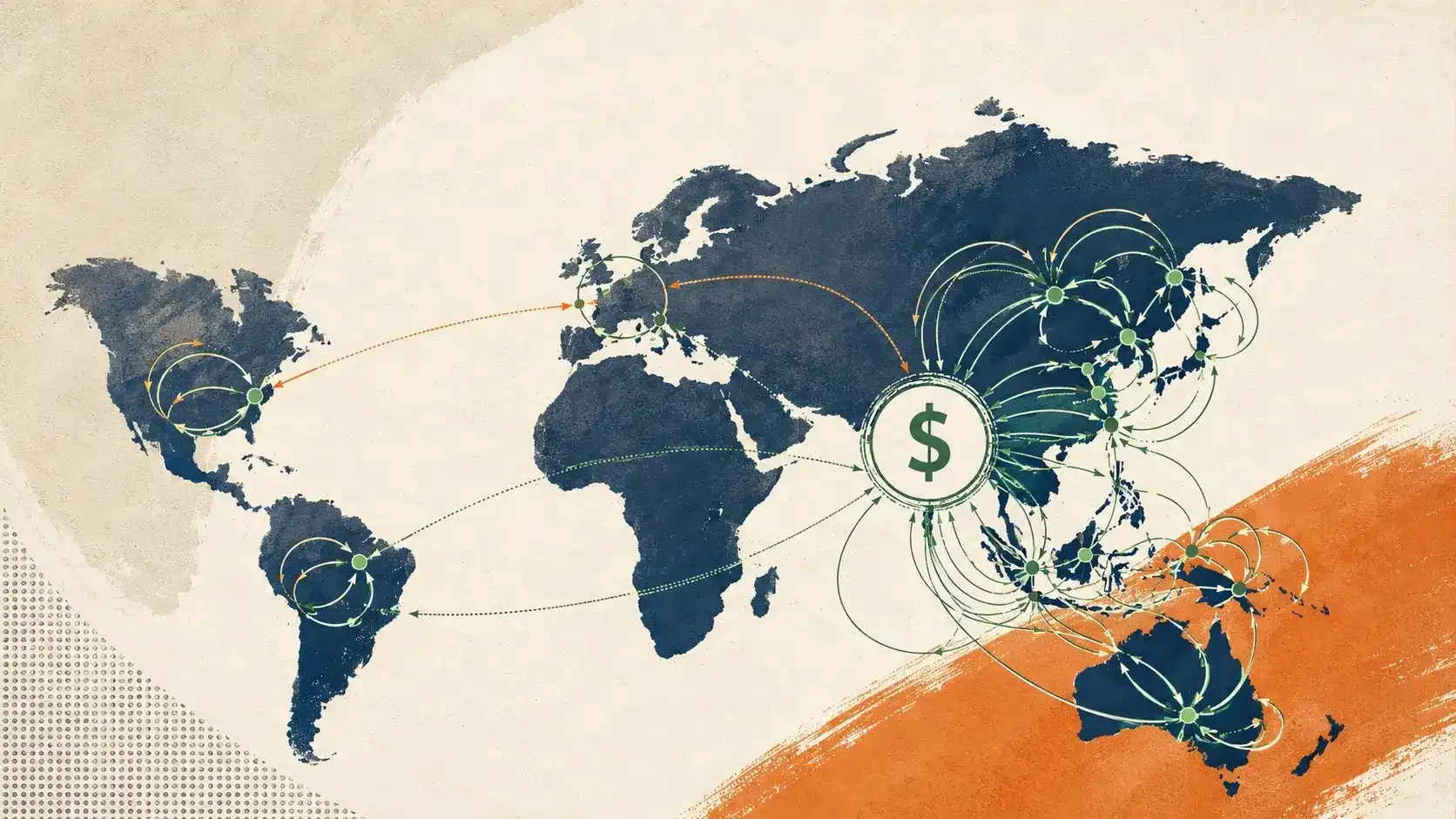
First, it brings a thorough cost revolution. The core mechanism of this upgrade can be figuratively understood as "widening the highway" for L2 without significantly increasing the burden on the L1 mainnet, while drastically reducing the "toll" for passage.

This design allows L2 transaction fees to remain at extremely low levels long-term, theoretically as low as approximately $0.001 per transaction. This extreme cost advantage is a ceiling-breaking achievement for high-frequency businesses. Whether it's on-chain gaming, decentralized social networks, AI agent settlements, or the frequent settlements of RWA (Real World Assets) that financial institutions are concerned about, all now truly have the economic foundation to "run on-chain." Simultaneously, Fusaka also achieves a delicate balance for the L1 mainnet. Through "speeding up" and "weight limiting" (setting upper limits for transactions), it improves efficiency while optimizing node storage requirements, ensuring a balance between efficiency gains and decentralization.

Second, it achieves a leap in user experience, which is key to achieving mass adoption. Fusaka solves the most criticized problem of blockchain technology for a long time: complex private key management. The upgrade natively supports the Passkey solution, achieving a leap from "memorizing seed phrases" to "fingerprint unlocking." Users no longer need to copy and keep complex seed phrases but can directly use their phone's fingerprint, FaceID, and other security modules to complete signatures. This innovation brings wallet usage experience closer to everyday apps, and combined with pre-confirmation mechanisms, brings the goal of "transferring funds as easily as using an app" one step closer. The entire Ethereum ecosystem is moving from "technically usable" to "truly user-friendly," which is the key foundation for attracting more Web2 users and running mass-market applications.

Ethereum's Economic Model Shifts from "Extreme Inflation" to "Deflation"

Of course, the most underestimated aspect of the Fusaka upgrade by the market is its disruptive improvement of Ethereum's ETH token economic model, transforming Ethereum from "extremely inflationary" to "slightly inflationary" or even "deflationary."

Let's use an interesting analogy: if Ethereum before was like the era of "feudal lords acting independently," afterwards it entered the era of a "market economy." The previous economic relationship between L1 and various L2s was somewhat like the "emperor and the feudal princes" during the Spring and Autumn Period: nominally respecting the king, but in essence, the princes governed their own territories. The economic activity generated by L2 prosperity did not effectively feed back to the ETH asset itself through mainnet fees and burns. After the Fusaka upgrade, this relationship is precisely linearized and institutionalized, readjusting the economic model to normal market logic—L2s become tenants who need to regularly and stably "pay taxes to the center," must pay stable L1 fees for using the security and data throughput capabilities provided by L1. Once L2 transaction volume and activity grow, they will be directly converted into the economic value capture of L1 (ETH) through this fee mechanism.

This institutionalized "tax payment" brings an underestimated隐形 (implicit) buyback mechanism for ETH. The fees paid by L2s are burned, which essentially constitutes a stable, endogenous "buyback" mechanism for the ETH token. Although the proportion of burns from L2 payments was extremely low in the past, after Fusaka drastically reduces fees and stimulates L2 activity, L2 transaction volume will grow exponentially, significantly increasing L1 burn volume. We estimate that related fees alone could bring about an additional 3,000–10,000 ETH in annual burns, equivalent to adding a long-term buyback mechanism for ETH linked to business volume. Fusaka's design allows ETH's supply to adjust according to business usage, which is a healthier, more resilient valuation foundation than a simple deflation narrative.

The current ETH scaling solution is correct and firm. Combined with subsequent upgrades, the overall TPS of the Ethereum L2 ecosystem has the potential to reach the 10,000 level, or even 100,000+ in the long term, with network Gas fees being very user-friendly. This means ETH will no longer be just a "network usage fee for DeFi" and a "deflationary asset in narratives," but will gradually become the risk hub and settlement layer equity of the entire L2 economy. This elevation in strategic position is the most powerful long-term value support brought by Fusaka.

Conclusion: Anchor Core Value, Embrace Era Transformation

We believe the strategic value brought by Fusaka is far higher than the current market pricing, and it is worth all institutions re-examining the long-term investment value of the Ethereum ecosystem. The Ethereum Fusaka upgrade is a very important underlying economic model change in the crypto asset industry. The extreme cost reduction and leap in user experience it brings are the "final kick" needed to achieve large-scale commercial adoption of Web3. Institutions focused on long-term value and foundational innovation will ultimately gain a first-mover advantage in the next industry transformation.


Trending Cryptos

Related Questions

QWhat are the two core bottlenecks that the Ethereum Fusaka upgrade systematically addresses, according to the article?

AThe Fusaka upgrade systematically addresses the two core bottlenecks of 'value capture' and 'user experience' that have plagued Ethereum for years.

QHow does the Fusaka upgrade achieve a 'cost revolution' for Layer 2 (L2) solutions?

AIt achieves a cost revolution by 'widening the highway' for L2s, significantly reducing the 'toll fees' for transactions without significantly increasing the burden on the L1 mainnet, potentially lowering single transaction costs to as low as $0.001.

QWhat key user experience improvement does Fusaka introduce regarding private key management?

AFusaka introduces native support for Passkey solutions, enabling a shift from 'memorizing seed phrases' to using 'fingerprint or FaceID unlocking', making wallet usage similar to everyday apps.

QHow does the article describe the change in Ethereum's economic model post-Fusaka upgrade?

AThe article states the upgrade changes Ethereum's economic model from 'extremely inflationary' to 'slightly inflationary' or even 'deflationary' by creating a stable, institutionalized 'taxation' system where L2s pay fees to L1 that are burned, acting as a hidden buyback mechanism for ETH.

QWhat long-term strategic role for ETH does the article suggest is strengthened by the Fusaka upgrade?

AThe upgrade strengthens ETH's role as the 'risk hub and settlement layer equity' for the entire L2 economy, moving beyond just being a 'DeFi network usage fee' or a 'narrative deflationary asset'.

Related Reads

US CFTC Launches Broad Investigation into Polymarket, Is the Prediction Market Party Coming to an End?

The U.S. Commodity Futures Trading Commission (CFTC) is conducting a broad investigation into the prediction market platform Polymarket, focusing on its business practices including social media promotions. This follows a bipartisan letter from U.S. senators urging the CFTC to probe alleged fraudulent marketing tactics used to promote gambling-like products. The action coincides with a period of explosive growth for the prediction market sector, driven by events like the World Cup, with platforms like Kalshi and Robinhood reporting record trading volumes and revenue. The investigation signals a potential end to the sector's unregulated expansion and may lead to clearer federal oversight, particularly regarding investor protection and distinguishing prediction markets from traditional sports betting. The CFTC's move has also intensified a jurisdictional conflict with multiple U.S. states (including Kentucky and New York), which have sued platforms like Polymarket and Kalshi, accusing them of operating illegal sports betting and threatening state gambling tax revenues. Furthermore, the CME Group has sued the CFTC, challenging its approval of certain prediction market products. The report also highlights the political and capital interests intertwined with the industry. Donald Trump Jr. holds advisory and investment roles in both Kalshi and Polymarket, and the Trump administration has previously emphasized federal regulatory authority over these markets. The CFTC's investigation into Polymarket is framed as a step towards formalizing the industry's regulatory landscape, moving it from a phase of "wild growth" towards a more structured future.

marsbit27m ago

US CFTC Launches Broad Investigation into Polymarket, Is the Prediction Market Party Coming to an End?

marsbit27m ago

U.S. CFTC Launches Extensive Investigation into Polymarket, Is the Prediction Market Frenzy Season Cooling Down?

The U.S. Commodity Futures Trading Commission (CFTC) has launched a broad investigation into the prediction market platform Polymarket, focusing on its business practices including social media activities. This follows a bipartisan letter from U.S. senators urging the CFTC to probe allegations of paid influencer false marketing and fraudulent promotion of gambling-like products to American users. The investigation comes as the prediction market sector experiences explosive growth, largely driven by the World Cup. Weekly trading volumes have hit record highs, exceeding $14.4 billion, with platforms like Kalshi and Robinhood's new venture seeing significant activity. Major firms like Meta are also showing interest in the space. This regulatory scrutiny signals a potential end to the sector's "wild growth" phase. The CFTC's move also highlights an escalating jurisdictional conflict between federal regulators and state authorities. Over a dozen states, including Kentucky and New York, have sued platforms like Polymarket and Kalshi, accusing them of operating illegal sports betting, which threatens state gambling tax revenues. The CFTC is countersuing to assert its exclusive federal jurisdiction over these "event contracts" as derivatives. Furthermore, the CFTC's approval of Kalshi's Bitcoin perpetual futures contract has sparked a lawsuit from traditional exchange CME, alleging regulatory overreach. The political and capital landscape is intricate, with Donald Trump Jr. holding advisory roles and investments in both Kalshi and Polymarket. This connects capital, political influence, and regulatory bodies, suggesting the current investigation may be a step toward formalizing the industry's rules rather than halting its progress.

Odaily星球日报30m ago

U.S. CFTC Launches Extensive Investigation into Polymarket, Is the Prediction Market Frenzy Season Cooling Down?

Odaily星球日报30m ago

Trading

Spot

Hot Articles

Discussions

Welcome to the HTX Community. Here, you can stay informed about the latest platform developments and gain access to professional market insights. Users' opinions on the price of ETH (ETH) are presented below.

活动图片